


Kurdistan Begins Oil Exports via Turkey
Posted on 02 January 2014 .
By John Lee.
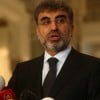
Turkish Energy Minister Taner Yildiz (pictured) said today that Kurdish oil has started flowing to the Turkish port of Ceyhan via the new pipeline, but it will not be shipped to world markets without agreement from Baghdad.
According to Reuters, the Minister said he hopes a deal allowing exports to begin can be reached this month, adding that initial flow rates of 300,000 bpd should rise to 400,000 bpd.
Turkey recently signed a multi-billion-dollar deal with the Kurdistan Regional Government under which the KRG plans independent energy exports via Turkey.
Kurdistan could eventually export 2 million bpd of oil to world markets and at least 10 billion cubic metres per year of gas to Turkey.
Ankara has set up the Turkish Energy Company (TEC), a state-backed entity which has struck partnership deals with Exxon and will represent Turkey in dealings with Kurdistan.
(Source: Reuters)
Posted in Iraq Oil & Gas News Comments Off on Kurdistan Begins Oil Exports via Turkey
Turkish Firm to Build Exxon Pipeline
Posted on 19 December 2013 .
By John Lee.
Energy Global reports that the Turkish construction firm EID Insaat is to build a 120-km pipeline for ExxonMobil in Iraq.
The $90-million project is expected to take approximately one year to complete.
The company Chairman said that this was in addition to an 85-km long pipeline project currently under construction.
The Iraqi marker accounts for 70% of the business volume of EID Insaat, which has operations in the energy and construction sectors in the Middle East and Russia.
(Source: Energy Global)
Posted in Construction & Engineering In Iraq, Iraq Oil & Gas News Comments Off on Turkish Firm to Build Exxon Pipeline
Oil Exports Recover, Targets Remain Problematic
Posted on 06 December 2013 .
By Andrew Scarre.
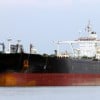
Iraq’s oil exports have increased in October to 2.25 million barrels per day, an increase of 0.18 million barrels per day in comparison to September’s figures. Over the course of October, Iraq exported 69.8 million barrels of oil over the course of October, creating US$7.160 of revenue. The ministry confirmed that the price of oil per barrel over the course of the month was US$102.579.
Exports Increase Despite Sabotage
This increase in exports came in spite of the ongoing maintenance work in the southern terminals. In addition to this, a statement released by the ministry confirmed that at separate points during the month, pumping of oil in the Kirkuk-Ceyhan had to be ceased due to sabotage. From where this sabotage stemmed is currently unclear. However, on 2nd November, the pipeline was attacked once more by insurgents who bombed the pipeline and disabled it.
Overall, during the course of the month, Iraq exported 63.8 million barrels through the southern port of Basra, and 621,000 barrels via Turkey's port of Ceyhan on the Mediterranean Sea.
The news of increasing oil exports will come as a welcome boost to the Iraqi economy due to its dependence on oil exports. At present, oil exports account for nearly 95 percent of its budget and a fall in such revenues would have a drastic impact on the economy as a whole.
Increasing Productivity
This, however, is not the only good news for Iraq of late and, after 2010’s announcement that oil reserves in the country were actually almost 30 billion barrels greater than original estimates; oil production has continued to thrive.
Posted in Iraq Oil & Gas News 1 Comment

China Consolidates Position in Iraqi Petroleum Sector
Posted on 03 December 2013 .
By Ahmed Mousa Jiyad.
Any opinions expressed are those of the author, and do not necessarily reflect the views of Iraq Business News.
China and CNPC are Consolidating Further their Positions in Iraq Petroleum Sector
Four years after the first bid round took place, some international oil companes (IOCs) are consolidating their positions. while others are descending after good start, and some were even unable to make an entry. CNPC stands among the first group, while ExxonMobil exemplifies the second group, and companies such as Chevron, Repsol and Conoco Phillips fall into the third group.
In a previous paper I addressed how Russia has entrenched and solidified its role in the Iraqi petroleum sector. This paper is mainly about CNPC's path to consolidating its presence in this sector.
Please click here to read Ahmed Mousa Jiyad’s report.
Mr Jiyad is an independent development consultant, scholar and Associate with Centre for Global Energy Studies (CGES), London. He was formerly a senior economist with the Iraq National Oil Company and Iraq’s Ministry of Oil, Chief Expert for the Council of Ministers, Director at the Ministry of Trade, and International Specialist with UN organizations in Uganda, Sudan and Jordan. He is now based in Norway (Email: [email protected], Skype ID: Ahmed Mousa Jiyad).
Posted in Ahmed Mousa Jiyad 5 Comments

ExxonMobil Sells Stakes in West Qurna I
Posted on 29 November 2013 .
By John Lee.
ExxonMobil signed agreements on Thursday with PetroChina for a 25 percent participating interest in the West Qurna I project in Iraq, and with Indonesia's Pertamina for a 10 percent participating interest in West Qurna I.
ExxonMobil retains 25 percent interest and remains lead contractor.
The transfer has been approved by the South Oil Company, Oil Exploration Company of the Iraqi Ministry of Oil and Shell West Qurna B.V., as members of the West Qurna I contractor consortium.
China is already the top foreign player in Iraq's oilfields.
(Source: ExxonMobil)
(Picture: Rex Tillerson, chairman, president, and CEO of Exxon )
Posted in Iraq Oil & Gas News 5 Comments
Turkey Unlikely to Upset Iraq in KRG Energy Deal
Posted on 13 November 2013 .
By Semih Idiz for Al-Monitor . Any opinions expressed are those of the author, and do not necessarily reflect the views of Iraq Business News.
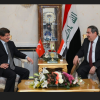
It is no secret, thanks to frequent leaks to the media, that energy cooperation between Turkey and the Kurdistan Regional Government (KRG) is continuing apace. This, however, has not broken the determination by both sides to maintain a low-key position on the subject. The sensitivity is due to strained ties between Baghdad, Ankara and Erbil over a number of issues, including the exploitation of northern Iraqi oil and gas.
The KRG has been demanding an independent say over the gas and oil in its region, arguing that Baghdad has not honored its pledge to give the Iraqi Kurds their rightful share of Iraq’s oil revenues. Baghdad denies this and has declared the KRG’s stance illegal and dangerous in terms of Iraq’s territorial integrity.
Baghdad has also accused Turkey of endangering Iraq’s territorial integrity through separate energy deals with the KRG, and has US support on this point. This, however, has not prevented energy cooperation between Turkey and the KRG. Turkish officials say if the United States is concerned, it should first convince the American oil giants Exxon and Chevron, who have also signed deals with the KRG.
An exclusive Reuters report this week, citing unidentified official sources, also showed that Turkey and the KRG are pushing ahead with “a comprehensive package of deals” in the energy field. This package, reportedly agreed on during last week’s visit to Istanbul by KRG Prime Minister Nechirvan Barzani, includes multibillion-dollar oil and gas pipelines between Turkey and northern Iraq.
According to the Reuters report, these will enable the KRG to export some 2 million barrels per day of oil to world markets, and at least 10 billion cubic meters of gas to Turkey annually when completed. The first pipeline is almost ready and should be pumping oil by the end of December. The next stage will be to pump northern Iraqi gas by pipeline as of December 2016. The technical details for a pipeline that will carry heavy oil between northern Iraq and Turkey are also said to have been mapped.
Posted in Iraq Oil & Gas News 2 Comments

Nineveh Takes Steps towards Energy Independence
Posted on 24 October 2013 .
By John Lee.
The Governor of Nineveh province, Atheel al Nujaifi (pictured), has told Reuters that Baghdad has focused on the giant southern oilfields and has paid little attention to developing resources in his province.
The province has started talks with oil companies, including Exxon Mobil, and is drafting terms to attract investment. Nujaifi added:
"We are not ready to wait for decades until the crude runs out from the south to start energy investment in Nineveh province ... We listened to [oil companies'] proposals about how to best invest in Nineveh, but we did not sign deals."
"We will start oil investments in the province with a priority to the downstream industry, and that could be followed by broader investments in the upstream sector ... When we have oil majors working, then definitely there will be social benefits, job opportunities and economic gains. Huge investments could create a better, stable environment."
Last month the provincial council of the predominantly Sunni Muslim governorate granted him the power to sign deals with foreign oil firms independently of Baghdad, which immediately rejected the move.
The governor has drafted regulations that could allow foreign investors to bid for an integrated project to build a 150,000 barrels per day (bpd) refinery and develop an oilfield to feed it.
Nujaifi said the province holds around 20 discovered but untapped oilfields and has the potential for huge resources that have yet to be discovered.
(Source: Reuters)
Posted in Iraq Oil & Gas News 7 Comments

BP "Interested in Kirkuk Oil Field"
Posted on 28 August 2013 .
By John Lee.
Oil minister Abdul Kareem Luaibi [Elaibi] has confirmed that BP is interested in getting involved in the redevelopment of the giant Kirkuk oil field, which is suffering from falling output.
According to a report from the Wall Street Journal, production at the field has declined to 260,000 barrels a day from 900,000 bpd in the early 2000s, after years of injecting water and the dumping of unwanted crude and other oil products into the field's reservoir.
Mr. Luaibi also denied reports that Russian oil major LUKoil was interested in the field.
Separately, he said the government likely will approve the sale of ExxonMobil's stake in West Qurna-1.
(Source: WSJ)
Posted in Construction & Engineering In Iraq 3 Comments

Exxon to Sell West Qurna Stake
Posted on 23 August 2013 .
Reuters reports that Exxon Mobil is selling part of its stake in the West Qurna-1 oilfield to PetroChina and Indonesia's Pertamina.
Oil Ministers Abdul Kareem Luaibi [Elaibi] told the news agency that 25 percent will go to PetroChina and 10 percent to Pertamina.
He added that the deal would be done "maybe after two to three weeks".
Exxon Mobil currently has a 60 percent stake in the giant oilfield and is the operator.
(Source: Reuters)
(Picture: Rex Tillerson, Chairman and CEO of ExxonMobil)
Posted in Iraq Oil & Gas News 1 Comment

Dialogue on Contentious Oil Issues in Iraq
Posted on 19 August 2013 .
By Ahmed Mousa Jiyad.
Mr Jiyad is an independent development consultant, scholar and Associate with Centre for Global Energy Studies (CGES), London. He was formerly a senior economist with the Iraq National Oil Company and Iraq’s Ministry of Oil, Chief Expert for the Council of Ministers, Director at the Ministry of Trade, and International Specialist with UN organizations in Uganda, Sudan and Jordan. He is now based in Norway (Email: [email protected], Skype ID: Ahmed Mousa Jiyad).
Any opinions expressed are those of the author, and do not necessarily reflect the views of Iraq Business News.
The first independent newspaper in Kurdistan-Iraq, Hawlati, e-interviewed me on mid-July. The Q&A is in English then translated into Kurdish and the edited text was published in two parts: numbers 1104 and 1105 dated 23 and 24 July 2013, and their “Pdf” files are available upon request.
The dialogue covers nine intriguing issues mostly focusing, as expected, on the contentious oil maters between the federal and KR governments. Hawlati’ contact person and the Editor had assured me the edited translated text reflects the essence of my answers. May I take this opportunity to sincerely thank Aland Mahwi, Fazil Hawrami and the Editorial staff of Hawlati for their good work and for taking the initiative.
The following provides full text of the questions and my answers.
1: As you are aware, on 27 June, the UN Security Council removed Iraq from the Chapter 7 and now Iraq is preparing the energy strategy (2013-2030), after these important changes where is Iraq heading?
AMJ answer on Q1:
Though the two issues are not connected except in timing (both occurred in June 2013) they will likely have serious impacts on the future of Iraq if proper policies are adopted and implemented. The removal of Iraq from Chapter 7 simply restored full sovereignty to the country. This by itself will surely have significant ramifications from diplomatic, political, economic, legal and financial perspectives, among others.
By exiting Chapter 7 Iraq will be freed from the direct and indirect impacts of so many restrictions imposed by UNSC decisions and those imposed unilaterally by other countries, organizations, entities, companies, financial institutions and alike. Accordingly, international trade activities-export and imports-; international service activities; insurance premiums- on individuals, business and frights-; the country’s risk and credit ratings; financial charges-interest rates and various back charges and fees- all will be impacted by lowering the cost of such activities for Iraq.
The most immediate consequences for Iraq will be the orderly end of the requirements to despite oil export revenues in the Development Fund for Iraq-DFI account at the Federal Reserve Bank of New York- FRBNY. This matter entails reactivating and improving the Iraqi operational procedures and functioning modalities pertaining to oil export revenues that existed prior to the imposition of Chapter 7, involving the related Iraqi entities such as the federal Ministry of Oil including SOMO, the Central Bank of Iraq-CBI, the federal Ministry of Finance, and the Iraqi banks, as the case may require.
As for the second issue of the Integrated National Energy Strategy-INES, this is the first ever, most thoroughly researched and well-articulated study on Iraqi energy sector. The preparation and consultation process for INES lasted more than 18 months involve holding 40 workshops and more than 150 interviews, including several senior officials from Region of Kurdistan.
INES describes the current challenges facing and the opportunities presented by Iraq’s energy resources. Its scope includes all the major components of Iraq’s energy sector: upstream and downstream oil, natural gas, power, and linked industries, with time horizon extends to 2030.
Posted in Ahmed Mousa Jiyad 1 Comment