


Iraq Approves $278m Halliburton Deal
Posted on 21 October 2014 .
By John Lee.
The Iraqi cabinet has approved a drilling deal with Halliburton value at $278.5 million (324 billion Iraqi dinars).
Reuters reports that under the 30-month contract, Halliburton will drill 30 oil wells in the 8.7-billion-barrel West Qurna-I field, operated by U.S. major ExxonMobil.
Production at the field is currently running at around 360,000 bpd due to problems with low levels of water injection.
(Source: Reuters)
Posted in Iraq Oil & Gas News Comments Off on Iraq Approves $278m Halliburton Deal

Oryx and Others Remove Staff from Iraq
Posted on 09 August 2014 .
By Patrick M Schmidt.
As the United States begun strikes against Islamic State of Iraq and the Levant (ISIL) militants, Canadian oil firm, Oryx, began evacuations of staff from their facilities in the Kurdistan region.
The company announced that portion of its Demir Dagh oil field had been shut down. Drilling and other operations continued at reduced levels by contract staff. The field produces approximately 3,000 to 4,000 barrels of oil per day.
Operations at Ain Al Safra and Banan oilfields have been completely suspended until further notice.
Other firms evacuated staff from the region including Chevron Corporation and Exxon Mobil.
(Source: Reuters)
Posted in Iraq Oil & Gas News, Security Comments Off on Oryx and Others Remove Staff from Iraq
Mystery Buyer of Kurdish Oil Revealed
Posted on 31 July 2014 .
After months of remaining out of public knowledge, the buyer of Kurdish oil in America has been revealed.
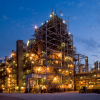
The chemical firm LyondellBasell purchased two tankers worth of Kurdish oil in May. The shipments totaled nearly 533,000 barrels of oil and at the time did not result in any legal action.
Data retrieved from the U.S. Energy Information Administration (EIA) revealed that the chemical make up of the crude oil from those two shipments matched characteristics of oil from the Shaikan field in Kurdistan.
Over the past two years the Kurdistan Regional Government (KRG) has sold almost 20 million barrels of oil. Kurdistan continues to have bases of operations for many major oil companies including Chevron, BP, and ExxonMobil.
(Source: Reuters)
(Picture: LyondellBasell)
Posted in Iraq Oil & Gas News Comments Off on Mystery Buyer of Kurdish Oil Revealed

What Went Wrong in Iraq: The Khedery Version
Posted on 07 July 2014 .
The following article was published by Reidar Visser, an historian of Iraq educated at the University of Oxford. It is reproduced here with the author’s permission. Any opinions expressed are those of the author, and do not necessarily reflect the views of Iraq Business News.
It’s going to be cited a lot, so it’s worth taking a closer look at a quite lengthy opinion piece on US policy towards Iraq and Prime Minister Nuri al-Maliki that recently appeared in The Washington Post.
The article is signed by Ali Khedery, one of the most prominent Americans of Iraqi origins to have served the United States government in Iraq between 2003 and 2010.
Until now, Khedery’s role has been largely unknown outside policy-making circles, but his assertion that he at times became “the Iraqi leader’s go-to guy for just about everything” seems credible enough, especially given his Arabic language skills, which by his own admission formed something of a rarity and an exception among high-level US decision-makers in Iraq during the years of the Bush administration.
Khedery also had particularly close ties to Maliki, described as going back before Maliki’s emergence as premier in 2006, and involving for example a prominent and personal role during Maliki’s visit to London in 2009 for purposes of urgent medical treatment.
Some valuable empirical information is certainly provided in the Khedery piece. We learn that not only did Maliki have the habit of working 16 hours a day during his early days as premier. Until 2009, apparently, leading US officials Ambassador Crocker and General Petraeus reportedly were together with him for several hours “virtually every day”, strengthening the impression of a period of American tutelage during long periods of Maliki’s first term.
Also, there is credible information in the Khedery piece about the key circles of American support for Maliki – consisting chiefly of Ambassador Chris Hill and Brett McGurk of the NSC, but also, crucially, at a key juncture in September 2010, of Vice President Joe Biden. Biden reportedly at one point in 2010 betted his vice presidency that Maliki was going to extend a US-Iraqi agreement that would have enabled American soldiers to stay in Iraq beyond 2011!
Posted in Politics, Security 3 Comments
Defying Daash in Karbala and Baghdad
Posted on 26 June 2014 .
The following article features an interview with Mantid International CEO Ginger Cruz.
Robert Tollast’s opinions expressed in the article do not necessarily represent the views of Mantid International, nor do the opinions expressed here necessarily reflect the views of Iraq Business News.
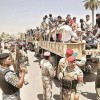
The vast majority of Iraqis, Shi'a, Kurd and Sunni, are preparing themselves to confront the threat of“Daash”. That's the Iraqi shorthand for the “Islamic State of Iraq and ash Sham” (Al Dawalah Al Islamiy fe Al Iraq wal Al Sham).
The idea that ISIL's advance could yet unite a new front of resistance was put to me recently by Ginger Cruz, CEO of Mantid International, who returned last week from a business trip in Iraq.
Her company work in an advisory role to the Karbala governorate and foreign companies, and she kindly agreed to answer a few questions about the current crisis. Mantid International have offices in Washington, Beirut and Baghdad.
Introduction
Baghdad is not about to fall. Undoubtedly, the news is grim: in addition to the fact that the “belts” around the city are contested and huge swathes of central and western Iraq are battlefields or under ISIL control, Iraq’s capital is bracing itself for some kind of offensive.
The possibility of street fighting in some districts of western Baghdad is very real, and the the situation there is “very tense” according to a friend in al-Ameriya. According to another source, life at Baghdad International airport goes on as normal, but again things are tense.
Sunni majority and mixed areas of the city are worried about a return of widespread sectarian violence, even as Grand Ayatollah Ali al-Sistani continues to call for restraint. In some areas outside the capital, Shi’a dominated Iraqi units still cooperate with Sunni “Sahwat”-- men who reject domination by ISIL, even if many despise Maliki.
The Sahwa movement today is a shadow of its former self, but all this bleak news is not the whole story: most of southern Iraq, so vital to the country’s economy, will be unscathed. The same applies to the increasingly confident Kurdish region.
Posted in Politics, Robert Tollast, Security Comments Off on Defying Daash in Karbala and Baghdad

Oil Price Surges amid Iraq Turmoil
Posted on 16 June 2014 .
By John Cookson. Any opinions expressed are those of the author, and do not necessarily reflect the views of Iraq Business News.
Traders will tell you the price of oil is a speculative market based on expectations. Most of Iraq's oil production is from the mega fields in the south, far from any fighting. But in the world's skittish bourses just a threat to exports is enough to cause market jitters.
Iraq was expected to contribute to 60 percent of OPEC's crude production in the next 10 years so its output had become important for the long-term global energy market.
Small wonder, as country slides towards possible civil war, some analysts predict the price of a barrel of oil could soar by US$30.
The jihadists lightning assault in the north of Iraq last week caused Brent crude to spike to US$113, and the price could rise still further today with the news ISIS seized another town,Tal Afar, in the north west and still had their sights on Baghdad.
The US Embassy in Baghdad has relocated some staff to its consulates in Erbil and Basrah and to Jordan. The oil industry has reacted too with majors like BP at Rumaila and ExxonMobil in West Qurna evacuating all but vital expatriate staff.
The oil companies are playing down any sense of panic. ExxonMobil is not commenting on the crisis and BP said simply the violence in Iraq "has no impact," on production at Rumaila. Royal Dutch Shell at Al Majnoon put a statement out saying safety and security of staff was: "an absolute priority."
Posted in Iraq Oil & Gas News, John Cookson, Security 4 Comments

Risky Business in Iraq
Posted on 12 June 2014 .
By John Cookson. Any opinions expressed are those of the author, and do not necessarily reflect the views of Iraq Business News.
As ISIS prepares to advance on Baghdad and Iraq slips towards civil war, the world's oil corporations are updating plans to evacuate worried staff, from Dohuk in the north to the southern powerhouse of Basrah.
With one eye on Iraq's turbulent history executives in Houston, London, Moscow and Beijing always knew they might have to pull their people out - although perhaps not now and not under these extraordinary circumstances.
Ever since a Turkish company discovered oil in Kirkuk in 1927, Iraq - with its 150 billion barrels of proven reserves - would be a commercially tantalising yet risky business for the global giants.
Oil exploration and production is long haul anyway and, as one boss told me: "Iraq is adventure capital, not venture capital."
But hundreds of billions of dollars of foreign investment did pour in since the fall of Saddam in 2003 and until now the biggest industrial revolution in Iraqi history was revitalising a moribund economy and underwriting mega-construction projects like millions of new homes, highways, Sports City and the Baghdad to Basrah high speed rail link.
ExxonMobil, Shell, BP, Lukoil, Kuwait Energy and China Petroleum are among major players in the south and east of Iraq. BP's Rumaila is spread over an astonishing 2000 kilometres and accounts for 12% of Iraq's entire reserves.
Shell's Al Majnoon is another monster, although the field's production potential was slowed by the discovery of thousands of tonnes of explosives and other military hardware left over the Iraq's war with Iran.
Posted in Iraq Industry & Trade News, John Cookson, Politics, Security 14 Comments
Black Diamond, Rezhwan Refinery Joint Venture
Posted on 16 April 2014 .
By John Lee.
[UPDATE: Further to the press release shown below, the Kurdistan Regional Government has issued a statement refuting the company’s claims to have a deal to refine crude oil from Genel Energy‘s Taq Taq oil field.
Genel Energy has also denied any knowledge of, or dealings with, Black Diamond and Rezhwan.
The full text of the KRG statement can be viewed here: https://www.iraq-businessnews.com/2014/04/17/false-claims-made-by-black-diamond-rezhwan/.]
The Black Diamond Oil Company has issued a press release in which it claims to make gross profits of $180,000 per day refining crude oil from the Taq Taq oilfield. The full text of the press release is shown below:
Iraq's largely autonomous Kurdistan region opened the doors to a joint venture refinery operation between Black Diamond Oil Co. and the Rezhwan Co.
The new oil refinery will start refining Taq Taq crude oil next week with 1,500 tons being refined on a daily bases.
It was further decided that both companies had agreed that Black Diamond would increase the daily output of the refinery with a production of 3000 tons per day starting in May 2014.
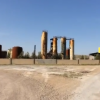
The refinery near the Kurdish capital Erbil will be operated by the private Kurdish group Rezhwan Co., which will process the crude from purchasing above ground reserves in Taq Taq.
Black Diamond will purchase the crude directly from the Taq Taq field, in central Iraq 50 miles east-southeast of Erbil, is the Kurdistan region’s largest oil producing field, notes operator Genel Energy PLC.
Proved and probable reserves total 607 million BBL of the currently estimated 1.7 billion BBL of oil in place, and the field is delivering 80,000-100,000 b/d, all of it by truck for the moment. Production averaged 75,500 b/d in 2012 compared with 66,000 b/d in 2011.
The TT-22 Taq Taq Deep exploratory well that targets a gross un-risked resource of 250 million BBL of oil equivalent in Jurassic and Triassic reservoirs is due to spud shortly. Projected total depth is 5,400 m. The Jurassic-Triassic interval tested gas from a well drilled in the mid-1970s at Taq Taq.
Posted in Iraq Oil & Gas News 3 Comments
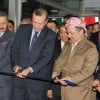
Turkey Defers to Baghdad on Kurdish Oil
Posted on 19 February 2014 .
By Semih Idiz for Al-Monitor. Any opinions expressed are those of the author, and do not necessarily reflect the views of Iraq Business News.
With hundred of thousands of barrels of its oil stuck in the Turkish Mediterranean port of Ceyhan, unable to be sold on the world market because of its continuing row with Baghdad, the Kurdistan Regional Government (KRG) is discovering just how landlocked and boxed in it is in terms of utilizing the vast oil reserves under its control.
Baghdad also has support from Washington, where administration officials fear the energy cooperation between Turkey and the KRG will increase the risk of splitting up Iraq — already in the throes of sectarian strife — and are consequently putting pressure on Ankara over its energy dealings with the Iraqi Kurds.
Iraq's constitution says oil revenues, regardless of where the reserves are located in the country, have to go through Baghdad and allocates the autonomous Kurdish region 17% of total revenues.
Nouri al-Maliki's government argues that the KRG can only export its oil after an agreement is reached between Erbil and Baghdad on how to proceed in this matter.
Baghdad has also threatened to cut the KRG out of its share of Iraq’s vast oil revenues, should it go ahead and sell its oil unilaterally.
Iraqi Oil Minister Abdul Kareem Luaibi told Reuters in January that the government would take legal action against Turkey and consider canceling all contracts with Turkish firms if Ankara enabled the exporting of KRG oil before an agreement between Erbil and Baghdad is reached.
Such an agreement, though, has been elusive because of Kurdish claims of sole ownership over oil reserves discovered in northern Iraq after the region gained political autonomy from Baghdad following the US invasion in 2003.
KRG officials are disappointed that a comprehensive package of agreements they signed with Turkey in November 2013 has not become fully operational yet.
Posted in Iraq Oil & Gas News, Politics 9 Comments

Capital Gain Tax on IOCs in Iraq
Posted on 10 February 2014 .
By Ahmed Mousa Jiyad.
Any opinions expressed are those of the author, and do not necessarily reflect the views of Iraq Business News.
Many countries impose capital gain tax on individuals, companies and corporations when a profit realized from the sale of assets. National and state legislation often has a large array of fiscal obligations and regulations regarding capital gains, however, these fiscal obligations may vary from jurisdiction to jurisdiction.
In other words capital gain tax is a normal component of taxation systems on both national and international levels, and thus has a significant contribution to the state revenues and fiscal policies. Iraq is no different and should consider doing the same.
In Iraq the signed service contracts provide the IOCs with a possibility to assign (sell) wholly or partly their participating interests as specified by a common clause in the signed contract, “any Company shall have the right to assign any of its Participating Interest, shares, rights, privileges, duties or obligations under this Contract to an Affiliate.” Such right for assignment is subject to and governed by a set of provisions outlined in the signed contract.
Due to the long duration of the contracts (the Term) that extend beyond 20 years, and due to the usual practice of Merger and Acquisition (M&A) in the international petroleum business it is highly probable that IOCs might “farm in” and “farm out” by acquiring, selling or exchange participation interests in the related petroleum field.
The transfer of participation interests between IOCs involves financial transactions or transfer of “asset” ownership between the concerned parties: the buyer and the seller. This assignment deal may (though highly likely) results in significant realized gain (profit) for the selling party compared to the actual cost (investment) it made as a consequence to its participation in the related upstream petroleum development project.
This realized gain is known to be “capital gain” and in most countries it is taxable. The “Capital Gain Tax” is imposed on individuals, companies and corporations and in many countries it is imposed in addition to other direct taxes such as “Property/Wealth Tax” and “Income Tax” among others. The percentage of Capital Gain Tax differs according to the taxation systems and fiscal policies across the world.
Posted in Ahmed Mousa Jiyad 3 Comments