



Iraq Petroleum Sector Chronicle
Posted on 05 October 2021 .
By Ahmed Mousa Jiyad.
Any opinions expressed are those of the author, and do not necessarily reflect the views of Iraq Business News.
The Iraqi economy structure is lopsided with heavy dependency on export of natural raw material, i.e., crude oil. The modest unbalanced growth that was accumulated by the end of 1970s began eroding and all economic accomplishments had washed-away, gradually, since then. Four decades of wars, severe sanctions, political tyranny and America-led occupation pushed the country into the brinks of a failed state.
The post occupation sectarian political sharing system, known in Iraq al-muhasasa, brought the most devastating manifestation of "resource curse" in the form of formalized legalized high level corruption, or Kleptocracy. When upstream petroleum became, once again but more urgently, the only sector capable for funding annual state budget for social welfare, reconstruction and development, it became the target for the corruptors, the Kleptocrats and domestic politics abuse.
Also, under the then prevailed political order, upstream petroleum redevelopment and development were sought through active and substantive participation of the international oil companies- IOCs; this brings to the fore of debate the complex issues of the political economy of such participation.
The essence of the international political economy of petroleum relationship between the IOCs and a developing economy, e.g., Iraq, is the relative comparative strength of both parties to maximize their interest through any formalized relationship; this is premised on two basic issues: sovereignty and petroleum rent.
Sovereignty relates to ownership of petroleum (both reserves and production) or claim of title on them on one side and the decision making structure and mechanism of that relationship on the other.
Distribution of petroleum (resource) rent is decided formally through the type and terms of the contracting modality on one side and, empirically, through actual management of such contracting modality on the other. "Government take" is the clearest manifestation of rent distribution; the higher is the government take the better it is for the host country, but what matters, in the final analysis, is the actual distribution more than the formal and contractual. This highlights the importance of the effective and efficient contract management, at all levels, during the entire life-cycle of the related contract.
Needless to say that host government and IOCs petroleum relationship are not, always, exclusive to them only, as the subject matter has other geopolitical and geostrategic considerations that go beyond the two parties; this implies the comparative strength of the host government on one side and the IOCs together with the geopolitics of their home-country government on the other has a lot to impact the petroleum relationship and their contractual modalities. More often than not geopolitical pressure and leverage are used to promote, enhance or even guarantee the interest of the IOCs through different ways and means and, when competition is transparent and tense the intervention becomes more intrusive an coercive. Those who failed winning in competitive bidding say that outcome reflects the dark side of transparency!!
One year after the invasion, Iraq pursued in 2004, what seems analytically and proven factually, a Grand Opining Big Push Policy in its petroleum sector by offering IOCs and foreign investors unprecedented opportunities to having access to and expansion in, particularly, upstream petroleum sub-sector.
Between 2004 to end 2008, the Ministry of Oil- MoO concluded over 40 memoranda of understanding/cooperation (MoU/Cs) with IOCs from 23 countries, with overwhelming dominance of the US (9); Japan and Norway (4 each); China, UAE, UK and Canada (2 each) and one company from each of other 16 countries.
For IOCs, MoU/Cs represent invaluable direct contact with Iraqi staff and professionals at all layers of responsibility and provide them access to most archives and database relating to upstream petroleum; that helped IOCs exploring where and what they could do to chart their way towards business in Iraq's upstream petroleum and beyond.
These MoU/Cs contributed in formulating and development of a model contract, and by the time they were terminated MoO succeeded, through direct government-to-government talks (with China), in converting Al-ahdab oilfield from production sharing to service contract.
The first bid round, for producing (brown) oilfields, was held end June 2009, followed by the second bid round for discovered but not commercially developed (green) fields on December 2009 and a third one for free-gas fields in October 2010.
120 IOCs participated in the qualification process for the bid rounds, 55 from 27 countries were qualified: Japan (9); USA (7); Russia (5); China and UK (4 each); Australia, India and Italy (2 each), and 19 other countries with one company each.
The outcome of the three bid rounds and Al-ahdab are: 14 oilfields contracted to 15 IOCs from 12 countries; total contracted/ targeted plateau production was 12.3mbd and their total proven reserves ca. 67 billion barrels (58% of the country's proven reserves at that time). Three gas fields were contracted to 3 IOCs from 3 countries with total plateau production of 820 mcfd and proven reserves of 11.2tcf.
Moreover, the period prior to end 2010 witnessed developments relating to other important issues particularly the proposed federal oil and gas law-FOGL and INOC Law; promulgated private investment in refinery law and proposing many new modern refineries for foreign investors; conclude HoA that led, latter, to establishing Basra Gas Company joint venture with Royal Shell and Mitsubishi among others
Also during those years, the upstream petroleum in the country was a magnet of attention by the occupying countries, the IOCs, international legal and consulting firms and business and media sources and alike; the number, frequency and substance of what was published internationally on Iraq is a manifestation of that attention. That could be explained by or attributed to a "Newness factor" as the country was reopened for the outside world after almost half a century of restricted access; to the "Invasion factor" that made accessing the country easy after 2003 occupation since the invasion was "all about oil"; to the "Business factor" for IOCs and petroleum service companies to have a share in exploiting the vastness of petroleum in the country; the last frontiers for least cost petroleum. Much of the attention and preference of the occupying forces, IOCs and pro-IOCs entities was for Production Sharing Agreements/Contracts-PSA/C.
On the other side, most Iraqi oil professionals and experts inside the country, particularly from the South Oil Company, and those residing outside the country demonstrated vibrant engagement and strong keenness by calling, individually or collectively, for protecting the country petroleum wealth through sovereign national efforts and opposing any form of PSA/C; they premised their stand on still valid important laws and the 2005 Constitution.
Obviously, the course of events prior to end 2010 highlights different pathways for upstream petroleum contracting modalities; long term service contract emerged as the preferable choice.
One of the International Compact with Iraq-ICI offspring's was the formalization, for the first time in modern Iraq, of transparency principles and working modalities in Iraq petroleum sector. On 10 February 2010, Extractive Industries Transparency Initiative (EITI) Board accepted Iraq as an EITI Candidate country; a new component in the governance of national upstream petroleum began in earnest with continuity and promising expectations, but time will tell!
Not surprisingly therefore that the period ended by December 2010 witnessed the most concerted efforts and vigorous debate among Iraqis relating to what could have been very significant milestones in the development of Iraq petroleum sector. Hence, the choice of end-2010 is the appropriate demarcation time-frame for this volume.
Over the last twenty years I have been compiling various, but related and relevant, documents, reports, studies, data and statistics and, accordingly, I have now very large, well organised, structured thematically and updated regularly, at least weekly, Database. Moreover, I developed and maintained relatively large network of contacts comprising senior government officials at different levels, parliamentarians, professionals, scholars, research institutions, academics, civil society organisation and media among others; such networking proved to be invaluable source of relevant insights, confidential materials and views from "inside the box".
My Database includes separate annual reports, exclusively, on the oil sector the first covers 2010 and earlier years and the latest is for 2021; these annual reports are the core of the archival efforts comprising well referenced, accurate, and verifiable data and sources. While archiving each annual report I read, commented and make different remarks on each item included in each annual report. Contents of parts two and three of this book are extracted from the annual report for 2010 and earlier years, but without incorporating my comments and remarks made on them then; I do not want to influence the readers' understanding of these items with my own views.
Also, my Database comprises significant statistical data and time-series on different aspects of petroleum sector, which I compile, regularly, from formal and credible sources, both Iraqi and non-Iraqi.
In the same way I followed closely the related development in the country and had my own contributions through various research work, analyses, publications, presentations, consulting assignments and commentaries among others.
I found it opportune to launch major research and publication project aiming at documenting, professionally and objectively, the development of the petroleum sector in the country by presenting different informed thoughts, views and insights that impacted the debate, policies and course of events.
The project comprises many volumes and begins with this recently published book, the details of which are summarized as follows:
Book title: Iraq Petroleum Sector Chronicle
Book Sub-title: Grand Opening for Big Push Strategy, Volume 1, 2010 & earlier
Author: Ahmed Mousa Jiyad
Publisher: Lambert Scientific Publication
ISBN-13: 978-620-4-20851-0; ISBN-10:6204208519; EAN:9786204208510
Pages: 434
Price: 98.90 € (Euro)

My prime purpose for preparing this book is to make it convenient reference for those interested in Iraqi petroleum sector, to understand the complexity of related issues and the discourse that prevailed in 2010 and positions taken by different parties; what, when by whom and, probably, why!!
This book is "Volume 1" and I intend, hopefully, to publishing further volumes covering years 2011 onward, since I have done already the basic research and have the needed documents and statistics in my Database.
The book provides different perspectives on Iraqi petroleum issues that prevailed during the period covered by the book: my own, other Iraqis, international views and statistics; it was structured according to these perspectives respectively in its four parts. Hence, the book is premised on "evidence-based research" that was thoroughly done, mostly during 2010 but also covers a couple of earlier years.
For those years prior to 2011, as was the case since then and as mentioned above, I compiled and documented my own Database, the oil annual reports and numerous thematic, i.e., issue specific, folders.
Part one of the book comprises a selection of my own essays and research work.
Each of my "Essays.." has its own methodology, structure, assumptions, analysis, discussion and consulted references; information on each essay was provide, when and where it was published and the web-link to access it, if that is permissible by the related websites.
Part two of the book comprises views of and positions taken by some selected well-known Iraqi oil professionals, senior government officials and others aiming at presenting a balance of wide spectrum of different, and sometimes opposing, views positions and affiliations; these are presented in a form of own articles, interviews and collective statements. They reflect the richness and diversity of opinion that shaped the discourse among Iraqis at that time and, consequently, enriched the value of this book. Official views, expressed, through detailed interviews and statements, by senior government officials and decision makers reflect the political vision and economic aspiration of the dominant political parties, groups, religious/ politicized individuals and different associations and gatherings of professionals, notably oil experts and professionals inside and outside the country.
Part three comprises outside foreign and international standpoints and contributions to the debate about Iraq's petroleum and its prospect; a large number of items compiled from many and different external sources includes reports, studies, articles and media reporting among others, most if not all, were written by non-Iraqis.
This part adds the third perspective of the book; how the outside world looked to Iraqi petroleum matters, what was their preoccupation, how did they understand or failed to understand, analyse, debate the issues and foresee the implications. It is really amazing to revisit the then prevailed insights and wisdom!!
Part four provides the statistical perspective through many annexes which are extracted from my Database; these include the most important statistical data (without further statistical analysis) pertaining to petroleum sector for 2010. The purpose is to supplement the expressed views with the "material evidence" in the form of data and statistics.
I would like to make the following remarks and caveats
Methodologically, the book is chronicle/archival of some of what was written, debated and published in 2010 and, a few belongs to, earlier years. Hence all items included in parts one, two and three are reproduced "as is/was", i.e., exactly as they were published in 2010, except the necessary editing to unify the text of the book to comply with publisher guidelines and requirements.
Therefore, it is vital to emphasise that the book is NOT about 2010 written from 2021 perspectives or in retrospective; rather it is on 2010 as was written in 2010 or earlier.
Each and every item included in parts two and three of the book has its source, the web-link, date of publication and the date I accessed it and compiled it in my Database. Sources, for the tables of part four of the book, are also provided. This is vital for verification, acknowledgement of copy right and helpful for further research on Iraqi petroleum.
A note of caution is due regarding websites availability; some websites do not exists anymore, some are changed to other identification, others are not accessible, for whatever reason, and some require subscription or fee for access.
Intentionally and for logistical reasons, I excluded items written in Arabic.
The book is a fruition of almost two decades of constant follow-up, research, direct involvement, networking and archiving. I encountered too many challenges during the course of those years, but with patient and determination I managed to overcome them; this book is the testimony for perseverance!
I would like to sincerely and wholeheartedly thank Tariq Shafiq for his kind "Preface" of the book; much appreciated Akhi Abu Ehsan.
Mr Jiyad is an independent development consultant, scholar and Associate with the former Centre for Global Energy Studies (CGES), London. He was formerly a senior economist with the Iraq National Oil Company and Iraq's Ministry of Oil, Chief Expert for the Council of Ministers, Director at the Ministry of Trade, and International Specialist with UN organizations in Uganda, Sudan and Jordan. He is now based in Norway (Email: mou-jiya(at)online.no, Skype ID: Ahmed Mousa Jiyad). Read more of Mr Jiyad's biography here.
Posted in Ahmed Mousa Jiyad, Iraq Oil & Gas News Comments Off on Iraq Petroleum Sector Chronicle

LUKoil Confirms possible Reduction of Stake in West Qurna-2
Posted on 23 July 2021 .
By John Lee.
The Chief Executive of Russia's LUKoil has reportedly confirmed that the company may reduce its stake in Iraq's West Qurna-2 oil field.
Reuters cites Vagit Alekperov as making the comment on Thursday during a visit to the company's facilities in Nizhny Novgorod.
(Source: Reuters)
Posted in Iraq Oil & Gas News Comments Off on LUKoil Confirms possible Reduction of Stake in West Qurna-2

4,000-year-old City discovered in Iraq
Posted on 18 July 2021 .
By Adnan Abu Zeed for Al Monitor. Any opinions expressed here are those of the author(s) and do not necessarily reflect the views of Iraq Business News.
4,000-year-old city discovered in Iraq
A group of Russian archaeologists made an impressive discovery in Iraq's Dhi Qar governorate, where an ancient settlement about 4,000 years old was found.
Posted in Blog Comments Off on 4,000-year-old City discovered in Iraq
IOC's Strategic Positioning in Iraqi Upstream Petroleum
Posted on 14 July 2021 .
By Ahmed Mousa Jiyad.
Any opinions expressed are those of the author, and do not necessarily reflect the views of Iraq Business News.
IOC's Strategic Positioning in Iraq Upstream Petroleum
Much talk have been circulating recently on "Big Oil" abandoning Iraq upstream petroleum projects after they rushed into the country many years ago. How much truth is in this; who is leaving, remaining and planning a comeback; why and what material evidences are available to provide verifiable realistic explanation are some of the topics this brief intervention attempts to address.
IOCs positioning in Iraq upstream petroleum have seen a dramatic shift since a Grand Opining Big Push Policy- GOBPP was pursued in 2004; offering IOCs opportunities to achieving unprecedented expansion in the petroleum production capacity during short period.
Their involvement and strategic positioning went through three phases: the first, 2004 to end 2008, comprises many memoranda of understanding/cooperation (MoU/Cs ) in search for foothold and as springboard for further opportunities; transparent competitive bidding phase, June 2009 to May 2012, includes four bid rounds and, third phase covers contracts implementation that began from January 2010 up to date.
Ministry of Oil- MoO concluded some 40 MoU/Cs with IOCs from 23 countries, with overwhelming dominance of the US (9); Japan and Norway (4 each); China, UAE, UK and Canada (2 each) and one company from 16 countries.
For IOCs, MoU/Cs represent invaluable direct contact with Iraqi staff and professionals at all layers of responsibility and access to most archives and database relating to upstream petroleum; that helped IOCs exploring where and what they could do to chart their way towards business in Iraq's upstream petroleum and beyond, i.e., to plan their strategic positioning in the sector. Some IOCs had their MoU/C terminated and were blacklisted from further involvement in upstream petroleum projects, due to their agreements with KRG in violation of the government declared policy.
MoU/Cs contributed in formulating and development of a model contract, and by the time they were terminated MoO succeeded, through direct government-to-government talks (with China), in converting Alahdab oilfield from production sharing to service contract. That conversion presents the model for what MoO offers: a long term service contract not a production sharing contract; an outcome many IOCs had not hoped for and probably impacted their decision for further undertaking.
The first bid round, for brown oilfields, was held end June 2009, followed by three bid rounds for green fields, gas fields and exploration blocks respectively; the last was convened end May 2012.
120 IOCs participated in the qualification process for the bid rounds, 55 from 27 countries were qualified: Japan (9); USA (7); Russia (5); China and UK (4 each); Australia, India and Italy (2 each), and 19 other countries with one company each; a different profile from phase one with obvious strategic positioning implications.
The outcome of the four bid rounds and Alahdab are: 14 oilfields contracted to 15 IOCs from 12 countries; a consolidation of strategic positioning. Total contracted plateau production was 12.3mbd and their total proven reserves ca. 67 billion barrels (58% of the country's proven reserves at that time). Three gas fields were contracted to 3 IOCs from 3 countries with total plateau production of 820mcfd and proven reserves of 11.2tcf. Finally, four exploration blocks were contracts with 7 IOCs from 5 countries resulting in discovery of Fayha and Eridu oilfields.
The contracted plateau production of 12.3mbd was IOCs making that proven to be unrealistic and unattainable, thus, consequently revised downward repeatedly!!
During the second phase many meaningful signs for significant shift in IOCs strategic positioning began to emerge, the most apparent consolidation was Russia.
The third phase, i.e., contracts implementation period, witnessed the most dramatic effective and lasting shifts in IOCs strategic positioning.
A complexity of combined reasons had contributed to such an outcome; some are related to IOCs themselves, others related to the Iraqi side (entities, policies and circumstances), while the rest are related to a variety of international factors and geopolitical considerations. Space limitation prevents from indulging in the details of relevant data, facts and documents, but it is useful to mention the most impacting among them: Fracking revolution in the US; ISIS and oil price collapse in mid-June 2014 that inflicted serious blow to Iraq fiscal, security and developmental efforts; OPEC+ impact on Iraq production; Covid-19 and finally energy/green transition and climate change debate.
However, it is vital to highlight briefly the IOCs that strengthened or weakened their positions during this phase.
In the context of Iraqi GOBPP, strategic positioning is taken here to mean IOCs persistent, competitive, enhanced and long-term underrating in Iraq upstream petroleum. Three dimensions manifest IOC involvement and its strategic positioning: horizontal (in multi-fields), vertical (the participating interest-PI in the fields) and volumetric (in terms of proven reserves and production due to field development).
From November 2013 China began enhancing its presence in the country through consolidating CNPC , CNOOC, ZhenHua , Sinopec , UEG and probably CPECC, which invests in utilizing all associated gas produced in Missan Province . In addition to the above, there are many Chines service companies that are involved in upstream petroleum activities such as drilling, supply and construct surface installations, pipelines, field management among others.
Russian Lukoil enhanced its position vertically horizontally and volumetric in West Qurna 2-WQ2 oilfield and in exploration Block 10 that led to Eridu oilfield discovery; Lukoil found other reservoirs beyond the field's current borders and thus requested to expand Eridu field. Surprisingly, the Oil Minister reportedly said recently Lukoil intends to sell its PI in WQ2 to a Chines company!
Other Russian IOCs with bid round contracts include Gazprom (operator of Badra oilfield) and Bashneft/ Rosneft (for Exploration Block 12), KRG not included here.
In addition to Chines and Russian IOCs Japanese companies increased their presence as well: Japex (Gharraf oilfield); INPEX (Exploration Block 10/Eridu oilfield) and Itochu bought entire Shell' PI (20%) in WQ1.
Against the consolidation of the Chines, Russian and Japanese companies, other IOCs lost or weakened their presence in upstream petroleum; these include Big Oil- as ExxonMobil, Shell and Oxy and medium-small size companies such as Petronas, Kogas, Kuwait Energy, TPAO.
Occidental Petroleum relinquished, in 2016, its PI in Zubair oilfield to South Oil Company (now Basra Oil Company), due to its decision pulling out from projects in the Middle East for financial reasons.
ExxonMobil demise began almost ten years ago soon after it had attained significant consolidation; a demise of its own making!! Apart from the contribution of the Iraqi factors ExxonMobil faced and facing many other challenges that exacerbate its decision to abandon Iraq. These include restructuring its international profile; energy transition (away from fossil-based to renewable-energy) environmentally-conscious; shareholder revolts, expulsion of ExxonMobil representative from EITI'MSG due to position regarding Dobb-Franck issue and the forthcoming SEC environmental compliance rules.
Royal Shell story is not very different from that of ExxonMobil. Shell launched initially a powerful strategic positioning, resisted the temptation of engaging with KRG petroleum and diversified its portfolio in oil, gas and petrochemical projects. Now it has much weakened role; withdrew from Majnoon oilfield, sold its PI in WQ1, rumors that it contemplate leaving Basra Gas Compan- BGC , whose HoA was signed in 2008 but it did not deliver the contracted target, and Nibras petrochemical project, with MIM & MoO, draggeed for too many years without any prospect.
Again, Shell decision to leave WQ1 and Majnoon oilfields and possibly BGC was not entirely due to contractual and working conditions in Iraq; one possible explanation relates to Shell' overall plan to restructure its global business, following its takeover of British Gas Group- BGG. Also Shell faces legal action; A Dutch court ruled, recently, that Shell will have to reduce its carbon emissions by 45 percent from 2019 levels by 2030.
BP has only one engagement- Rumaila oilfield, with almost equal PI with CNPC (while during the June 2009 bidding round BP' PI was double that of CNPC). Recently, BP decided to spin off its involvement in Rumaila into a stand-alone company, a "ring fencing practice", for reasons relating to diverting its global assets and investment plans. Though this move is more structural and organizational in nature that has, contractually, no effect on Iraq, it, nevertheless, could indicate possible departure from Rumaila sooner or later.
Total, rebranded TotalEnergies, have very modest PI in only one oilfield- Halfaya, is trying a comeback to Iraq through concluding HoA comprising four major projects, three of which are part of SIIP that Iraq wasted too many years discussing with ExxonMobil!!
Surely, IOCs strategic positioning has significant implications for petroleum sector and the prospect of the entire economy. There has been a tendency for some to be highly selective by focusing only on one Iraqi based, real reason, such as harsh contractual terms; type of contracts; corruption, resource mismanagement and security conditions among others. While all these are real and effective, they are absolutely not the only factors behind IOCs shift and change of priorities as there is a complex wed that one should be aware of; 20 IOCs have recently warned for tax violation and IOCs that lost their strategic positioning inside Iraqi petroleum had themselves contributed to that outcome.
Moreover, global energy/green transition and international geopolitics have powerful ramifications though the debate is, as usual, not conclusive. While IEA recent report could have effective impact, REN21 new report raises doubt; and such wide divergence suggests oil remains needed much longer than some thinks.
Click here to download the full report in pdf format.
Mr Jiyad is an independent development consultant, scholar and Associate with the former Centre for Global Energy Studies (CGES), London. He was formerly a senior economist with the Iraq National Oil Company and Iraq's Ministry of Oil, Chief Expert for the Council of Ministers, Director at the Ministry of Trade, and International Specialist with UN organizations in Uganda, Sudan and Jordan. He is now based in Norway (Email: mou-jiya(at)online.no, Skype ID: Ahmed Mousa Jiyad). Read more of Mr Jiyad's biography here.
Posted in Ahmed Mousa Jiyad, Iraq Oil & Gas News 1 Comment

China to Snap Up Iraqi Oil Assets?
Posted on 07 July 2021 .
By John Lee.
Both BP and Lukoil are reported to be considering quitting upstream oil operations in Iraq.
Reuters quotes Iraq's Oil Minister, Ihssan Abdul-Jabbar Ismail, as making the comments during a parliamentary session last week.
Last month, BP was said to be planning to spin off its Iraqi operations in Iraq into a separate company, which would be jointly owned with its partner in the giant Rumaila project, the China National Petroleum Corporation (CNPC).
Meanwhile, the Minister said Russia's Lukoil is thought to be trying sell its 75-percent stake in the West Qurna-2 oilfield to Chinese firms.
(Sources: Reuters, Oil Price)
Posted in Iraq Oil & Gas News, Politics Comments Off on China to Snap Up Iraqi Oil Assets?
Lukoil paid over $60m to Iraqi Govt in 2020
Posted on 23 June 2021 .
By John Lee.
Russian oil company Lukoil has published details of its payments made during the financial year ended 31 December 2020 in favor of the government of Iraq:
- The Dhi Qar Oil Company (DQOC) [Thiqar Oil Company] received 1,963 million Russian Rubles [$26.9 million] in respect of the Block 10 field;
- The General Commission of Tax received 2,511 million Russian Rubles [$34.4 million] in respect of the West Qurna-2 field (pictured).
(Source: Lukoil)
Posted in Iraq Oil & Gas News Comments Off on Lukoil paid over $60m to Iraqi Govt in 2020
LUKoil announces Plans for Iraq's Block 10
Posted on 07 June 2021 .
By John Lee.
The head of Russia's LUKoil has said that the company plans to start production at Iraq's Block 10 at the end of 2022 or in 2023.
Vagit Alekperov (pictured) told a Reuters that output will start at 30,000 barrels per day (bpd).
The field is being developed by LUKoil (60%) and Inpex (40%)
(Source: Reuters)
Posted in Iraq Oil & Gas News Comments Off on LUKoil announces Plans for Iraq's Block 10

Increasing Oil Production at West Qurna 2
Posted on 31 May 2021 .
By John Lee.
Iraq's Oil Minister, Ihssan Abdul-Jabbar Ismail, has announced the start of experimental operations at the Yamamah reservoir in the West Qurna 2 oil field, with the aim of increasing output from the reservoir from 10,000 barrels per day (bpd) to 350,000 bpd.
When fully implemented, the development would bring total production at the field to 800,000 bpd.
The Minister praised the work of Russian company Lukoil, which is developing the field.
(Source: Ministry of Oil)
Posted in Iraq Oil & Gas News Comments Off on Increasing Oil Production at West Qurna 2
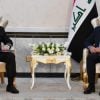
New Russian Ambassador to Iraq
Posted on 29 May 2021 .
By John Lee.
On 25 May 2021, Foreign Minister, H.E. Mr. Fuad Hussein received a copy of the credentials of H.E. Mr. Elbrus Kutrashev, the Ambassador Plenipotentiary of the Russian Federation to Baghdad.
The two sides held talks on ways to improve bilateral relations between the two countries, and the importance of enhancing cooperation opportunities at various levels to meet the aspirations of the two peoples.
Ambassador Kutrashev has previously worked at the Central Office of the Russian Ministry of Foreign Affairs, and in Russian diplomatic missions in Iraq and Syria.
(Sources: Iraqi Foreign Ministry, Russia-Islamic World)
Posted in Iraq Industry & Trade News, Politics, Security Comments Off on New Russian Ambassador to Iraq

Iraq in Talks to build Nuclear Reactors
Posted on 27 April 2021 .
By John Lee.
Iraq is reportedly in talks with Russia, France and the United States regarding the construction of three civil nuclear reactors.
According to The New Arab, the Head of the Iraqi Radioactive Sources Regulatory Authority (IRSRA) said that several preliminary meetings had been held to study the feasibility of setting up the reactors.
(Source: The New Arab)
Posted in Iraq Industry & Trade News, Security Comments Off on Iraq in Talks to build Nuclear Reactors