



Lukoil and Iraqi PM discuss Cooperation
Posted on 03 November 2020 .
The Prime Minister of Iraq, Mustafa Al-Kadhimi, and Iraqi Oil Minister Ihsan Abdul Jabbar Ismail, received a delegation from LUKOIL on Monday, headed by its President Vagit Alekperov (pictured).
The meeting was also attended by the Russian Ambassador Maxim Maximov.
The parties discussed the progress of the West Qurna-2 project and Eridu field (Block-10), as well as prospects for cooperation in other areas in Iraq.
Prime Minister praised LUKOIL's operations in the Republic and spoke in favor of expanding cooperation and coordination between LUKOIL and the Iraqi Oil Ministry.
(Source: Lukoil)
Posted in Iraq Oil & Gas News Comments Off on Lukoil and Iraqi PM discuss Cooperation
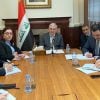
Iraq discusses sourcing Covid Vaccine with AstraZeneca
Posted on 05 October 2020 .
By John Lee.
The Ambassador of Republic of Iraq in London, Mr. Muhammad Jaafar Al-Sadr, chaired a meeting with representatives of the British pharmaceutical group, AstraZeneca, which is a leading company in Coronavirus vaccine in cooperation with the University of Oxford in Britain, through video conference.
The meeting discussed the possibility of Iraq obtaining adequate doses of the vaccine produced by the company that are being developed, in addition to the possibility of the early launch of the vaccine.
During the meeting, the Ambassador thanked the group for the efforts made by the company to produce the vaccine, which would be a scientific achievement to protect humanity from the risks of infection with the Coronavirus, stressing Iraq's desire to obtain the vaccine after its production.
While the company has expressed its readiness to supply Iraq with the vaccine after the last experimental stages which will be ready by the end of this year, especially after making sure of its safety, effectiveness and compliance with international health standards. The company is conducting clinical trials of the vaccine in several regions of the world, including the United States, Russia and a number of Latin American countries.
This meeting comes within a series of meetings held by the embassy with the company and other pharmaceutical companies in order to ensure that Iraq receives the vaccine in the start of its production.
(Source: Iraqi Ministry of Foreign Affairs)
Posted in Healthcare Comments Off on Iraq discusses sourcing Covid Vaccine with AstraZeneca
Oil Minister meets with Chinese and Russian IOCs
Posted on 09 July 2020 .
By John Lee.
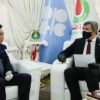
The director of the China National Offshore Oil Corporation (CNOOC) has presented his company's plans for the development of the Bazergan [Buzurgan] oil field in Maysan to Iraq's Oil Minister Ihsan Abdul-Jabbar.
In a separate meeting on Wednesday, the Minister also received the CEO of Lukoil in Iraq, Igor Zubarev, who gave a summary of the company's activities and plans in Iraq.
(Source: Ministry of Oil)
Posted in Iraq Oil & Gas News Comments Off on Oil Minister meets with Chinese and Russian IOCs

Iran, Iraq Discuss Oil Cooperation
Posted on 21 June 2020 .
Iranian Oil Minister Bijan Namdar Zangeneh and his Iraqi counterpart Ihsan Abdul Jabbar discussed ways to promote cooperation between the two neighbors in the oil industry.
In a telephone conversation, Zangeneh and Abdul Jabbar called for the expansion of oil cooperation between the two Muslim neighbors.
The Iranian minister congratulated Abdul Jabbar on taking office as the new oil minister of Iraq after formation of a new government under Prime Minister Mustafa Al-Kadhimi's leadership, according to the Iranian government's official website.
Abdul Jabbar said Iraq's daily export of crude in June has reached 2.8 million barrels.
The Iraqi oil minister also emphasized that it would be in Iraq's interests to abide by a production cut agreement between OPEC and its allies, known as OPEC+, saying the Iraqi Kurdistan Region has been directed to comply with the OPEC+ deal and cut its share of oil output.
The OPEC members, Russia and other oil producing nations agreed in April to cut output by around 10% of global supply to support oil prices amid the coronavirus pandemic.
(Source: Tasnim, under Creative Commons licence)
Posted in Iraq Oil & Gas News 1 Comment

Petrel Raises Capital to pursue Iraq Prospects
Posted on 27 May 2020 .
By John Lee.
Petrel Resources Plc (Lon: PET) has announce that the company has arranged a placing with ETX Capital to raise £250,000 (before expenses) via the issue of 7,692,308 new ordinary shares (the "Placing Shares") at a placing price of 3.25p per Placing Share.
Subject to the appointment of responsible officials by the new Iraqi Government, and the lifting of Covid-19 restrictions, Petrel expects to enter into re-qualification discussions with the appropriate decision-makers at the Ministry of Oil. Discussions may cover Petrel's past studies on the Merjan-Kifl-West Kifl area, and the Mesozoic and Paleozoic potential of the Western Desert.
Pending, such discussions, this investment will strengthen the company's Balance Sheet.
David Horgan, Director, commented:
"Petrel is fortunate to have maintained strong relationships with Ministry of Oil officials, even during the darkest hours of sanctions, invasion, conflict, and Covid-19. Our Iraqi Director, Riadh, is a son of the renowned "driller", Mahmoud Ahmed. In Iraq we found World-class geology.
"Prevailing circumstances obliged Petrel temporarily to dis-engage from on-the-ground operations in 2010. We saw too many challenges - both governance, political and financial - to justify risking Shareholders' funds given the then-limited upside available."
"Recent events are transforming this situation. A three-way rivalry among Saudi Arabia, Russia and American producers - aggravated by an unprecedented demand-hit caused by Covid-19 - crashed the oil price. This cripples high cost operations offshore, and unconventional reservoirs. As a low-cost producer, Iraq is now well positioned to exploit this historic opportunity. I believe that Petrel has the experience, contacts and board commitment to help drive forward the next phase of Iraqi oil development."
(Source: Petrel Resources)
Posted in Iraq Oil & Gas News Comments Off on Petrel Raises Capital to pursue Iraq Prospects
Russia Considers Major Investment in Iraqi Gas Field
Posted on 18 May 2020 .
From Middle East Monitor, under a Creative Commons licence. Any opinions expressed here are those of the author(s) and do not necessarily reflect the views of Iraq Business News.
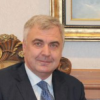
The Russian Ambassador to Iraq, Maxim Maksimov [Maximov] (pictured), said that Russia is seeking to invest heavily in Al-Mansouriya gas field, in the Diyala governorate.
Maksimov said in a press statement yesterday that "Russian companies are willing to mobilise significant funds and have submitted an investment tender for Al-Mansouriya gas field in Diyala."
He added that "three Russian companies in Iraq produce about 600,000 barrels of oil per day, including Gazprom, which operates in the Badra oil field in Wasit Governorate with a production capacity of 100,000 barrels of oil per day, in addition to 400,000 barrels in the [West Qurna 2] field."
The Russian ambassador stated that his country is paying special attention to the Russian-Iraqi Commission.
Moscow has assigned its deputy prime minister to head the Russian delegation, in preparation for a very important meeting between the two sides, which was postponed due to the coronavirus crisis.
Posted in Iraq Oil & Gas News Comments Off on Russia Considers Major Investment in Iraqi Gas Field
Iraq Considers Russian Air Defense System
Posted on 07 May 2020 .
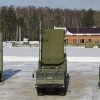
An Iraqi lawmaker said Baghdad is considering purchasing advanced Russian air defense systems to enhance its air capabilities and protect its airspace.
Baghdad is studying the purchase of Russian made long-range, surface-to-air S-300 systems or S-400 missile defense systems if the United States does not provide it with modern air defense systems, the Chairman of the Security and Defense Committee in the Iraqi parliament, Mohammed Redha Al-Haidar said, according to the Middle East Monitor.
"Iraq needs to upgrade its air defense system to protect its sovereignty and prevent any violation of the Iraqi airspace," he said, adding that Iraq currently owns ineffective American and Russian defense systems.
Back on April 30, Russian Ambassador to Iraq Maksim Maksimov said Moscow was prepared to provide Baghdad with advanced S-400 air defense missile systems once the Arab country made an official request for the military hardware.
The United States has already warned Iraq of the consequences of extending military cooperation with Russia, and striking deals to purchase advanced weaponry, particularly S-400 missile systems.
(Source: Tasnim, under Creative Commons licence)
Posted in Construction & Engineering In Iraq Comments Off on Iraq Considers Russian Air Defense System
Coronavirus causes Staffing Problems for Lukoil in Iraq
Posted on 28 April 2020 .
By John Lee.
Lukoil is reportedly having difficulties staffing its operations in Iraq due to coronavirus and associated restrictions.
Interfax cited chief executive Vagit Alekperov (pictured) was quoted as saying that the company has a problem with replacing shift workers, adding, "We are reaching deals with people to keep them on for shifts that are 60 days long or more."
The Russian-based company operates the West Qurna 2 oilfield in Basra, one of the world's largest fields.
(Source: Reuters)
Posted in Iraq Oil & Gas News Comments Off on Coronavirus causes Staffing Problems for Lukoil in Iraq
Kurdistan, Iraq discuss Oil Production
Posted on 21 April 2020 .
From Middle East Monitor, under a Creative Commons licence. Any opinions expressed here are those of the author and do not necessarily reflect the views of Iraq Business News.
An official Kurdish delegation arrived on Sunday in the Iraqi capital Baghdad to discuss oil production.
"The delegation, led by the Kurdistan government's Finance Minister, Awat Sheikh Janab, will discuss the federal budget, low oil prices, and the region's participation in the Iraqi commitment to reduce oil production in accordance with the Organisation of Petroleum Exporting Countries (OPEC)'s decision," Kurdish Minister of State, Khalid Shwani, told reporters.
The Kurdistan Region recently said it would export "250,000 barrels per day of oil to Baghdad to support the Iraqi federal budget."
"The region must abide by the federal government's decision to reduce crude oil production," Shwani stressed.
Oil prices have fallen sharply since Russia and OPEC countries failed to agree on an additional 1.5 million barrels per day of oil production cuts in early March. Concerns over the market impact of the global coronavirus outbreak are compounding the price fall.
Saudi Arabia-led OPEC and Russia-led non-OPEC oil producing countries - a grouping known as OPEC+ that pumps over 40 per cent of the world's oil - agreed earlier this month to new oil production cuts which will come into effect in May and are expected to stabilise prices.
[This article has been edited to correct Khalid Shwani's title.]
Posted in Iraq Oil & Gas News 2 Comments

Covid-19: Iraq asks IMF for Debt Deferment
Posted on 19 April 2020 .
From Middle East Monitor, under a Creative Commons licence. Any opinions expressed here are those of the author and do not necessarily reflect the views of Iraq Business News.
Iraq asks IMF for debt deferment due to coronavirus crisis
The economic and finance adviser to Iraq's Prime Minister has revealed that talks are taking place with the International Monetary Fund (IMF) for a deferment of the country's foreign debt payments during the coronavirus crisis.
Mohammed Saleh told the IMF that the circumstances constitute a force majeure which is afflicting many countries around the world, the state-owned Al-Sabaah has reported.
"As one of the founders of the International Monetary Fund and the World Bank in the 1940s," explained Saleh, "Iraq seeks to defer the payment of its debts. The IMF will help Iraq if it agrees to this, or a simplification of procedures, which is possible, but it all needs high-level diplomatic input."
According to a spokesman for Iraq's Council of Ministers, Alaa Al-Fahd, while the talks are ongoing and the proposal has been made, the IMF has given no response at the present time, as there are no claims for payment outstanding. He said that when the Iraqi government has a deficit it is approached on a yearly basis by the World Bank which offers it a loan to stabilise its economy.
"This year, however, there are many things that will be taken into consideration, as the United States has proposed stopping debt repayment at this stage, which is a good thing, especially since Iraq's debts to be paid to the IMF this year are estimated at more than $10 billion," said Al-Fahd. "In the event that there is an agreement, this will benefit Iraq given the current economic and political situation."
The burden of paying its foreign debt, added the spokesman, is a strain on Iraq's already-fragile economy, as most of the country's wealth is produced by its oil industry due to a lack of economic diversity. "The economy of Iraq is unstable, because it depends 95 per cent on oil and the remaining five per cent cannot be collected now, due to the lack of taxes, fees, etc." Iraq's dependence on its oil industry has already been hit by the recent oil price war between Saudi Arabia and Russia.
The coronavirus pandemic and the economic slump it has caused is predicted to be particularly difficult for Middle East countries. In its World Economic Outlook report for 2020 which was released this month, the IMF has predicted that Iraq's economy will decline by 4.7 per cent.
(Source: Middle East Monitor)
Posted in Iraq Banking & Finance News, Politics Comments Off on Covid-19: Iraq asks IMF for Debt Deferment