



Jiyad: Oil Market Collapse Damages the Iraqi Economy
Posted on 14 April 2020 .
By Ahmed Mousa Jiyad.
Any opinions expressed are those of the author, and do not necessarily reflect the views of Iraq Business News.
Oil Market Collapse, Damages the Iraqi Economy and Changes Oil Geopolitics
The collapse of the global oil market is undoubtedly unprecedented in its timing, magnitude, spread and devastating impacts across the globe. A strange and unpredicted association of a few, but major, factors had contributed to the current threat, causing much uncertainty and vulnerability on national and global levels.
The revised "OPEC+" production cut agreed on 12 April prompted initial minor improvement in oil price, but there remains very many serious concerns that such reduction is much below what is needed to bring stability to and balances a saturated global oil market.
This article aims at estimating the collapse in oil market on Iraq first then on both Russia and Saudi Arabia, as they are accused for "OPEC+" failure early last March that ignited the oil price war, and assesses the geopolitical and political economy consideration that contributed to and further complicate the impasse. The article provides a summary of two articles written and published in Arabic recently and an update on recent deliberation by "OPEC+" and G20 Energy Ministers to rescue the situation and bring some stability to global oil market under existing threat of Coronavirus to the world biosecurity.
My two articles attempt to provide comparative assessment of the impact of the collapse with particular focus on short-term horizon, i.e., the remaining nine months of this year under different Brent oil price scenarios on Iraq, first article , while the second focuses on Russia and Saudi Arabia.
Click here to download the full report in pdf format.
Mr Jiyad is an independent development consultant, scholar and Associate with the former Centre for Global Energy Studies (CGES), London. He was formerly a senior economist with the Iraq National Oil Company and Iraq's Ministry of Oil, Chief Expert for the Council of Ministers, Director at the Ministry of Trade, and International Specialist with UN organizations in Uganda, Sudan and Jordan. He is now based in Norway (Email: mou-jiya(at)online.no, Skype ID: Ahmed Mousa Jiyad). Read more of Mr Jiyad's biography here.
Posted in Ahmed Mousa Jiyad, Iraq Oil & Gas News 1 Comment

Market Review: "Iraq, Oil Prices and the Coronavirus"
Posted on 07 April 2020 .
By Ahmed Tabaqchali, CIO of Asia Frontier Capital (AFC) Iraq Fund.
Any opinions expressed are those of the author, and do not necessarily reflect the views of Iraq Business News.
"The herd instinct among forecasters
makes sheep look like independent
thinkers" -- Edgar Fielder
The crash in oil prices, brought on by the oil price war between Russia and Saudi Arabia, and the collapse in consumption due to COVID-19, seems like the perfect storm to hit Iraq given its vulnerabilities to such external shocks.
Though, this is not the first perfect storm to hit it. The last one which was arguably more perfect than the current one took place in the summer of 2014 when ISIS took over a third of the country, threatening its imminent break-up, and for good measure oil prices crashed.
As in 2014, the fall in oil prices poses serious threats to Iraq's oil-dependent economy, but the current storm hits a very different Iraq from that of 2014 - especially changed this time is its equity market. Then, the equity market was at the end of a multi-year bull market that, as measured by the Rabee Securities RSISX USD Index (RSISUSD), had almost doubled by early 2014 from the levels of 2010.
Comparatively, now the equity market is at the end of a multi-year bear market that saw it decline 71% from the 2014 peak. Fuelling the 2014 bull market were foreign investor inflows and the government's multi-year investment spending program which boosted the economy and domestic liquidity. The opposite is true in the current bear market with most foreigners having withdrawn from the market and the government's investment spending having been practically non-existent for a number of years.
RSISUSD Index: Bull market 2010-2014 - Bear Market 2014-2020

(Source: Bloomberg)
The significant drop in oil revenues will force the government to sharply curtail expenditures in the same way that it did in 2014-2016, with negative consequences for the economy, yet unlike then the cuts will not be magnified by the need to shift resources to the sharply increasing cost of the ISIS conflict. The combination of the different profiles of investment spending and expenditures have vastly different implications for both the economy and equity market.
In 2014-2016 the dramatic cuts to investment spending and diversion of resources towards the war effort led to year-over-year contractions in non-oil gdp of 3.9% and 14.4% in 2014 and 2015 respectively. The severity of the drop was such that the small bounce of 1.3% in 2016 was followed by a 0.6% drop in 2017. The multiplier effect of these contractions negatively impacted corporate earnings and ultimately led to the equity market's multi-year decline.
Today's different circumstances mean that the non-oil economy will not face the same severe double whammy as then, and as such the contractions will be of a different magnitude. It will nevertheless be negatively impacted by the effects from the COVID-19 lockdown far more than any cuts to the government's investment spending. While every sector of the economy will feel the effects of the lockdown, the informal sector which is dominated by retail and hospitality and which accounts for the bulk of private sector economic activity will be particularly hard hit. Whereas, these effects on the equity market will be through a few sectors that dominate the market, consisting of banking, telecoms and consumers staples.
The banking sector was hurt the most between 2014-2016 as the cuts to the government's investment spending were disastrous for private sector businesses at the receiving end of the cuts, whose finances deteriorated. This in turn affected the quality of bank loans as these businesses accounted for the bulk of bank lending. Consequently, the banks' earnings suffered from the increasing non-performing loans (NPL's) coupled with negative loan growth, as well as losing funding sources due to negative deposit growth. The scale of the effects on private sector businesses from any future cuts by the government ought be smaller this time around and should not lead to the same negative effects for the banking sector. However, it would be reasonable to assume that the sector's tentative recovery will be on hold, while any reversal would be limited given the nascent recovery prior to the COVID-19 shock and the sector's limited exposure to the informal economy. With the sector contributing the most to the market's 71% decline from the 2014 peak, it's difficult to see how bank stock prices can decline much further in response to these developments.
Other reasonable assumptions that can be made are that telecom stocks could benefit from the increased need for broadband induced by the lockdown, while any moderation in consumption for soft drinks - whose local bottler accounts for the bulk of the consumer staples sector market capitalization in the equity market - should be limited. These are very early thoughts and much more data, on the economy and company specific, are needed before any meaningful analysis can be made. However, such data and analysis in the short term will play second fiddle to shifting expectations on the future direction of oil prices.
Forecasting the direction of oil prices, especially at critical junctures, is fraught with uncertainty, as subsequent prices have made a mockery of all predictions throughout recent history: from those calling for ever higher prices when "peak oil" was the consensus thinking, to those calling for ever lower prices when "lower for longer" became the consensus. However, analysing the supply-demand for oil, while equally fraught with uncertainty, it is possible to analyse a few broad trends to help frame expectations for the general direction of prices.
The effects of the lockdowns related to COVID-19 have been profound on the global demand for oil given that about 60% of consumption comes from transportation. The first contraction in demand was seen when China went into lockdown in January and expanded as the rest of the world followed suit in March. Current expectations call for a decline in April of up to 20 million barrels per day (mbbl/d) from initial world oil demand estimates of 101mbbl/d.
The known nature of the virus precludes a return to full normalcy when global lockdowns are expected to ease from mid-summer onwards. Combined with the unknown nature of the new normal as the world learns to deal with and ultimately contain the virus, the return to a pre-virus oil demand picture is unlikely within the next 12 months. But, in six to nine months demand for oil should recover from the extreme lows of April and trend upwards to a small drop from base-line demand by year end, as suggested by the chart below.
Global Oil Demand Impact from COVID-19

(Source: CNBC 26/03/2020 citing Goldman Sachs Investment Research, International Energy Agency, Bloomberg, Reuters, New York Times)
The supply-side of the equation is much harder to predict given the multitude of possibilities of producer reactions to low, yet extremely volatile oil prices in which a great deal of oil production becomes uneconomical. The International Energy Agency (IEA) estimates that about 3.8-5.0mbbl/d of global production is uneconomical at $25-30/bbl prices for Brent crude. The industry has responded to the severe price drop by cutting expenses and in particular capital spending plans with the IEA reporting a range of 20-30% in cuts to initial plans for 2020. It would be reasonable to conclude that these and other actions would lead to the removal of about 2-5mbbl/d from an initial supply estimate of 102mbbl/d for 2020. But these will take a few months to alter the supply-demand imbalance and as such all the excess supply will end up in storage.
Global crude storage capacity will likely be maxed out in the next few weeks, currently estimated at 63% capacity with an effective full capacity at 80%, which will force additional significant production cuts above and beyond the above mentioned 2-5mbbl/d - this time by economically viable crude producers. This will likely accelerate, or pre-empt, the currently discussed plans for a new round of coordinated production cuts by OPEC+, or OPEC++ if other countries such as the U.S. join.
All of the above will likely mean that oil prices will remain under pressure for the next 9 to12 months, probably in a price range of $30-40/bbl for Brent crude. However, with a return to some sort of post-lockdown normalcy in early 2021, low oil prices should stimulate demand, and coupled with the massive worldwide fiscal stimuli to the global economy should begin to recover. Following a time-lag, as demand absorbs the stored supply, the supply-demand picture should be tilted in supply's favour, and oil prices will trend higher - likely to a price range of $45-55/bbl for Brent crude.
The outlook for Iraq, within this scenario, i.e. an average of $30-40/bbl for Brent crude over the next 12 months, is far from benign, but hardly bleak. As noted here in the past, the economic consequences from the continued political paralysis would be that no new budget will be passed, and thus the government will continue to implement the current spending parts of the 2019 budget. However, it will embark on dramatic cuts to investment spending plans and expenditures on goods and services, though it will maintain expenditures on salaries, pensions and social security. These measures could lead to annual expenditures of $69bn resulting in a cumulative 12-month budget deficit of $25bn-38bn. This can be comfortably funded by indirect monetary financing by the Central Bank of Iraq (CBI), with its foreign currency reserves of $67bn as of the end of 2019.
Beyond the next 12 months, Brent crude prices in a range of $45-55/bbl will remove much of the pressure on government finances, but the exact timing of the post-lockdown return to normal with the new level of oil prices means that Iraq cannot avoid embarking on an accelerated and significant set of economic reforms, previously agreed to with the IMF in the 2016 Stand-By Agreement (SBA) but abandoned when oil prices recovered in 2018. However, with an increasingly alienated population these reforms would not come about without meaningful political reforms.
As a measure to contain the outbreak of COVID-19, the government announced a one-week nationwide curfew, starting on March 16th that was extended twice to April 11th. Trading on the Iraq Stock Exchange (ISX) was suspended in response to these instructions and the market, as measured by Rabee Securities RSISX USD Index (RSISUSD), ended the month down 7.1%.
The concentrated selling in the few foreign favoured stocks that began in January continued into March. However, as in February, the list narrowed further, and turnover declined. Given the uncertain global economic outlook, this selling could continue when the market resumes trading. Nevertheless, as Iraq's equity market was discounting neither an economic nor a corporate earnings recovery, it's difficult to see why it should decline as other markets have elsewhere. Most global markets have had multi-year bull markets and would need to discount vastly different economic assumptions than those that led to their multi-year rises. This explains the better action by the ISX compared to other markets during the recent sell-off - the decline, at least until March 16th, was less than other markets as can be seen from the chart below and arguably makes the risk-reward profile more attractive for the ISX versus these markets as portfolio allocations are rebalanced in the light of the changed global environment.
Trailing 12-months normalized returns for the RSISUSD Index vs MSCI World Index, MSCI Emerging Markets Index and MSCI Frontier Markets Index.

(Source: Bloomberg)
Please click here to download Ahmed Tabaqchali's full report in pdf format.
Mr Tabaqchali (@AMTabaqchali) is the CIO of the AFC Iraq Fund, and is an experienced capital markets professional with over 25 years' experience in US and MENA markets. He is a non-resident Fellow at the Institute of Regional and International Studies (IRIS) at the American University of Iraq-Sulaimani (AUIS), and an Adjunct Assistant Professor at AUIS. He is a board member of the Credit Bank of Iraq.
His comments, opinions and analyses are personal views and are intended to be for informational purposes and general interest only and should not be construed as individual investment advice or a recommendation or solicitation to buy, sell or hold any fund or security or to adopt any investment strategy. It does not constitute legal or tax or investment advice. The information provided in this material is compiled from sources that are believed to be reliable, but no guarantee is made of its correctness, is rendered as at publication date and may change without notice and it is not intended as a complete analysis of every material fact regarding Iraq, the region, market or investment.
Posted in Ahmed Tabaqchali, Investment Comments Off on Market Review: "Iraq, Oil Prices and the Coronavirus"

Gazprom "Not Reducing Investment" in Iraqi Kurdistan
Posted on 02 April 2020 .
By John Lee.
Russia's Gazprom Neft has reportedly said it will not reduce investment in its projects in Iraqi Kurdistan, despite a request from the Kurdistan Regional Government (KRG) to do so.
Reuters reports that following a slump in oil prices, oil producers have been asked to reduce their investments, which governments often have to partially reimburse as part of their contractual arrangements.
Gazprom Neft holds a participating interest of 40 percent in the Garmian block and 80 percent in the Halabja and Shakal blocks. The Sarqala field is located within the Garmian block.
(Source: Ekurd, Reuters)
Posted in Iraq Oil & Gas News Comments Off on Gazprom "Not Reducing Investment" in Iraqi Kurdistan

KRG to Investigate Alleged $250m payment from Rosneft?
Posted on 30 March 2020 .
By John Lee.
The Prime Minister of the Kurdistan Regional Government (KRG), Masrour Barzani, has reportedly called for the public prosecutor to launch an investigation into allegations that Russian state oil company Rosneft paid $250 million to a consultant to secure deals in Iraqi Kurdistan.
Earlier this month, Bloomberg claimed that the oil company paid the money an unknown individual in 2017 and 2018 to become the dominant foreign player in the Kurdish oil industry.
(Source: Ekurd)
Posted in Iraq Oil & Gas News, Politics, Security Comments Off on KRG to Investigate Alleged $250m payment from Rosneft?

Rosneft "Paid Mystery Consultant $250m in Iraq Deal"
Posted on 03 March 2020 .
By John Lee.
Russia’s state oil company Rosneft has reportedly paid $250 million to an external consultant to help secure deals in Iraqi Kurdistan.
Bloomberg reports that Rosneft Trading SA in 2017 “entered into an advisory agreement with an external consultant for advisory services relating to Rosneft Group’s proposed concession agreement and Production Sharing Contracts (“PSCs”) with the Kurdistan Regional Government of Iraq (“KRG”)”.
Click here to read the full story.
(Source: Bloomberg)
Posted in Iraq Oil & Gas News, Security Comments Off on Rosneft "Paid Mystery Consultant $250m in Iraq Deal"
Iraq is Turkey's Fourth Biggest Customer
Posted on 02 March 2020 .
By John Lee.
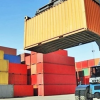
According to statistics from Turkey's official statistical office, TurkStat, the country sold $20 million more to Iraq in January than it imported.
In January 2020, Turkey's main partner country for exports was Germany with $1.415 billion, followed by Italy with $888 million, the United Kingdom with $869 million, Iraq with $816 million,s and USA with $746 million. The ratio of total export of the first five countries in total export was 32.1 percent.
The top country for Turkey's imports was Russia with $2.083 billion, followed by China with $1.886 billion, Germany with $1.349 billion, USA with $1.223 billion, and Iraq with $796 million. The ratio of first five countries in total import was 38.2 percent.
(Source: TurkStat)
(Picture credit: Tasnim, under Creative Commons licence)
Posted in Iraq Industry & Trade News Comments Off on Iraq is Turkey's Fourth Biggest Customer

Ambassador meets Russian Deputy Minister of Energy
Posted on 24 February 2020 .
The Ambassador of Iraq in Moscow, Mr. Abdul-Rahman Hamid Al-Hussaini, met with the Russian Deputy Minister of Energy, Mr. Pavel Sorokin to discuss bilateral cooperation in the fields of energy (oil, gas, and electricity).
Ambassador Al-Hussaini stressed Iraq’s keenness to develop relations with the Russian Federation in the energy sector and provide support to Russian companies working in it, noting the importance of increasing Russian investments to serve the interests of the two friendly countries.
Ambassador Al-Hussaini stated that the embassy will support all Russian companies willing to work in Iraq, and will work to provide facilities with the responsible authorities in Iraq.
The two sides discussed the possibility of employing Iraqi graduates from universities with engineering specializations in the fields of energy in Russian companies operating in Iraq.
The two sides also discussed the dangers of the Coronavirus and its impact on the energy market, as well as bilateral cooperation on stabilizing oil prices in global markets.
(Source: Ministry of Foreign Affairs)
Posted in Iraq Oil & Gas News Comments Off on Ambassador meets Russian Deputy Minister of Energy

Russia may Triple Investment in Iraqi Oil
Posted on 13 February 2020 .
By John Lee.
Investment by Russian oil and gas companies in Iraq may increase three-fold, according to a report by Tass.
It quotes Russian politician Yury Fedorov [Nikolay Vasilyevich Fyodorov] as telling the Iraqi Ambassador to Russia, Abdul-Rahman Al-Husseini, that the total investment in Iraq by companies such as Lukoil, Bashneft and Gazprom Neft has exceeded $10 billion, and that this could triple.
"Our companies such as Zarubezhneft, Tatneft and Rosneftegaz also show a high degree of interest," he added.
(Source: Tass)
Posted in Iraq Oil & Gas News Comments Off on Russia may Triple Investment in Iraqi Oil
The Only Winner of the US-Iran Showdown is Russia
Posted on 12 January 2020 .
By Maggie Tennis and Strobe Talbott, for The Slate. Any opinions expressed are those of the author, and do not necessarily reflect the views of Iraq Business News.
Hours before Iran launched a missile attack on U.S. troops in Iraq, Vladimir Putin visited Syria to huddle with his Syrian counterpart Bashar al-Assad over the mounting U.S.-Iran crisis.
Russia has repeatedly condemned the U.S. airstrikes that killed Iranian Major Gen. Qassem Soleimani.
It’s fair to assume that leaders in Moscow are seeking to turn the situation to their advantage.
Posted in Politics, Security Comments Off on The Only Winner of the US-Iran Showdown is Russia
Airlines Re-route away from Iraq, Iran
Posted on 09 January 2020 .
By John Lee.
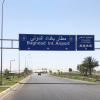
The US Federal Aviation Administration (FAA) has reportedly banned US carriers from flying in the airspace over Iraq, Iran, the Gulf of Oman and the waters between Iran and Saudi Arabia.
The ban was imposed due to "heightened military activities and increased political tensions in the Middle East, which present an inadvertent risk to US civil aviation operations due to potential for miscalculation or misidentification”.
The Russian Federal Air Transport Agency, Rosaviatsia, has reportedly issued a similar order.
(Source: Reuters)
Posted in Iraq Transportation News, Security Comments Off on Airlines Re-route away from Iraq, Iran