


Rising Yields a Plus for Stocks
Posted on 01 October 2014 .
By Mark DeWeaver.
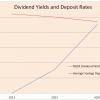
Falling prices and higher dividends have led to a jump in ISX dividend yields this year. As of September 30, Rabee Securities’ RSISX index was yielding 4.5%, up from 1.5% in 2013 and 0.0% in 2012. Yields are also improving relative to local interest rates, which have been gradually declining.
The RSISX yield is now above Rafidain’s 4% savings deposit rate and is approaching the average deposit rate for all Iraqi banks. (See chart. Yield calculations are based on period-ending prices and index weightings. Average deposit rates are from Rabee’s most recent Bank Sector report.)
The conclusion of the last three years’ bank capital increases (see this post) is the main reason for this trend. Now that most banks have finally met the central bank’s IQD 250 bn capital requirement, a number have switched from making cash calls to paying cash dividends. So far this year, 7 of the 21 listed banks have made dividend announcements, compared to only 2 in 2013. The 7 include RSISX constituents BIME, BBOB, and BIBI along with BASH, BIIB, BNOI, and BMNS.
While foreign institutional investors—who generally are looking for capital gains rather than dividends—may be unexcited by this development, the local individuals who account for most of the trading are likely to see it in a more positive light. For them, cash payments are a sign that a company has actual earnings—something it’s hard to be sure of when financial reporting is viewed as unreliable. Locals are also more likely to compare dividend yields to deposit rates, bank accounts being the only other domestic financial asset available.
Since any further price declines would push the yield above the deposit rate, this year’s dividends should help to put a floor under the market at its current level. Assuming no deposit rate changes, we might expect this level to hold as long as aggregate dividends remain constant or rise.
I think this is a likely scenario, despite the recent decline in bank earnings (see my last post). While dividends at individual banks may fall, the number of banks paying them can be expected to increase now that almost all of their capital targets have been met.
Yields could even head higher.
Posted in Investment, Mark DeWeaver on Investments and Finance Comments Off on Rising Yields a Plus for Stocks
Bank Earnings Take a Hit
Posted on 19 September 2014 .
By Mark DeWeaver.
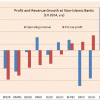
It’s been lackluster year for the ISX-listed banks. Total pre-tax profit for the 12 non-Islamic lenders that have reported so far fell 12% in the first half on a 3% decline in operating revenue, an 8% increase in operating expense, and a 21% increase in administrative expense.
Earnings dropped at 7 of the 12, with heavyweights Iraqi Middle East Bank (BIME), North Bank (BNOR), Qatar National Bank subsidiary Al Mansour Bank (BMNS), and Burgan Bank subsidiary Bank of Baghdad (BBOB) showing the steepest declines (see chart.)
Falling earnings are unsurprising given the deterioration in the security situation, the central government’s continuing failure to pass a 2014 budget, and, particularly for North Bank, the fiscal crisis in Kurdistan. Months before the fall of Mosul in early June, the banks’ trade finance businesses were already slowing as a result of disruptions to truck traffic from Jordan and Turkey.
At the same time, the budget delay has led to a slowdown in construction—another key sector for the banks—while in the Kurdish region the entire state sector appears to be running out of money.
The direct effect of lost business from branches in what are now ISIS controlled areas is probably quite small, however. For the 14 banks for which earnings breakdowns by province are available, Rabee Securities has calculated that the total contribution attributable to Mosul, Anbar, Kirkuk, Salah Ed Din, and Dyala came to just 2.2% of aggregate pre-tax profit. (Mosul Bank and Economy Bank, where the contributions were 30.9% and 29.6%, respectively, are important exceptions. So far neither has released first half results.)
This suggests that rolling back ISIS territorial gains is not necessarily a prerequisite for a recovery in bank earnings growth. Even with a continuation of the status quo, there could easily be a rebound next year if Parliament passes a budget, payments to the KRG are resumed, and progress can be made in reopening major highways and/or rerouting trade around danger zones.
The hit to bank earnings is likely to be only temporary.
Posted in Investment, Mark DeWeaver on Investments and Finance Comments Off on Bank Earnings Take a Hit
Has ISIS Killed Its Golden Goose?
Posted on 26 June 2014 .
By Mark DeWeaver.
While it has long been assumed that ISIS gets most of its money from donors in the Gulf, recently declassified documents suggest otherwise.
Researchers at the RAND Corporation found that donations actually accounted for less than 5% of the group’s funding during the period from 2005 to 2010. (See this article.)
The city of Mosul, rather than Saudi Arabia or Kuwait, turns out to have been, as one researcher put it, “the area that was keeping the group afloat”—through extortion rackets, kidnapping, and robbery.
Following the fall of the city on June 10, it’s hard to see how this can continue to be the case. Out of a population of 1.8 million, the BBC has reported that 500,000 have fled. Presumably the wealthiest residents will not be returning any time soon. It is also unclear how Mosul’s remaining state employees are going to be paid. Obviously it won’t be possible to extort money from businesses without customers or collect ransoms from people who can’t afford to leave town. You can’t get blood from a stone after all.
It’s not even clear that ISIS could have stolen as much US$ 420 million from the Mosul branch of the Central Bank of Iraq (or, in some accounts, from a combination of the CBI and private banks). While this figure has been widely reported in the media, some analysts have dismissed it as wildly exaggerated.
In any case, looting can be only a short-term source of funds. Once the city’s homes and businesses have been stripped of cash and salable assets, this bonanza will come to an end as well.
ISIS apparently had a pretty good thing going in Mosul, where it could help itself to a share of the economy of one of Iraq’s largest cities with all but complete impunity. Once this golden goose has stopped laying, I wonder if they won’t end up concluding that they should have left well enough alone.
Posted in Investment, Mark DeWeaver on Investments and Finance Comments Off on Has ISIS Killed Its Golden Goose?
Iraqi Stocks Bounce Back
Posted on 20 June 2014 .
By Mark DeWeaver.
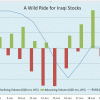
This week saw a dramatic turnaround in Iraqi stocks. Last Thursday’s selloff (see this post) accelerated into a mad dash for the exits on Sunday, with the RSISX losing 4.3% on virtually no advancing volume and 60% of the trading in limit-down stocks. On Monday the index fell another 3% to bottom at 1603, just north of long-term support at 1600, a level that hasn’t been tested since January, 2013.
Stocks moved up sharply for the rest of the week, particularly on Wednesday, when not a single stock declined and heavyweights BBOB, BNOR, and BUND closed limit up after closing limit down only three days before. By the Thursday close, the market had recovered about half of the previous two weeks’ losses. (See chart.)
This week’s action mirrored the situation on the battlefield quite closely, with the 1600 support level serving as a market analogue for the army’s line of defense at Samarra. Indeed Iraqi stocks now seem to have become almost entirely a play on the progress of the security forces.
Given that the insurgents are unlikely to push farther south, this suggests that the market is unlikely to see further steep losses. But for the RSISX to bounce all the way back, the front may have to start moving north.
Posted in Investment, Mark DeWeaver on Investments and Finance 6 Comments

The Eyes of the World are on Iraq
Posted on 19 June 2014 .
The eyes of the world are on Iraq at the moment, as the country struggles to contain the advance of the Islamic State in Iraq and the Levant (ISIL, ISIS). And while the attack on the important oil refinery at Baiji is a setback for the government, many are now of the opinion that ISIS has no realistic chance of taking Baghdad.
More eyes on Iraq also means more eyes on Iraq Business News, as we increase our coverage of events with:
- Additional updates from our security partners Constellis;
- Frequent news and analysis from Iraq expert John Cookson;
- New blogs from Mark DeWeaver, John Schnittker and Bob Tollast;
- Video feeds from news channels; and,
- One-off contributions from Ruth Lux at Strategic Analyis, and Tariq Abdell.
But with all the media attention, it's important to remember that events can swing just as dramatically in the other direction; just as the rise of ISIS took many by surprise, so too could the backlash against them.
In marketing, as in investing, there can be value in contrarianism, in going against the crowd and seeing opportunities where others just see risk. So while this may not look like an obvious time to advertise, getting your company's name in front of all those extra readers now could position it just right for the next phase in Iraq's development.
Why not contact us now to see what Iraq Business News can do for you. We'll even give an extra 5 percent discount to all new customers booking before the end of June.
(Flag image via Shutterstock)
Posted in Blog 6 Comments

The Wrong Time to Panic
Posted on 13 June 2014 .
By Mark DeWeaver.
Iraqi stocks held up surprisingly well for most of this week despite the dramatic loss of much of Northwestern Iraq to extremists. Even following the fall of Mosul on Tuesday, Rabee Securities’ RSISX index was down only 2.6% for the week by Wednesday’s close. And while the ISX index fell 3.3% on Wednesday, about half of that decline was due to a 10% drop in Asiacell on a mere US$ 659 worth of turnover.
Thursday, however, was a different story. Five of the top banks—BBOB, BCOI, BNOR, BROI, and BUND—were down by the 10% daily limit (or close to it) on heavy foreign selling. Net foreign buying, which had been positive every day since the start of the week, swung sharply negative. Having accumulated US$ 627,000 worth of Iraqi stocks from Sunday to Wednesday, foreigners ended the week by net selling US$ 415,000 in a single day.
While I don’t have any way of knowing for sure, it seems obvious to me that one of the foreign funds has finally panicked.
Should I be panicking too? I don’t think so. Orc-like hordes of invaders descending on the capital is undoubtedly a scary prospect, but ISIS has almost certainly reached the limit of its advance by this point. The Iraqi army is unlikely to melt away from the Shia areas in that way that it did in Mosul. It is already being backed up by Kurdish forces in the territories bordering Kurdistan and may quite possibly be able to call upon US airpower by as early as next week. Meanwhile, the enemy is stretched thin and vastly outnumbered.
The scenario to bet on is not the fall of Baghdad but rather a series of reversals for ISIS. Once that happens, the market should stabilize and, in the event of US airstrikes, will easily erase its losses. If one is going to sell at all, now is not the time to do it.
Posted in Investment, Mark DeWeaver on Investments and Finance 6 Comments
North Bank "in Good Position for Growth"
Posted on 31 May 2014 .
From Marcopolis. Any opinions expressed are those of the author, and do not necessarily reflect the views of Iraq Business News.
Iraq's North Bank -- the largest bank in Iraq (Private) -- believes in active involvement in the market, and statics show the bank as the largest in the Republic in giving loans and three times the size of its nearest competitor in terms of capitalization.
Iraq Business News praised North Bank in a recent article "as one of Iraq’s best capitalized, being one of only three to have reached the CBI’s IQD 250 billion share capital target. It has also been one of the top performing names in the Iraqi market. Adjusted for capital increases, the shares have risen by over 250 percent since 2009."
"What 's not to like?" Principal at Quantrarian Capital Management, Mark DeWeaver asked rhetorically.
The Sansar report added that rising credit penetration is likely to further fuel banking sector growth. "Buoyed by strong economic growth and rising credit penetration, the five largest private Iraqi banks grew aggregate net income by 207 percent between 2010-2012.
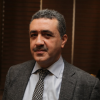
Nozad Dawood Fattah Al Jaff (pictured), Chairman of North Bank, pointed out during an interview with Marcopolis the new state of the banking market and the regional room for growth. “This market is very new and it is an open market. The size of the economy in Iraq is so big that there is room for another hundred banks to enter the market.”
He added, "Competition comes if you actually get involved in the daily market business, which is the policy that North Bank is following. North Bank is the largest bank in Iraq in terms of giving loans and we surpass the second closest bank in this area by at least three times."
Al Jaff asserted, "We welcome any other banks to do business in this area." He noted “Every bank has its own specialty and a new variety of expertise would definitely help this important sector to grow, be it in Iraq or particularly in Kurdistan.”
According to Singapore-based Sansar Capital, the Iraqi banking sector " is poised for significant earnings and asset growth over the next decade driven by a strong macro environment, increasing credit penetration and an improving security situation." Sansar reported that for 2013 the IMF was expecting Iraqi GDP to hit a nine percent growth, after posting a strong 8.4 percent GDP for 2012.
Posted in Iraq Banking & Finance News Comments Off on North Bank "in Good Position for Growth"

An Eventful Week in Iraqi Business
Posted on 10 April 2014 .
It is surely significant for global oil supplies that within the past two weeks, two of the largest Iraqi oil fields have started production: Lukoil commenced pumping at West Qurna 2 at the end of March, while Shell exported its first crude from Majnoon this week.
As a result, oil production is set to rise sharply, and as our Expert Blogger Mark DeWeaver explains, this is one of the factors that should help to boost Iraq's stock market, which has been held back by the uncertainty surounding the forthcoming parliamentary elections -- you can find the full list of candidates here.
Meanwhile this week, we have news of everything from new cement factories to new Pizza Hut franchises opening, and from new power stations to new the new Erbil stock exchange.
(Flag image via Shutterstock)
Posted in Blog Comments Off on An Eventful Week in Iraqi Business
Stocks Brace for Iraqi Election
Posted on 09 April 2014 .
By Mark DeWeaver.
This hasn’t been a particularly good year for Iraqi stocks. So far the Rabee Securities Index (RSISX) is down 3% year-to-date and off 8% from its recent high on January 28. The ISX index has been dropping all year. It’s now down 5% year-to-date.
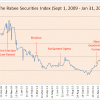
Uncertainty in the run up to Iraq’s April 30 parliamentary elections seems to be the most obvious explanation for this downturn. Market participants may well be expecting a repeat of the last elections, on March 7, 2010, after which the government formation process lasted until November 11. That year the RSISX was already down 12% from its November, 2009 pre-election peak by election day. It fell a further 8% before finally rebounding in October. (See chart.) Investors could hardly be blamed for getting cold feet this time around.
But this year is unlikely to be a rerun of 2010 for three reasons. First, Iraqi oil production is set to jump sharply. This should lead to strong growth in the money supply—always a positive for asset prices. Second, bank capital increases will be less of an overhang than they were four years ago as many banks have already met the central bank’s final capitalization target of IQD 250 bn. Finally, there isn’t really that much uncertainty about the outcome of the election. Presumably some compromise will once again be reached after a protracted period of government formation. The situation will continue to be bad but there is no reason to expect it to get worse.
This time, look for Iraq’s strong economic fundamentals, rather than its fractious politics, to be the main driver for stocks.
Posted in Investment, Mark DeWeaver on Investments and Finance Comments Off on Stocks Brace for Iraqi Election

Money Still Flowing into Iraq
Posted on 03 April 2014 .
With just four weeks left to the parliamentary elections, and all the uncertainty and risk that that brings, it is interesting to note that money is still flowing into the country and oil is still flowing out.
On the production and export side, the latest figures look very positive, and Lukoil has just started production at the giant West Qurna 2 oilfield.
As regards investment, we see Abu Dhabi's TAQA pumping $300 million into its Atrush oilfield, and Samsung signing an $840 million deal at Zubair.
Meanwhile, analysis from our Expert Blogger Mark DeWeaver questions the official exchange rate for the Iraqi Dinar, arguing that "one exchange rate should be enough".
You can read all about it at Iraq Business News.
(Flag image via Shutterstock)
Posted in Blog 3 Comments