



Iraq Signs MoU with Shell for Huge Petrochemical Plant
Posted on 11 April 2012 .
Iraq has signed a Memorandum of Understanding in Baghdad with Shell to make a technical and economic feasibility study to set up a major petrochemical plant, reports Aswat al-Iraq.
“Iraq has a big vision to cope with the big leaps in the oil sector in the coming few years through the use of the natural gas reserves to develop the Iraqi industry and to benefit from these materials to produce the basic materials for the petrochemical industries,” Mohammad Abdullah, undersecretary for companies' affairs at the Ministry of Industry, said during the signing ceremony.
“There is a high level of coordination with the oil ministry regarding providing the raw materials necessary for the petrochemical industries and nitrogen fertilizers,” he added.
“The project will contribute in offering job opportunities for a large number of people and will decrease the unemployment rate.”
(Source: Aswat al-Iraq)
Posted in Iraq Oil & Gas News Comments Off on Iraq Signs MoU with Shell for Huge Petrochemical Plant
Basra’s Unfair Share: Wealthy in Oil, Poor in Every Other Way
Posted on 23 March 2012 .
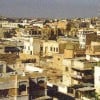
The citizens and authorities in what is potentially Iraq’s wealthiest oil boom town are upset. They say oil companies are causing environmental problems and Baghdad is getting rich while they’re missing out, according to this article from NIQASH.
Any opinions expressed are those of the author, and do not necessarily reflect the views of Iraq Business News.
The southern Iraqi region of Basra is estimated to hold about two thirds of all of the country's oil reserves. It is also home to the giant oil fields of Rumaila, Zubair and West Qurna which also produce a significant amount of natural gas.
And late last year the central government in Baghdad signed new contracts for further exploitation of these resources with multi-national energy companies, Shell and Mitsubishi. Around 12 international oil companies are currently working in Basra province, including Russia's Lukoil, Italy's Eni and China’s National Petroleum Corporation.
Yet the people of Basra feel they have seen barely any benefit from the natural resources in their home region. Despite the oil and gas in the area and the region’s potential to be Iraq’s wealthiest, “citizens’ living standards are still dire, unemployment is widespread, infrastructure is missing and reconstruction is not going anywhere,” local tribal leader, Falah al-Asdi, said.
Additionally, al-Asdi said the companies involved in Basra were not addressing any of these problems. For example, Basra was beginning to experience a housing shortage because land was being reserved for oil and gas exploration and extraction.
“These companies were supposed to take the initiative and implement both construction and service projects. But up until now all we have seen them do is pay lip service to these ideas,” al-Asdi complained.
Posted in Iraq Oil & Gas News, Politics Comments Off on Basra’s Unfair Share: Wealthy in Oil, Poor in Every Other Way
UNDP and Shell Iraq Sign Partnership Agreement
Posted on 22 March 2012 .
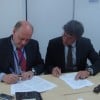
The United Nations Development Programme (UNDP) and Shell Iraq have signed an agreement to implement a range of development projects in Southern Iraq. The four year partnership aims to increase the number of local area development activities, promote local small and medium enterprises and provide vocational training to respond to the private sector’s needs.
“UNDP believes that such partnerships are fundamental for the effective implementation of our development programmes in Iraq” said Peter Batchelor, UNDP Iraq Country Director. “Partnering with the private sector, particularly with international oil companies who are the largest investors in the country, is key to capacity building, generating employment and building strong and competitive inclusive markets” he added.
The partnership, the first between UNDP Iraq and the private sector, has two main components. The first includes vocational training to equip existing and future Iraqi workers to respond to the needs of the oil and gas sector. It also includes providing support for the establishment and development of micro, small and medium enterprises. The second includes a range of programmes to improve the quality of basic services for the residents of Basra province. This will be achieved through more inclusive and participatory planning processes, where local communities and civil society organisations are able to identify their own development needs and priorities.
Unemployment in Iraq is currently 11.5% of the labor force, slightly less than in recent years. More than 20% of Iraqi youth are unemployed, while at least one in every five women participating in the labor force is unemployed. In the Basra governorate, unemployment is 11 %.
Posted in Iraq Industry & Trade News, Iraq Oil & Gas News, Iraq Public Works News Comments Off on UNDP and Shell Iraq Sign Partnership Agreement
Weekly Security Update for 21st March 2012
Posted on 21 March 2012 .
As security measures are heightened ahead of the Arab League Summit in Baghdad levels of violence fell in Iraq last week with 26 people killed and 22 injured in nationwide incidents. This was a drop by half from the previous week and a very low figure in general for the country.
However, a spate of attacks swept the country on 20 March, killing at least 50 people and injuring over 250. The bombings have been claimed by al-Qaeda in Iraq and as analysed on Iraq Business News were likely an attempt to discredit the government. Many are now questioning the security measures put in place ahead of the summit although at the time of writing the event is still set to go ahead. To cancel it at this stage would constitute a major loss of face.
Managing Traffic
The government has announced that a public holiday will begin on 25 March, lasting beyond the course of the event. Official buildings will be closed and traffic congestion in Baghdad will be reduced as a result. This will make it easier for the security forces to manage the traffic and search more vehicles moving around the city. This is turn will hopefully make it more difficult for terrorists to infiltrate, but travel conditions will still be difficult for the personnel who continue to work in the capital.

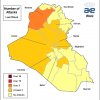
Weekly Attacks in Iraq - the last 6 months. Note the decline in violence over the past week. Next week's bar will likely see a notable rise.
Violence Last Week
In the run-up to the latest assault conditions were relatively quiet countrywide. Only six bomb attacks were recorded last week, which is less than a third of the usual weekly figure. For a change, more people were killed in shooting attacks than in bomb blasts, with 18 people shot dead and 14 injured against only seven killed and eight injured by explosive devices over the course of the week.
Geographical Distribution
Attacks were concentrated in the northern cities of Mosul and Kirkuk, with a scattering of attacks in districts surrounding the capital. Basrah also saw a demonstration on Monday as local residents and attendees from elsewhere in the southern provinces gathered to complain of a lack of development and high unemployment in the oil-rich region.
A number of blasts have also been reported in the city although they appear to have slipped under the radar of in-country news coverage. No casualties have been reported but security has been increased around central Basrah in response and personnel are reminded that conditions are neither ‘safe’ nor ‘stable’ in what should otherwise be considered a city with strong economic opportunities. Companies are still encouraged to look to the city as a good investment, but proper risk mitigation measures need to be put in place prior to any serious investment.
John Drake is a senior risk consultant with AKE, a British risk mitigation company working in Iraq since 2003. You can access AKE’s intelligence website Global Intake here, and you can obtain a free trial of AKE’s Iraq intelligence reports here.

Posted in Weekly Security Update Comments Off on Weekly Security Update for 21st March 2012
US Embassy Helps Young Iraqi Entrepreneurs Create Businesses and Jobs
Posted on 16 March 2012 .
The U.S. Embassy’s Iraqi Youth Initiative, which forms part of the Tijara Provincial Economic Growth Program run by the United States Agency for International Development (USAID), will mark its two-year anniversary in April 2012.
Since the start of the program, loans valued at $3,625,100 have enabled 1,045 young entrepreneurs to build businesses that today employ 2,220 Iraqis. The pace of job creation is increasing, with more than 1,000 new jobs created during the last quarter of 2011 thanks to microfinance loans totaling $1.63 million.
The Embassy announced last week that 27 young Iraqis from Baghdad, Karbala, Wasit, Muthanna, Najaf and Dhi Qar provinces have been awarded loans worth $87,700 through the Iraqi Youth Initiative to help them start new businesses that will create an estimated 54 new jobs.
The initiative has also trained 1,222 young Iraqis in its apprentice training program over the past two years, and 690 participants have been placed in apprenticeships with local company sponsors for three months of on-the-job skills development.
An additional 1,300 young Iraqis will complete similar training by the end of June 2012, and over $4.45 million more is budgeted to loan to young entrepreneurs. In all, over 3,800 individuals have benefited from the Tijara program thus far.
Posted in Iraq Education and Training News, Iraq Industry & Trade News Comments Off on US Embassy Helps Young Iraqi Entrepreneurs Create Businesses and Jobs
Finance Ministry Considers Adding 42,000 Jobs to Budget
Posted on 16 January 2012 .
The parliamentary Finance Committee said on Sunday that it is considering adding 42,000 jobs to the 58,000 allocated in the 2012 budget, according to AKnews.
On Jan. 5 the Iraqi government approved the 2012 budget of $100 billion USD (117 trillion IQD) with a deficit of up to $13.5 billion USD (20.5 trillion IQD), based on an oil price of $85 USD (99,400 IQD) per barrel and an export rate of up to 2.6 million bpd.
More than 90% of the Iraqi government's revenue is raised through the oil industry, so the oil price the government uses to predict its income in the coming year is of vital importance.
Both Forbes and the Wall Street Journal estimate the price of oil to remain above $100 USD (117,000 IQD) a barrel. The government expects this disparity would wipe more than $10 billion USD (11.7 trillion IQD) off the deficit.
Committee member Najiba Najib told AKnews the Finance Committee is looking for financial resources to allocate for the new jobs without affecting the operating and investment budgets.
The Iraqi government says the rate of unemployment in the country does not exceed 15%, but local and international organizations put it at more than 30%.
The United Nations Mission in Iraq announced last November that the poverty rate in Iraq is 23%.
(Source: AKnews)
Posted in Iraq Banking & Finance News, Iraq Oil & Gas News, Politics Comments Off on Finance Ministry Considers Adding 42,000 Jobs to Budget
Iraq's Small Business Development Centers Create New Jobs
Posted on 03 January 2012 .
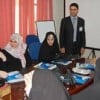
Business training offered in Iraq’s Small Business Development Centers is helping shape a new generation of Iraqi entrepreneurs whose companies someday may become significant private sector employers. So says a survey published this month of 4,329 trainees who graduated last year from SBDC programs that include the two most popular courses, ”How to Start a Business” and “How to Improve a Business.”
Sponsored by the USAID-Tijara Provincial Economic Growth Program, which also supports Iraq’s network of 17 SBDCs, the survey is based on interviews with 1,236 respondents, about 30% of the 4,329 people who took SBDC courses in 2010.
SBDC training emphasizes vocational skills, English literacy, computer and accounting proficiency, but most of the people responding to the survey signed up for courses on how to start or improve a business. The major reason for their interest was unemployment. A full 50% of those taking the two business courses lacked a job when they signed up.
Interviews with survey respondents revealed that 21.4% of those wanting to start their own business succeeded in doing so. These 234 new enterprises produced 834 new direct and indirect jobs throughout Iraq between February 2010 and May 2011. Some 135 people, or 12.3% of the survey respondents, said they had not yet started a business but fully planned to do so.
What of those trainees simply wanting to improve their existing business? Within six months of their SBDC graduation nearly 90% reported improved sales revenues directly resulting from the new techniques and methodologies they learned.
Small Business Development Centers supported by USAID provide services in addition to business training. These efforts range from supporting business conferences, trade fairs and local business exhibitions to assisting international trade delegations and preparing municipal business directories. Recently, SBDCs in nine provinces sponsored market assessment conferences that brought together local government and private business leaders to discuss investment opportunities and constraints to future business growth. SBDCs also play a vital role in communicating the concerns of small and medium enterprises to government regulators and policy makers.
For more information about USAID-Tijara’s Small Business Development Program and the opportunities it provides, click here to visit the Business Development Services section of this Web site or visit the SBDC Web site at www.sbdc.com.
(Source: USAID)
Posted in 'Your Country' - United States, Iraq Industry & Trade News Comments Off on Iraq's Small Business Development Centers Create New Jobs
Iraq in 2011: Protests, Political Problems and Farewell to the US
Posted on 03 January 2012 .
Another year in Iraq, another slew of tragic suicide bombings and jarring political crises. On the other hand, locals welcomed what economic progress they saw as well as the chance to become masters of their own political destiny, post-US-withdrawal, according to this article from NIQASH.
Any opinions expressed are those of the author, and do not necessarily reflect the views of Iraq Business News.
The two biggest events of the year in Iraq seem to have occurred at opposite ends of 2011. At the beginning of the year popular protests took place around the country. They began in Baghdad’s own Tahrir Square and spread to other Iraqi cities.
In Iraq’s version of the Arab spring style protests, Iraqis made it clear that they were angry about high unemployment, government corruption and human rights abuses; their demands also included better rationing and no more interruptions to electricity supply. Protests resulted in a number of deadly clashes between protestors and state forces. But the biggest anti-government campaigns resulted in the removal of the governors of Basra and Kut from their jobs.
Reacting to the demonstrations, Iraqi Prime Minister Nouri al-Maliki then established his 100 Day deadline which would expire June 7. During those hundred days ministers and state governors were to outline a plan for improvement or lose their jobs. At the time, politicians argued about what the deadline was really for and what would be achieved. And it seemed the results were uncertain. However looking backwards, from this end of 2011, one would say that, in effect, the 100 Day plan achieved very little.
Iraq’s 2011 was also marked by the kind of political conflict that reflected the country’s own troubled internal realities. Several important ministries were without ministers – these included the ministries of defence and internal affairs – and as the year progressed, and internal schisms deepened, the positions became even harder to fill. Simply put, nobody could agree on anything.
And this was not just about disagreements between the various political blocs. In 2011 there were also plenty of disagreements inside Iraq’s political parties. In March, a handful of MPs from the main opposition bloc, Iraqiya led by former Iraqi Prime Minister Ayed Allawi, left that party. They formed a new group they called the White Iraqiya bloc; they currently have ten MPs.
Posted in Politics Comments Off on Iraq in 2011: Protests, Political Problems and Farewell to the US
Unemployment "Hits One Million"
Posted on 14 December 2011 .
Unemployment in Iraq has reached one million, according to a report from AKnews.
Dara Hasan, Deputy Minister of Labor and Social Affairs, told the agency:
"We are working on a plan to bring the level of unemployment down. There are 13 new laws ready to be issued which will protect and stabilized employees' rights in both private and public sector."
He added: "Due to a high level of unemployment in Iraq the government will recruit more than 150,000 people. But we do not relay solely on government job creation but also the private sector."
Hassan believes small and medium sized loans for individuals and companies will somehow boost employment in the private sector however he provided AKnews with no data to substantiate this or any details on the size of the loans.
The report seems to contradict previous reports that the official unemployment rate was running at around 15%. The CIA's 2009 figures show a labour force of 8.5 million; 15% of this would be about 1.3 million.
(Source: AKnews)
Posted in Employment Comments Off on Unemployment "Hits One Million"
Hope is Not a Scarce Resource in Iraq
Posted on 14 November 2011 .
By John Filson, for the Common Ground News Service (CGNews). Any opinions expressed are those of the author, and do not necessarily reflect the views of Iraq Business News.
US President Barack Obama recently confirmed that he will bring US troops home from Iraq by the end of the year and, at the same time, reiterated that the United States will remain committed to an Iraq that is “stable, secure and self-reliant”, with institutions that are “just, representative and accountable.”
The future of Iraq, however, hinges not on the status of US troops or its deep oil wells but on whether Iraqis can muster a sense of hope in their collective future.
Iraqis waiting for hours in line for gasoline or fanning away flies until the electricity comes back on are understandably sceptical of government promises. They bear the scars of their own government’s dismal history. They also believe the United States has its own interests in mind, and does not have unlimited political will to slough through decades of messy, expensive problem solving.
Many Iraqis believe life has not improved since 2003, the start of the Iraq War that led to the toppling of Saddam Hussein’s regime. Unemployment, poor infrastructure and simmering social divides are daily tensions that have prevented families from relaxing. There is no safe traffic system, no clean legal system, no inclusive political system and no fair economic system.
Posted in Blog Comments Off on Hope is Not a Scarce Resource in Iraq