


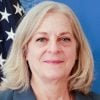
Ambassador addresses US-Iraq Business Council
Posted on 15 February 2023 .
U.S. Ambassador to Iraq Alina Romanowski's Remarks
Virtual Roundtable Discussion with the U.S.-Iraq Business Council
January 31, 2023
I am pleased to meet with members of the U.S.-Iraq Business Council. You represent some of the finest companies in the United States, and some of you know Iraq very well.
Let me begin by providing a brief overview of where things stand in the U.S.-Iraq bilateral relationship. In short, we are committed to the relationship for the long term. Iraq plays an important and strategic role in the region. We are closely engaged with the new Iraqi government and the Iraqi people in our mutual desire to see a democratic, peaceful Iraq that is stable, secure, and sovereign.
An important part of our work is to facilitate trade and investment in Iraq and thus promote Iraq's growth. While Iraq's investment climate has its challenges, there are some positive trends. An estimated 60 percent of the population is younger than 25 years of age, and the Iraqi youth are Iraq's most valuable resource for building a prosperous, inclusive Iraq. Now that a new government is in place under the leadership of Prime Minister Sudani, we are working with Iraq's leaders on a range of common goals, with economic and commercial issues taking a prominent place in our agenda.
In my meetings with Iraq's new leaders, I have emphasized that the Iraqi government must respond to the legitimate demands of the Iraqi people. I have also assured Prime Minister Sudani of our readiness to collaborate with his government on a whole range of shared interests. We have further demonstrated our willingness to work with the Sudani government with the recent visit of National Security Coordinator for the Middle East and North Africa Brett McGurk and Special Presidential Coordinator for Global Infrastructure and Energy Security Amos Hochstein, who met with Prime Minister Sudani and other Iraqi leaders in Baghdad and Erbil in January. The prime minister made it clear that our goals and his significantly overlap.
We are currently working with the Iraqi government to finalize plans for a visit to Washington in early February by a delegation led by Deputy Prime Minister and Foreign Minister Fuad Hussein. In planning the delegation's visit - and in our bilateral relations in general - we are increasing our focus on issues such as economic cooperation and climate change.
The Iraqi people look to their government to provide greater economic opportunity, and it is important for the Sudani government to make the promotion of diverse economic growth a priority. Economic and regulatory reform is needed to rebalance the economy from its reliance on oil, to deal with chronic shortages in electricity, and to address climate change. We firmly support Iraqi efforts in these areas and strongly encourage the Iraqi government to partner with U.S. companies - with their tremendous expertise, capacity, and experience - in meeting these energy and environmental challenges. We know that strengthening the investment climate is crucial to attracting U.S. and other foreign investment in these areas, and we engage with our Iraqi partners on this issue as well.
The impasse in forming a government after the previous elections impeded the national governments' budget process. The Sudani government is now preparing a 2023 budget that could open the doors for progress on infrastructure projects and other vital programs. That budget holds the potential for progress as well as peril.
Higher oil prices in 2022 boosted government revenue - another development that can potentially aid Iraq's progress. But, as might be expected, the government is under pressure to add new jobs to an already bloated public sector. If it does not exercise caution, inflation might accelerate, putting the economy on shaky ground. The government should act prudently in authorizing new projects, while vigorously addressing corruption and seeking to rein in salary expenditures.
We have seen positive signs from the Sudani government on the economic front. For years, the United States has worked closely with the Central Bank of Iraq (CBI) to prevent criminal and corrupt actors from accessing the international banking system and to bring Iraqi banks into compliance with international standards. In coordination with the CBI, we implemented regulatory changes that improve transparency into financial transactions. These changes were planned for over two years and not related to the timeline for government formation. An immediate consequence of these and other anti-corruption measures is that the United States and CBI have successfully limited the ability of bad actors to misuse the Iraqi banking system to launder funds. And despite strong criticism of the government and conspiracy theories claiming sinister U.S. motives for the dollar exchange rate issue, the new government has strongly supported CBI's new measures and is trying to rein in actors who are hoarding dollars or taking other measures to artificially increase the spread on the informal market.
Under the new government, we have seen the strongest levels of U.S. wheat purchases we have seen in some time. They also approved an energy contract that was negotiated under the previous government with a U.S. firm.
Further, just hours after local sources began circulating U.S. press stories about the unlicensed Starbucks cafes in Baghdad, the prime minister's spokesperson issued a strong statement condemning their operations, and the unlicensed cafes were closed within hours.
Some remain skeptical of Iraq's private sector. I, however, see hopeful signs. Iraq's entrepreneurship and innovation ecosystem is growing rapidly. USAID now offers a diverse series of business development programs to support that ecosystem. Since 2020, more than 10,000 entrepreneurs have received business support services from USAID programs, including support for setting up, formalizing, and sustainably scaling up their businesses.
We saw impressive growth in Iraq's tech and e-commerce sectors during the surge of COVID. In response, we are helping Iraqi businesses present themselves to the U.S. and other markets as viable investment opportunities. Since 2021, USAID has mobilized about $41 million in investments to local firms with contributions from U.S.-based venture capital.
We are doing much more to support the development of Iraq's private sector. USAID has allocated approximately $2 million to partner with business development hubs - including Five One Labs, The Station, Science Camp, and Mosul Space - to build the resilience capacities of the private sector, focusing on increased opportunities for women and youth and providing business management skills and access to finance opportunities. This work is ongoing throughout Iraq, including in the Iraqi Kurdistan Region.
Despite the economic and political challenges facing Iraq, the newly formed government, the expected passage of a new budget, increased oil revenue, and progress in Iraq's private sector are positive developments. I'm confident that opportunities exist for U.S. businesses to export products and services to Iraq. Specifically, the embassy has identified franchising, agriculture, education, renewable energy, healthcare, defense, and energy as sectors with potential for U.S. trade and investment in Iraq.
And with support from our consulate in Erbil, the American Chamber of Commerce-Kurdistan is growing and developing into an effective advocacy organization for reform, inclusive growth, and diversification of the economy.
In addition to the traditional services offered by the U.S. Commercial Service, our embassy has launched a new initiative to promote U.S.-Iraq business endeavors. On November 15, we hosted the first in a series of Forums to Improve Iraq's Business Climate, which brought together representatives of U.S. businesses and Iraqi businesses. At that virtual forum, we focused our discussion on Iraq's customs system and the impediments it presents to trade. A representative of the United Nations Conference on Trade and Development, UNCTAD, spoke to the forum participants about his organization's project to automate Iraq's customs process. Supporting this project, known by its acronym ASYCUDA, should be a goal of the business community as well as the U.S. Embassy and likeminded embassies in Baghdad. The project has the potential to revolutionize the customs process, decrease opportunities for corruption, and facilitate trade while enhancing Iraqi government revenues. ASYCUDA will surely face resistance as it is rolled out. We plan to use this series of forums to develop support for improvements like automation of the customs process.
We are keen to address the challenges of the private sector's growth in Iraq, particularly unlocking financing opportunities for SMEs. Last June, USAID convened financial experts, donors, government, and private business leaders to discuss securing capital for local businesses, establishing the first access-to-finance forum in Iraq. This March, USAID will hold a follow-on event in Erbil to present solutions and innovative approaches to increase lending to the private sector and advance financial inclusion.
I do not want to present an overly rosy picture of the business environment in Iraq. U.S. companies doing business here face significant challenges, as some of you know all too well. We are engaged on several fronts to advocate for U.S. businesses. But I do believe there are positive developments. And I can assure you that my team at the embassy and I stand ready to support you.
(Source: US Embassy)
Posted in Investment, Iraq Industry & Trade News, Politics, Security Comments Off on Ambassador addresses US-Iraq Business Council
IBBC Trade Delegation meets New Iraqi Govt
Posted on 28 January 2023 .
The Iraq Britain Business Council (IBBC) President Baroness Nicholson of Winterbourne supported by Managing Director Christophe Michels, and Board Member Haider Al Shamaa led a delegation of 20 IBBC members to Baghdad to meet the new Government of Federal Republic of Iraq
Welcomed by President of Iraq H.E. Abdullatif Rasheed, and Prime Minister H.E. Mohammed Shiaa Al Sudani, the delegates met with H.E. Taif Sami, Minister of Finance, H.E. Mr Zyad Ali Fadhil, Minister of Electricity, H.E. Abdul Ameer Al Shimari Minister of Interior, and the Governor of the Central Bank.
Further meetings were held with Mr. Hameed Naeem Al Ghizzy, Secretary General of the Council of Ministers and the Prime Minister's Office, Dr Abdulkareem, Chairman of PMAC and Mr. Hazim Al Hafadhi, Deputy Minister of Transport.
In all meetings IBBC and its members were praised for its long and strong relationship with Iraq and were further assured of the Government's support for all of its continuing work. The IBBC Spring Conference 2023, to be held on the 16th June was welcomed, would be attended as speakers, special guests by ministers, officials, and leading financial experts.
New member Company, UK Education in Iraq brought a parallel delegation of Academics led by Professor Victoria Lindsay accompanied by IBBC, Health and Education Advisor Professor Mohammed Al Uzri. On Tuesday 24th January Baroness Nicholson and Christophe Michels joined the academic delegation for an important meeting held with H.E. Naeem Al Aboudi, Minister of Higher Education and Scientific Research. At this meeting, an agreement was signed by the Minister enabling UK Education In Iraq to establish a British University in country.
Ambassador Mark Bryson-Richardson hosted a reception for the delegation at the British Embassy on Sunday 22nd, with special guests, H.E. Rakan Saeed, Governor of Kirkuk, H.E. Shakhwan Abdullah, Deputy Speaker of the Parliament and Dr. Laith Al Shaher, Director General of the Legal Department in the Ministry of Oil.
On Monday 22nd, outgoing Chairman of TBI Dr Salem Chalabi hosted a dinner for the delegation at the Babylon Hotel when Dr Salem introduced his successor, Mr Bilal Al Hamdani. The dinner was also attended by Dr Fareed Yasseen immediate past Ambassador to the USA and present Advisor to the Iraqi Prime Minister.
Baroness Nicholson of Winterbourne gave her warmest thanks to the President of Iraq, Prime Minister and all government for their support and looks for another opportunity for IBBC to visit Iraq.
Christophe Michels stated:
"IBBC has just undertaken one of our most successful trade missions thanks to the open and helpful support of the Government of Iraq and especially thanks to the hospitality of the Prime Minister and President.
"Our large contingent of members all benefitted from the meetings and insights that were shared in relation to investment and educational opportunities. I am delighted to highlight of the continuing growth of the business being done between and among IBBC members and Government entities.
"We look forward to a positive relationship with the Government and to welcome them to the Mansion House conference on June 16th ."
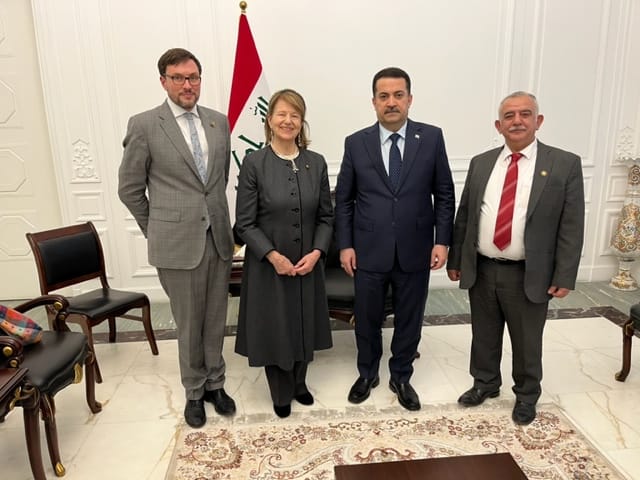
(Source: IBBC)
Posted in Investment, Iraq Industry & Trade News, Politics Comments Off on IBBC Trade Delegation meets New Iraqi Govt
$4.1m New Projects in Ankawa District
Posted on 22 January 2023 .
By John Lee.
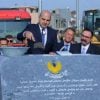
Two new projects were officially launched in sector 128 of Ankawa district on Monday, January 16th.
The projects, which include street paving, sidewalk construction, water supply, and sewerage will be financed by the KRG's Ministry of Municipalities and Tourism.
Additionally, an expansion of the sector's electricity network will be financed by the Ministry of Electricity of the Kurdistan region.
The cost of the projects is estimated at 6 billion Iraqi dinars ($4.1 million).
The ceremony was attended by Sasan Auni, Minister of Municipalities and Tourism, Ano Jawhar, Minister of Transport and Communications, and Dr. Umid Sabah, President of the Diwan of Council of Ministers.
(Source: KRG)
Posted in Construction & Engineering In Iraq, Iraq Public Works News Comments Off on $4.1m New Projects in Ankawa District
Siemens to provide more Electricity Generation to Iraq
Posted on 17 January 2023 .
By John Lee.
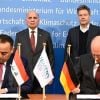
Federal Government welcomes Germany's contribution to the sustainable development of Iraq's energy infrastructure
The CEO of Siemens Energy AG, Dr. Christian Bruch, has signed a cooperation agreement with the Iraqi Minister of Electricity, Zayad Ali Alrzij [Ziyad Ali Fadel, Ziad Ali Fadhil Sudani], on the further electrification of Iraq.
The agreement was signed in Germany in the presence of Vice Chancellor Habeck and the Iraqi Deputy Prime Minister and Foreign Minister, H. Fuad Mohammed Hussein, and it will see Siemens Energy provide another 11 GW for local power generation.
Federal Minister Habeck said:
"Iraq will invest heavily in its energy infrastructure in the coming years. Siemens Energy will play a key role in this development. I am pleased that renewable energies are used as far as possible. This is an immense contribution to a climate-friendly, sustainable and reliable energy supply in Iraq."
The list of projects includes projects for the development and improvement of power generation from conventional and renewable energies.
All turbines that are newly installed in power plants are fully H2-capable and can also be operated with hydrogen or its derivatives.
In addition, an energy system study on the increased use of renewable energies is to be drawn up, the electricity transmission network is to be improved and prepared for the increased use of renewable energies, and existing systems are to be modernized.
The Federal Government has classified this project as a strategic foreign project in the interest of the Federal Republic of Germany.
(Sources: German Ministry for Economic Affairs and Climate Action, Media Office of the Iraqi Prime Minister)
Posted in Iraq Industry & Trade News Comments Off on Siemens to provide more Electricity Generation to Iraq
New Power Stations installed in Iraqi Kurdistan last year
Posted on 16 January 2023 .
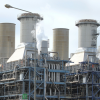
In order to solve the problem of electricity shortage and increase the amount of electricity production, the Ministry of Electricity of the Kurdistan Regional Government (KRG) last year installed several new electricity generation units.
According to the director of electricity generation of the Ministry of Electricity, two units with a capacity of 500 MW were installed in Bazian last year and 95% of the work is now completed.
"Another work is the installation of a combine cycle in Bazian power plant with a capacity of 250 megawatts, which will use the heat emitted from the exhaust of other turbines during operation,".
He added that similar to Bazian station in Khurmala gas station design and survey work has begun to install (combined cycle) with a capacity of 500 MW, which is using the heat emitted from the exhaust of other turbines during operation.
In another step to increase electricity production, the Ministry of Electricity began preparations, studies and collection of data and information for the establishment of three solar power plants with a capacity of 25 MW each, two of which are located in Erbil province and one station is located in Duhok province.
Director General of Electricity Generation said: ''Last year, the installation of the largest solar power plant in Iraq and the Kurdistan Region was completed in Duhok University with a capacity of 2 MW on December 21, 2022, which consists of 3,782 solar panels on an area of 20,400 square meters."
In order to increase the level of electricity production from clean energy sources, the contract was signed to install four kinetic power plants in all four autonomous administrations of the Kurdistan Region, including 100 MW in Soran, 100 MW in Zakho, 50 MW in Raperin and 50 MW in Garmian,.
According to the General Director of Electricity Generation, the necessary land in all four places has been handed over to the investment company, is currently in the design and preparation stage to start the implementation of the projects.
At the same time, four other power plants that were stopped and did not work which have been repaired and are work again with very low fuel consumption, so that the cost of production has decreased significantly, the plants are 51 MW Tasluja, 29 MW Erbil and 29 MW Sulaimani and the 29MW Duhok power plant, which is 90% complete.
Peshraw Nuri, pointed out that 95% of the work of the Deraluk hydropower project is completed and is planning to sign a contract with a private sector company to operate and maintain for seven years.
Another task of the Ministry of Electricity was to use waste gas from oil wells and for this purpose a contract was signed with an investment company to build a power plant with a capacity of 100 MW in the first phase, and then increase the production capacity to 300 MW base on the gas which will be available.
According to the Director General of Electricity Generation, the ministry has continuously carried out maintenance for both Dukan and Darbandikhan hydropower plants and currently in Dukan hydropower plant, four out of five units are ready for production, but due to low water levels and low rainfall The production capacity has been limited to suit the amount of water flowing from the Dukan Dam.
Also, the works of Darbandikhan station mantenace have been continued by the engineers and technicians of this station so that two out of three units are ready for production, but due to the low water level, the production capacity is limited.
(Source: KRG)
Posted in Iraq Industry & Trade News Comments Off on New Power Stations installed in Iraqi Kurdistan last year

KRG Digitises several Major Services
Posted on 09 January 2023 .
From the Kurdistan Regional Goverment:
According to the strategic program set by the Kurdistan Regional Government (KRG), by the end of 2025, all services in Kurdistan will be managed digitally and electronically and no paper will be used.
The Prime Minister's vision for the issue of digitalization of government institutions and services has been made into a long-term strategic program and now being implemented in several institutions as they have been digitized:
Smart electricity meters
This electronic system plays a significant role in regulating electricity distribution, informing citizens about how to use electricity and preventing excesses on the public electricity grid.
Electricity bill
The electronicization of electricity billing systems has begun alongside smart meters, allowing citizens to monitor electricity consumption and electricity expenditures through their mobile phones.
Electronicization of judicial records
Electronicization of the judicial system is one of the largest electronic system of the Kurdistan Regional Government (KRG) which about 65 judicial offices are connected to the main data center of the Kurdistan Regional Government.
E-System - Education
Through this system, all the work of the Ministry of Education of the Kurdistan Regional Government has been done electronically, which will have a better impact on the organization of staff, which is a major problem in the ministry.
Entry and Exit system
Regulation of entry and exit in the Kurdistan Region is one of the new steps of the ninth cabinet of the Kurdistan Regional Government and the most important benefits of this system is the creation of e-visa portal and collecting data on entry and exit in the borders.
Ministry of Higher Education
The system of processing citizen's transactions in the Ministry of Higher Education is Electronized, you can be aware of the transactions submitted to the Ministry of Higher Education through a mobile application.
Service Portal
This portal provides complete information about the offices and directorates of all ministries, offices and departments with the requirements that citizens need when making transactions. Before making any steps, citizens can check the service portal to see what kind of documents are required for their transactions.
Driving license
This digital system is for renewing driver's licenses in a modern and time-saving manner. At the same time, it will accelerate the annual renewal and vehicle registration processes throughout Kurdistan.
Electronic records and receipt of vaccines and dashboards.
In this context, the system of receiving the results of the coronavirus test, has been made electronic so that citizens can receive the results of the coronavirus test from their mobile phones. A coronavirus dashboard has also been established that citizens and journalists can use.
Electronic pension transactions
The pensioners' transaction system has been electronized and through this system all departments are connected together and the level of errors and routines is reduced and is a reason for the electronic payment of pensioners.
Electronicization of public contracts
The KRG's electronic public contracts system will enter a new stage of transparency and reduce routine in the tendering process in Kurdistan.
Electronic salaries
Digital Payroll Management System is another system for managing the payroll schedule of employees in the Kurdistan Region.
Electronic financial management
The Kurdistan Regional Government (KRG) Financial Management System is a system for managing expenditures of all institutions of the Kurdistan Regional Government.
Information update system
This system is used between all institutions of the Kurdistan Regional Government and the Department of Media and Information of KRG to send and publish news.
Electronic management of martyrs, Anfal victims and political prisoners
This system is used to manage the payment of financial entitlements.
Domain .KRD
The .KRD domain is the only Kurdish domain that represents Kurds in the world of technology and has great benefits in consolidating Kurdish language and culture in the electronic world.
Official Government Website
Official website of the Kurdistan Regional Government: Through this website, the websites of all ministries are linked together and citizens can access information and data of the Kurdistan Regional Government through this portal.
Central Government Data Center
The Central Government Data Center is the repository of information of the Kurdistan Regional Government and all the data that is digitized is stored in this data center.
(Source: KRG)
Posted in Iraq Industry & Trade News, Iraqi Communications News, Politics Comments Off on KRG Digitises several Major Services
Georgia to open Consulate in Erbil
Posted on 02 January 2023 .
From Rudaw. Any opinions expressed are those of the author(s), and do not necessarily reflect the views of Iraq Business News.
Iraqi economic capital engulfed in trash, suffers from dilapidated electricity
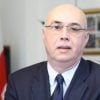
Georgian government plans to open an honorary consulate in Erbil in the near future to strengthen cultural and economic ties between Tbilisi and Erbil, Georgia's envoy in Iraq told Rudaw last week.
Zaza Kandelaki (pictured), Ambassador of Georgia to Iraq, Jordan and Lebanon, told Rudaw last Wednesday that it may take some time for the opening of an honorary consulate in Erbil because of procedures.
Posted in Iraq Industry & Trade News, Politics Comments Off on Georgia to open Consulate in Erbil
KRG PM receives JICA delegation
Posted on 17 December 2022 .
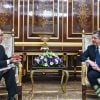
KRG Prime Minister Masrour Barzani has received a delegation from the Japan International Cooperation Agency (JICA), headed by the agency's Vice President Ando Naoki.
Prime Minister Barzani thanked the Japanese government and JICA for assisting the Kurdistan Regional Government (KRG) in the process of reforming and establishing a solid economic infrastructure in the Kurdistan Region through professional project implementation.
The JICA delegation highlighted its work and activities in the Kurdistan Region, implemented in the fields of electricity, water, sewage, agriculture, and the re-modification of Erbil's master plan in coordination with the KRG.
The agency also expressed the willingness of Japanese companies to initiate investments in the Kurdistan Region.
(Source: KRG)
Posted in Iraq Industry & Trade News, Politics Comments Off on KRG PM receives JICA delegation
IMF says 8 Percent Real GDP Growth in Iraq
Posted on 08 December 2022 .
Iraq: Staff Concluding Statement of the 2022 Article IV Consultation Mission:
A Concluding Statement describes the preliminary findings of IMF staff at the end of an official staff visit (or 'mission'), in most cases to a member country. Missions are undertaken as part of regular (usually annual) consultations under Article IV of the IMF's Articles of Agreement, in the context of a request to use IMF resources (borrow from the IMF), as part of discussions of staff monitored programs, or as part of other staff monitoring of economic developments.
The authorities have consented to the publication of this statement. The views expressed in this statement are those of the IMF staff and do not necessarily represent the views of the IMF's Executive Board. Based on the preliminary findings of this mission, staff will prepare a report that, subject to management approval, will be presented to the IMF Executive Board for discussion and decision.
Washington, DC :
High oil prices have provided Iraq's economy with much-needed respite after a near-crisis in 2020. Nevertheless, underlying imbalances and oil dependence continued to increase. Using the opportunity provided by high oil revenues to reverse the trend of rising vulnerabilities and modernize the economy will be of paramount importance in the face of multiple looming challenges, which could severely test the limits of the current economic model. A meaningful economic transformation must start with a prudent, patient, and disciplined fiscal policy aimed at building financial buffers, reducing oil dependence, and reorienting expenditures toward priority investment and social needs. A careful calibration of the 2023 budget will be crucial to preserve gains from recent policy efforts. Alongside, decisive structural reforms will be critical to improve socio-economic conditions and promote private sector development as the key driver of growth and employment.
Economic Outlook and Risks
1. The economy is gradually recovering amid rising underlying vulnerabilities. Real GDP is projected to grow by 8 percent in 2022, driven by a 12-percent expansion in oil output. Meanwhile, real non-oil GDP is expected to expand at a more moderate pace of 3 percent after rebounding by 21 percent in 2021. Inflation has been relatively contained, averaging 5 percent during the first 10 months of 2022, as the pass-through from high global commodity prices has been muted by food and fuel subsidies. Helped by high oil prices, this year's fiscal and external current account balances are expected to reach surpluses of 6 and 11 percent of GDP, respectively, while foreign exchange reserves of the central bank could exceed $90 billion by end-year. At the same time, these surpluses veil widening of the non-oil fiscal balance, and Iraq's dependence on oil continued to increase with the oil price needed to balance the government budget ("budget breakeven oil price") reaching US$66 per barrel in 2022, up from US$52 per barrel in 2019.
2. Near-term outlook is positive, but vulnerabilities could manifest themselves in the medium term. Oil output is projected to gradually rise from 4.4 to 5 million barrels per day by 2027. Non-oil real GDP growth is expected to accelerate to 4 percent in 2023-helped by the stimulus from the Emergency Law for Food Security and Development-before moderating to 3.5 percent in the medium term. Under the baseline projection of declining global oil prices and continued expansionary fiscal stance, both fiscal and external balances are projected to decline and turn into deficits by 2025. Alongside, foreign exchange reserves could peak at around US$100 billion in 2024 and rapidly decline over the medium term.
3. This outlook is subject to significant downside risks, amid multiple looming challenges. A faster decline in global oil prices could reignite financing pressures sooner. Government finances are particularly vulnerable to faster accumulation of losses in the electricity sector and the depletion of the State Pension Fund, as well as the rising costs of climate change.
Policy Priorities
4. A sound fiscal framework will be critical to tackle Iraq's economic challenges. Policymakers need to carefully balance the goals of saving the oil windfall to strengthen resilience to future oil price volatility, and increasing critical social spending and public investments, while gradually reducing dependence on oil. IMF staff recommends a commitment to a fiscal rule targeting a gradual reduction of the non-oil primary fiscal deficit to build a fiscal stabilization buffer which would improve the government's ability to smooth expenditures in response to future oil price declines. At the same time, the fiscal strategy should seek to allocate sufficient resources for public investments and the social safety net to support Iraq's critical development needs and the vulnerable population.
5. Careful calibration of the 2023 budget parameters will be pivotal. It would be important to provide adequate indexation of targeted cash transfers and low-income pensions to protect the most vulnerable from the rising cost of living. At the same time, a large procyclical boost to expenditures is not advisable as it could fuel inflation pressures, further increase the government budget's dependence on oil revenues and create conditions for a costly boom-bust cycle. IMF staff recommends saving a significant portion of the oil windfall by targeting a non-oil primary fiscal deficit of ID 114 trillion (58 percent of non-oil GDP) in 2023, most importantly by containing growth of the government payroll and mobilizing non-oil revenues.
6. Elevated inflation risks warrant vigilance on the part of monetary policy. Although inflation has remained stable in recent months, there are significant risks of its acceleration in the near term with a looser fiscal stance and second-round effects of high global commodity prices. Should these risks begin to materialize, it would be important for the central bank to be prepared to tighten domestic financial conditions as needed to avoid fueling domestic drivers of inflation.
7. Implementation of the proposed fiscal framework needs to be accompanied by sustained policy efforts in several key areas:
- Upgrading public financial management notably by urgently establishing a Treasury Single Account and implementing an Integrated Financial Information Management System (IFMIS), in addition to strengthening control over commitments and contingent liabilities.
- Diversifying government revenues , including by making payroll taxes more progressive, eliminating regressive exemptions, strengthening tax and customs administration, and introducing taxes on the sales of selected non-essential goods and services.
- Reducing the government wage bill , which consumes around 40 percent of the annual budget, crowding out other priorities, and cannot be sustained in the long run, which puts a premium on promoting private sector job creation. A multi-pronged approach should focus on strengthening control over payroll; an attrition-based employment reduction strategy; and close alignment of government pay and allowances with the private sector. In parallel, IMF staff encourages developing a civil service reform and a national employment strategy to improve labor force participation, remove obstacles for private employment, and reduce informality.
- Enhancing the social safety net. Limiting eligibility for the untargeted food ration card program would allow to significantly augment the budget for targeted cash transfers. Automatic inflation indexation of cash transfers would ensure adequate protection. Furthermore, a pension reform is increasingly urgent, most importantly to restore the financial sustainability of the State Pension Fund. Going forward, close alignment or integration of pension systems for private and public sector workers is needed to facilitate labor mobility and strengthen incentives for private sector employment.
- Fixing the electricity sector , which incurs an annual loss in excess of 3 percent of GDP while being unable to meet domestic demand. A comprehensive reform strategy should focus on enhanced monitoring and transparency of the sector's costs, a review of the tariff structure, investments in gas capture and renewable energy sources, and sustained efforts to improve collection and reduce technical losses.
- Strengthening Financial Stability. Accelerating implementation of core banking systems and initiating the restructuring of large state-owned banks remains a critical priority. The IMF team welcomes the completion of Iraq's first AML/CFT national risk assessment and agrees with the authorities' plans to swiftly proceed with implementing its key recommendations. IMF staff also supports the central bank's efforts to strengthen monitoring of transactions through the foreign exchange auction and its plans to explore alternative trade finance mechanisms to facilitate trade. In parallel, the mission recommends developing liquidity management tools to better support exchange rate stability.
- Improving Governance. IMF staff welcomes the authorities' efforts to implement the 2021-24 National Integrity and Anti-Corruption strategy and emphasized the importance of continuing to strengthen governance, including through timely completion and publication of the audit reports of government accounts, improving the legal framework and streamlining the institutional structure for combatting corruption, and advancing digitalization of government institutions.
(Source: IMF)
Posted in Iraq Industry & Trade News, Iraq Oil & Gas News, Politics Comments Off on IMF says 8 Percent Real GDP Growth in Iraq
Contract Signed for New Solar Power Station in Erbil
Posted on 08 December 2022 .
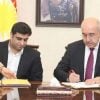
The KRG's Minister of Electricity, Kamal Mohammed, signed a contract with with "Pluto Otto Cycle company" on Monday to build a solar power station in Erbil province.
The minister signed the deal with the company to set up a 25-megawatt solar power station. The project will be implemented within 90 days and will produce 25 megawatt of electricity using solar energy.
The Ministry of Electricity in the Kurdistan Regional Government's (KRG) Ninth Cabinet aims to develop the electricity sector, through numerous different projects, especially using solar energy to provide electricity.
(Source: KRG)
Posted in Iraq Industry & Trade News Comments Off on Contract Signed for New Solar Power Station in Erbil