



Iraq "Planning 8 Nuclear Power Stations"
Posted on 10 June 2021 .
By John Lee.
Iraq is reportedly planning to build eight nuclear power stations to provide much-needed electricity.
According to Bloomberg, the $40-billion scheme would provide 11 GW of power to the Iraqi grid.
Click here to read the full article.
(Source: Bloomberg)
Posted in Construction & Engineering In Iraq, Iraq Industry & Trade News Comments Off on Iraq "Planning 8 Nuclear Power Stations"
KRG to rely 100% on Natural Gas for Electricity
Posted on 08 June 2021 .
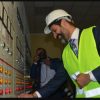
Ten electricity plants were provided with transformers at a ceremony attended by Deputy Prime Minister Qubad Talabani in Koya town on Thursday.
The Deputy Prime Minister commended the Koya transformer project and addressed developments in the electricity sector, including the Kurdistan Regional Government's decision to go all in on natural gas.
"The power generation costs are still high," said Deputy Prime Minister Talabani, "and to solve this, we are planning to increase the dependency on natural gas to 100 percent as a source of fossil fuel in power generation."
Also in attendance at the Koya ceremony was Minister of Electricity Kamal Mohammed Salih, who provided more information on the 2.728 billion dinar (or roughly 1.8 million USD) transformer project.
Minister Salih hailed the cabinet's achievements in power generation and distribution, and stated that more than 450 projects have been initiated with a total worth of 60 billion dinars.
KRG is planning to open three more power plants in the Kurdistan Region by the end of this year: a steam power plant in Khabat District, a gas power plant in the Garmian region, and a 37-megawatt plant in Deraluk.
The Deputy Prime Minister Qubad Talabani also talked about his latest visit to Baghdad with the KRG delegation to discuss the region's share of the budget.
He noted that one of the topics of discussion was cooperative power generation between the federal and regional governments, a step that would drastically increase Iraq's supply of electricity.
(Source: KRG)
Posted in Iraq Industry & Trade News, Iraq Oil & Gas News Comments Off on KRG to rely 100% on Natural Gas for Electricity
Iraqi Cabinet Awards Energy Contracts
Posted on 03 June 2021 .
By John Lee.
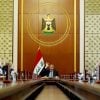
At its regular meeting on Tuesday, the Iraqi Cabinet agreed to send an invitation, "in a single bid manner", to the French company Total to invest in a project to generate 1,000 megawatts of solar electric power.
The project was originally agreed in March as part of a larger engagement with the French energy company, which last week announced that it would rebrand itself as TotalEnergies.
The cabinet also approved a request from the Ministry of Electricity to award a contract "in a single bidding manner" to the Chinese company PowerChina (Power Construction Corporation of China).
(Source: Govt of Iraq)
Posted in Iraq Industry & Trade News, Iraq Oil & Gas News Comments Off on Iraqi Cabinet Awards Energy Contracts
Iran, Iraq Agreement on Customs, Joint Investment
Posted on 31 May 2021 .
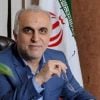
Ministerial delegations from Iran and Iraq agreed on plans to promote cooperation on customs affairs, pave the way for joint investment, and expand the capacity for transportation between the two neighboring countries.
After two rounds of meetings on Saturday, delegations led by Iranian Economy Minister Farhad Dejpasand and Iraq's Finance Minister Ali Abdul-Amir Allawi reached agreements on closer trade ties between Tehran and Baghdad.
Speaking at a press conference after the meetings, Dejpasand said the new agreements entail plans to address the problems relating to customs, exchange experiences in customs affairs, and facilitate the activities of the two countries' business people.
He noted that Iran and Iraq have also agreed on organized plans for joint investment in order to increase foreign investment in the two countries by setting up new industrial complexes.
Another issue agreed upon in the meetings was the expansion of the capacity for the transportation of rail passengers and cargo between the two neighbors.
Iran and Iraq held the 4th session of Economic Cooperation Joint Commission in January, weighing plans for stronger cooperation in various sectors with an eye to the geographical, cultural and religious commonalities between the two Muslim neighbors.
Participants in the meeting are also planned to discuss the ways to boost economic ties, promote exports, and evaluate the markets for optimum productivity in various sectors, such as the transportation and energy industries, tourism sector, construction projects, and water and electricity industries.
(Source: Tasnim, under Creative Commons licence)
Posted in Iraq Industry & Trade News Comments Off on Iran, Iraq Agreement on Customs, Joint Investment

Rumaila Oilfield "delivers Strong 2020 Performance"
Posted on 20 May 2021 .
The Rumaila Operating Organisation (ROO) has announced its 2020 performance results.
The field's oil production rate averaged 1.392 million barrels per day (bpd), despite the impact of COVID-19, a budget reduction and compliance with instructions from BOC to reduce oil production, which reflected OPEC+'s request for Iraq to curtail oil exports.
The year's strong performance has been attributed to the dedication of the field's workforce (which is 96% Iraqi) to adapt to and overcome major new challenges. These included a revised and reprioritized production strategy, which benefitted from the strong foundations laid in previous years to modernize facilities, optimize wells and deploy advanced technologies.
Basra Oil Company (BOC) Director General, Mr Khalid Hamza Abbas, said:
"Rumaila's achievements in 2020 deserve great recognition, not least within the context of the global pandemic. My thanks go to every member of staff who did his or her utmost to ensure the field continued to serve the nation at this most difficult time."
Rumaila's 2020 achievements included record-breaking levels of water injection, averaging 1.35 million bpd of water - volumes never previously seen at the field. New digital technologies were deployed to maximize efficiencies; 21 new wells were drilled, 115 wells were optimized or renewed, and almost 7,000 well services jobs were conducted to further maintain production, while preventative maintenance and repairs ensured the continued performance of ageing facilities.
In addition, new projects were initiated to reduce Rumaila's operational carbon emissions, particularly utilizing electricity from the gas-fired Rumaila Power Plant, rather than diesel generators, to power some key facilities in the field.
Rumaila also continued to support local communities living near or within the field during the pandemic, with ongoing initiatives to help the Al-Khora Primary Health Care Clinic and the North Rumaila Mobile Health Clinic; ROO also oversaw and delivered the procurement, shipping, installation and training on a computed tomography (CT) scanner for the Basra Al-Sadir Teaching Hospital. Major renovation works also took place at Al Sikak, Al Rumaila and Al Nukhaila schools in order to enhance the quality of local education.
With the onset of the pandemic, global oil demand contracted, resulting in the already low international oil price falling further and causing governments and companies around the world to review their plans. Iraq was no exception and resulted in the ROO's annual budget reduced by around 30%, with adverse impacts on some development projects and well and production-raising activities.
In addition, government-requested curtailments averaged 55,000 bpd over the course of the year, partly in response to Iraq's compliance with OPEC+'s request to reduce the country's overall oil exports.
2020 was therefore a year defined by COVID-19. It has always been ROO's commitment to place the health and safety of staff members above all other considerations. COVID-19 therefore required multiple preventative and responsive activities to limit the transmission of the virus. Field personal protective equipment (PPE) was sourced and distributed, including 300,000 sets of gloves, 20,000 masks, and 1,300 units of hand sanitizing products. Two new clinics were established; additional respiratory and life support equipment were secured; 4,370 diagnostic tests were carried out; contact tracing was instigated after each suspected and confirmed COVID-19 case, and wellbeing initiatives were introduced.
Operationally, the field had to adapt to major disruptions to the way everyday work was delivered. Field staff had to contend with working fewer, yet longer shifts patterns; movement was restricted at Rumaila headquarters which is staffed by a limited number of Iraqi and international colleagues who all adhered to strict quarantining protocols on arrival; hundreds of Iraqi and expatriate staff adapted to working from home. A new IT terminal server enabled staff working remotely in Basra and around the world to securely access emails, files and industry applications, while the number of videoconferencing users increased 960%.
ROO Deputy General Manager, Hussein Abdul Khadim Hussein, said:
"With the virus making its way to Iraq, we knew we had to do everything we could to keep our people as safe as possible while at work. We also had to move quickly, to ensure that the day-to-day operation of the entire field could be maintained, so that Rumaila could continue to deliver for Iraq. The human cost of COVID-19 has been felt by everyone at Rumaila; to everyone affected, we extend our deepest sympathies."
ROO General Manager, Orkhan Guliyev, said:
"The tremendous co-operation and teamwork between BOC, bp and PetroChina, which in previous years had been key to Rumaila surpassing targets, expressed itself in 2020 through a shared sense of resilience. The determination, dedication, patience and endurance of our people enabled us to continue to make progress during what was an extraordinarily challenging year for everyone."
Rumaila Special Deputy General Manager, Fan Jianping, added:
"It has been a difficult operating environment for national and international oil companies across the world. At Rumaila, it has been humbling to see such strength of purpose in overcoming complex challenges. 2020 has further illustrated that our partnership has the focus, fortitude and capability to face tough challenges."
(Source: ROO)
Posted in Iraq Oil & Gas News Comments Off on Rumaila Oilfield "delivers Strong 2020 Performance"
Siemens to rebuild West Mosul's Super-Grid Station
Posted on 06 May 2021 .
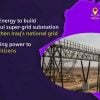
Siemens Energy and the Ministry of Electricity of the Republic of Iraq signed a contract to construct Iraq's West Mosul 400-kilovolt (kV) super grid station, which will provide reliable and efficient power supply to around 700,000 Iraqi citizens in northern Iraq, particularly the Nineveh province.
The construction of the Mosul station, which was destroyed in 2014, will help ensure stability in the transmission of power supply to the covered areas, coupled with a reduction in power losses.
The newly built 400-kV station will supply approximately 30 stations with voltage levels of 132-kV, thereby helping to tackle the severe shortage of power supply in the Nineveh province.
Eng. Khalid Ghazay Attia, Director General, Electricity Transmission Company, Northern Region, Iraq, said:
"Strengthening the national grid and scaling up its stability is a focal priority for us as demand for power in Iraq increases due to a growing population and to support industries and development projects in the country.
"The new Mosul station aims to bring predictable power to support the reconstruction and rebuilding of the Nineveh Governorate, recovering now from years of war. We're already working on comprehensive grid projects across the country in collaboration with international partners, like Siemens Energy, to deploy the most reliable and advanced technologies."
The project will be financed by the German state-owned development bank KfW.
Mahmoud Hanafy, Vice President, Grid Stabilization, Middle East, said:
"We're proud to support the Iraqi national grid with our latest technologies. The new project comes at a significantly important time for Nineveh province.
"In addition to this project, we're working relentlessly on the installation of more than 14 stations across Iraq. Just recently, we delivered 35 high voltage transformers to the Ministry of Electricity as part of Siemens Energy's Roadmap for Iraq."
For the West Mosul project, Siemens Energy's scope of work includes the design, equipment manufacturing, construction, site delivery, erection, testing and commissioning for the turnkey 400/132/11kV substation project together with the supply of 13 auto transformers.
In 2019 Siemens and the Ministry of Electricity of the Republic of Iraq signed an implementation agreement to kick off the execution of the Iraq Roadmap which includes the addition of new and highly efficient power generation capacity, rehabilitation and upgrade of existing plants and the expansion of transmission and distribution networks.
(Source: Siemens)
Posted in Iraq Industry & Trade News Comments Off on Siemens to rebuild West Mosul's Super-Grid Station

Dana Gas Resumes $600m Expansion in Iraq
Posted on 27 April 2021 .
Dana Gas and its partner Crescent Petroleum have announced the full resumption of the expansion project at the Khor Mor field in the Kurdistan Region of Iraq (KRI), which the companies jointly operate on behalf of the Pearl Petroleum consortium.
The KM250 expansion involves further investment of US$600 million to add 250 million cubic feet per day of much-needed additional gas production to supply the local power stations. The project construction work had been put on hold due to the COVID pandemic but is now on track for a new target start date of April 2023, after agreement to lift the force majeure with both the Kurdistan Regional Government (KRG) and the contractor [Exterran].
Under a Gas Sales agreement signed in March 2019 with the KRG Ministry of Natural Resources, Pearl Petroleum will sell the additional quantities of gas to supply the power stations with affordable and environmentally cleaner fuel, and further enhance electricity supplies. Today over 80% of the KRI's electricity generation is enabled by the gas produced by the companies.
Current production at the Khor Mor field is 440 million cubic feet per day of natural gas as well as 15,700 barrels per day of condensate and 1,020 tonnes of liquified petroleum gas (LPG), or a total of 110,400 barrels of oil equivalent (boe) per day, making it the largest overall producer in the KRI and the largest private sector upstream gas operation in Iraq. After the KM250 train, there are plans to add a further KM500 train which would take production to almost 1 billion cubic feet per day by 2024.
Total investment to date exceeds US$2 billion with total cumulative production of over 332 million barrels of oil equivalent (boe), which has resulted in significant fuel cost savings and economic benefits for the Kurdistan Region and Iraq as a whole. In addition 43 million tonnes of CO2 emissions have been eliminated by displacing liquid fuels, which in turn has made a positive contribution to tackling global climate change as well as reducing local air pollution.
Mr. Majid Jafar, CEO of Crescent Petroleum and Board Managing Director of Dana Gas, commented:
"After a year of delay due to the COVID pandemic, we are pleased to fully resume the KM250 expansion project to invest US$600 million and grow the gas production almost 60% within 2 years from now, supporting the local electricity provision even further. Despite the challenges the whole world has faced over the past year we have kept our operations safe and managed to grow production and we are grateful to all our staff and to the KRG for its support."
Dr. Patrick Allman-Ward, CEO of Dana Gas, added:
"With our partners in Pearl Petroleum we are proud to be investing further in the gas sector of the Kurdistan Region of Iraq, delivering a reliable source of cleaner energy, and supporting local economic development. The continuing receipt of payments in a timely manner gives confidence for our continued investment commitment as we enter the next exciting phase of growth with the Khor Mor expansion, which will be carried out under strict health protocols to ensure the safety of our staff and service providers."
(Source: Dana Gas)
Posted in Iraq Oil & Gas News Comments Off on Dana Gas Resumes $600m Expansion in Iraq

Iraq-Lebanon Fuel Oil talks "Shrouded in Mystery"
Posted on 25 April 2021 .
By Noam Raydan, for Amwaj Media. Any opinions expressed are those of the author(s), and do not necessarily reflect the views of Iraq Business News.
Iraq-Lebanon fuel oil talks remain shrouded in mystery
Despite Lebanon's deepening financial crisis, its politicians remain committed to the same stop-gap measures that have crippled the country's dilapidated electricity sector. Lebanese officials continue to experiment with ad hoc solutions to the power sector, which has long been a drag on the national budget.
Among the more controversial plans is the government's attempt to import fuel oil from Iraq. Aside from its unsuitability for power plants in Lebanon, partly due to its high sulfur content, talks between Baghdad and Beirut over fuel supplies have been fraught with contradictory and factually inaccurate statements.
Posted in Iraq Oil & Gas News, Politics Comments Off on Iraq-Lebanon Fuel Oil talks "Shrouded in Mystery"
Chinese Company to Develop Iraq's Mansuriyah Gas Field
Posted on 21 April 2021 .
By John Lee.
The Chinese company Sinopec (China Petroleum & Chemical Corporation) has won a contract to develop the Mansuriyah gas field in Diyala.
The field, near the Iranian border, is expected to produce 300 million standard cubic feet (Mmscf) per day of gas, which will be used for electricity generation.
In 2010, an agreement had been signed for the field to be developed by Turkish Petroleum (TPAO) (37.5%), Iraqi Oil Exploration Company (25%), Kuwait Energy (KEC) (22.5%), and Kogas (15%). This consortium stopped development in 2014 due to security concerns, and the agreement was reportedly cancelled in 2020.
Under the new 25-year deal agreed on Tuesday, Sinopec will have a 49-percent interest in the field, with Iraq's state-owned Midland [Middle, Central] Oil Company having 51 percent.
The contract may be extended for an additional five years.
According to the Ministry of Oil, Sinopec's bid was he lowest submitted.
(Source: Ministry of Oil)
Posted in Iraq Oil & Gas News Comments Off on Chinese Company to Develop Iraq's Mansuriyah Gas Field

Jiyad: Iraq, and the China-Iran Cooperation Program
Posted on 14 April 2021 .
By Ahmed Mousa Jiyad.
Any opinions expressed are those of the author, and do not necessarily reflect the views of Iraq Business News.
Iraq and the China-Iran Comprehensive Cooperation Program
The China-Iran Comprehensive Cooperation Program (CICCP) was signed on 27 March 2021; two days later the CICCP's direct impacts on Iraq began emerging and one of such impacts seems to benefits both Iraq and Iran!!
A few days ago I completed a detailed preliminary assessment of CICCP document. The assessment was written in Arabic entitled "China-Iran Comprehensive Cooperation Program: Tactically Important Strategically Impacting if Implemented", it was circulated widely and posted on many websites.
The assessment uses composite methodology of three researches approaches (Text analysis, SCOR (Strength, Challenges; Opportunities and Requirements) and facts/evidence based) and comprises an introduction, three parts and concluding remarks. Part one provide brief review of CICCP document structure: preamble, articles, annexes, effective date and term of the deal, coordinating and supervising authorities. Part two, provides detailed assessment of eight fundamental topics/ areas of cooperation, from the perspectives of the political economy of bilateral relations and geopolitical considerations. Part three provides the direct official reactions to CICCP from Iraq, USA, Arab Gulf States/Saudi Arabia and Russia.
The political economy perspectives are related to the following basic issues: The first relates to the nature of bilateral relations in terms of sovereign independence or dependency and hegemony; the second is whether the principle of "mutually beneficial" is also equitable; the third concerns the structuring of the Iranian economy on whether the deal will eventually deepens the dependence on the export of raw materials, oil and gas, or introduces the required and desirable structural changes horizontal, vertical and knowledge-based levels; and the fourth is about the financial and banking independence, monetary and currency issues pertaining to funding investments and trade exchange.
The geopolitical considerations were addressed at four levels, starting from the domestic (national for both countries), continental (Asian from China to Syria), regional (West Asia / Middle East) and international levels.
The assessment argues that the timing of signing and announcing CICCP is tactically motivated and important, while its proper and timely implementation could be a game-changer and thus strategically impacting; but, as usual, reality seldom coincides with expectations.
This brief intervention focuses on the direct current evidenced impacts on Iraq. Interested readers are kindly invited to read the Arabic version of my detailed initial assessment through the web-links mentioned at the end of this article.
In a remarkable speed and substance CICCP has already prompted both Iraq and the US to react!
First; after the current prime minister, Mustafa al-Kadhimi, denied, rather harshly, in a press conference on November 18, 2020, the existence of an Iraq-China agreement by saying, 'You know there is no China agreement, why are you promoting these lies?', he returned to authorize, on March 30 - that is, only three days after the signing of CICCP, "to start implementing the Chinese agreement"!!
While I do not find it necessary, now, to discuss what has happened between Iraq and China since the government of Haider al-Abadi, I find it useful to remember the statement by the Prime Minister's Financial Affairs Adviser, Dr. Modhir Muhammad Saleh, on March 29, 2021, that the "Iraq-China agreement" became effective on October 18, 2020, and then he affirmed the "cooperation framework agreement ... and the final accounting and oil annexes were signed on September 23, 2019." So why has not been published to this day any official document on this agreement / cooperation framework agreement, nor any of its annexes or memoranda of cooperation/ understanding related to it!!??
But there is a document at the Ministry of Finance entitled "Export Credit Insurance Cooperation Framework" between the China Export & Credit Insurance Corporation and the Iraqi Ministry of Finance) dating back to May 11, 2018 (that is, before the date of the agreement signed by former Prime Minister Adel Abdul Mahdi) !!!!
It is worth mentioning that 2021 State Budget Law includes a few infrastructure projects worth 1.803 trillion Iraq Dinnar to be funded, presumably by the above mentioned 2018 framework; since there is no new framework agreement officially published by the Ministry of Finance, nor approved by the Council of Ministers, nor legislated by the House of Representatives/ the Parliament. Moreover, even if such agreement is ratified and activated it utilization will be differed to future state budget for 2022 or even 2023 because of the national election scheduled for October this year.
Apparently, CICCP was a wakeup call for the Iraqi government but it is in reality too late for 2021 budget funding.
But on the other hand, the Iraqi Premier rushed for quick visits to Saudi Arabia and the UAE, immediately after signing CICCP; is there a relationship between the two events? Time will only tell!!!!
Second, among direct reactions by the US administration and as far as Iraq is concerned relates to Iraq-Iran interests. Just two days after signing the CICCP the U.S. renewed and extended the Iraqi exemption from the practices of maximum US pressure on Iran from 45 to 120 days; a waiver to avoid penalties for buying natural gas and electricity from Iran. This exception entails two positive consequences for both Iraq and Iran: the first is to ensure the continued supply of Iranian gas to generates electricity; this what the Iraqis suffer from its shortages especially the heated summer is on the doorstep, and the second is that Iraq pays Iran's accumulated dues for importing gas and electric power (which constitutes about a third Iraq's production of electricity) as the total of those receivables were mentioned in the 2021 budget, about 1688 billion Iraqi dinars.
Third, another important reaction by the US administration was its quick decision to hold a new round of strategic dialogue with Iraq; the discussions began on April 7, and mainly relate to the issue of US forces remaining in Iraq and the Strategic Framework Agreement signed in December 2008. (This agreement and related matters face strong opposition and many important, influential, legal and judicial challenges, especially after the Trump administration assassinated two leading heavy weight individuals, Abu Mahdi Al-Muhandis (Iraq) and General Qassem Soleimani (Iran), on January 3, 2021 near Baghdad airport).
It is worth noting that energy cooperation is one of the eight topics included in the said strategic framework agreement. Evidence suggests that the previous round of the Iraqi-American Committee for the Coordination of Cooperation in the Field of Energy, which was held, virtually remotely, on January 18 of this year was brief and did not include any important issues or noticeable impacts or new achievements. Hence, it did not attract attention from domestic or external media. Even the two ministries, i.e, Oil and Electricity, that should be directly involved, hardly mentioned anything on their websites on that latest meeting. Will CICCP invigorate Iraqi-American cooperation for the benefit of the energy sector in Iraq?? Who knows, will see!!!
Click here to download the full report in pdf format.
Mr Jiyad is an independent development consultant, scholar and Associate with the former Centre for Global Energy Studies (CGES), London. He was formerly a senior economist with the Iraq National Oil Company and Iraq's Ministry of Oil, Chief Expert for the Council of Ministers, Director at the Ministry of Trade, and International Specialist with UN organizations in Uganda, Sudan and Jordan. He is now based in Norway (Email: mou-jiya(at)online.no, Skype ID: Ahmed Mousa Jiyad). Read more of Mr Jiyad's biography here.
Posted in Ahmed Mousa Jiyad, Iraq Oil & Gas News, Politics Comments Off on Jiyad: Iraq, and the China-Iran Cooperation Program