


GE Closes Financial Deal for Iraqi Electricity Projects
Posted on 14 April 2021 .
Iraqi Ministry of Finance and GE Mark Financial Close of Power Up Plan
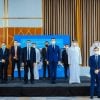
The Iraqi Ministry of Finance (MoF), GE and their financial partners have celebrated the financial close -- a critical milestone that marks the final step of a loan agreement becoming effective -- of the Power Up Plan 4 (PUP4).
Under PUP4, GE will provide capital and spare parts, repairs and services to the Qudus, Khairat, Baghdad South, Hilla, Mussayab, Haidariya and Karbala power plants to help maintain more reliable generation of up to 2.7 gigawatts (GW) of electricity for the Iraqi people.
As part of these efforts, 20 gas turbines that are currently not operational at these sites will also be returned to service. GE played a key role in bringing the Iraqi Ministries of Finance, Electricity and Planning together with various financial institutions, including export credit agencies, commercial banks and others, to secure financing for the project.
H.E. Dr. Thani bin Ahmed Al Zeyoudi, UAE Minister of State for Foreign Trade and Deputy Chairman of Etihad Credit Insurance (ECI) Board of Directors said:
"Open economies, trade and public private partnerships can play a strong role in supporting countries to develop critical infrastructure. This is highlighted by the Power Up Plan 4, for which certain key services will be executed in and exported from GE's facilities in the UAE, allowing us the opportunity to extend financial support through Etihad Credit Insurance and providing a win-win scenario for all. It also reflects the vision of our leadership to broaden regional collaborations that can help enhance the quality of life of people across the Middle East and beyond."
Mudaffar Al-Jbori, Ambassador of Iraq to the UAE, said:
"The recent visit of Iraqi Prime Minister Mustafa Al Kadhimi has further strengthened bilateral ties between the two countries. There is also a renewed focus by the UAE to invest in Iraq and support the country's socio-economic progress. The support by ECI to PUP4 is another example of the partnership between the two nations and will further accelerate Iraq's electricity infrastructure development."
Mr. Khaled Murad, the Director General of Public Debt at the Iraqi Ministry of Finance said:
"Electricity is the foundation that modern life is built on. The financing secured through the support of GE and other partners will ensure more seamless operations at key power plants in Iraq, helping us to make better use of existing assets and to provide the electricity that people depend on to run their homes and businesses. Looking ahead, there remains plenty of opportunity to enhance Iraq's power sector through further large-scale investments, and we look forward to continue to focus on developing such valuable collaborations in the future."
GE is bringing the strength of its global network to support the execution of PUP4. Several key repair works for equipment such as Gas turbines will be undertaken at GE's service centre in Jebel Ali Free Zone, Dubai, UAE. This has been facilitated by ECI, the UAE's Federal export credit company, which supports projects that promote economic diversification in the UAE and reduce the dependence on oil resources as a source of income.
ECI is one of the debt reinsurers for PUP4, providing insurance coverage to the lender, JP Morgan. PUP4 is the first Iraqi project supported by ECI and opens the doors to further collaborations between the UAE and Iraq.
"Etihad Credit Insurance is committed to delivering the vision of the UAE's leadership to drive sustainable and diversified economic development. As part of these efforts, we are honored to extend our support to finance a project in Iraq for the first time, a strong statement on the regional partnerships that we continue to build. We look forward to continue evaluating opportunities for future partnerships in Iraq," said Massimo Falcioni, CEO of ECI.
GE has supported the development of Iraq's energy infrastructure for over 50 years. In the north, GE's teams helped power liberated areas with the rehabilitation of Mosul's Al Qayara Power Plant. In central Iraq, the company is helping to equip, operate and maintain the country's largest combined cycle power plant - the Besmaya Power Station.
In the south, GE's Advanced Gas Path upgrade solution has enabled the Ministry of Electricity to decrease the downtime of gas turbines, improve availability, enhance performance and lower annual maintenance costs at the Najibiya Power Plant.
"Working closely with the Iraqi Ministries of Finance, Electricity and Planning, GE has collaborated with various private and public financial institutions from around the world to help secure over US $2.4 billion in financing since 2015 for energy sector projects across the country," said Joseph Anis, President & CEO of GE Gas Power Europe, Middle East and Africa. "We remain committed to continuing to facilitate investments from various institutions, provide industry-leading technologies and work with our team of local professionals on-the-ground, to deliver results that strengthen Iraq's power sector further and drive growth and prosperity for everyone, no matter how challenging the circumstances."
In addition to strengthening critical infrastructure, GE also supports several local community development projects across Iraq. The company has partnered with Kapita, a grassroots entrepreneurship organization, to launch the 'Iraqi Microbusinesses' initiative - 'Taqat' in Arabic.
Through the partnership, GE will support up to 50 microbusinesses owned by young Iraqis to scale up further by providing grants, marketing and business training. GE also recently announced a program to strengthen the skills of young Iraqis by providing scholarships for five Baghdad Business School students for a 10-month educational program.
(Source: Etihad Credit Insurance)
Posted in Iraq Industry & Trade News Comments Off on GE Closes Financial Deal for Iraqi Electricity Projects
Solar Power "Remains a Mirage" in Iraq
Posted on 29 March 2021 .
By Noam Raydan and Harry Istepanian, for Amwaj Media. Any opinions expressed are those of the author(s), and do not necessarily reflect the views of Iraq Business News.
Despite scorching heat, solar power remains mirage in Iraq
Iraq has suffered from a lack of electricity generation capacity following the US-led invasion of 2003 as well as the rise and fall of the Islamic State group (IS) over 2014-17.
Successive governments have thus far failed to rehabilitate Iraq's electricity sector, despite spending some 50B USD on it in the first 16 years after the invasion.
In the absence of robust regulatory frameworks and action plans, the country's electricity sector is loaded with investment plans that can be described as ambitious at best and outlandish at worst.
Among these plans is a previous renewable energy project that resurfaced last month.
Posted in Investment, Iraq Industry & Trade News, Iraq Public Works News Comments Off on Solar Power "Remains a Mirage" in Iraq
New Report on Iraqi Electricity Sector
Posted on 17 March 2021 .
This report provides a general overview of the Iraqi electricity sector.
It gives a glimpse of the electricity infrastructure starting with electricity generation, transmission, and distribution in Iraq.
This publication is part of Business LANDSCAPE series which a series of research publication aims to highlight the current situation of Iraq's economy and private sector through publishing researches and data and make it freely available for the benefit of investors, and the local and international community.
This study is published in partnership with German Government via the Deutsche Gesellschaft für Internationale Zusammenarbeit (GIZ) GmbH.
Click here to download the full report.
(Source: Kapita, in partnership with GIZ)
Posted in Iraq Industry & Trade News Comments Off on New Report on Iraqi Electricity Sector
Pope's visit to Iraq highlights needs in Liberated Areas
Posted on 12 March 2021 .
Pope Francis' historic visit to Iraq highlights remaining needs in areas liberated from ISIL
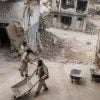
The historic visit of His Holiness Pope Francis to Iraq is testament to the strength of the Iraqi people in rebuilding their lives post ISIL, but also highlights the urgent, basic remaining needs of 1.2 million Iraqis still displaced from the conflict, says the United Nations Development Programme (UNDP) in Iraq.
As the biggest implementer of rehabilitation and stabilization activities in the country, UNDP Iraq has estimated US $660 million is still required to cover Iraq's basic needs, with almost 70% of that apportioned to the Ninewa governorate which was one of the locations of the Pope's visit and encompasses Iraq's historical city of Mosul as well as the Ninewa Plains, home to Iraq's many religious minorities.
"His Holiness Pope Francis' historic, long-awaited visit to Iraq - and in particular - his visit to areas like Mosul that were ravaged by ISIL, is a significant marker of peace, hope and unity for the Iraqi people," says Resident Representative of UNDP Iraq, Zena Ali Ahmad.
"It is also an opportunity to shine a spotlight on the critical remaining needs of Iraqis across the five liberated areas. These urgent needs must be addressed to allow Iraq's sustainable recovery from one of the most brutal conflicts in the country's recent history-paving the way towards durable solutions in Iraq.
"It's been three years since Iraq was officially liberated from ISIL, and while there has been many achievements in bringing more than 4.6m Iraqis home, we cannot forget about the 1.2 million people who remain the 'hardest to return', or ignore the remaining needs like water, electricity, housing and healthcare of all Iraqis who have suffered from the conflict, " she says.
To date, with generous support from the international community and the Government of Iraq, UNDP has implemented more than 2,700 stabilization projects in Iraq, which include the restoration of basic infrastructure and services, as well as short term employment opportunities, local capacity strengthening and social cohesion activities, benefiting more than 11 million Iraqis.
In Mosul alone, where daily life has resumed for many communities, UNDP Iraq, through its partners have restored more than 7,000 houses, 147 schools, 46 university buildings, 8 water treatment plants, 39 electricity networks, and one major hospital, with another 5 underway.
Collectively, these efforts have benefited 5.5 million Moslawis. UNDP has a strong presence in areas populated by religious minority groups, having completed more than 500 projects in locations such as Al Qosh, Bartela, Bashiqa, Batnaya, Hamdaniya, Karamless, Telesqof, Sinjar and Sinuni.
(Source: UNDP)
Posted in Construction & Engineering In Iraq Comments Off on Pope's visit to Iraq highlights needs in Liberated Areas
More Details on Iraqi Solar Projects
Posted on 22 February 2021 .
By John Lee.
Oil Minister Ihssan Abdul-Jabbar Ismail has given further details of the seven "alternative energy" plants that will be built, clarifying that they will all be solar power plants.
The projects will have a combined capacity of 750MW, with the largest being a 300-MW facility in Karbala.
There will also be plants in Wasit and Babil, and two sites in Muthanna -- Sawa-1 and Sawa-2.
The Minister said that Iraq plans to reach 10GW of solar electricity production by 2030, which appears to contradict his statement last week in which he targetted 20GW of solar by 2030.
He added that Iraq is in talks with international companies, including Norwegian companies, and the French company Total, to implement a number of important projects in this area.
(Source: Ministry of Oil)
Posted in Construction & Engineering In Iraq, Investment, Iraq Industry & Trade News 1 Comment
Iraqi Cabinet approves New "Alternative Energy" Power Plants
Posted on 18 February 2021 .
By John Lee.
The Iraqi Cabinet has agreed to approve a recommendation from the National Investment Commission (NIC) for the Ministry of Electricity to proceed with an investment project for the construction of seven "alternative energy" power plants.
The new power stations are to be built in Karbala, Wasit, Babylon, and Al-Muthanna provinces.
(Source: Govt of Iraq)
Posted in Construction & Engineering In Iraq, Investment, Iraq Industry & Trade News, Iraq Oil & Gas News 1 Comment
Iraq plans 20GW Solar Power by 2030
Posted on 16 February 2021 .
By John Lee.
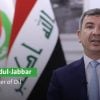
Iraq's Minister of Oil has his Ministry's goal is to support the Ministry of Electricity to have 20 gigawatts of solar energy capacity installed by 2030.
In a promotional video issued by the Government of Iraq, Ihsan Abdul Jabbar added that the recently-announced partnership with French energy company Total will include the production of clean solar energy in Southern Iraq.
He said the Ministry was in discussion with other oil producers, including BP, to use their sites to produce solar power.
(Source: Govt of Iraq)
Posted in Iraq Industry & Trade News, Iraq Oil & Gas News 1 Comment
KRG to Increase Electricity Prices
Posted on 02 February 2021 .
From Rudaw. Any opinions expressed are those of the author(s), and do not necessarily reflect the views of Iraq Business News.
KRG raises electricity rate by 20%
The Kurdistan Regional Government's (KRG) Ministry of Electricity is increasing the price of national electricity by 20 percent, the spokesperson told Rudaw on Monday.
Posted in Iraq Industry & Trade News, Politics Comments Off on KRG to Increase Electricity Prices
Iran targets $20bn Trade with Iraq
Posted on 13 January 2021 .
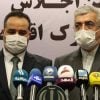
Iran's Energy Minister Reza Ardakanian stressed the need to support Iranian and Iraqi private sectors and remove the obstacles to investment in order to achieve the goal of annual trade exchange of $20 billion between the two neighbors.
Delivering a speech to Iran-Iraq Economic Conference on Tuesday, Ardakanian said the main and common target of the two neighbors at the level of political leaders is to increase the value of annual bilateral trade exchanges to $20 billion.
The energy minister explained that achievement of the trade target requires plans to allow the private sector to get involved in the economic activities freely, remove the trade obstacles, set up a joint investment fund, and settle the problems arising in the transportation industry, standard and customs issues, or the preferential trade arrangements.
The Iranian Energy Ministry has been tasked three months ago with handling the affairs of Iran-Iraq Economic Cooperation Joint Commission, he noted, saying the first successful plan was to convene the commission after six years.
"The main purpose of the fourth meeting of the Economic Cooperation Joint Commission is to create facilities for the private sectors in the trade and economic activities," the minister said, adding that there are also plans to strengthen cooperation between the state-run organizations.
Ardakanian further expressed hope that negotiations among the participants in the conference, held on January 12 and 13 within the framework of four expert sub-committees on technical and engineering services, consular affairs, monetary and banking issues, and trade affairs, would result in agreements.
The Iranian minister also stressed the need to expedite the implementation of joint projects in the energy and transportation industries, customs affairs, as well as construction and health sectors, and warned the state organizations to avoid the obstructive and bureaucratic obstacles that may impede the activities of private sectors.
At the conclusion of the conference, Ardakanian and Iraqi Trade Minister Alla Ahmed Hassan visited an exhibition of Iranian and Iraqi products, held at the Energy Ministry of Iran, according to the government's official website.
The 4th session of Iran-Iraq Economic Cooperation Joint Commission kicked off on Tuesday morning, attended by high-ranking officials and business people from the two countries.
The commission is going to weigh plans for stronger cooperation in various sectors with an eye to the geographical, cultural and religious commonalities between the two Muslim neighbors.
Participants in the meeting are also planned to discuss the ways to boost economic ties, promote exports, and evaluate the markets for optimum productivity in various sectors, such as the transportation and energy industries, tourism sector, construction projects, and water and electricity industries.
(Source: Tasnim, under Creative Commons licence)
Posted in Iraq Industry & Trade News Comments Off on Iran targets $20bn Trade with Iraq
Iraq to use Euro Account to pay Iran Debts
Posted on 04 January 2021 .
By John Lee.
Iran's Minister of Energy has said that a euro account is to be opened in Baghdad so that Iraq can pay its debts to Iran for electricity and natural gas purchases.
IRNA reports that Reza Ardakanian added that the same account can be used for Iraq's debts to Iranian private sector companies.
(Source: IRNA)
Posted in Iraq Banking & Finance News, Iraq Oil & Gas News Comments Off on Iraq to use Euro Account to pay Iran Debts