


Schneider Electric signs MoU for Electricity Distribution in Iraq
Posted on 31 December 2020 .
Iraqi Ministry of Electricity, Schneider Electric sign MoU to upgrade of 33/11kV Electricity Distribution Network in Iraq
- This is a part of the French government's efforts to rebuild Iraq and upgrade its electricity distribution network
- Emrah Tekdemir: The experience of Schneider Electric in energy efficiency helped our engineers gain great experience to train their peers in Iraq
The Iraqi Ministry of Electricity and Schneider Electric, a global leader in energy management and automation, signed a memorandum of understanding to implement an electrical substations, with a capacity of 11/33 kilovolts.
The new utility comes with the aim of contributing to the upgrade of Iraq's electrical distribution network and overcome the crisis of frequent power outages.
The MOU was signed between Iraqi Minister of Electricity Mr. Majid Mahdi Al Emara, and Luc Rémont, Executive Vice President of Schneider Electric for International Operations, followed by meeting with Iraqi PM in Paris on 19th Oct.
The cooperation between the Iraqi Ministry of Electricity and Schneider Electric comes within the framework of the projects that are supported by the French government as part of its efforts to rebuild Iraq through the implementation of vital infrastructure projects.
Under to the agreement, Schneider Electric will supply all equipment and technological solutions that contribute to solving the problems facing the electricity networks in Iraq.
It will also be responsible for training engineers and technicians in the Iraqi Ministry of Electricity on how to deal with the modern equipment and software, manage substations, and carry out proactive maintenance operations.
Emrah Tekdemir, Iraq Country Manager, said:
"Schneider Electric has a strong presence in Iraq, with operations in several key projects that contribute to the country's reconstruction.
"With the growth in demand for electricity in Iraq by nearly 10% annually, it was necessary to provide the technological solutions that contribute to increasing the efficiency of the services provided by the power stations, fulfilling the urgent need for a new station to solve the distribution problems in the energy sector and assisting the Ministry of Electricity in achieving its objectives of delivering electric energy to Iraqi citizens in an effective and reliable manner.
"The role of Schneider Electric will not be limited to the stage of completing implementation works in the stations, as we will also provide training for the Iraqi engineers and technicians, and we will rely heavily on Schneider Electric local presence in Iraq, which is part of Schneider Electric NEAL cluster."
About Schneider Electric
Schneider's purpose is to empower all to make the most of our energy and resources, bridging progress and sustainability for all. We call this Life Is On. Our mission is to be your digital partner for Sustainability and Efficiency.
We drive digital transformation by integrating world-leading process and energy technologies, end-point to cloud connecting products, controls, software and services, across the entire lifecycle, enabling integrated company management, for homes, buildings, data centers, infrastructure and industries.
We are the most local of global companies. We are advocates of open standards and partnership ecosystems that are passionate about our shared Meaningful Purpose, Inclusive and Empowered values.
(Source: Schneider Electric)

Posted in Iraq Industry & Trade News Comments Off on Schneider Electric signs MoU for Electricity Distribution in Iraq

Belgium enhances Support for Stabilization in Iraq
Posted on 31 December 2020 .
The Government of Belgium has invested an additional EUR 2 million in the Funding Facility for Stabilization (FFS).
The contribution will support stabilization efforts implemented by the United Nations Development Programme (UNDP) across Iraq's five governorates in Anbar, Diyala, Kirkuk, Ninewa and Salah Al-Din.
Since 2016, Belgium has contributed EUR 12.12 million to the Facility, which was recently extended to 2023. To date, Belgium's support along with other international donors to the FFS has benefitted over 1.46 million Iraqis, of which 50 percent are women.
With this generous additional funding, UNDP will be able to support additional essential services such as housing, and the rehabilitation of critical infrastructure in the sectors of electricity, water and education.
"The spread of COVID-19 in Iraq has increased economic instability, exacerbating existing challenges, such as the limited access to basic infrastructure and services, and a still-volatile security context. With Belgium's support we will better help the most vulnerable communities recover from the multiple crises they face today," says the UNDP Resident Representative for Iraq, Zena Ali Ahmad.
Belgium was one of the first international development partners to respond and support the UNDP rapid response to COVID-19, in partnership with national and local authorities. The support was used to establish isolation wards in Fallujah Teaching Hospital and Baqubah General Hospital that serve a catchment area of approximately 2.25 million people.
"We are grateful for Belgium's timely contribution towards supporting the people of Iraq build forward better, and for being one of the first to lend their support to our COVID-19 response," adds Ms. Ali-Ahmad.
"Belgium is very happy to continue its support for UNDP's FFS. The stabilization of Iraq remains an important challenge, even more in the context of COVID-19. We are therefore pleased that the FFS has been extended until 2023 and that other partners have renewed contributions," says Ambassador of Belgium to Jordan and Iraq, Filip Vanden Bulcke.
Since its launch in 2015, FFS has supported the return of 4.7 million Iraqis displaced by the ISIL conflict and helped more than 10 million Iraqis access critical services and infrastructure.
(Source: UN)
Posted in Construction & Engineering In Iraq Comments Off on Belgium enhances Support for Stabilization in Iraq
Iraq begins Importing Electricity from Turkey
Posted on 29 December 2020 .
By John Lee.
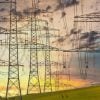
Turkey has reportedly begun to export electricity to Iraq.
According to Anadolu Agency, Turkey's Energy Market Regulatory Authority (EMRA, EPDK) started supplying Iraq on Monday at a rate of 150 MW, through the Silopi-Zakho transmission line.
The deal is due to run until 1st November, 2021.
(Source: Anadolu Agency)
Posted in Iraq Industry & Trade News Comments Off on Iraq begins Importing Electricity from Turkey
Iraq to Export Fuel to Lebanon in 2021
Posted on 25 December 2020 .
Iraq will begin exporting fuel to Lebanon starting January 2021 at "global prices", Minister of Oil Ihsan Abdul Jabbar announced.
Abdul Jabbar's remarks came in a statement on Monday after his meeting with his Lebanese counterpart, Raymond Ghajar, in the Iraqi capital city of Baghdad.
"Exported fuel will be part of a surplus over the Iraqi refineries' current demand," the minister pointed out, adding that the supply would be "limited and to be announced later."
He noted that the exports were expected to cover the "requirements of the Lebanese power stations to generate electricity", the Middle East Monitor reported.
On his part, Ghajar told reporters that the meeting had discussed an "expansion in bilateral relations between the two countries."
Lebanon has been suffering from a severe lack of power for years, with most residential and commercial establishments dependent on generators.
(Source: Tasnim, under Creative Commons licence)
Posted in Iraq Oil & Gas News Comments Off on Iraq to Export Fuel to Lebanon in 2021
IMF Recommendations on Iraq
Posted on 22 December 2020 .
From the International Monetary Fund (IMF):
IMF Staff Completes 2020 Article IV Mission with Iraq
End-of-Mission press releases include statements of IMF staff teams that convey preliminary findings after a visit to a country.
The views expressed in this statement are those of the IMF staff and do not necessarily represent the views of the IMF's Executive Board.
Based on the preliminary findings of this mission, staff will prepare a report that, subject to management approval, will be presented to the IMF's Executive Board for discussion and decision.
December 12, 2020
- The COVID-19 pandemic and the sharp decline in oil prices and output have aggravated Iraq's economic vulnerabilities. Real GDP growth this year is expected to contract by 11 percent amid a sharp widening of fiscal and external imbalances.
- A comprehensive package of near-term economic policies anchored in a credible fiscal strategy is needed to overcome the health crisis, ensure economic stability, and protect the vulnerable.
- Achieving durable and inclusive growth amid formidable challenges will require wide-ranging structural reforms aimed at strengthening public finances, improving governance, reforming the electricity sector, promoting private sector development, and ensuring financial sector stability.
An International Monetary Fund (IMF) team led by Tokhir Mirzoev held a virtual mission with the Iraqi authorities from November 11 to December 10, to conduct discussions for the 2020 Article IV consultation with Iraq.
At the end of the virtual mission, Mr. Mirzoev issued the following statement:
"The fallout of the COVID-19 pandemic and the sharp decline in oil prices and output have aggravated Iraq's economic vulnerabilities. Real GDP growth is expected at -11 percent in 2020, reflecting a contraction of oil output and an interruption of non-oil economic activity. The sharp decline in oil revenue is expected to widen the fiscal and external current account deficits to 20 and 16 percent of GDP respectively.
"A decisive recalibration of near-term economic policies will be critical to ensure macroeconomic stability and protect the vulnerable. Overcoming the health crisis is the highest priority. The next phase of the pandemic will require additional fiscal resources, including to acquire and distribute widely a viable vaccine, supported by a strong governance framework. A comprehensive policy package to reduce fiscal and external imbalances will be critical to relieve financing constraints and ensure debt sustainability, while safeguarding international reserves. In this context, fiscal efforts in the 2021 budget should target key areas of fiscal vulnerability, notably reversing the unsustainable expansion of wage and pension bills, reducing inefficient energy subsidies, and raising non-oil revenues. Protecting the vulnerable will be of paramount importance and requires boosting significantly the targeted cash transfers and expanding their coverage, as well as improving targeting of other parts of the social safety net.
"Achieving durable and inclusive medium-term growth amid formidable challenges and vulnerabilities will require sustained implementation of wide-ranging structural reforms. These reforms should aim at strengthening public finances to enable critical health and social expenditure needs, reforming the electricity sector, fighting corruption, and expanding institutional capacity. Uncertain medium-term oil market prospects and strong population growth further raise the urgency of advancing the reform agenda.
"Continued strengthening of public finances over the medium term would create much-needed fiscal space for development and social protection. A comprehensive civil service reform would strengthen the effectiveness of the public sector while reducing fiscal costs. Recalibration of the pension system is needed to ensure its sustainability. Stemming the electricity sector's mounting financial losses and reforming the sector will enhance service provision and ensure its financial viability. Overhauling the tax and customs policy and administration will help diversify fiscal revenues. These efforts should be combined with improvements in public financial management and reforms to minimize fiscal risks stemming from government guarantees and other contingent liabilities.
"Addressing governance weaknesses and reducing corruption will be vital for Iraq's future economic development. Simplification, digitalization, and greater transparency of key public services and institutions would reduce corruption risks, especially in public procurement. Alongside, strengthening audits, improving legal and regulatory frameworks in line with international standards and conventions, expanding capacity for risk-based supervision and enforcing compliance with AML/CFT rules will help strengthen public trust and investor sentiment.
"A decisive strategy to reform the large state-owned banks and level the playing field in the financial sector will enable private sector development and secure financial stability. In addition to strengthening control over these banks' governance and enhanced supervision, it will be important to perform an international audit of the large state-owned banks to inform options for their restructuring.
"The team exchanged views with senior officials of the Central Bank of Iraq (CBI) and the Ministry of Finance, members of the Parliamentary Finance Committee, as well other ministries, government agencies, and representatives from the civil society.
"The IMF team would like to thank the authorities for candid and productive discussions during this mission."
Posted in Iraq Industry & Trade News Comments Off on IMF Recommendations on Iraq

Khor Mor Gas Plant reaches Record Production
Posted on 21 December 2020 .
Dana Gas has announced the production of sales gas from Pearl Petroleum's Khor Mor Gas Plant in the Kurdistan Region of Iraq (KRI) reached a new record level of 430MMscf/d on 15 December 2020.
Fourth quarter's average gas production as of 15 December 2020 is 400MMscf/d, an 8% increase on Q4 2019's average production of 370MMscf/d.
Pearl Petroleum has also restarted expansion plans in the KRI on the 15 December. This follows the suspension of work in March 2020 due to Covid-19 restrictions. All parties working on the project are fully committed to executing the expansion project as quickly and as safely as possible.
The Company expects to complete the first 250 MMscf/d gas processing train in Q1 2023 and is also examining ways to reduce the schedule further.
In line with the Kurdistan Regional Government (KRG) commitment to review the outstanding December 2019 to February 2020 invoices totalling $30 million, Dana Gas notes Pearl Petroleum's confirmation of receipt of a payment plan proposal from the KRG to pay down past receivables during 2021 as long as Brent remains above $50/bbl.
Pearl Petroleum continues to engage constructively with the KRG on this matter to ensure timely payment. The KRG has maintained regular monthly payments since March 2020.
Dr Patrick Allman-Ward, CEO of Dana Gas, commented:
"Our joint operations at Pearl Petroleum continue to set new records with production output whilst maintaining an excellent HSSE track record, validating our long-term strategy to concentrate on further developing our world-class fields in the KRI. We are getting tremendous support from the KRG, which has given us the green-light to restart the civil engineering works under strict health protocols and controls.
"This clears a major hurdle and puts us on a path for first gas from the new train in Q1 2023. I am also pleased to provide an update on our Q4 average gas production, which is 8% higher at 400MMscf/d than in the same period last year.
"In addition, our commitment and contribution to the people of the KRI remains as strong as ever. Our partnership is now in its 12th year. 2020 has been very challenging due to the restrictions imposed by the global pandemic but the team has worked tirelessly to keep our operations ongoing throughout the year, adhering to strict health and safety protocol to ensure the continuous flow of gas to power the KRI's electricity needs."
(Source: Dana Gas)
Posted in Iraq Oil & Gas News Comments Off on Khor Mor Gas Plant reaches Record Production
GE Synchronizes Gas Turbines at Zubair Power Plant
Posted on 17 December 2020 .
By John Lee.
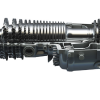
GE Gas Power has said it has "marked a major milestone" by synchronizing two GT13E2 gas turbines to the national grid at the Zubair Permanent Power Generation Plant.
The facility is owned by the Basra Oil Company (BOC) and located at the Zubair oil field, about 20 kilometers from the city of Basra.
ENI Iraq B.V. is responsible for developing the oil field and had awarded a contract to GE for the engineering, procurement, installation and commissioning of the power plant.
Two other GT13E2 units at the site had previously been synchronized to the grid in summer 2020. The new additions have taken the total generation capacity of the site up to 700 megawatts (MW).
Joseph Anis, President & CEO of GE Gas Power in the Middle East, North Africa and South Asia, said:
"With Iraq's population growing at over 2 percent per year, the demand for reliable, affordable electricity continues to increase. Every megawatt added to the grid can make a significant impact to the quality of life of the Iraqi people.
"GE is honored to work together with ENI to support the country's socioeconomic development by delivering much-needed electricity to power growth and prosperity for present and future generations."
(Source: GE)
Posted in Iraq Industry & Trade News, Iraq Oil & Gas News Comments Off on GE Synchronizes Gas Turbines at Zubair Power Plant

Challenges Facing the Electricity Sector in Iraq
Posted on 06 December 2020 .
From the Al-Bayan Center for Planning and Studies. Any opinions expressed are those of the author(s), and do not necessarily reflect the views of Iraq Business News.
Powering Iraq: Challenges Facing the Electricity Sector in Iraq
On February 21, 2020, Iraq recorded its first case of the novel coronavirus. Five months later, total recorded cases are 129 000 at the time of writing, and daily reported deaths almost 100.
The crisis has battered the country's economic development plans, and put an indefinite question mark over the realisation of a massive US$ 15 billion electricity infrastructure upgrade roadmap announced by former Prime Minister Adel Abdel Mehdi in April last year.
Simultaneously, global energy markets continue to struggle ever since the oil market collapsed between March and April, briefly plunging oil price will drop to low single-digit.Iraq's hydrocarbon revenues have, as a result, fallen to their lowest since the early years after the 2003 US invasion.
Click here to read the full report by Robin Mills And Maryam Salman.
Posted in Iraq Industry & Trade News Comments Off on Challenges Facing the Electricity Sector in Iraq
Korea extends Support to Stabilization in Iraq
Posted on 06 December 2020 .
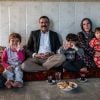
The Ministry of Foreign Affairs of the Republic of Korea (MoFA) is supporting the United Nations Development Programme (UNDP) with an additional USD 5M million to support stabilization activities in areas liberated from the Islamic State of Iraq and the Levant (ISIL) in Iraq.
The Republic of Korea's contribution will be channeled through UNDP's Funding Facility for Stabilization (FFS) which supports the return of Internally Displaced Populations from the five ISIL liberated governorates. This is Korea's sixth contribution to FFS since 2015, bringing its total contribution to US$23,950,000.
Based on priorities identified by the Government of Iraq and the local authorities, UNDP will use the generous contribution from Korea to rehabilitate basic infrastructure and repair damaged houses to facilitate the return of displaced Iraqis from Sinjar and surrounding areas.
The focus on Sinjar in Iraq's Ninewa governorate, homeland of the Yazidis and other minority groups who suffered atrocities under ISIL, stands as a key area for UNDP's stabilization programming.
"In mid-2020, Sinjar experienced a marked increase in returnees compared to previous years. UNDP continues to prioritize this area and is upscaling its efforts to meet the critical needs of returnees across a number of sectors including housing, electricity, water and education, as well as livelihoods creation and social cohesion," says Resident Representative of UNDP, Zena Ali-Ahmad.
"We are very grateful to the Republic of Korea for this important and timely contribution," adds Ms. Ali-Ahmad.
"I am very pleased that the Republic of Korea has provided contributions to FFS for six consecutive years since its launch in 2015, and I hope this year's contribution can help facilitate the implementation of UNDP's stabilization programme during its three-year extension until 2023." said Jang Kyung-Wook, Ambassador of the Republic of Korea to Iraq.
"Supporting internally displaced persons and returnees in areas liberated from ISIL is one of the main priorities in our assistance to Iraq, and we will continue to work with UNDP to help them rebuild their lives and achieve sustainable livelihoods and social cohesion."
To date, UNDP's Funding Facility has implemented over 2,560 projects in 31 locations in Ninewa, Anbar, Salah al-Din, Diyala and Kirkuk.
(Source: UN)
Posted in Iraq Industry & Trade News Comments Off on Korea extends Support to Stabilization in Iraq
Cabinet tightens up on Public Sector Salaries
Posted on 03 December 2020 .
By John Lee.
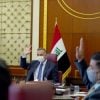
The Iraqi Cabinet held its weekly meeting on Tuesday under the chairmanship of Prime Minister Mustafa Al-Kadhimi.
Following discussions, the Cabinet decided to:
- Approve the recommendations from the specialist working group to complete the comprehensive database of all those who work in the public sector, and to allocate a unique employment number to each employee by the Central Bureau of Statistics at the Ministry of Planning;
- Expedite the development of the unified salary structure for the public sector that supports electronic payment and receipt of salaries;
- Authorise the Minister of Finance to sign an agreement to finance multiple annual maintenance projects (fourth phase) which is implemented by GE for the Ministry of Electricity, and guaranteed by UK Export Finance (UKEF).
(Source: Govt of Iraq)
Posted in Iraq Industry & Trade News Comments Off on Cabinet tightens up on Public Sector Salaries