



Work Starts at $450m Karbala Power Station
Posted on 09 May 2011 .
Iraq's Deputy Premier for Energy, Hussein al-Shahrestani, laid the foundation stone for the new 1250 megawatt al-Khairat power station in Karbala, which will add about 20% to power production in Iraq if completed as scheduled in April 2013.
Iraqi energy officials on Sunday marked the start of work on a 1,250 megawatt power plant with Turkey's Calik Enerji as the power-starved country seeks to boost its electricity output.
The project is being undertaken by Turkish company Calik Enerji, which won the $445.5 million contract in October. The cost is to be repaid based on a deferred payment system as agreed with the Turkish government, Zahi Samit al-Da’mi, the chairman of the Karbala Provincial Council’s power & fuel committee, told Aswat al-Iraq news agency.
The plant consists of 10 gas turbines, each producing 125 MW, giving 1,250 MW in total. The turbines are among 56 gas turbines the ministry purchased from General Electric in 2008, Sabeeh Qadu, general manager for gas projects in Iraq's Electricity Ministry, told Reuters.
"Today we are celebrating by putting in the foundation of building one of the biggest power generation plants in Iraq," Hussain al-Shahristani, the deputy prime minister for energy, told reporters at the site where the plant will be built in Khairat, 30 km southeast of Kerbala.
A Turkish official said Calik Enerji had so far completed a soil survey at the site, which currently employs 100 people, including engineers and technicians. Around 60 of the 100 employees are Turkish.
Calik also won a $388.5 million contract in March to build a 750 KW power plant near Mosul in northern Iraq.
A subsidiary of Calik Holdings, GAP Construction, will carry out a $195 million project rehabilitating a 19-kilometer expressway between Baghdad International Airport and the city center, as well as landscaping works on a plot with a total area of 1.6 million square meters.
(Sources: Reuters, Hurriyet, Turkish Weekly)
Posted in Iraq Oil & Gas News, Iraq Public Works News 1 Comment

Iraq Spent $450m on Postponed Summit
Posted on 06 May 2011 .
Iraq spent $450 million [540 billion Iraqi dinars] in preparation for the Arab League Summit, which has now been postponed for a year.
The money was spent planting palm trees along highways, re-paving roads and restoring a palace of former dictator Saddam Hussein, according to a report from Reuters.
Arab League Secretary-General Amr Moussa said on Thursday the summit had been postponed to March 2012 after being put off twice this year amid regional turmoil and animosity towards Iraq by some Gulf Arab states after it criticised Bahrain's crackdown on Shia'ite protesters.
Revamping Iraq's capital included the refurbishment of six of Baghdad's main hotels and repaving the city's airport road, one of the most dangerous to travel on at the height of the war.
Many are questioning the amount of money spent on a regional summit expected to be attended by heads of state.
"What will we get from the summit? What is the benefit? We, the people, don't understand the language of politics, we seek benefit," a Baghdad barber told Reuters.
"They should have spent it on the electricity sector, which has suffered the most damage. I am 60 years old and in my life, I haven't witnessed any benefit coming from Arab summits."
Ali al-Moussawi, Prime Minister al-Maliki's media adviser, said he was confident the money had not gone to waste.
"It is impossible to ignore our hotels and leave them in such a condition," Moussawi said.
Around $40 million of the allocated $450 million was used to renovate Saddam's Republican Palace, used as a U.S. embassy and military headquarters after the 2003 invasion, while Al Jazeera put the figure at $400m.
The 60-year-old palace, expected to house Arab leaders, has been kitted out with giant chandeliers and paintings of Babylon. Date palms adorn the garden, which also has a swimming pool.
"We had to work around the clock. Everything needed to be repaired, redone," Osman Mimarsinanoglu, chairman of the Turkish Gorkem company told Reuters before the postponement.
The summit may also be a test of readiness for Iraq's army and police. U.S. troops are scheduled to leave by year-end.
(Source: Reuters)
Posted in Construction & Engineering In Iraq, Iraq Industry & Trade News Comments Off on Iraq Spent $450m on Postponed Summit
High Costs Hamper Iraqi Telecoms
Posted on 06 May 2011 .
Telecommunications should be one of the hottest growth industries in Iraq, but according to a report from Reuters, providers have yet to introduce 3G technology into a market where the military jams mobile phone networks to stop insurgents detonating bombs.
Poor infrastructure, high operating costs, conflicts between communications regulators and security problems are stunting development in a country slowly rebuilding eight years after the U.S.-led invasion that ousted Saddam Hussein.
Iraq holds a pivotal geographical position in the region and could be an important communications bridge joining the Middle East with Europe and Asia.
But security remains one of the country's biggest concerns as Iraq's army and police battle a weakened yet stubborn insurgency while U.S. troops prepare to withdraw by December 31.
Jamming of mobile phone frequencies and poor data services are frequent complaints of Iraqis since the 2003 invasion that toppled its autocratic government and paved the way for a cellular phone market and unrestricted access to the Internet.
Mobile phone firms say military jamming costs them millions of dollars in maintaining and upgrading spectrum. Infrastructure damaged by bombs often takes time to repair due to curfews imposed by authorities because of fears of more attacks.
Sometimes companies are forced to wait until security officials have investigated the attack.
Iraq's mobile phone and internet providers also fret over the high cost of fiber optic cables, electricity and security. They say that feuding between Iraq's Communications and Media Commission (CMC) and the Iraqi Telecommunications and Posts Company (ITPC) is hindering progress.
Posted in Iraqi Communications News Comments Off on High Costs Hamper Iraqi Telecoms
Jordan Requests Increased Allocation of Iraqi Oil
Posted on 04 May 2011 .
Iraq has received an official request from Jordan to raise oil supplies to 30,000 barrels a day after Egyptian gas stopped flowing to the kingdom when a Sinai pipeline was attacked, AFP has reported.
"I have sent a letter to the Iraqi oil minister and asked to increase the oil supplies from 10,000 barrels a day to 30,000," Khaled Tukan told the Arabic Al-Rai daily.
Jordan imports about 240 million cubic feet of Egyptian gas a day, for 80% of its electricity needs.
(Source: AME Info)
Posted in Iraq Oil & Gas News Comments Off on Jordan Requests Increased Allocation of Iraqi Oil
Major Expansion for Basra Airport
Posted on 04 May 2011 .
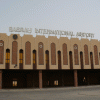
The Basra International Airport in southern Iraq will undergo a major expansion and renovation this year, according to its director.
On the sidelines of the first Iraq Airports Expansion, Cargo and Logistics Conference and Exhibition held in Erbil last week, Abdul Ameer Ganim Abdullah said:
"There are several huge projects that will commence this year, which in return will convert the airport into a major airport in Iraq and the northern Arab Gulf region."
A total of $65 million [78 billion Iraqi dinars] has been budgeted for the purpose by the Iraqi Transport Ministry and the Basra Governorate.
The projects at Basra International Airport, Iraq's third largest airport, include renovation of the passenger terminal, repairing the runway, and adding more air-bridges and other basic services such as water and electricity.
Built in the 1980s by European companies, the airport can handle more than two million passengers a year.
Among the carriers that operate scheduled flights to the port city of nearly three million people are Emirates, Gulf Air, Royal Jordanian and the nation's national carrier, Iraqi Airways.
Turkish Airlines will launch Istanbul to Basra services on May 11. According to the airport director, the German carrier Lufthansa is also planning flights to Basra from Frankfurt.
"We had talks with Lufthansa and the plan is to operate these flights from October," he said, while adding that he hoped Austrian Airlines will follow at a later stage.
Both Lufthansa and Austrian Airlines have scheduled flights to Erbil and Baghdad.
Abdullah also reiterated the readiness of Basra to receive tourists and business delegations from around the world.
(Source: Gulf News)
Posted in Iraq Transportation News Comments Off on Major Expansion for Basra Airport
A New Democracy Grows in the Middle East
Posted on 02 May 2011 .
The following article was written by Anahit Khatchikian and Roni Alasor, and published by Ararat News -- it is reproduced here with their permission. The opinions expressed are those of the authors, and do not necessarily reflect the views of Iraq Business News.
On economic level Federal Kurdistan Region (Iraq) has been compared by Western media to the Dubai. The political observers qualify it as close to the Western type democracy in the Middle East. From social and cultural prospective it is described as multi-ethnical society where different ethnical and religious groups coexist in peace. What is behind these praising labels, which Kurdistan Region acquired so quickly after the fall of Saddam Hussein's regime? Will the young Kurdish democracy succeed to respond to the challenge and justify these high expectations at a time when the wind of change and political instability blows in the countries in the Middle East and North Africa?
We’ve just visited Federal Kurdistan Region 8 years after the fall of Saddam Hussein’s regime. While the rest of Iraq is still under the sign of instability, suicide bombs and terrorist attacks, Kurdistan Region enjoys relative safety and stability. The special trained Kurdish security forces and check points still exist, but they give to the citizens feeling of protection and calmness. We shared this feeling of security and it gave us good opportunity to observe the recent developments in the Region.
The tragic history of Kurds during Saddam
The history of Iraqi Kurdistan before 1991 is the history of destruction and displacement. Few decades ago one could hardly believe that in Kurdistan Region a city with high towers will emerge under the ruins and the trash; that a western type democracy would be born after centuries of massacres, deportations, chemical attacks (Anfal Campaign of the Baath regime against Kurds in 1986-1989, including ground offensives, aerial bombing, systematic destruction of settlements, mass deportation, firing squads, and chemical warfare, Halabja poison gaz attack -1988). Kurds in Federal Region of Kurdistan had been fighting for their rights nearly during the whole XX century. Several generations of grandfathers, fathers and sons have spent their life as Peshmerga (Freedom Fighters) in the mountains and nearly every family lost a family member in this long lasting hard fight.
Today 4.7 million Kurds enjoy autonomy in this "quasi-state" of about 40,643 square kilometres (about the same size as Netherlands or Denmark). They have directly elected Parliament based in the capital Erbil and composed of 111 Members. 10 % of them are representative of the ethnical and religious minorities and about 40 % are women. The Kurdish Regional Government (KRG) composed of 19 ministers not only governs the internal affairs in the Region, but also maintain foreign relations with different countries all over the world. In the KRG Foreign Relations Department about 50 young and educated diplomats and administrators speaking several languages (among them already more than 10 % are women) open up the new way of Kurdistan Region to the world. Currently, there are 11 KRG representations abroad, including to the USA and to the EU, as well as about 20 foreign consulates in Kurdistan Region. Recently, Kurdistan region opened its representation in France, while Bulgaria is the next EU member, which will open consulate in Erbil.
The Kurds have their own army composed of 100 000 Peshmerga and many thousand Special Forces, including anti-terror units. There are two intelligent services based in Erbil (Parastin) and Suleymania (Zanyar), which work closely and count mainly on the cooperation of the ordinary people to prevent any kind of external or internal threat.
Kurds keep strong positions in Bagdad
Posted in Politics Comments Off on A New Democracy Grows in the Middle East
Iraq to House Another 12,600 Families
Posted on 30 April 2011 .
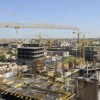
Iraqi minister for reconstruction and housing said throughout 2011 some seven housing projects will be constructed in seven Iraqi provinces. AKnews reports that the flats will be allocated to 12,600 families in installments.
Mohammed Daraji told AKnews on Thursday that the Iraqi Prime Minister Nouri al-Maliki has ordered the creation of the units in Kirkuk, Diyala, Basra, Nineveh, Karbala, Salahaddin and Baghdad to ease the housing crisis.
Each unit will comprise 600 three-floored flats, each constructed on 128 square meters area. There will be three rooms in each floor. All the basic services as school, hospital, electricity, mosque, etc will be provided for the units.
The project, designed by the ministry, is expected to be completed by September, Daraji added.
The flats will be issued to employees, the families of martyrs, and to a number of people whose daily income is less than 20 US Dollar. The customers are offered to pay in long-term installments while they may also benefit from governmental housing loan.
Those who have benefited form the government housing projects will be excluded if they apply to buy the flats.
(Source: AKnews)
Posted in Construction & Engineering In Iraq Comments Off on Iraq to House Another 12,600 Families
Time Running Out for Iraq's Ministers
Posted on 27 April 2011 .
With just another month to go in Nouri al-Maliki's 100-day ultimatum to his ministers to improve services, the Prime Minister is now increasing the pressure once more.
In addition to sacking ministers who have not performed within the required time, Maliki is also suggesting dissolving the government or even the entire parliament, either at the 100-day mark or at some later stage.
When we think back to the painfully long process of forming the current government, threats of this nature should not be made lightly or idly.
But this rolling ultimatum, if it is serious, may help to focus the minds of Iraq's ministers and parliamentarians in their mammoth task of rebuilding the country.
Parliament's next big decision in this respect is to approve the cabinet's plans to spend $35bn on infrastructure. With the country crying out for basic essential services such as electricity, and with Maliki's threat hanging over them, allocating funds to improve infrastructure should be high on their list of priorities.
Whatever sector of the economy your business operates in, Upper Quartile and AAIB are here to help you. For more information please contact Gavin Jones or Adrian Shaw.
Posted in Blog, Construction & Engineering In Iraq, Politics Comments Off on Time Running Out for Iraq's Ministers
Iraq to Spend $37 billion on Infrastructure
Posted on 27 April 2011 .
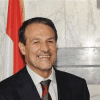
Iraq has approved an ambitious $37-billion [45 trillion Iraqi dinar] programme to upgrade Iraq's collapsing infrastructure, which has fallen victim to three decades of war and sanctions, government spokesman Ali al-Dabbagh (pictured) said on Tuesday.
AFP reports that the cabinet's plans, which must now be approved by parliament, are the latest in efforts by the government to placate protesters who have railed against poor public services and a lack of improvement in their daily lives, eight years on from the US-led invasion that ousted Saddam Hussein.
The allocated funds, decided at a Monday evening cabinet meeting, will be spread over several years.
The draft law to authorise the investment has been languishing for more than a year, with Maliki having initially proposed it before March 2010 election.
Opposition parties at the time objected to it, viewing it as a pre-election spending spree to lure voters.
Areas to receive investment include:
- transport infrastructure, with $10 billion in spending planned, and an additional $1.5 billion for highways;
- $5 billion for education,
- $5 billion for water and sewerage;
- $5 billion for agriculture.
- $3 billion for health infrastructure; and,
- $2 billion for higher education.
"I hope parliament will approve these infrastructure projects... to develop services, because without the agreement of parliament, we cannot fulfill our ambitions to build houses, services, electricity and health," Maliki said at a news conference in Baghdad.
(Source: AFP)
Posted in Agriculture, Construction & Engineering In Iraq, Iraq Education and Training News, Iraq Public Works News, Iraq Transportation News 1 Comment
UK Business in Kurdistan
Posted on 27 April 2011 .
By Chris Bowers, British Consul General in Erbil. This article was originally published by Rudaw, and is re-published with permission by Iraq Business News.
Imagine a visitor who arrives at Erbil International Airport. He passes a car showroom and heads to a hotel. He flicks a switch and is pleased to see the room illuminated by electricity.
The visitor strolls around town and visits one of Erbil’s new shopping malls. He is keen to do business. He seeks out banks to secure corporate investment and at the same time check his bank balance at home. The visitor finds a partner but naturally wants to check the company’s credibility and its accounts. Next he wants to find some employees familiar with English, the international language, and familiar with international commerce.
Why am I telling you this story? Because at each stage the visitor would be in contact with British business. Erbil’s fantastic new airport was British-designed by architects Scott Wilson, who are also engaged in drawing up a master-plan for Suleymaniya airport. The most striking of Erbil’s car showrooms is the one for Land Rover, Range Rover and now the latest Jaguar models: all classics of British design and engineering and brands that speak to a combination of the best of British tradition and innovation.
Three British companies, Heritage, Gulf Keystone and Sterling have made significant investments into Kurdistan’s oil and gas sector that will eventually be powering cars driven by people on the streets of Erbil. Two of them have made among the largest discoveries of oil and gas anywhere in the world over the last few years, and they and other hydrocarbons companies depend on the services provided by UK drilling and supplies companies. Across Iraq as a whole, Shell and BP are the largest investors.
Power is another UK strength. Parsons Brinkerhoff is working on a master-plan for electricity supply and generation in the KRG. UK firms are providing premises management and management more generally in Erbil’s hotels.
Other UK companies have had a significant behind the scenes role in the development of Kurdistan’s commercial sector. Companies such as Jones Lang Lasalle and BTW Shiells provide the property management advice that are making Erbil’s shopping malls the envy of the rest of Iraq.
Posted in Construction & Engineering In Iraq, Iraq Banking & Finance News, Iraq Industry & Trade News, Iraq Oil & Gas News Comments Off on UK Business in Kurdistan