


Iraq Stock Market Report
Posted on 03 March 2023 .
Advertising Feature
Rabee Securities Iraq Stock Exchange (ISX) market report (week ending: 2nd March 2023).
Please click here to view a table of listed companies and their associated ticker codes.
| RSISX Index Return | |||
| RSISX Index | Closings | Change (w/w) (%) | Change (YTD) (%) |
| RSISX IQD Index | 942.2 | -0.9% | 3.5% |
| RSISX USD Index | 926.5 | 14.5% | 19.6% |
| ISX Market Summary of This Week | |||
| Trading Vol. (IQD mn)/d | 4,610 | # of Listed Companies on the ISX | 103 |
| Trading Vol. ($ mn)/d | 3.5 | # of Traded Companies | 58 |
| Traded Shares (mn)/d | 2,849 | # of Companies (Up) | 32 |
| Total Trades (#/d) | 2,607 | # of Companies (Down) | 10 |
| ISX Mcap (IQD bn) | 15,417 | # of Companies (Not changed) | 16 |
| ISX Mcap ($ mn) | 11,680 | # of Comp. Suspended from Trading (GA) | 1 |
| Market FX Rate*/ CBI Auction Price (IQD/$)** |
1320
/ 1310 |
# of Comp. Suspended from Trading (ISC) | 3 |
*Selling price of the dollar from banks and non-bank financial institutions to the final beneficiary
**Selling price of the dollar by the CBI to the banks
| Top 5 Gainers - Weekly | ||||
| Company Names | ISX Code | Closing Price(IQD) | Price Change (w/w) | Price Chg. (YTD) |
| Nationality H. Furniture (NR) | IHFI | 3.190 | 49.8% | 116.3% |
| Modern Animal & Agr. Prod. (UCM) | AMAP | 0.690 | 9.5% | 3.0% |
| National Bank of Iraq | BNOI | 1.290 | 3.2% | 17.3% |
| Mansour Hotel | HMAN | 34.750 | 2.2% | -6.1% |
| Bank of Baghdad | BBOB | 1.470 | 2.1% | 7.3% |
| Top 5 Losers | ||||
| Company Names | ISX Code | Closing Price(IQD) | Price Change (w/w) | Price Chg. (YTD) |
| United Bank (UCM) | BUND | 0.060 | -14.3% | 0.0% |
| Al-Sadeer Hotel (UCM) | HSAD | 19.250 | -12.5% | 28.3% |
| Iraqi Engineering Works | IIEW | 10.150 | -11.4% | 66.4% |
| Mosul Dam Tourist Village (NR) | HTVM | 6.250 | -10.7% | -10.7% |
| United Bank (UCM) | BUND | 0.060 | -14.3% | 0.0% |
| Top 5 Active by Trading Volume | ||||
| Company Names | ISX Code | Trading Vol. (IQDmn)/d | Trading Vol. ($'000)/d | Share in Total Trad. Vol.(%) |
| Baghdad Soft Drinks | IBSD | 1,297.2 | 925.6 | 28.1% |
| Bank of Baghdad | BBOB | 1,255.7 | 896.0 | 27.2% |
| National Bank of Iraq | BNOI | 378.7 | 270.2 | 8.2% |
| Asiacell Communications PJSC | TASC | 361.6 | 258.0 | 7.8% |
| Iraqi for Seed Production | AISP | 179.2 | 127.9 | 3.9% |
| Sector | No.of Trades/w | Trading Vol. (IQD mn)/w | Trading Vol. ('000 $)/w | Share in Total Trading Vol. (%) |
| Banking | 667 | 1,838.1 | 1,311.6 | 39.9% |
| Industry | 1,044 | 1,664.7 | 1,187.8 | 36.1% |
| Telecom | 193 | 361.6 | 258.0 | 7.8% |
| Services | 291 | 315.5 | 225.1 | 6.8% |
| Hotels&Tourism | 216 | 236.6 | 168.9 | 5.1% |
| Agriculture | 182 | 184.3 | 131.5 | 4.0% |
| Insurance | 12 | 9.0 | 6.4 | 0.2% |
| Investment | 2 | 0.0 | 0.0 | 0.0% |
| Grand Total | 2,607 | 4,610.0 | 3,289.3 | 100.0% |
ISX Company Announcements
- Stocks that resumed / will resume trading:
- Al-Qabedh Islamic Bank (BQAB) resumed trading on Feb. 28 after holding its AGM on Feb. 20 in which they discussed and approved the book of CBI, number (9/3/25060 on 5/10/2022) (which includes the non-distribution of dividends for the next 10 years and allocating it for investments starting from the year 2022) and took the appropriate decision regarding it, and viewed the special report for evaluating the performance and work of the Board of Directors for the year 2021.
- Iraqi For Tufted Carpets (IITC) resumed trading on Feb. 28 after holding its postponed AGM on Feb. 19 in which they discussed and approved electing five original and five alternative board members.
- Original shares of National Household Furniture Industry (IHFI) resumed trading on Feb. 26 after holding its AGM on Feb. 15 in which they discussed and approved 2020 and 2021 annual financial statements, increasing the capital from IQD1.66 bn to IQD3.32 bn through 100% rights issue, and changing the company's name from National Company for Home Furniture Industries to National Company for Industrial Investments.
- Stocks that were suspended / will be suspended from trading:
- ISX will suspend trading of Al-Mansour Hotels (HMAN) starting Mar. 14 due to the AGM that will be held on Mar. 19 to discuss and approve 2021 annual financial statements and elect five original and five alternative board members for the private sector.
https://www.facebook.com/RabeeSecurities
Posted in Investment Comments Off on Iraq Stock Market Report
Iraq Stock Market Report
Posted on 24 February 2023 .
Advertising Feature
Rabee Securities Iraq Stock Exchange (ISX) market report (week ending: 23rd Febuary 2023).
Please click here to view a table of listed companies and their associated ticker codes.
| RSISX Index Return | |||
| RSISX Index | Closings | Change (w/w) (%) | Change (YTD) (%) |
| RSISX IQD Index | 951.0 | 1.6% | 4.5% |
| RSISX USD Index | 809.4 | 2.2% | 4.5% |
| ISX Market Summary of This Week | |||
| Trading Vol. (IQD mn)/d | 136,493 | # of Listed Companies on the ISX | 103 |
| Trading Vol. ($ mn)/d | 89.5 | # of Traded Companies | 59 |
| Traded Shares (mn)/d | 107,370 | # of Companies (Up) | 19 |
| Total Trades (#/d) | 2,992 | # of Companies (Down) | 23 |
| ISX Mcap (IQD bn) | 15,521 | # of Companies (Not changed) | 17 |
| ISX Mcap ($ mn) | 10,178 | # of Comp. Suspended from Trading (GA) | 4 |
| Market FX Rate/ CBI Auction Price (IQD/$)* |
1525/
1310 |
# of Comp. Suspended from Trading (ISC) | 3 |
*Selling price of the dollar by the CBI to the banks
| Top 5 Gainers - Weekly | ||||
| Company Names | ISX Code | Closing Price(IQD) | Price Change (w/w) | Price Chg. (YTD) |
| Ashour Hotel (NR) | HASH | 13.980 | 24.3% | 51.1% |
| Modern Animal & Agr. Prod. (UCM) | AMAP | 0.630 | 21.2% | -6.0% |
| Iraqi Islamic Bank | BIIB | 0.480 | 11.6% | 6.7% |
| Iraqi Land Transport (UCM) | SILT | 1.990 | 9.9% | 6.4% |
| Palestine Hotel (UCM) | HPAL | 19.250 | 6.9% | 35.6% |
| Top 5 Losers | ||||
| Company Names | ISX Code | Closing Price(IQD) | Price Change (w/w) | Price Chg. (YTD) |
| Fallujah for Construction Mat. (NR) | IFCM | 4.300 | -23.2% | -27.1% |
| Al Taif Islamic Bank | BTIB | 0.640 | -13.5% | -36.0% |
| AL- Batek Investment (UCM) | VBAT | 0.400 | -11.1% | -11.1% |
| Al-Mansour Pharmaceutical Ind. | IMAP | 2.200 | -5.2% | 43.8% |
| Al -Khazer for Construction M. | IKHC | 2.050 | -4.2% | 5.1% |
| Top 5 Active by Trading Volume | ||||
| Company Names | ISX Code | Trading Vol. (IQDmn)/d | Trading Vol. ($'000)/d | Share in Total Trad. Vol.(%) |
| Bank of Baghdad | BBOB | 132,226.6 | 86,882.6 | 96.9% |
| Baghdad Soft Drinks | IBSD | 1,527.1 | 1,003.4 | 1.1% |
| Asiacell Communications PJSC | TASC | 609.4 | 400.4 | 0.4% |
| National Bank of Iraq | BNOI | 275.9 | 181.3 | 0.2% |
| Al-Ataa Islamic Bank (NR) | BLAD | 241.9 | 158.9 | 0.2% |
| Sector | No.of Trades/w | Trading Vol. (IQD mn)/w | Trading Vol. ('000 $)/w | Share in Total Trading Vol. (%) |
| Banking | 486 | 132,978.8 | 87,376.8 | 97.4% |
| Industry | 1,727 | 2,058.9 | 1,352.9 | 1.5% |
| Telecom | 228 | 609.5 | 400.5 | 0.4% |
| Hotels&Tourism | 169 | 326.5 | 214.6 | 0.2% |
| Services | 154 | 290.6 | 190.9 | 0.2% |
| Agriculture | 219 | 228.6 | 150.2 | 0.2% |
| Investment | 9 | 0.4 | 0.3 | 0.0% |
| Insurance | 0 | 0.0 | 0.0 | 0.0% |
| Grand Total | 2,992 | 136,493.3 | 89,686.1 | 100.0% |
ISX Company Announcements
- Cross Transactions: 103.6 bn shares of Bank of Baghdad (BBOB) on Feb. 20, Feb. 21, Feb. 22 and Feb. 23, (valued at IQD131.5 bn), corresponding to 41.4% of BBOB's capital.
- Commercial Bank of Iraq (BCOI) invited its shareholders to receive their cash dividends for the fiscal year 2020/2021 starting Feb. 23. The company decided in its recent AGM (Sep. 27) to distribute IQD0.094 cash dividend per share, corresponding to 18.4% dividend yield.
- Ameen Al-Iraq Islamic Bank (BAME) invited its shareholders to subscribe on 27.5 bn shares starting Feb. 23 from the capital increase to IQD250 bn through 12.4% rights issue. Subscription period is no less than 30 days and no more than 60 days.
- Stocks that resumed / will resume trading:
- Original shares of National Household Furniture Industry (IHFI) will resume trading on Feb. 26 after holding its AGM on Feb. 15 in which they discussed and approved 2020 and 2021 annual financial statements, increasing the capital from IQD1.66 bn to IQD3.32 bn through 100% rights issue, and changing the company's name from National Company for Home Furniture Industries to National Company for Industrial Investments. The opening price will be IQD2.13 per share with +/-50% price change limit.
- Iraqi Middle East Investment Bank (BIME) resumed trading on Feb. 21 after holding their AGM on Feb. 10 in which they discussed and approved adopting the cumulative voting method and elected seven original and seven alternative board members.
- Stocks that were suspended / will be suspended from trading:
- ISX suspended trading of Babylon Bank (BBAY) starting Feb. 23 due to the AGM that will be held on Feb. 28 to discuss and approve 2016-2021 annual financial statements, dividend distribution, and electing seven original and seven alternative board members.
https://www.facebook.com/RabeeSecurities
Posted in Investment Comments Off on Iraq Stock Market Report

Halting the Iraqi Dinar's Volatility
Posted on 22 February 2023 .
By Ahmed Tabaqchali, for the Atlantic Council. Any opinions expressed here are those of the author(s) and do not necessarily reflect the views of Iraq Business News.
Iraq needs to address the economy's structural imbalances to halt the dinar's volatility
A planned implementation of global procedural requirements for cross-border payments by the Central Bank of Iraq (CBI) in mid-November 2022 had a detrimental effect on the volumes of the CBI's daily "Foreign Currency Selling Window," better known as the CBI's US Dollar (USD) auction.
The decreased volumes versus the continued high demand for USD led to a supply-demand mismatch and, consequently, to a depreciation of the market price of the Iraqi Dinar (IQD) versus the USD.
As a result, it ignited a firestorm of controversy.
Posted in Iraq Banking & Finance News, Iraq Industry & Trade News, Politics Comments Off on Halting the Iraqi Dinar's Volatility
Iraq Stock Market Report
Posted on 17 February 2023 .
Advertising Feature
Rabee Securities Iraq Stock Exchange (ISX) market report (week ending: 16th February 2023).
Please click here to view a table of listed companies and their associated ticker codes.
| RSISX Index Return | |||
| RSISX Index | Closings | Change (w/w) (%) | Change (YTD) (%) |
| RSISX IQD Index | 936.4 | 1.2% | 2.9% |
| RSISX USD Index | 791.8 | -2.4% | 2.2% |
| ISX Market Summary of This Week | |||
| Trading Vol. (IQD mn)/d | 36,220 | # of Listed Companies on the ISX | 103 |
| Trading Vol. ($ mn)/d | 23.6 | # of Traded Companies | 55 |
| Traded Shares (mn)/d | 28,654 | # of Companies (Up) | 22 |
| Total Trades (#/d) | 2,435 | # of Companies (Down) | 15 |
| ISX Mcap (IQD bn) | 15,423 | # of Companies (Not changed) | 18 |
| ISX Mcap ($ mn) | 10,048 | # of Comp. Suspended from Trading (GA) | 4 |
| Market FX Rate/ CBI Auction Price (IQD/$) |
1535/
1460 |
# of Comp. Suspended from Trading (ISC) | 3 |
| Top 5 Gainers - Weekly | ||||
| Company Names | ISX Code | Closing Price(IQD) | Price Change (w/w) | Price Chg. (YTD) |
| Modern Animal & Agr. Prod. (UCM) | AMAP | 0.520 | 18.2% | -22.4% |
| Iraqi for General Transp. (UCM) | SIGT | 1.260 | 14.5% | 22.3% |
| Babylon Bank (UCM) | BBAY | 0.080 | 14.3% | 14.3% |
| Al-Ahlyia for Agricultural Prod. | AAHP | 1.000 | 9.9% | 14.3% |
| Baghdad Soft Drinks | IBSD | 3.080 | 8.5% | -6.7% |
| Top 5 Losers | ||||
| Company Names | ISX Code | Closing Price(IQD) | Price Change (w/w) | Price Chg. (YTD) |
| Al Taif Islamic Bank | BTIB | 0.740 | -17.8% | -26.0% |
| Iraqi Agricultural Products | AIRP | 25.500 | -15.0% | 5.2% |
| National Islamic Bank | BNAI | 0.500 | -9.1% | -53.7% |
| Al-Ataa Islamic Bank (NR) | BLAD | 0.210 | -8.7% | -8.7% |
| Mamoura Real-estate Inv. | SMRI | 13.980 | -6.6% | 47.9% |
| Top 5 Active by Trading Volume | ||||
| Company Names | ISX Code | Trading Vol. (IQDmn)/d | Trading Vol. ($'000)/d | Share in Total Trad. Vol.(%) |
| Bank of Baghdad | BBOB | 32,922.1 | 21,893.3 | 90.9% |
| Asiacell Communications PJSC | TASC | 909.7 | 605.0 | 2.5% |
| Baghdad Soft Drinks | IBSD | 620.4 | 412.6 | 1.7% |
| Al-Hilal Industries | IHLI | 327.7 | 217.9 | 0.9% |
| Al-Mansour Pharmaceutical Ind. | IMAP | 264.3 | 175.8 | 0.7% |
| Sector | No.of Trades/w | Trading Vol. (IQD mn)/w | Trading Vol. ('000 $)/w | Share in Total Trading Vol. (%) |
| Banking | 307 | 33,376.8 | 22,195.7 | 92.1% |
| Industry | 1,432 | 1,554.5 | 1,033.8 | 4.3% |
| Telecom | 247 | 909.9 | 605.1 | 2.5% |
| Services | 224 | 169.4 | 112.6 | 0.5% |
| Agriculture | 156 | 132.7 | 88.3 | 0.4% |
| Hotels&Tourism | 63 | 76.6 | 50.9 | 0.2% |
| Investment | 6 | 0.1 | 0.1 | 0.0% |
| Insurance | 0 | 0.0 | 0.0 | 0.0% |
| Grand Total | 2,435 | 36,220.2 | 24,086.6 | 100.0% |
ISX Company Announcements
- ISX announced on Monday the approval of the sale of Burgan Bank's 51.79% stake in Bank of Baghdad (BBOB) to the Jordan Kuwait Bank. Then on Feb 15, a cross transaction occurred on 25.9 bn shares of BBOB, valued at IQD32.9 bn and corresponding to 10.4% of BBOB's capital.
- According to Asiacell's (TASC) parent company, Ooredoo, Asiacell generated QAR 960.1 mn (around $262 mn) revenue in 4Q22, increased by 7% y/y. EBITDA increased 1% y/y to QAR 397.1 mn (around $108 mn) in 4Q22, while EBITDA margin contracted from 43.6% in 4Q21 to 41.3% in 4Q22. TASC's customer base increased 7% y/y to 17.1 mn at end-4Q22. On Feb 14, a cross transaction occurred on 79.2 mn shares of TASC, valued at IQD601.2 mn and corresponding to 0.03% of TASC's capital.
Stocks that resumed / will resume trading:
- Ashur International Bank for Investment (BASH) resumed trading on Feb. 12 after holding their AGM on Jan. 9 in which they discussed and approved 2021 annual financial statements and decided to distribute IQD0.05 cash dividend per share, corresponding to an 11.9% dividend yield.
- National Company for Tourism Investment (HNTI) resumed trading on Feb. 13 after holding their AGM on Feb. 7 in which they discussed and approved 2021 annual financial statements and decided to distribute IQD0.32 cash dividend per share, corresponding to a 2.7% dividend yield.
- Iraqi Date Processing and Marketing (IIDP) resumed trading on Feb. 15 after not being able to hold its first and postponed AGM (Jan. 31 and Feb. 7) due to a lack of quorum.
Stocks that were suspended / will be suspended from trading:
- ISX suspended trading of Al-Qabedh Islamic Bank (BQAB) on Feb. 15 due to the AGM that will be held on Feb. 20 to discuss and approve the book of CBI, number (9/3/25060 on 5/10/2022) and take the appropriate decision regarding it and view the special report for evaluating the performance and work of the Board of Directors for the year 2021.
- ISX suspended trading of National Household Furniture Industry (IHFI) on Feb. 12 due to the AGM that will be held on Feb. 15 to discuss and approve 2020 and 2021 annual financial statements, increasing the paid-in capital through 100% rights issue, and changing the company's activity from National Company for Home Furniture Industries to The National Company for Industrial Investments.
https://www.facebook.com/RabeeSecurities
Posted in Investment Comments Off on Iraq Stock Market Report
Iraq Stock Market Report
Posted on 10 February 2023 .
Advertising Feature
Rabee Securities Iraq Stock Exchange (ISX) market report (week ending: 9th February 2023).
Please click here to view a table of listed companies and their associated ticker codes.
| RSISX Index Return | |||
| RSISX Index | Closings | Change (w/w) (%) | Change (YTD) (%) |
| RSISX IQD Index | 925.1 | -2.3% | 1.6% |
| RSISX USD Index | 811.3 | 15.0% | 4.7% |
| ISX Market Summary of This Week | |||
| Trading Vol. (IQD mn)/w | 8,469.4 | # of Listed Companies on the ISX | 103 |
| Trading Vol. ($ mn)/w | 5.4 | # of Traded Companies | 57 |
| Traded Shares (mn)/w | 7,682 | # of Companies (Up) | 34 |
| Total Transactions (#/w) | 2,851 | # of Companies (Down) | 11 |
| ISX Mcap (IQD bn) | 15,488 | # of Companies (Not changed) | 12 |
| ISX Mcap ($ mn) | 10,465 | # of Comp. Suspended from Trading (GA) | 5 |
| Market FX Rate/ CBI Auction Price (IQD/$) |
1480/
1460 |
# of Comp. Suspended from Trading (ISC) | 3 |
| Top 5 Gainers - Weekly | ||||
| Company Names | ISX Code | Closing Price(IQD) | Price Change (w/w) | Price Chg. (YTD) |
| AL-Nukhba for Construction | SNUC | 0.700 | 20.7% | 25.0% |
| Modern Animal & Agr. Prod. (UCM) | AMAP | 0.440 | 15.8% | -34.3% |
| Iraqi Agricultural Products | AIRP | 30.000 | 11.1% | 23.7% |
| Nationality H. Furniture (NR) | IHFI | 3.260 | 8.7% | 67.2% |
| Baghdad Passengers Transport | SBPT | 31.000 | 6.9% | 12.7% |
| Top 5 Losers | ||||
| Company Names | ISX Code | Closing Price(IQD) | Price Change (w/w) | Price Chg. (YTD) |
| National Islamic Bank | BNAI | 0.550 | -38.9% | -49.1% |
| Baghdad Hotel | HBAG | 10.260 | -10.8% | 3.6% |
| Electronic Industries (UCM) | IELI | 0.820 | -8.9% | -13.7% |
| National Comp. for Met. Ind. M.&B. | IMIB | 2.780 | -7.3% | -13.1% |
| Al Taif Islamic Bank | BTIB | 0.900 | -7.2% | -10.0% |
| Top 5 Active by Trading Volume | ||||
| Company Names | ISX Code | Trading Vol. (IQDmn)/d | Trading Vol. ($'000)/d | Share in Total Trad. Vol.(%) |
| Ameen Al-Iraq Islamic Bank (NR) | BAME | 5,100.0 | 3,256.7 | 60.2% |
| Al-Mansour Pharmaceutical Ind. | IMAP | 971.9 | 620.6 | 11.5% |
| Baghdad Soft Drinks | IBSD | 529.9 | 338.4 | 6.3% |
| Asiacell Communications PJSC | TASC | 328.3 | 209.6 | 3.9% |
| Al-Ataa Islamic Bank (NR) | BLAD | 239.4 | 152.9 | 2.8% |
| Sector | No.of Trades/w | Trading Vol. (IQD mn)/w | Trading Vol. ('000 $)/w | Share in Total Trading Vol. (%) |
| Banking | 333 | 5,683.6 | 3,629.4 | 67.1% |
| Industry | 1,686 | 1,818.9 | 1,161.5 | 21.5% |
| Telecom | 187 | 328.3 | 209.6 | 3.9% |
| Services | 247 | 227.2 | 145.1 | 2.7% |
| Agriculture | 227 | 213.5 | 136.4 | 2.5% |
| Hotels&Tourism | 169 | 195.7 | 125.0 | 2.3% |
| Insurance | 1 | 2.0 | 1.3 | 0.0% |
| Investment | 1 | 0.0 | 0.0 | 0.0% |
| Grand Total | 2,851 | 8,469.4 | 5,408.3 | 100.0% |
ISX Company Announcements
- A cross transaction occurred on 5.1 bn shares of Ameen Al-Iraq Islamic Bank (BAME) on Feb. 8, valued at IQD5.1 bn and corresponding to 2.3% of BAME's capital.
- New shares of Modern Animal and Agricultural Production (AMAP) from the capital increase through 400% rights issue to IQD20.5 bn resumed trading on Feb. 5.
- Al-Hamraa for Insurance (NHAM) invited its shareholders to subscribe to 18 bn shares starting Feb. 6 from the capital increase to IQD25 bn through a 257% rights issue. The subscription period is no less than 30 days and no more than 60 days.
- Stocks that resumed / will resume trading:
- Asiacell (TASC) resumed trading on Feb. 6 after holding their postponed AGM on Feb. 4 in which they discussed and approved re-appointing an auditor to audit the company's accounts for the year.
- Ashur International Bank For Investment (BASH) will resume trading on Feb. 12 after holding their AGM on Jan. 9 in which they discussed and approved 2021 annual financial statements and decided to distribute IQD0.05 cash dividend per share, corresponding to an 11.9% dividend yield.
- Stocks that were suspended / will be suspended from trading:
- ISX suspended trading of Iraqi Middle East Investment Bank (BIME) on Feb. 7 due to the AGM that will be held on Feb. 10 to discuss and approve adopting the cumulative voting method and electing seven original and seven alternative board members.
- ISX suspended trading of Iraqi for Tufted Carpets (IITC) on Feb. 7 due to the AGM that will be held on Feb. 12 to discuss and approve electing five original and five alternative board members.
- ISX will suspend trading of National Household Furniture Industry (IHFI) starting Feb. 12 due to the AGM that will be held on Feb. 15 to discuss and approve 2020 and 2021 annual financial statements, increasing the paid-in capital by 100% rights issue, and changing the company's activity from National Company for Home Furniture Industries to The National Company for Industrial Investments.
- ISX will suspend trading of Al-Qabedh Islamic Bank (BQAB) starting Feb. 15 due to the AGM that will be held on Feb. 20 to discuss and approve the book of CBI, number (9/3/25060 on 5/10/2022) and take the appropriate decision regarding it and view the special report for evaluating the performance and work of the Board of Directors for the year 2021.
https://www.facebook.com/RabeeSecurities
Posted in Investment Comments Off on Iraq Stock Market Report
Iraq Stock Market Report
Posted on 03 February 2023 .
Advertising Feature
Rabee Securities Iraq Stock Exchange (ISX) market report (week ending: 2nd February 2023).
Please click here to view a table of listed companies and their associated ticker codes.
| RSISX Index Return | |||
| RSISX Index | Closings | Change (w/w) (%) | Change (YTD) (%) |
| RSISX IQD Index | 946.9 | -4.6% | 4.0% |
| RSISX USD Index | 705.5 | -11.1% | -8.9% |
| ISX Market Summary of This Week | |||
| Trading Vol. (IQD mn)/w | 5,628 | # of Listed Companies on the ISX | 103 |
| Trading Vol. ($ mn)/w | 3.3 | # of Traded Companies | 58 |
| Traded Shares (mn)/w | 3,091 | # of Companies (Up) | 21 |
| Total Transactions (#/w) | 3,839 | # of Companies (Down) | 15 |
| ISX Mcap (IQD bn) | 15,704 | # of Companies (Not changed) | 22 |
| ISX Mcap ($ mn) | 9,015 | # of Comp. Suspended from Trading (GA) | 4 |
| Market FX Rate/ CBI Auction Price (IQD/$) |
1742/
1460 |
# of Comp. Suspended from Trading (ISC) | 3 |
| Top 5 Gainers - Weekly | ||||
| Company Names | ISX Code | Closing Price(IQD) | Price Change (w/w) | Price Chg. (YTD) |
| Nationality H. Furniture (NR) | IHFI | 3.000 | 31.6% | 53.8% |
| Mamoura Real-estate Inv. | SMRI | 15.250 | 22.5% | 61.4% |
| Iraqi Engineering Works | IIEW | 11.380 | 13.8% | 86.6% |
| AL-Kindi of Veterinary Vac. | IKLV | 1.600 | 12.7% | 14.3% |
| Iraqi Agricultural Products | AIRP | 27.000 | 8.4% | 11.3% |
| Top 5 Losers | ||||
| Company Names | ISX Code | Closing Price(IQD) | Price Change (w/w) | Price Chg. (YTD) |
| Palestine Hotel (UCM) | HPAL | 18.800 | -18.6% | 32.4% |
| National Islamic Bank | BNAI | 0.900 | -16.7% | -16.7% |
| Modern Animal & Agr. Prod. (UCM) | AMAP | 0.380 | -15.6% | -43.3% |
| Baghdad Soft Drinks | IBSD | 2.900 | -11.9% | -12.1% |
| Baghdad Passengers Transport | SBPT | 29.000 | -10.8% | 5.5% |
| Top 5 Active by Trading Volume | ||||
| Company Names | ISX Code | Trading Vol. (IQDmn)/d | Trading Vol. ($'000)/d | Share in Total Trad. Vol.(%) |
| Al-Mansour Pharmaceutical Ind. | IMAP | 1,329.7 | 789.1 | 23.6% |
| Bank of Baghdad | BBOB | 1,144.0 | 678.9 | 20.3% |
| Baghdad Soft Drinks | IBSD | 914.2 | 542.5 | 16.2% |
| Ishtar Hotels (UCM) | HISH | 385.9 | 229.0 | 6.9% |
| National Bank of Iraq | BNOI | 312.8 | 185.6 | 5.6% |
| Sector | No.of Trades/w | Trading Vol. (IQD mn)/w | Trading Vol. ('000 $)/w | Share in Total Trading Vol. (%) |
| Industry | 2,423 | 2,752.4 | 1,633.3 | 48.9% |
| Banking | 502 | 1,654.8 | 981.9 | 29.4% |
| Hotels&Tourism | 295 | 496.3 | 294.5 | 8.8% |
| Services | 344 | 361.8 | 214.7 | 6.4% |
| Agriculture | 265 | 352.7 | 209.3 | 6.3% |
| Insurance | 6 | 10.3 | 6.1 | 0.2% |
| Investment | 1 | 0.1 | 0.0 | 0.0% |
| Telecom | 3 | 0.0 | 0.0 | 0.0% |
| Grand Total | 3,839 | 5,628.3 | 3,339.8 | 100.0% |
ISX Company Announcements
- The AGM of Asiacell (TASC) has been postponed to Feb. 4 due to a lack of quorum.
- New shares of Modern Animal and Agricultural Production (AMAP) from the capital increase through 400% rights issue to IQD20.5 bn will resume trading on Feb. 5.
- Stocks that resumed / will resume trading:
- Ishtar Hotels (HISH) resumed trading on Jan. 29 after holding its AGM (Jan. 11) in which they discussed and approved 2020 annual financial statements and elected five original and five alternative board members representing the private sector.
- Stocks that were suspended / will be suspended from trading:
- ISX suspended trading of National Company for Tourism Investment (HNTI) on Feb. 2 due to the AGM that will be held on Feb. 7 to discuss and approve 2021 annual financial statements and dividend distribution.
- ISX will suspend trading of Iraqi for Tufted Carpets (IITC) starting Feb. 7 due to the AGM that will be held on Feb. 12 to discuss and approve electing five original and five alternative board members.
https://www.facebook.com/RabeeSecurities
Posted in Investment Comments Off on Iraq Stock Market Report
Iraq Stock Market Report
Posted on 27 January 2023 .
Advertising Feature
Rabee Securities Iraq Stock Exchange (ISX) market report (week ending: 26th January 2023).
Please click here to view a table of listed companies and their associated ticker codes.
| RSISX Index Return | ||||
| RSISX Index | Closings | Change
(d/d) (%) |
Change (ytd) (%) | Change (12M) (%) |
| RSISX IQD Index | 985.9 | 0.0% | 8.3% | 7.5% |
| RSISX USD Index | 792.3 | -1.7% | 2.3% | -1.5% |
| ISX Market Summary of Today | |||
| Trading Vol. (IQD mn)/d | 1,033.1 | # of Listed Companies on the ISX | 103 |
| Trading Vol. ($ mn)/d | 0.6 | # of Traded Companies | 40 |
| Traded Shares (mn)/d | 661 | # of Companies (Up) | 14 |
| Total Trades (#/d) | 737 | # of Companies (Down) | 13 |
| ISX Mcap (IQD bn) | 15,886 | # of Companies (Not changed) | 13 |
| ISX Mcap ($ mn) | 9,836 | # of Comp. Suspended from Trading (GA) | 4 |
| Market FX Rate/ CBI Auction Price (IQD/$) |
1615 / 1460 | # of Comp. Suspended from Trading (ISC) | 3 |
| Top 5 Gainers | ||||
| Company Names | ISX Code | Closing Price(IQD) | Price Change (d/d) | Price Chg. (YTD) |
| Iraqi Engineering Works | IIEW | 9.200 | 15.0% | 50.8% |
| Nationality H. Furniture (NR) | IHFI | 2.280 | 5.6% | 16.9% |
| Iraqi Agricultural Prod. Mark. Meat | AIPM | 6.000 | 5.3% | -12.4% |
| Al-Sadeer Hotel (UCM) | HSAD | 23.680 | 5.0% | 57.9% |
| Al-Mansour Pharmaceutical Ind. | IMAP | 1.930 | 4.9% | 26.1% |
| Top 5 Losers | ||||
| Company Names | ISX Code | Closing Price(IQD) | Price Change (d/d) | Price Chg. (YTD) |
| Iraqi Agricultural Products | AIRP | 25.000 | -7.4% | 3.1% |
| Sumer Commercial Bank | BSUC | 0.200 | -4.8% | 5.3% |
| Mosul Bank | BMFI | 0.220 | -4.3% | 4.8% |
| Iraqi Islamic Bank | BIIB | 0.450 | -4.3% | 0.0% |
| Modern Animal & Agr. Prod. (UCM) | AMAP | 0.450 | -4.3% | -32.8% |
| Top 5 Active by Trading Volume | ||||
| Company Names | ISX Code | Trading Vol. (IQDmn)/d | Trading Vol. ($'000)/d | Share in Total Trad. Vol.(%) |
| Fallujah for Construction Mat. (NR) | IFCM | 244.7 | 151.5 | 23.7% |
| Al-Mansour Pharmaceutical Ind. | IMAP | 231.1 | 143.1 | 22.4% |
| Baghdad Soft Drinks | IBSD | 122.8 | 76.0 | 11.9% |
| National Bank of Iraq | BNOI | 81.7 | 50.6 | 7.9% |
| Bank of Baghdad | BBOB | 78.2 | 48.4 | 7.6% |
| Sector | No. of Comp. | Mcap (IQD bn) | YTD % Chg. of Mcaps | P/E Ratio (Last)* | P/B Ratio (Last)* | ROE (Last)** | ROA (Last)** |
| Banking | 43 | 7,691 | 2.1% | 11.1 | 0.6 | 1.9% | 0.9% |
| Telecom | 2 | 5,909 | 3.2% | 8.8 | 1.6 | 10.3% | 5.8% |
| Industry | 20 | 938 | 1.6% | 14.0 | 2.0 | 7.1% | 4.9% |
| Hotels&Tourism | 9 | 633 | 13.7% | 42.3 | 15.4 | 19.4% | 11.5% |
| Services | 11 | 396 | 22.4% | 18.0 | 3.1 | 19.7% | 15.8% |
| Agriculture | 7 | 278 | 5.8% | 46.9 | 3.3 | 6.3% | 4.2% |
| Insurance | 5 | 37 | 0.0% | 10.9 | 0.4 | 4.8% | 4.4% |
| Investment | 6 | 5 | 3.2% | - | 0.6 | 0.1% | 0.1% |
| Total | 103 | 15,886 | 3.4% | - | - | - | - |
| Average | - | - | - | 12.4 | 1.8 | 6.5% | 3.8% |
ISX Company Announcements
- ISX is requesting from Iraqi Engineering Works (IIEW) to explain why the prices touched the higher limit on Jan. 24 and Jan. 25
- Stocks that resumed / will resume trading:
- United Bank (BUND) resumed trading on Jan. 26 after holding its AGM (Dec. 31) in which they discussed and approved 2021 and previous years' annual financial statements and adopted the cumulative voting method.
- Ishtar Hotels (HISH) will resume trading on Jan. 29 after holding its AGM (Jan. 11) in which they discussed and approved 2020 annual financial statements and elected five original and five alternative board members representing the private sector.
- Stocks that were suspended / will be suspended from trading:
- ISX suspended trading of Asiacell (TASC) on Jan. 24 due to the AGM that will be held on Jan. 28 to discuss and approve re-appointing an auditor to audit the company's accounts for the year 2022.
- ISX suspended trading of Iraqi Date Processing and Marketing (IIDP) on Jan. 26 due to the AGM that will be held on Jan. 31 to discuss the dismissal of the current board and the election of a new board of directors in case the dismissal was voted on.
- ISX will suspend trading of Iraqi Middle East Investment Bank (BIME) starting Feb. 7 due to the AGM that will be held on Feb. 10 to discuss and approve adopting the cumulative voting method and electing seven original and seven alternative board members.
https://www.facebook.com/RabeeSecurities
Posted in Investment Comments Off on Iraq Stock Market Report
Iraq Stock Market Report
Posted on 19 January 2023 .
Advertising Feature
Rabee Securities Iraq Stock Exchange (ISX) market report (week ending: 19th January 2023).
Please click here to view a table of listed companies and their associated ticker codes.
| RSISX Index Return | |||
| RSISX Index | Closings | Change (w/w) (%) | Change (YTD) (%) |
| RSISX IQD Index | 981.2 | 1.0% | 7.8% |
| RSISX USD Index | 781.3 | -2.7% | 0.8% |
| ISX Market Summary of This Week | |||
| Trading Vol. (IQD mn)/w | 26,436 | # of Listed Companies on the ISX | 103 |
| Trading Vol. ($ mn)/w | 16.5 | # of Traded Companies | 62 |
| Traded Shares (mn)/w | 25,231 | # of Companies (Up) | 18 |
| Total Trades (#/w) | 3,192 | # of Companies (Down) | 24 |
| ISX Mcap (IQD bn) | 15,779 | # of Companies (Not changed) | 20 |
| ISX Mcap ($ mn) | 9,680 | # of Comp. Suspended from Trading (GA) | 3 |
| Market FX Rate/ CBI Auction Price (IQD/$) |
1630/ 1460 | # of Comp. Suspended from Trading (ISC) | 3 |
| Top 5 Gainers - Weekly | ||||
| Company Names | ISX Code | Closing Price(IQD) | Price Change (w/w) | Price Chg. (YTD) |
| Ashour Hotel (NR) | HASH | 11.500 | 24.2% | 24.3% |
| Iraqi Engineering Works | IIEW | 7.020 | 15.1% | 15.1% |
| Mamoura Real-estate Inv. | SMRI | 10.000 | 13.6% | 5.8% |
| Modern Sewing | IMOS | 6.700 | 11.7% | 15.5% |
| National Bank of Iraq | BNOI | 1.390 | 11.2% | 26.4% |
| Top 5 Losers | ||||
| Company Names | ISX Code | Closing Price(IQD) | Price Change (w/w) | Price Chg. (YTD) |
| Modern Animal & Agr. Prod. (UCM) | AMAP | 0.450 | -18.2% | -32.8% |
| Kharkh Tour Amuzement City | SKTA | 3.140 | -7.1% | 4.7% |
| Economy Bank (NR) | BEFI | 0.150 | -6.3% | -16.7% |
| Babylon Hotel | HBAY | 91.000 | -5.2% | -2.2% |
| Iraqi for Seed Production | AISP | 11.300 | -5.0% | 11.3% |
| Top 5 Active by Trading Volume | ||||
| Company Names | ISX Code | Trading Vol. (IQDmn)/d | Trading Vol. ($'000)/d | Share in Total Trad. Vol.(%) |
| Ameen Al-Iraq Islamic Bank (NR) | BAME | 20,000.0 | 12,520.3 | 75.7% |
| Asia Al Iraq Islamic Bank | BAIB | 1,908.0 | 1,194.4 | 7.2% |
| Iraqi for Seed Production | AISP | 565.4 | 354.0 | 2.1% |
| Al-Mansour Pharmaceutical Ind. | IMAP | 540.4 | 338.3 | 2.0% |
| Baghdad Soft Drinks | IBSD | 526.0 | 329.3 | 2.0% |
| Sector | No.of Trades/w | Trading Vol. (IQD mn)/w | Trading Vol. ('000 $)/w | Share in Total Trading Vol. (%) |
| Banking | 615 | 23,137.0 | 14,484.1 | 87.5% |
| Industry | 1,388 | 1,541.1 | 964.8 | 5.8% |
| Agriculture | 473 | 571.3 | 357.6 | 2.2% |
| Services | 355 | 515.6 | 322.8 | 2.0% |
| Telecom | 233 | 474.0 | 296.7 | 1.8% |
| Hotels&Tourism | 126 | 126.8 | 79.4 | 0.5% |
| Investment | 2 | 70.5 | 44.1 | 0.3% |
| Insurance | 0 | 0.0 | 0.0 | 0.0% |
| Grand Total | 3,192 | 26,436.3 | 16,549.6 | 100.0% |
ISX Company Announcements
- Zain Iraq (TZNI) in Iraq has entered into a definite 15-year deal to sell and leaseback, as well as allow the management rights of the passive physical infrastructure of its 4,968-tower portfolio in Iraq to TASC Towers Iraq for $180 mn. (tradearabia)
- A cross transaction occurred on 20.0 bn shares of Ameen Al-Iraq Islamic Bank (BAME) on Jan. 15, valued at IQD20.0 bn and corresponding to 9.0% of BAME's capital.
- New shares of Ameen Al-Iraq Islamic Bank (BAME) from the capital increase to IQD222.5 bn through 11.3% rights issue, resumed trading on Jan. 15.
- The ISC has approved the request of World Islamic Bank (BWOR) to have a three-month extension period to add the new shares from the capital increase through a 4% rights issue to IQD260 bn starting from Jan. 3, 2023.
- The ISC has approved the request of Fallujah for Construction Materials (IFCM) to have a four-month extension period to add the new shares from the capital increase to IQD4.68 bn through a 50% rights issue starting from Dec. 30, 2022.
- Stocks that resumed / will resume trading:
- Modern Chemical Industries (IMCI) resumed trading on Jan. 15 after disclosing its 9M22 financial results.
- Stocks that were suspended / will be suspended from trading:
- ISX will suspend trading of Iraqi Date Processing and Marketing (IIDP) starting Jan. 26 due to the AGM that will be held on Jan. 31 to discuss the dismissal of the current board and the election of a new board of directors in case the dismissal was voted on.
https://www.facebook.com/RabeeSecurities
Posted in Investment Comments Off on Iraq Stock Market Report
Iraq Stock Market Report
Posted on 14 January 2023 .
Advertising Feature
Rabee Securities Iraq Stock Exchange (ISX) market report (week ending: 12th January 2023).
Please click here to view a table of listed companies and their associated ticker codes.
| RSISX Index Return | |||
| RSISX Index | Closings | Change (w/w) (%) | Change (YTD) (%) |
| RSISX IQD Index | 971.6 | 4.3% | 6.7% |
| RSISX USD Index | 803.3 | 4.0% | 3.7% |
| ISX Market Summary of This Week | |||
| Trading Vol. (IQD mn)/w | 22,515 | # of Listed Companies on the ISX | 103 |
| Trading Vol. ($ mn)/w | 14.3 | # of Traded Companies | 59 |
| Traded Shares (mn)/w | 37,548 | # of Companies (Up) | 15 |
| Total Trades (#/w) | 3,808 | # of Companies (Down) | 26 |
| ISX Mcap (IQD bn) | 15,710 | # of Companies (Not changed) | 18 |
| ISX Mcap ($ mn) | 10,007 | # of Comp. Suspended from Trading (GA) | 3 |
| Market FX Rate/ CBI Auction Price (IQD/$) |
1570/
1460 |
# of Comp. Suspended from Trading (ISC) | 4 |
| Top 5 Gainers - Weekly | ||||
| Company Names | ISX Code | Closing Price(IQD) | Price Change (w/w) | Price Chg. (YTD) |
| Palestine Hotel (UCM) | HPAL | 18.550 | 23.7% | 30.6% |
| Al-Sadeer Hotel (UCM) | HSAD | 17.900 | 13.7% | 19.3% |
| Iraqi for Seed Production | AISP | 11.900 | 12.3% | 17.2% |
| Al-Mansour Pharmaceutical Ind. | IMAP | 1.710 | 10.3% | 11.8% |
| Al -Khazer for Construction M. | IKHC | 2.150 | 10.3% | 10.3% |
| Top 5 Losers | ||||
| Company Names | ISX Code | Closing Price(IQD) | Price Change (w/w) | Price Chg. (YTD) |
| Rehab Karbala Company | HKAR | 0.900 | -14.3% | -14.3% |
| Modern Animal & Agr. Prod. (UCM) | AMAP | 0.550 | -11.3% | -17.9% |
| Iraqi for Carton Man. (UCM) | IICM | 0.950 | -6.9% | -8.7% |
| Economy Bank (NR) | BEFI | 0.160 | -5.9% | -11.1% |
| Iraqi Land Transport (UCM) | SILT | 1.800 | -5.3% | -3.7% |
| Top 5 Active by Trading Volume | ||||
| Company Names | ISX Code | Trading Vol. (IQDmn)/d | Trading Vol. ($'000)/d | Share in Total Trad. Vol.(%) |
| Ameen Al-Iraq Islamic Bank (NR) | BAME | 8,000.0 | 5069.7 | 35.5% |
| Al-Qabedh Islamic Bank (NR) | BQAB | 5,976.0 | 3787.1 | 26.5% |
| Asia Al Iraq Islamic Bank | BAIB | 1,908.0 | 1209.1 | 8.5% |
| Asiacell Communications PJSC | TASC | 1,375.2 | 871.5 | 6.1% |
| Iraqi for Seed Production | AISP | 1,099.3 | 696.7 | 4.9% |
| Sector | No.of Trades/w | Trading Vol. (IQD mn)/w | Trading Vol. ('000 $)/w | Share in Total Trading Vol. (%) |
| Banking | 651 | 17,034.7 | 10,795.1 | 75.7% |
| Industry | 1,403 | 1,769.0 | 1,121.1 | 7.9% |
| Telecom | 384 | 1,376.2 | 872.1 | 6.1% |
| Agriculture | 777 | 1,113.2 | 705.5 | 4.9% |
| Hotels&Tourism | 212 | 827.9 | 524.7 | 3.7% |
| Services | 380 | 394.1 | 249.8 | 1.8% |
| Investment | 1 | 0.0 | 0.0 | 0.0% |
| Insurance | 0 | 0.0 | 0.0 | 0.0% |
| Grand Total | 3,808 | 22,515.2 | 14,268.2 | 100.0% |
ISX Company Announcements
- The sale of Burgan Bank's 51.8% share in Bank of Baghdad (BBOB) to Jordan Kuwait Bank has been approved by the Central Bank of Iraq, according to Burgan Bank, Kuwait's second-largest conventional bank by assets. The deal's completion is contingent upon the execution of legal papers and compliance with the requirements of the Iraq Stock Exchange. (Iraqi News)
- A cross transaction occurred on 24.9 bn shares of Al-Qabedh Islamic Bank (BQAB) on Jan. 10, valued at IQD6.0 bn and corresponding to 9.96% of BQAB's capital.
- A cross transaction occurred on 8.0 bn shares of Ameen Al-Iraq Islamic Bank (BAME) on Jan. 12, valued at IQD8.0 bn and corresponding to 3.6% of BAME's capital.
- Stocks that resumed / will resume trading:
- Original shares of Ameen Al-Iraq Islamic Bank (BAME) resumed trading on Jan. 12 after holding its AGM (Jan. 7) in which they discussed and approved 2021 annual financial statements, increasing the capital from IQD222.5 bn to IQD250 bn through 12.4% rights issue, and electing seven original and seven alternative board members. News shares of the capital increase from IQD200bn to IQD222.5bn through 11.3% rights issue, will resume trading on Jan. 15.
- Fallujah for Construction Materials (IFCM) resumed trading on Jan. 9 after not being able to hold its first and postponed AGM (Dec. 27 & Jan. 3) due to a lack of quorum.
- AL- Kindi of Veterinary Vaccines Drugs (IKLV) resumed trading on Jan. 9 after holding its postponed AGM (Jan. 4) in which they discussed and approved 2021 annual financial statements.
- Al-Mansour Pharmaceuticals Industries (IMAP) resumed trading starting Jan. 9 after holding its AGM (Jan. 7) in which they elected new board members.
- Modern Chemical Industries (IMCI) will resume trading on Jan. 15 after disclosing 9M22 financial results.
- Stocks that were suspended / will be suspended from trading:
- ISX will suspend trading of Asiacell (TASC) starting Jan. 24 due to the AGM that will be held on Jan. 28 to discuss and approve re-appointing an auditor to audit the company's accounts for the year 2022.
- ISX suspended trading of Ishtar Hotels (HISH) on Jan. 8 due to the AGM that will be held on Jan. 11 in which they will discuss and approve 2020 annual financial statements and elect five original and five alternative board members representing the private sector.
https://www.facebook.com/RabeeSecurities
Posted in Investment Comments Off on Iraq Stock Market Report
Iraqi Company Completes Purchase of Romanian Power Plant
Posted on 29 December 2022 .
By John Lee.
Iraq's Mass Group Holding has completed its purchase of a power plant in Romania on Tuesday (27th December).
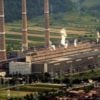
According to a statement from the administrator, Expert Insolventa SRL, the company has bought the Mintia thermal power plant (pictured) from Complexului Energetic Hunedoara SA for 91.2 million euro ($91 million) in a public auction.
Mass Global Energy Rom, a subsidiary of Mass Global Holding, was the only bidder.
Romania's Energy Ministry has stipulated that Mass Global must increase capacity by at least 1,290 MW by the end of 2026, at least 800 MW of which must be from gas and renewables. The plant currently has a capacity of 1,075 MW.
Ahmad Ismail Saleh, Chairman of Mass Holding, is quoted as saying that more than 1 billion euros will be spent on upgrading the facility.
Although an Iraqi company, Mass Group Holding has its head office in Amman, Jordan.
The full statement from the administrator can be viewed here (Romanian).
(Source: Expert Insolventa SRL)
(Picture credit: Govt of Romania)
Posted in Investment, Iraq Industry & Trade News Comments Off on Iraqi Company Completes Purchase of Romanian Power Plant