


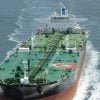
Could Iraq Dethrone Saudi Arabia as Largest Oil Producer?
Posted on 30 May 2022 .
Writing in Oil Price, Simon Watkins examines recent statements by Iraq's Oil Minister, Ihsan Abdul-Jabbar, that the country aims to increase its crude oil production to 6 million barrels per day (bpd) by the end of 2027.
Posted in Iraq Oil & Gas News Comments Off on Could Iraq Dethrone Saudi Arabia as Largest Oil Producer?

Anbar get Funding for Saudi Border Crossing
Posted on 22 May 2022 .
By John Lee.
Iraq's Ministry of Finance has allocated one billion dinars (£700k) to Anbar Governorate to complete procedures relating to the Arar (Ar Ar) border crossing.
The border post with Saudi Arabia was re-opened in late 2020 following a 30-year closure.
Improving trade links between the two countries has been a priority for both governments.
(Source: Media Office of the Prime Minister)
Posted in Construction & Engineering In Iraq, Iraq Industry & Trade News, Iraq Transportation News Comments Off on Anbar get Funding for Saudi Border Crossing
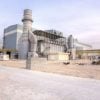
Iraqi Steel Plant Sold for $195m
Posted on 26 April 2022 .
By John Lee.
Jordan's Al Tanmiya Steel has completed the sale of its Iraqi steel operations for $195 million.
Al Tanmiya had full ownership of the Iraqi Al Anmaa for Construction Materials Production, which operates a steel plant (pictured) in Khor Al-Zubair, Basra.
Al Anmaa has been bought by Alghad Almutkamel for General Trading and Iron and Steel Metallic Industries.
According to a filing published by the Saudi stock exchange, Al Tanmiya is 65-percent owned by Saudi Arabian industrial conglomerate Astra Industrial Group (AIG), with Al Maseera International owning the remaining 35 percent.
In 2010, Astra paid $61 million for a 51 percent stake in Al Tanmiya.
(Source: Saudi Stock Exchange)
Posted in Construction & Engineering In Iraq, Investment Comments Off on Iraqi Steel Plant Sold for $195m
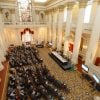
IBBC Iraq Conference, London, Tuesday 24th May
Posted on 05 April 2022 .
After a two-year absence, IBBC is back at the Mansion House hosting its Iraq conference on Tuesday May 24th focusing on finance, energy and sustaining economic growth in Iraq.
The country stands at another pivotal moment with a new government still in formation, record high oil and gas prices and a world supply crisis, in recovery mode after the pandemic and a strong desire to diversify the economy, grow the private sector and improve employment prospects, particularly for the young, a possible Iranian / US nuclear settlement, issues over water supply and food production, diversifying into renewable energy and still much work to be done on repairing and renewing infrastructure, but progress being made on improving governance and hugely enhanced government revenue to provide business opportunities across all the sectors.
International interest in investing in Iraq remains strong with the Chinese (Rumaila) and French (Total) Governments being particularly aggressive and most recently a wish expressed by the Saudi Government to join them.
In each sector we are hosting influential Iraqi ministerial attendees including the Minister of Oil H.E. Ihsan Abdul Jabbar Ismaael and Mr Kareem Hatta Deputy Oil Minister for Upstream Affairs, the Governor of the Central Bank of Iraq, H.E Mr. Mustafa Ghalib Mukheef, the Minister of Youth and Sport H.E. Adnan Darjal Motar Al-Rubaye, as well as Ms Taif Al-Shakarchi, Deputy Minister of Finance , Dr Salem Chalabi, President & Chairman of the Trade Bank of Iraq, a delegation of Iraqi Private banks.
From the UK side Louis Taylor, Chief Executive of UKEF, UK Ambassador Mark Bryson- Richardson, BP President Iraq Zaid Elyaseri, and Richard Wilkins from JP Morgan will address the audience with latest developments and opportunities and Professor Frank Gunter will present his latest views on the political economy.
Principal panel subjects include developing the banking sector, project finance, energy transition and how to boost short term production, education and skills, insurance, in addition to an online Tech panel addressing the benefits of crypto currency.
For companies interested in Iraq, this is a prime opportunity to hear what some of the most important players, both government and private sector are saying and thinking, and an excellent place for networking with potential partners and customers from both national and international organisations.
For further information and to register - please follow the link below:
IBBC Spring Conference at the Mansion House, London - IBBC (iraqbritainbusiness.org)
A reminder to overseas attendees, to arrange for visas to UK within the next few days as is relevant for your country.
(Source: Iraq Britain Business Council)
Posted in Construction & Engineering In Iraq, Investment, Iraq Banking & Finance News, Iraq Industry & Trade News, Iraq Oil & Gas News, Politics, Security 1 Comment
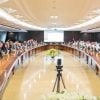
IBBC meets with Saudi Iraqi Business Council in Riyadh
Posted on 30 March 2022 .
From the Iraq Britain Business Council (IBBC):
Baroness Nicholson and Christophe Michels led a 30-strong delegation of IBBC Members to Riyadh to meet with Members of the Saudi Iraqi Business Council.
The high profile meeting of Members of both Councils met under the auspices of the Saudi Minister of Commerce at the head quarters of the Saudi Chambers of Commerce.
Mr Mohammed Al Khorayef, Chairman of SIBC presided over a 3 hour seminar at which 10 different IBBC member companies presented and discussed challenges and opportunities in doing business in Iraq. Mr AlKhorayef and Baroness Nicholson gave opening addresses on behalf of their respective organisations and attendees also heard short presentations from the Saudi Foreign Investment Authority and the Export Finance Authority.
The seminar was followed by an extensive networking Lunch.
The Saudi Minister of Commerce hosted members of both councils for dinner at the Ritz Carlton Hotel. The dinner was attended by the Governor of the Saudi Investment Authority, the Chairman of the Saudi Chambers of Commerce and other senior Saudi officials.
Both sides voted this first meeting a huge success which allowed for ample business to business meetings and the exchange of valuable experiences and information. Baroness Nicholson highlighted the important role IBBC can play in a triangular relationship between Iraq, Saudi Arabia and Britain. Christophe Michels emphasised the depth and knowledge of IBBC and its members, having worked in Iraq since 2009 if not longer and the willingness of IBBC Members to do business with their Saudi Companies in Iraq, but also in Saudi Arabia.
The meeting concluded with an invitation to SIBC members to attend the IBBC Spring Conference at The Mansion House in London on 24th May.
Christophe Michels stated that this was a first historic visit to Saudi Arabia for IBBC and that he was confident that IBBC and SIBC will build on it to further strong cooperation between their members in Iraq, Saudi Arabia and the United Kingdom. He added that today in Iraq business to business relationships really mattered and would lead to substantial measurable outcomes.
The IBBC delegation included, Mr Zaid Elyaseri, President of BP Iraq, Mr Sardar Al Bebany, Chairman of Sardar Group, Mr Mohammed Delaimy, CEO of SCB Iraq, Mr Ismail Maraqa, Chairman of PWC Middle East, Mr Khalil Nezir, Director of UB Holding, Mrs Sarah Akbar, MD of Oilserv, Mr Stuart Mackay, Corporate Development Director at G4S Risk Management, Mr Jaber Aljaberi, CEO of AA Global Trading Company, Ms Hadeel Hasan, Managing Partner of Al Hadeel Al Hasan LLC; Mr Khalil Al Salem, Deputy CEO of Al Majal; Mr Anmar Al-Gharifi, Partner, Saudi Arabia of Eversheds Sutherland (International) LLP, Mr Amar Shubar, Partner of Management Partners, Mr Hamed Silmi of Martrade Shipping & Logistics, Mr Hal Miran, Founding CEO of MSELECT, Mr Yaser Al Abbadi, Head of Business at NB of Iraq, National Bank of Iraq / Capital Bank and Mr Zeid Barghouti, NBI- Head of Treasury, Invest & FI, National Bank of Iraq / Capital Bank, Mr Faisal AlTamimi, Senior Associate- Business Development, PwC, Ms Leena Zeyad, Group BOD Administration Manager of Sardar Trading Agencies, Mr Habib Bitar, CEO of TBI Saudi Arabia and Mr Hussam Chakouf, Senior Associate of Zaha Hadid Architects, and was joined by IBBCs GCC Representative Mr Vikas Handa, Mr Richard Cotton, Commercial Advisor and Professor Mohammed Al Uzri, Health and Education Advisor.
On Saturday 26th March, our hosts organised visits to Riyadh Fort, now fully refurbished to its original state, the site now designated as the place where the modern Saudi state began in 1902 and to the Saudi National Museum, which records in fabulous settings, the geology, the history of the country over centuries, and the large diversity of cultures across the country.
On the evening of Sunday 27th March, the Trade Bank of Iraq in Saudi CEO Habib Bitar kindly hosted a dinner for the IBBC delegates who were able to exchange ideas with senior bank officials and other distinguished Saudi guests.

(Source: IBBC)
Posted in Investment, Iraq Industry & Trade News, Iraq Oil & Gas News Comments Off on IBBC meets with Saudi Iraqi Business Council in Riyadh

Tabaqchali, Market Review: Oil and the Iraqi Economy
Posted on 07 March 2022 .
By Ahmed Tabaqchali, Chief Strategist of AFC Iraq Fund.
Any opinions expressed are those of the author, and do not necessarily reflect the views of Iraq Business News.
Market Review: "Oil and the Economy"
The market, as measured by the Rabee Securities RSISX USD Index, increased by 4.5%, and 8.8% for the year. Average daily turnover on the Iraq Stock Exchange (ISX) declined for the second month in a row and is currently at the lower end of the levels that prevailed over the last twelve months.
On a positive note, the Rabee Securities RSISX USD Index has reclaimed the upper-end of the uptrend that it established over the last two years (chart below) - a promising development that is in contrast to that of many markets worldwide.
 (Source: Iraq Stock Exchange, Rabee Securities, AFC Research, data as February 28th)
Among the index's constituents, lower-priced Gulf Commercial Bank (BGUC) was up 20.0% for the month, far ahead of the other nine constituents. The next best performing constituent was Bank of Baghdad (BBOB) up 4.7%, followed by Baghdad Soft Drinks (IBSD) up 4.4%, Asiacell (TASC) up 3.3%, the National Bank of Iraq (BNOI) up 2.6%, and Al-Mansour Bank (BMNS) up 2.0%, while the Commercial Bank of Iraq (BCOI) was flat. Decliners were led by Al-Mansour Pharmaceutical Industries (IMAP) which was down 6.5%, followed by National Chemical and Plastics Industries (INCP) down 2.0%, and Kharkh Tour Amusement City (SKTA) which was down 0.3%.
Excluding BGUC, these modest stock price performances for the month haven't yet reflected the increased bounty brought by high oil prices taking Iraq's oil sales to an all-time high for a fifth consecutive month (chart below). The country's high leverage to oil prices and hence to oil sales will have significant positives for both the economy, and the equity market down the line - as a result of the centrality of the government's oil fuelled spending to the economy.
 (Source: Ministry of Oil, AFC Research, data as of February 28th)
There is a great deal of fear built into oil's current prices, and as such they are unlikely to be sustainable for too long, yet the changed geopolitical landscape as a consequence of the invasion of Ukraine will have significant consequences for the supply and demand of oil. On the demand side, the limited disruptions brought by the Omicron variant on economic activity worldwide since its emergence has solidified market expectations that oil demand in 2022 will return to pre-COVID-19 levels seen in 2019 - there is no reason, at least for now, to expect meaningful change to these expectations following the Ukraine invasion.
However, the same market expectations that supply will itself, like demand, return to its pre-COVID-19 levels will likely be re-examined in light of the pressures that the OPEC+ group will be under in the new changed world order. Prior to the events leading to the current crisis, OPEC+'s plan was to fully unwind by September 2022 the production cuts agreed to in April 2020. However, over the last few months, the plan was facing difficulties as some members of OPEC+ were struggling to return to pre-COVID-19 production levels.
A situation will likely worsen given the wide scope of sanctions levied upon Russia, which will negatively affect its oil production and the production of many of the "+" members of OPEC+ that are closely aligned to Russia. Consequently, supply will likely be meaningfully tighter than anticipated earlier despite many countries releasing oil held within their strategic reserves, the return of full U.S. shale oil production, and possible production increases by Saudi Arabia. Moreover, the changed geopolitical landscape means the return of high-risk premiums to oil prices for a considerable period into the future.
 (Source: U.S. Energy Information Agency, data as of February 8th)
Oil price expectations - a consequence of the changed dynamics of oil's supply and demand - and what they mean for the Iraqi economy, are meaningfully higher than those articulated here in the "Outlook for 2022" which argued at the time that "oil prices at these levels are positive for the country's financial position in that they will provide governments, current and upcoming, with the wherewithal to continue with current expansionary economic policies that will also still allow for the accumulation of budget surpluses. Moreover, they will also lead to multi-year positive balances in the country's current account which in turn will translate into meaningful increases in Iraq's foreign exchange reserves."
Iraq's equity market outlook and attractive risk-reward profile, in the unfolding new world order, is in sharp contrast to that of many markets worldwide. Firstly, the Iraqi equity market is in the process of emerging from a multi-year bear market that saw the Rabee Securities RSISX USD Index at the end of 2020 down by 68% from its 2014 all-time high - unlike many markets worldwide that have had multi-year bull markets.
Secondly, its 8.8% performance year-to-date is in contrast to the sell-offs experienced by other markets in response to the changed world order dynamics.
Finally, the index's 8.8% increase year-to-date coming on the back of a +21.4% return in 2021, is by the end of the month still 58% below the 2014 high - underscoring the potential catch-up upside for the equity market and its attractive risk-reward profile versus other global markets (chart below).
Normalised returns for the RSISUSD Index vs MSCI World Index, MSCI Emerging Markets Index and MSCI Frontier Markets Index

(Source: Bloomberg, data as of February 28th)
Please click here to download Ahmed Tabaqchali's full report in pdf format.
Mr Tabaqchali (@AMTabaqchali) is the Chief Strategist of the AFC Iraq Fund, and is an experienced capital markets professional with over 25 years' experience in US and MENA markets. He is a Visiting Fellow at the LSE Middle East Centre, Senior Fellow at the Institute of Regional and International Studies (IRIS), and a Senior Non-resident Fellow at the Atlantic Council. He is also a board member of Capital Investments, the investment banking arm of Capital Bank in Jordan.
His comments, opinions and analyses are personal views and are intended to be for informational purposes and general interest only and should not be construed as individual investment advice or a recommendation or solicitation to buy, sell or hold any fund or security or to adopt any investment strategy. It does not constitute legal or tax or investment advice. The information provided in this material is compiled from sources that are believed to be reliable, but no guarantee is made of its correctness, is rendered as at publication date and may change without notice and it is not intended as a complete analysis of every material fact regarding Iraq, the region, market or investment.
Posted in Ahmed Tabaqchali, Investment, Iraq Oil & Gas News Comments Off on Tabaqchali, Market Review: Oil and the Iraqi Economy
Could Alkhouzai be Iraq's next Prime Minister?
Posted on 24 February 2022 .
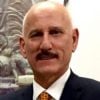
The Iraqi businessman, Sheikh Mohammed Al'Khouzai [Alkhouzai], has announced that he is putting his name forward as a candidate for the position of Prime Minister.
Mohammed, a long-time friend of Iraq Business News, claims support from across the political spectrum, and from a range of tribal leaders. Amongst those endorsing his candidacy are Dr. Mahmoud Al-Mashhadani, MP and former head of Iraqi Parliament; Dr Sayyid Ibrahim Bahr al-Uloom, former Minister of Oil; Irfan al Hiyali, former Minister of Defence; Sheikh Saad Nayef Mashhan Al-Hardan, Head of the Dulaim Tribe; Sheikh Ghassan Aboud Ilhaymous, Head of Tribe Albu Saltan; Sheikh Abdulillah Fahim al Farhud; and Judge Mouayid Riyah.
We took this opportunity to ask Mohammed about his vision for the future of Iraq.
IBN: For those who don't know you, can you give a brief outline of your family history and your current role in Iraqi society?
MAK: My father was from the Khuzaa tribe and my mother the Shammar tribe and my family have been involved in the history of the Middle East and Iraq for thousands of years. First as the custodians of Mecca 500 years prior to the birth of the Prophet (Peace be upon him), to the creation of the Abbasid empire and the city of Baghdad, and more recently as Emirs of the Khuzaa Emirate of the Middle Euphrates, fighting the occupation of the country by the Ottoman Empire for 250 years.
I left the country under political persecution and have lived in the United Kingdom ever since. After the fall of Saddam Hussain, I returned to Iraq and split my time between Iraq and the UK.
I spend a lot of time in dialogue with social, security and political leaders across the world, trying to find a better way forward for Iraq.
Most recently I set up the Iraqi Forum for Dialogue that has senior politicians (past and present), tribal leaders, religious leaders and a number of Generals and Security leaders for the country. The goal of the group is to build a unified solution to the problems our country faces.
I am truly honoured that so many other people share my vision and desire for a better future for our nation.
IBN: What do you see as the biggest challenges to Iraq at the moment?
MAK: The transition from the Saddam regime to a democratic nation has not been easy. Those who have been given the honour of driving our country forward have often acted not to unify the country but to furthering their own success. This is not what leadership is about.
And of course, it is unfair to say that our leaders were given a perfect field to grow our nation's future from; but it is my belief that Iraq is strongest when together, not being pulled apart.
Of course, when faced with external threats or influence it is man's nature to retreat to what he knows is safe; tribe, religion, family.
But when our nature says to retreat from wider social groups in the search of stability, I believe it is in that moment that we should have been uniting at a national level.
The cracks between our people created vacuums of influence filled by foreign actors. It is not to say that we should not look to have a future Iraq working closely with foreign nations; but the future of Iraq should be determined by its people.
And finally, we had to face and are still dealing with issues around Daesh and ISIS. We must eradicate these fake Muslim pretenders. They have no desire to better people's lives; they simply want to force others to extremes to benefit themselves. It's barbaric and they need to be driven not just from Iraq but from the world.
And this division led to three major failings:
- Corruption that has leached the nation's finances into the bank accounts of the few. You can't change a country's fortunes without having the finances to implement change. If we want to push forward, we need the people's money to be spent wisely on building the infrastructure necessary to establish a proud future for our children.
- A failed economy. Our rentier economy is predominantly state-led with the other 90% of GDP being a result of oil. This leaves our economy exposed to global economic change.
- A lack of future. I want to apologise now to the young people of Iraq who face such a hard battle to secure employment and find their path forward. We haven't gifted you the platform from which to build your future and that is something we must do quickly.
IBN: What do you mean when you say that unity needs to be central to the future of Iraq?
MAK: I am the product of two tribes. My family are both Shia and Sunni. I have friends from all regions of Iraq, from all religions and all across the world. We are all trying to make our little bit of the world better for the next generation. On a personal level there really is little difference between us.
If we retreat into what we feel comfortable, we sacrifice the shared future of the country. When people ask me if I am Shia or Sunni, I tell them I am Iraqi. Because that is what I am first and foremost, albeit a devoted Muslim.
We shouldn't only act for one religion or one tribe. For one region or for one industry. We need to build a one Iraq. Because a unified Iraq where the state and the people work together, for a better tomorrow is the foundation from which a new brighter future of Iraq is born.
I am not a poet or orator, but I was always fond of the words of Rudyard Kipling:
"For the strength of the Pack is the Wolf, and the strength of the Wolf is the Pack."
By working together three things happen. First, we can stop corruption. Second we can bring our nation together with new economic projects that promote integration and cohesion and third, we foster national strength through unity.
Imagine what we could do with all that energy we waste trying to divide our nation if we used it instead to work towards a bright future? That's a lot of energy.
IBN: You mention corruption. Do you believe that this can be eradicated?
MAK: We have to believe! If we can't see a future without corruption, then how can we expect to foster civic pride or hope?
How can we expect our people to accept a new way if we don't face the number one problem that has ripped their and the nation's future from them?
We need to target those who are committing corruption and strengthen our judicial system to ensure that we have the teeth to deliver justice.
IBN: When discussing the economy, you said that we need to diversify the economy. What do you mean by that?
MAK: The world is transitioning from fossil fuels to electrification. While Iraq is blessed with natural resources of oil, we cannot base our future on this one commodity alone, as the rest of the world moves away from it.
So, I propose that we establish a national investment fund from the profits of oil to invest in projects that diversify our economy.
This transition cannot be done over-night but we should be future-scoping global and regional economic trends and acting now to ensure Iraq is an active player in the global market in 10, 20, 30 years; not a recipient of welfare from others.
We need to focus on the other areas of the economy that we are able to utilise: agriculture and renewable energy systems. We have the potential to deliver agricultural fertiliser on a truly massive scale to both domestic projects and international customers such as India.
We haven't explored the mineral wealth of Iraq but as a unified nation we have potential minerology that is of great interest to international companies. The only thing keeping them out of Iraq is the security and corruption.
Iraq is a State led economy but we need to transition this to a free market economy. To do this we need to foster and support entrepreneurs. We need to attract foreign companies to come to Iraq and invest; not only creating jobs and paying taxes but passing on vital skills.
IBN: Do you think there can be a positive role for other countries in Iraq?
MAK: I do. We can't allow foreigners to dictate our future either directly or indirectly. But we also must not shun foreign support. Iraq cannot rebuild by itself so it is important that we work with our foreign allies for the benefit of all, yet primarily for our people.
When I was young, my father told me that Iraq is the bridge between Iran and Saudi Arabia. As the bridge, it is important to keep both regional powers in dialogue but also be strong enough to hold them to account.
A strong unified Iraq is better for the region and therefore better for the world.
IBN: Tell us about your decision to run for office?
I have never been aligned to a political party. I can't be someone promoting unity in Iraq if I am aligned to a single Party.
I would be honoured to serve my country one day but I will not forgo my principles for a position in Parliament. If I can serve my country I will; but I will do so for everyone, not a single Party or group.
In the past month or so, I have been approached by many people throughout Iraq, of all creeds and groups, asking me to put my name forward to become the non-partisan Prime Ministerial candidate. These people range from all areas of society, from tribal leaders, politicians, army generals, prominent religious figures and academics, to youth activists and journalists.
Watching the current situation manifest, with political deadlock disabling the progress of our nation, I have decided to accept their proposal. I pledge that if this honour is given to me, I will use it for the sole purpose of benefiting the people.
It is therefore my intention, to run as the independent, non-partisan candidate to become Prime Minister of Iraq, with the view of bringing our once great nation, out of the grips of corruption, sectarianism and lawlessness, to create a place of peace, security and prosperity for all.
Posted in Politics Comments Off on Could Alkhouzai be Iraq's next Prime Minister?

Panel Discussion: Saudi Arabia and Iraq - An Evolving Relationship
Posted on 16 February 2022 .
From The Brookings Institution. Any opinions expressed here are those of the author(s) and do not necessarily reflect the views of Iraq Business News.
Saudi Arabia and Iraq: An evolving relationship
Saudi Arabia and Iraq have long had a complex relationship, at times vying for positions of leadership in the Arab World and often closely influenced by each country's stance toward other powers, notably Iran.
After tense relations following the Iraqi invasion of Kuwait in 1990, the relationship became closely tied to Iranian influence in Iraqi affairs after the US invasion of Iraq in 2003. Today, both countries have taken steps to improve bilateral relations, which remains crucial for the regional order and for Iraqi domestic politics.
On February 9, the Center for Middle East Policy at Brookings hosted an event to discuss this important relationship and its implications for American interests.
The session was chaired by Bruce Riedel, with Katherine Harvey, Ken Pollack and Ranj Alaaldin.
Posted in Iraq Industry & Trade News, Politics Comments Off on Panel Discussion: Saudi Arabia and Iraq - An Evolving Relationship
Iraq Hosts FAO Conference
Posted on 08 February 2022 .
Near East and North Africa countries focus on nutrition, climate, resilience, water and gender
The 36th FAO Regional Conference for the Near East (NERC36) started today with a focus on improving nutrition, building resilient rural communities, optimizing water management, addressing the impacts of the climate crisis and fostering green recovery initiatives, as well as gender-sensitive development strategies.
Agrifood sectors are among those struggling to recover from the shocks created by the COVID-19 pandemic over the past two years, and highlight the importance of sustainable and resilient societies, FAO Director-General QU Dongyu said in opening remarks conveyed virtually to the meeting hosted by the Government of Iraq.
"In the Near East and North Africa region, the pre-pandemic food security situation was already critical" with rising hunger and increasing inequalities jeopardizing the welfare of rural populations, women and youth, and worsening water scarcity, he said.
The Director-General outlined four priority areas for innovation and best practice to support the region's recovery: Reducing the urban and rural socio-economic divide by creating better rural employment opportunities; ensuring food security and healthy diets for all; restoring environmental balances; and building resilience against multiple shocks.
"Action at country level is the core of the 2030 Agenda," Qu said, emphasizing the importance of partnerships and cooperation in achieving the 2030 Agenda.
"Dialogue, joint thinking, cooperation , partnership and the development of new strategies to deal with challenges, especially climate change, are among the priorities to achieve common goals," said Prime Minister Mustafa Al-Khadimi of Iraq in opening remarks. "No society can grow at the expense of another."
The inaugural session was also addressed by Muhammad Karim Al-Khafaji, Iraq's Minister for Agriculture, the Chairperson of NERC36, and Hans Hoogeveen, Independent Chairperson of the FAO Council. The Director-General of FAO expressed his gratitude to the government and people of Iraq for hosting NERC36 during challenging times, and for delegations who joined the meeting in Baghdad.
"With the world experiencing the worst food crisis in 100 years, the FAO Regional Conference for the Near East will provide an opportunity to share expertise and review the capabilities of the countries of the region with a view to helping achieve food security," the Iraqi Agriculture Minister, Mohammad Karim Al-Khafaji, highlighted during his opening speech.
"The conference's output is expected to reflect positively on the future of agriculture in Iraq and to help achieve integration among the countries of the region," he added.
NERC36
The regional conference's agenda includes several high-level segments with ministerial roundtables on core themes to be held today. Tomorrow's agenda will include a side event on water, energy and food in the context of the upcoming COP27, followed by the adoption of a ministerial declaration and the report on NERC36.
The Director-General emphasized he has initiated institutional reforms at FAO to give regional offices more strategic power to ensure local action, and that flagship initiatives to support the Organization's Strategic Framework are already at work in the region.
Three countries in the region are already participating in the Hand-in-Hand Initiative, which aims at increasing agricultural production in areas with the highest rates of poverty and hunger. Seven countries are participating in the 1000 Digital Villages Initiative, which seeks to reduce the digital gap faced by smallholders and rural dwellers, while the new One Country One Priority Product initiative, which focuses on products with unique qualities, holds important opportunities for implementation around the region, Qu said.
More actions are forthcoming, he added, as FAO develops a regional strategy on digital innovation and completes the Regional Technical Platform on Water Scarcity, which will become a knowledge hub on the subject allowing countries around the world to benefit from the vast experiences acquired in the Near East and North Africa.
FAO is also hosting a Coordination Hub to shepherd follow-up actions on the ground after the UN Food Systems Summit 2021.
In preparation for the Ministerial meeting, a Senior Officers' meeting (SOM) was organized in virtual format in January. It was attended by 409 participants from 27 Members as well as representatives from the private sector, civil society and academia. The SOM was coordinated by FAO Assistant Director-General Abdul Hakim Rajab Elwaer, Regional Representative for the Near East and North Africa, along with senior officials from Iraq.
The documents submitted to the meeting are available here.
Members of the NERC: Afghanistan, Algeria, Azerbaijan, Bahrain, Cyprus, Djibouti, Egypt, Iran, Iraq, Jordan, Kuwait Kyrgyzstan, Lebanon, Libya, Malta, Mauritania, Morocco, Oman, Pakistan, Qatar, Saudi Arabia, Somalia, Sudan, Syrian Arab Republic, Tunisia, Turkmenistan, United Arab Emirates, Turkey, Yemen.
(Source: FAO)
Posted in Agriculture Comments Off on Iraq Hosts FAO Conference
Iraq and Saudi Arabia to Cooperate in Agriculture
Posted on 01 February 2022 .
By John Lee.
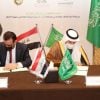
Iraq's Minister of Agriculture, Muhammad Karim Al-Khafaji, and the Saudi Minister of Agriculture, Water and Environment, Abdul Rahman Al-Fadhli, have signed a memorandum of understanding (MoU) promoting cooperation in the areas of agriculture and fisheries.
The agreement includes cooperation in a number of fields, including: plant production and plant pest control, support for ways to combat desertification and preserve forests, pastures and biodiversity, methods for developing agricultural marketing and trade exchange for agricultural products, wastewater management, treatment and reuse in the agricultural sector, in addition to security food and agriculture, animal and vegetable quarantine, veterinary laboratories, and investment support in the areas of animal production, animal health, fisheries and feed production.
According to the agreement, joint seminars and workshops will be held, a number of trade and investment exhibitions will be held, and the establishment and operation of agricultural projects will be encouraged.
A joint working team will also be formed within the work of the Saudi-Iraqi Coordination Council to consult about the necessary measures and measures to be taken to enhance and develop cooperation in accordance with the provisions of the memorandum signed between the two sides.
(Source: Saudi Ministry of Agriculture, Water and Environment)
Posted in Agriculture Comments Off on Iraq and Saudi Arabia to Cooperate in Agriculture