


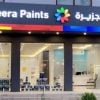
Jazeera Paints opens New Showroom in Rania
Posted on 09 August 2022 .
By John Lee.
Saudi Arabia-based Jazeera Paints has opened its sixth showroom in Iraq.
The new showroom is in Ranya [Rania], in the Northeast of the Kurdistan Region, which has seen significant economic and industrial development in recent years.
It is close to other towns such as Qaladze, Dukan, Chwar Qwrna, Sangasar, and Hajiawa, and will also, "serve their needs for high-quality paints and construction solutions."
Several distinguished city officials, engineers, and contractors interested in construction and urbanization attended the branch opening.
This is Jazeera Paints' sixth showroom in Iraq; the previous five are in Sulaymaniyah, Chamchamal, Kirkuk, Ramadi, and Basra.
By the end of 2022, the company intends to expand further in Iraq, opening three showrooms in three cities.
(Source: Jazeera Paints)
Posted in Iraq Industry & Trade News Comments Off on Jazeera Paints opens New Showroom in Rania
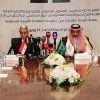
Saudi Arabia allocates Grant for Renovation of Ibn Al Khatib Hospital
Posted on 29 July 2022 .
By John Lee.
Iraq and Saudi Arabia have signed a memorandum of understanding (MoU) regarding the allocation of a grant from the government of Saudi Arabia to finance the renovation of Ibn Al Khatib Hospital in Baghdad.
The Saudi embassy initially announced its support for the hospital last year, following a fire that killed at least 82 people, and left more than 100 injured.
The grant will be provided through the Saudi Fund for Development (SFD).
During the meeting, Iraq's Ambassador to Saudi Arabia, Dr. Abdul Sattar Hadi Al-Janabi, praised the critical role played by the Kingdom through the SFD in supporting the health sector and the infrastructure in Iraq. He highlighted the importance of the present project in enhancing the livelihood of many Iraqis and their access to essential health services.
According to the official Saudi Press Agency, the Kingdom has allocated $1.5 billion for soft loans through SFD to support development in Iraq.
(Source: Saudi Press Agency)
Posted in Construction & Engineering In Iraq, Healthcare Comments Off on Saudi Arabia allocates Grant for Renovation of Ibn Al Khatib Hospital

Saudi Arabia approves Maritime Transport MoU with Iraq
Posted on 28 July 2022 .
By John Lee.
Saudi Arabia has approved a cooperation agreement with Iraq relating to maritime transport.
The official statement following a meeting of the Saudi Cabinet said simply, "approving a cooperation agreement between the government of the Kingdom of Saudi Arabia and the government of the Republic of Iraq in the field of maritime transport," without giving any details.
(Source: Saudi Press Agency)
Posted in Iraq Transportation News Comments Off on Saudi Arabia approves Maritime Transport MoU with Iraq

Deep Data: GCC Electricity and Iraq's Reliance on Iran
Posted on 25 July 2022 .
From Amwaj Media. Any opinions expressed are those of the author(s), and do not necessarily reflect the views of Iraq Business News.
Deep Data: GCC Electricity and Iraq's Reliance on Iran
In connection with the recent Arab summit in Jeddah, Iraq and Saudi Arabia are forging ahead with efforts to connect their electricity grids.
The plan revolves around a new power line between the two neighbors with a capacity of 1 gigawatt (GW). Separately, Iraq and the Gulf Interconnection Authority (GCCIA) are advancing a scheme to power southern Iraq.
While Iraq has long been under pressure from the US and some Arab states to reduce reliance on energy imports from Iran, informed sources in Baghdad characterize the shifts underway as a win-win for all sides-pointing to burgeoning domestic demand in Iran, and the possibilities offered by a new regional electricity market.
Posted in Iraq Industry & Trade News, Iraq Oil & Gas News, Politics Comments Off on Deep Data: GCC Electricity and Iraq's Reliance on Iran
Prime Minister: Iraq is finding its Own Footing
Posted on 14 July 2022 .
By John Lee.
Writing in Foreign Policy, Iraqi Prime Minister Mustafa al-Kadhimi says that after leaning heavily on the United States, Iraq is finding its own footing.
Original article (subscription required):
On Biden's Middle East Visit, He Will See a New Iraq at the Table
Summary of the main points of the article, according to the Media Office of the Prime Minister:
Arabic: here;
English, below (via Google Translate):
When US President Joe Biden arrives in the Middle East this week, he will arrive in a region facing many challenges, such as terrorism, food security, and climate change. But the Middle East today is a region facing these challenges with a group of leaders seeking positive change.
I will represent a recovering Iraq that stands with greater confidence on the international stage stronger than it has been since President Biden's last visit in 2016, or even more than when we met in the Oval Office last year.
The United States has had a significant role in supporting Iraq over many years, and we are grateful for the help and sacrifices that Americans have made to support us. Today, Iraq is drawing its own path, locally, regionally and internationally.
What I hope Mr. Biden will realize after our meeting in Saudi Arabia on Friday is my personal determination, and the determination of the Iraqi people to solve Iraq's problems through Iraqi solutions.
Iraq is now a multi-party and multi-ethnic constitutional democracy. Yes, we are still in the protracted process of forming a new government after the elections last fall. The formation of the government took a long time, which has indeed frustrated many inside and outside Iraq.
I share that sentiment, but I am also proud of the state's ability to continue to serve Iraqi citizens, protect our natural resources, and play a leading role in regional initiatives that advance prosperity and security.
Nearly two decades have passed since the elections were called, which is a great evidence of the extent to which democracy has been entrenched in Iraq after more than three decades of Saddam's brutal dictatorship; This is a success story that cannot be overlooked.
The political difficulties that result from the elections are an example of the confused conditions that democracy sometimes produces, and confirm the need to consolidate the principles of democracy in Iraqi public life, and to ensure its sustainability in a way that is not limited to the ballot boxes.
The path towards a successful democracy requires time, will and leadership. With our two feet after the expulsion of ISIS from our land, today we can look towards better prospects, as our country is no longer a passive member of the international community; We are now active at the regional and international levels, including the initiative to host the multilateral summit aimed at strengthening regional cooperation and stability.
Last year, Iraq hosted the Baghdad Conference for Cooperation and Partnership with the leaders of Jordan, the United Arab Emirates, France, Qatar, Kuwait, and Egypt, with the participation of ministers from Turkey, the Islamic Republic of Iran, and Saudi Arabia.
The conference discussed security, economic, and environmental issues whose solutions require goodwill, sincere participation, and cooperation between states, through these and other initiatives, we were able to play a positive role in the region.
This is evidence of my government's commitment to spare no effort to achieve stability in our country and the region. While we seek to de-escalate tensions by bringing the various parties together, we also strongly support respect for each country's sovereignty and the need for non-interference in the internal affairs of other countries.
Our relationship with the United States has changed for the better, and while our historical cooperation revolved around security and combating terrorism, the relationship is now expanding to include other no less important societal challenges, such as: economy, energy, climate change, environment, health, education, and culture.
With progress made by Iraq, our strategic dialogue with the United States has also progressed, and the transition from the American combat role to another broad-minded form has taken place with a deepening of relations outside the security framework.
Our partnerships with the United States Agency for International Development and other American institutions provide us with influential support and technical expertise in our journey to build our country.
The main motive for this growth in the relationship was the Iraqi national need to invest in the repercussions of regional stability, economic development, environmental security, solutions to climate change, and food security.
Geographically, Iraq is located in the hottest regions in the world, and the most affected by climate changes, and concern about dust storms, high heat waves, drought, and lack of water supply has become the prevalent among our people compared to the terrorist threat.
But Iraq remains an important producer of oil at the international level, with huge reserves that are not fully explored, but this economic artery increases our environmental challenges.
Therefore, we are working quickly to invest gas that burns in oil fields, and we want to convert our strong sunlight into electrical energy that can support the development of our industries, and create jobs for our young generations.
Iraq has a lot to offer the region, whether in terms of economic integration, free trade opportunities or the stability of energy markets.
We have built bridges of important relations with countries such as: Jordan, Egypt, and the Gulf Cooperation Council, and we have begun to see tangible results for this improvement in relations in various forms, including the development of electrical interconnection with our Gulf neighbors as well as Jordan, the pivotal regional state.
At the end of last year, we completed the payment of the dues to the State of Kuwait, which resulted from the disastrous invasion carried out by Saddam in 1990.
There are problems that need to be addressed, foremost among which is that we, the Iraqis, strengthen the state's authority and control over the spread of uncontrolled weapons.
The problem of recovering weapons after they fell into the wrong hands suffered from the most powerful countries; In order to protect their democracies, and address them in Iraq will require Iraqi solutions that are sustainable and require strategic patience inside Iraq and from our partners.
The United States and our other international partners should look at and deal with the Iraqi issue from the perspective of the progress we have made, as well as should.
(Sources: Foreign Policy, Media Office of the Prime Minister)
Posted in Iraq Industry & Trade News, Politics, Security Comments Off on Prime Minister: Iraq is finding its Own Footing
Iraqi PM sets Objectives for Regional Summit
Posted on 14 July 2022 .
By Al Monitor staff. Any opinions expressed here are those of the author(s) and do not necessarily reflect the views of Iraq Business News.
Iraqi prime minister sets objectives for regional summit
Amid longstanding political deadlock and economic and environmental challenges, Iraqi prime minister Mustafa Kadhimi is attending the GCC +3 Summit in Saudi Arabia.
Posted in Iraq Industry & Trade News, Politics, Security Comments Off on Iraqi PM sets Objectives for Regional Summit

Debating the Iraq-Jordan Oil Pipeline
Posted on 12 July 2022 .
By Ahmed Mousa Jiyad.
Any opinions expressed are those of the author, and do not necessarily reflect the views of Iraq Business News.
A confused and confusing decision by the Council of Ministers-CoM followed by an imprecise statement from the Ministry of Oil-MoO regarding Iraq-Jordan/ Basra-Aqaba Oil Pipeline-BAOP project had ignited a new wave of serious concerns and protests that eventually led to filing two lawsuits of appeal before the Federal Supreme Court-FSC and, probably, more cases are in the making, but surely the heated debate continues unabated.
To clarify what surrounds BAOP project, a debating platform, Al-Mushtarek, invited me to address the mater; by utilizing Zoom facility and with help of PowerPoint the event was successfully convened.
The topic is, Basra - Aqaba Oil Pipeline: Economic, Legal, Geopolitical, Geostrategic and National Security Perspectives. My purpose is to make independent, professional, constructive, and facts/evidence-based contribution to the national ongoing debate regarding this pipeline.
Throughout my presentation I covered some basic issues before opining the debate by and with the direct participants who are in many different countries and others who posted questions through other social media means, particularly Twitter.
The first issue was "Reality and Implications of Semi Landlocked Geographic Location".
The reality, Iraq is the only Arab resource rich (oil and gas) country that has very narrow access to international waters through north Arabian Gulf; due to its imbalance economic structure, it has high dependency on natural resource, specifically oil, exports revenues, and after almost a century of oil discovery the failed economic policies only deepen such imbalance, making it more chronic and the country as clear example manifesting "Dutch disease" and "Resource curse" effects, exacerbated by devastating kleptocracy of post 2003 invasion.
Geography is sovereign, and thus there are, for Iraq, many implications of relevance to our topic- oil export pipelines.
Each of the neighboring countries, i.e., Jordan, Syria, Saudi Arabia, Turkey possesses a "location rent"; this could be economical and financial (in terms of transit fee, oil supplies or operating the pipeline) and political leverage, competition and interference.
Each export outlet has, simultaneously, geopolitical risks and geostrategic importance and, thus, there are high degrees of associated vulnerability and uncertainty.
The diversity and capacities of oil export outlets through pipelines and seaborne represent an economic rationality problem, i.e., if all oil export outlets are developed, total export capacity would exceed total oil production capacity by many folds.
The above reality and implications are bound to impact Iraqi decision making and the national debate on any proposed oil pipeline.
My second talking point is to provide brief background and data on BAOP.
This project has been under official and formal considerations for four decades; it went through two distinct periods of intensive attention while shelved for almost 28 years in between.
The first period, 1983/4, was short but witnessed very intensive efforts at high level of decision making.
A pipeline of one million barrel daily, the US Bechtel Co., was selected to execute the project that could cost estimated to be one billion US Dollar, half of which would be offer by the US EXIM Bank' financial guarantees.
Iraq requested US government security guarantees for the pipeline against any Israeli attack, but the US government refused to make such undertaking.
The project was shelved, and Iraq pursued other options; the first was to expand the capacity of Kirkuk-Ceyhan (Turkey) pipeline-ITP through a loan from APICORP of OAPEC and, the second was a new pipeline through Saudi Arabia-IPSA, financed fully by Iraq.
BAOP project was completely forgotten due to ITP expansion, IPSA, Kuwait invasion, the sanction and US led invasion of 2003 and its dramatic far reaching consequences.
The second period started in earnest in 2012 and continued to date. Every government and prime minister stated and asserted they have concluded a "Frame Agreement" with Jordan regarding the pipeline, but no substantive verifiable complete documents comprising such frame agreement and feasibility study ever made public!!!!
From whatever available information, I premise my assessment on the following formal data:
The pipeline project is composed of two parts: Part 1, between Basra and Haditha with designed capacity of 2.2mbd, while Part 2, is between Haditha and Aqaba with designed capacity of 1mbd. The two parts have different pipeline sizes, length and there are many pumping stations and tank farms along them and a loading terminal at Aqaba.
The entire project was reportedly estimated cost at $26billion ($4billion for part1 (15.4%) and $22billion for part 2 (84.6%)) as an "investment BOOT/BOT", or between $8.5 - $10.9billion as "EPCF".
Obviously, the difference is very huge indeed, but no official clarification was provided, and our repeated questions remained unanswered by any authority within the government!!
I move now to my third item which is about MoC Decision 95 of April 2022.
MoC agrees to adopt a plan to execute the pipeline by the Chinese CITIC' consortium with Worley Engineering as supervising consultants, according to the proposed EPCF by the Ministry of Oil; the project is to be financed by the Iraq-China strategic cooperation framework and, after 2022 state budget law is promulgated.
The above decision raises more questions than offers answers, clarifications, or assurances.
Discussion within the MoO revealed that no sufficient funding is available under the Iraq-China strategic cooperation framework; no other mean of funding is secured and, 2022 state budget law has not been even proposed so far as the new government has not been formed!! Moreover, nothing at all was released regarding the EPCF proposed by the ministry- utter lack of transparency. Also, it is not clear whether the proposed EPCF is the same or different from that proposed by the MoO in October 2021 and sent then to the Ministry of Planning-MoP for inclusion under the investment provisions of the state budget. And, what makes the matter murkier is a follow-up statement by the MoO asserting MoC decision was only a "roadmap" as the project is still under study and consideration!!
No surprise, therefore, that the pipeline project and MoC decision ignited powerful reactions, mostly by Iraqi parliamentarians and oil professionals.
These reactions include "parliamentary questions" that require formal answer from the MoO, various public statements by parliamentarians and other legal actions. Two legal cases were field before the FHC by the outspoken parliamentarian Dr. Hanan Fatlawi: a "stay/ restraining order" (Amr walaei) and an appeal case, both dated 16 April 2022. Also, a former member of the parliament, Lawyer, Yosuf Al-Kolabi and a group of lawyers and parliamentarians have been considering launching another appeal before FHC.
For the economic evaluation of the project, I used and calculated three criteria as presented briefly hereunder.
- Cost of funding (based on EPCF contract according to MoO October 2021 and MoP December 2021 official data) of capital cost ca. $9 billion, funding cost-accumulated interest ca. 1.9billion. Total cost payable in six equal annual installments.
Funding cost, i.e., accumulated interest, ranges between 21% and 109% of capital provided by the contractor, depending on when these six installments start: after the completion of the pipeline or at the commencement of the construction of the pipeline.
These funding costs are unreasonably high and, if the project is to be financed by the Iraq-China strategic cooperation framework, such cost of funding is totally unacceptable and contravene with the provisions of that framework.
- Cost of "piped-barrel". This cost was estimated by using full-cycle method; 25 years economic life; $300 million operating cost, $0.25/b transit fee; 4 years construction period with capex distributed evenly; pipeline capacity utilization rate-PCUR ranges from minimum 20% and maximum 80% of designed capacity.
The cost ranges between ca. $10.4/b at 20% PCUR and ca. $2.7/b at 80% PCUR. The implications are if seaborne barrel cost Basra FOB- Aqaba is lower than $10.4/b, it is not rational then for Jordan to import 200kbd through this pipeline AND if it is lower than $2.7/b the pipeline then has ZERO feasibility; it loses any competitiveness!!!
- Limitation and deception of conventional commercial feasibility indicators such as NPV, IRR and Payback-period; this is due to the intrinsic biasness to oil price and its impact. This was proved analytically and empirically in my previous articles on the pipeline and how such arguments prompt corruption, favoring contractor interest and ignore efficiency considerations.
In addition to the above standalone assessment, this project should be subject to thorough comparative assessment; such comparative evaluation covers exports options comprising existing, possible, and potential alternatives.
This takes me to address very briefly these comparative options for export outlets.
- Southern route/Basra export outlets. Now KAOT is expanding to add 600kbd and 300kbd within 6 months and, adding one more SPM would add 900kbd; both options are cheaper, quicker, fully sovereign, have more oil marketing flexibility and generate higher "Netback" for Iraq. Hence, either option is more valuable compared to the BAOP from capacity & operation, economic, financial, national economic security, strategic importance, and geopolitical complications among others.
- The Turkish route provides three options. I- Rehabilitation of pipeline section Kirkuk- Feishkhabor measurement station on Iraq-Turkey borders; II- Use/buy current KRG (KAR/Rosneft) pipeline; III- revive Turkish 2011 proposal for a new Basra-Ceyhan pipeline at, then, $2billion cost for 1.6mbd and 18-24 months construction period. Either option I & II is better than "Part 2" of BAOP, and option III is highly favorable than entire BAOP.
- The Syrian route. This route has many unique advantages: two pipelines- more than 2mbd; two types of crude- regular and heavy oil; two export facilities- Banias and Tertus on the Mediterranean; pipeline to Lebanon; it goes along Railway line Iraq-Syria; mutually supportive to IIS gas pipeline; it benefits from China's BRI. But this route currently faces formidable geopolitical risks: American policy and military, Qasad, Daesh presence. Also faces opposition from Turkey, SA and Jordan.
- Rehabilitating IPSA; the pipeline costed Capex $2.7billion, Opex $72 annualy, pipeline capacity 1.65mbd (1990). Using same BAOP methodology IPSA had piped-cost of $1.49/b at 20% PCUR and $0.37/b at 80% PCUR (these should be escalated by annual index increase). IPSA rehabilitation remains viable option with competitive/ comparative advantage (from cost, marketing flexibility and geopolitical complexity) over BAOP if it requires partial rehabilitation. But for complete rehabilitation, this route has one disadvantage since most of it is in Saudi Arabia compared with other routes; but this depends on cost of full rehabilitation.
Pro BAOP arguments emphasis the strategic importance of the project; but Aqaba location refutes such claim. Analytically and empirically three strategic national security equations should not be ignored:
- Where there are four states that have direct presence in the area, the geopolitical risks are highly probable and thus the geostrategic importance, for Iraq, diminishes; this applies to Aqaba.
- When a location has Global Strategic Importance, the local geopolitical risks are less probable and less impactful and, thus, geostrategic importance for Iraqi oil exports are secured; this applies to Basra seaboard export outlets via Strait of Hormuz.
- BAOP-P2 route is highly susceptible to local terrorist and sabotage inside Iraq and Jordan, thus very vulnerable from national security and strategic perspectives.
What to do and the way forward
Recent government move contravenes the constitution on many aspects and thus, any legal action against government action should be supported. The government and MoO in particular, should provide and make the FEED and/or a comprehensive feasibility study publicly available.
BAOP' Frame Agreement is an international bilateral treaty with over 25 years term and, thus it should be debated, approved, and legalized according to the current constitution and valid laws.
Aqaba area is the most vulnerable geopolitically as four states can have very serious impacts: Egypt, Saudi Arabia, Jordan and Israel. Iraqi Ministry of Foreign Affairs should provide its assessment particularly regarding Wadi Araba Agreement between Jordan & Israel and advise on possible implications on this project.
Based on the published data and information, the economic, financial, geopolitical and geostrategic analysis do not support this project and particularly so through thorough comparative assessment. More data and transparency are urgently needed and thus are prerequisite for making final decision on expanding Iraq's oil export outlets.
The debate on this BAOP with my PowerPoint slides, in Arabic, is available through the following link https://www.youtube.com/watch?v=apg0JY51rQ4
Click here to download the full report in pdf format.
Mr Jiyad is an independent development consultant, scholar and Associate with the former Centre for Global Energy Studies (CGES), London. He was formerly a senior economist with the Iraq National Oil Company and Iraq's Ministry of Oil, Chief Expert for the Council of Ministers, Director at the Ministry of Trade, and International Specialist with UN organizations in Uganda, Sudan and Jordan. He is now based in Norway (Email: mou-jiya(at)online.no, Skype ID: Ahmed Mousa Jiyad). Read more of Mr Jiyad's biography here.
Posted in Ahmed Mousa Jiyad, Iraq Oil & Gas News Comments Off on Debating the Iraq-Jordan Oil Pipeline
Saudi approves MoU to supply Electricity to Iraq
Posted on 16 June 2022 .
By John Lee.
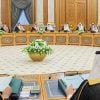
Saudi Arabia has approved a memorandum of understanding (MoU) with Iraq, under which Saudi Arabia would provide electricity to Iraq.
The agreement was approved at meeting of the Saudi cabinet (pictured) on Tuesday, chaired by King Salman bin Abdulaziz Al Saud.
According to the state-controlled Iraqi News Agency (INA), the routes of the new lines have already been decided,
INA quotes Iraqi Electricity Minister, Adel Karim, as saying that the link will be completed within two years.
(Sources: Saudi Press Agency, Iraqi News Agency, Shafaaq)
Posted in Iraq Industry & Trade News Comments Off on Saudi approves MoU to supply Electricity to Iraq
PM announces new Ministry of Electricity and Alternative Energy
Posted on 09 June 2022 .
By John Lee.
The Iraqi Prime Minister has announced that the Ministry of Electricity is to be renamed the "Ministry of Electricity and Alternative Energy".
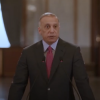
At a press conference in Baghdad, Mustafa al-Kadhimi (pictured) said it is unreasonable to build gas power stations when there is not enough gas available, so the new ministry will actively seek alternative power sources.
In the past, he said, power stations were built, "in an absurd manner, without planning and without knowledge."
He also referred to the country's electrical interconnection projects with the Gulf states, Saudi Arabia, Turkey, Jordan and Egypt, which will provide power until Iraq reaches self-sufficiency.
Addressing the annual shortage of electricity during the very hot summer season, he said that last year's production of 21,000 MW will not be achieved this year, due to the reduction in gas supply from Iran.
(Source: Govt of Iraq)
Posted in Iraq Industry & Trade News, Iraq Oil & Gas News, Politics Comments Off on PM announces new Ministry of Electricity and Alternative Energy
Saudi Arabia and Iraqi discuss Connecting Electricity Grids
Posted on 07 June 2022 .
By John Lee.
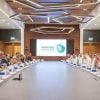
Iraq's Minister of Oil, Ihsan Abdul-Jabbar Ismail, has met with the Saudi Minister of Energy, HRH Abdulaziz bin Salman, to discuss connecting their respective electricity grids.
They also discussed enhanced energy cooperation between the two countries, and the work of the Saudi-Iraqi Coordination Council.
Iraq and Saudi Arabia signed a memorandum of understanding (MoU) in January to link their power grids.
(Source: Saudi Ministry of Energy)
Posted in Iraq Industry & Trade News, Iraq Oil & Gas News Comments Off on Saudi Arabia and Iraqi discuss Connecting Electricity Grids