


Deal Signed to Develop Iraq's Mansuriya Gas Field
Posted on 24 January 2022 .
By John Lee.
The Chinese company Sinopec (China Petroleum & Chemical Corporation) has signed a deal to develop the Mansuriyah gas field in Diyala.
The field, near the Iranian border, is expected to produce 300 million standard cubic feet (Mmscf) per day of gas, which will be used for electricity generation and "various industrial projects".
With an area of 150 km2 and gas reserves estimated at 4.5 trillion standard cubic feet, Mansuriyah is the second largest gas field in Iraq, after the Akkas field in Anbar Province.
Sinopec will have a 49-percent interest in the field, with Iraq's state-owned Midland [Middle, Central] Oil Company having 51 percent.
Previous information suggested that the contract will run for 25 years, and may be extended for an additional five years.
In 2010, an agreement had been signed for the field to be developed by Turkish Petroleum (TPAO) (37.5%), Iraqi Oil Exploration Company (25%), Kuwait Energy (KEC) (22.5%), and Kogas (15%). This consortium stopped development in 2014 due to security concerns, and the agreement was reportedly cancelled in 2020.
The signing follows the initial announcement of the award in April 2021. At the ceremony, the Minister for Oil clarified that the "final" contract will need to be signed by the next government.
(Source: Ministry of Oil)
Posted in Iraq Oil & Gas News Comments Off on Deal Signed to Develop Iraq's Mansuriya Gas Field

Video: Pipeline Explosion appears caused by Falling Pylon
Posted on 21 January 2022 .
By John Lee.
Australia's SBS News has published CCTV footage purporting to show the explosion that temporarily closed the Kirkuk-Ceyhan pipeline earlier this week.
It appears to show an electricity pylon falling on the pipeline.
According to Kurdish news agency Rudaw, a group affiliated with the Kurdistan Workers' Party (PKK) had claimed responsibility for the attack.
(Sources: SBS News, Rudaw)
Posted in Iraq Oil & Gas News Comments Off on Video: Pipeline Explosion appears caused by Falling Pylon
Half a Million Plots of Land allocated for Housing
Posted on 13 January 2022 .
By John Lee.
Prime Minister Mustafa Al-Kadhimi has confirmed that more than half a million plots of land have been allocated for three million citizens under the "Dari" housing initiative.
Applications for the scheme were made via an online process.
Addressing the Cabinet, al-Kadhimi said that a plan has been made to provide the sites with services such as potable water, sewage network, electricity, internet and roads.
He added that about 186,000 plots have already been distributed to citizens.
(Source: Iraqi Cabinet)
Posted in Construction & Engineering In Iraq, Politics Comments Off on Half a Million Plots of Land allocated for Housing

Dana Gas achieves 50% Gas Production Growth in 3 yrs
Posted on 13 January 2022 .
Dana Gas and its partner, Crescent Petroleum, have reported record sales gas production from their operations in the Kurdistan Region of Iraq (KRI), reaching 452 million cubic feet of gas per day (MMscf/d) at the end of 2021.
The production milestone is the culmination of numerous process improvements at the Khor Mor gas plant, including a bypass project completed in 2020 as well as a de-bottlenecking programme earlier in 2018. Together, the process improvements have grown the production by 50% from 305 MMscf/d in 2018.
Dana Gas and Crescent Petroleum jointly operate the Khor Mor and Chemchemal gas fields on behalf of the Pearl Petroleum consortium, supplying the gas which enables much needed electricity generation in the KRI, and also producing close to 16,000 barrels of condensate and 1,000 tonnes of LPG per day. The successful process improvements will be reinforced by the KM250 expansion project at the plant which is currently under implementation, and will increase total capacity by an additional 55% to 700 MMscf/d by April 2023.
Major works for the US$630 million KM250 expansion project resumed in April, 2021 after a delay of one year due to the COVID pandemic. The project is now on track for the new target start date of April 2023. As part of the expansion works, the Company is also preparing to drill up to five development wells, which are scheduled to commence production in March 2022.
The KM250 Gas Expansion Project is supported by a $250 million financing agreement for 7 years with the U.S. International Development Finance Corporation (DFC) which was announced in September 2021. After completion of the KM250 project, the partners also plan a further KM500 train that would raise production to almost 1 billion cubic feet per day to meet rising demand for cleaner burning natural gas and electricity generation in the Kurdistan Region and all of Iraq.
Majid Jafar, CEO of Crescent Petroleum and Board Managing Director of Dana Gas, said:
"The achievement of this production milestone underscores the progress we continue to make at Khor Mor to meet the rapidly growing demand for natural gas in the KRI. Despite the challenges the whole world has faced over the past two years, we are proud to have continued delivering uninterrupted supply of clean-burning natural gas to support the KRI economy and enable a healthy recovery. Meanwhile our major expansion plans at the Khor Mor and Chemchemal fields to target 1 billion cubic feet per day in the coming few years will enable improved services across the region for years to come."
Dr Patrick Allman-Ward (pictured), CEO of Dana Gas, said:
"This milestone is testament to our people and their hard work making consistent production growth possible at our Khor Mor gas plant. Our continued investments since 2018, notably the Khor Mor de-bottlenecking and bypass projects, have allowed us to deliver reliable supplies of clean energy to support the KRI economy and its people, with enhanced economic and environmental benefits which will increase as we further grow production."
Total investment by the Pearl Petroleum consortium exceeds US$2.3 billion to date, with total cumulative production of over 360 million barrels of oil equivalent (boe) of natural gas and liquids. The uninterrupted supply of gas to power plants in Erbil, Chemchemal and Bazian provides over 80% of the KRI's power generation and has resulted in significant fuel cost savings through substitution of diesel representing both environmental and economic benefits for the Kurdistan Region and Iraq as a whole.
The displacement of diesel fuel for power generation in the KRI with gas has also enabled emissions savings of 42 million tonnes of CO2, thereby making a major contribution to reducing greenhouse gas emissions and reducing local air pollution in the region as well as supporting the transition to better energy sources to tackle global climate change.
(Source: Dana Gas)
Posted in Iraq Oil & Gas News Comments Off on Dana Gas achieves 50% Gas Production Growth in 3 yrs
Finland gives additional $1.7m for Stabilization in Iraq
Posted on 01 January 2022 .
Finland Renews Commitment to Stabilization With New Contribution
The United Nations Development Programme (UNDP) in Iraq welcomes an additional EUR 1.5 million (US$ 1.7 million) contribution from the Government of Finland to its flagship programme the Funding Facility for Stabilization (FFS).
The critical support will bolster ongoing efforts to stabilize the five governorates liberated from the Islamic State of Iraq and the Levant (ISIL). Since 2015, the FFS has supported over 3,000 projects, restoring essential services, supporting livelihoods, building municipal capacity and fostering cohesion in areas liberated from ISIL.
"UNDP's ability to deliver to the highest standard at speed and scale makes us the development partner of choice. This would not be possible without the continuous and generous support from international partners such as the Government of Finland," says UNDP Resident Representative for Iraq, Zena Ali Ahmed.
"However, critical stabilization needs remain as over 1 million people are still internally displaced, including the hardest-to-return populations. The Government of Finland's contribution comes at an important time in Iraq's recovery from years of conflict, as the country looks to safeguard the hard-won stabilization gains and prevent ISIL's resurgence," adds Ms. Ali Ahmad.
"Finland has been supporting the Facility since 2016 and we are proud to renew our commitment. UNDP and its partners have achieved many concrete results during these years, but Iraq still faces a multitude of challenges. Finland is a long-standing and solutions-oriented partner to Iraq," says Ville Skinnari, Finland's Minister for Development Cooperation and Foreign Trade.
To date, FFS projects are estimated to have benefitted more than 6 million individuals in the target areas with 17.5 million benefits accruing to them, mostly in Ninewa and Salah al-Din, and in sectors such as electricity, health and water.
(Source: UN)
Posted in Iraq Industry & Trade News Comments Off on Finland gives additional $1.7m for Stabilization in Iraq

Jiyad: IEITI Annual Reports Continue, but Changes are Needed
Posted on 22 December 2021 .
By Ahmed Mousa Jiyad.
Any opinions expressed are those of the author, and do not necessarily reflect the views of Iraq Business News.
IEITI Annual Reports Continue but Changes in Form, Quality and Substance are Crucial and Needed
Iraq Extractive Industry Transparency Initiative (IEITI) issued its 2018 annual report and, currently, is processing its combined annual report, i.e., for 2019 and 2020 in a single issue.
Releasing the annual reports, though with two year time-lag, is undoubtedly commendable efforts. But the qualitative aspects and lack of impacts of these reports have been constantly identified with flaws and, thus, cause much concerns and raise very serious questions.
Consequently call upon IEITI and EITI is long overdue to undertake thorough revision aiming at making such annual reports different, better, relevant and helpful in enhancing real and effective transparency in the extractive industry in Iraq, more than what has been the case so far.
IEITI issued its tenth annual report, covering 2018, by end March 2021. 2018 preliminary report was delivered on 5 February 2020 and the final version was supposed to be released by latest end of 2020. Due to Covid-19 effect an extension of three months was granted by the International Secretariat of EITI- Oslo; it was release by 20 March 2021.
Currently, IEITI is processing its combined annual report, i.e., for 2019 and 2020 in a single issue; the preliminary report was presented to the MSG on September 2021 and the final report is scheduled for publication on March 2022.
Davinci Consulting / Geneva Group international (DCGGI) was contracted as the Independent Administrator- IP (according to EITI guidelines) to produce the annual reports for 2018, 2019 and 2020.
I reviewed all previous nine IEITI annual reports, and this current review is a continuation of my constant follow-up and monitoring of IEITI activities and my database relating to this topic.
This review covers first IEITI 2018 report followed by brief notes on the preliminary report of the forthcoming 2019/2020 combine report and ends with a few concluding remarks
IEITI 2018 Report
The 2018 Report comprises seven sections with executive summary and list for terms and abbreviations. It is a rather long report, 131 pages, and has 25 files (accessed through different web-links)
After reading the report I can make the following brief remarks on this report.
The executive summary, comparative to previous annual reports, is poor and limited in coverage, conceptually ambiguous, misleading and, though it is short, its' data was presented twice in tabular and graphic forms; totally unnecessary.
Except a few substantive improvements much of the contents of the main report were repetition from previous reports and sometimes using the usual copy, modify and paste- CMP method.
The web-links to the above mentioned 25 files indicate those files are either prepared or provided by the related entities, mostly Iraqi entities. Some of the files are in MS Excel with many sheets of varying size, while others are in MS Word.
The consultant, i.e., the IP did not analyse or provide explanatory notes or reconciliation of the contents of most of these files. A random check on the contents of some of these files raises many questions on the validity, accuracy and relevance of their contents. IP left the burden of assessing and using these files on the readers. And since no comments on or revision of the annual report were posted on IEITI website, it seems the MSG members, probably did not read thoroughly the report itself and most or all these 25 files!!!
The reports uses excessively and unjustifiable both tabulations and graphs even for simple two items; this lengthened the report (page wise) and increase its size (bitwise). Moreover, some of the graphs are confused and confusing.
All tables in the reports haves no number and no title and some of them are not professionally done. No references were provided for these tables and thus, it is impossible to check their accuracy or validate their contents.
There are many methodological and conceptual flaws, which could cause serious misunderstanding; below are a few examples.
Neither all activities of the Ministry of Oil nor all activities of the Ministry of Industry and Minerals are "extractive"!!!
Similarly, "associated gas", "free gas", "dome gas" all are "natural gas"; but the distinction between them is vital when one considers their data and how it is used. Moreover the term "gas burnt non-investable" is technically wrong and misleading as it justifies flaring!!!! Also there is difference between "liquid gas" and LPG!!
There is no "Amman" oil in SOMO's export price setting mechanism for the Asian market. This error has been repeated in previous annual reports due to CMP method; but, why SOMO representative in the MSG did not correct this apparent repetitive flaw!!
Also SOMO do not use "ICE Brent" or "NYMEX WTI" as marker crudes in its price formula for European and Americas markets.
SOMO is not "The revenue recipient government agency" for "Crude oil exports" and not recipient government agency for "the value of oil loaded by IOCs operating within the licensing rounds".!!!!
Moreover, IOBs do not make direct payment of export revenues to DFI.
When it comes to SOMO, the IP seems to be totally confused in understanding the role of SOMO and the flowchart of oil export revenues, or different parts of the report were written by different people without coordination among them!!!
The focus on "Budget allocation" and "actual transfer" regarding petrodollar and governorate development funds is misleading because it ignores the chronic problems regarding actual spending and how it was done; as the experience since 2010 demonstrates.
There is no West Qurna oilfield; what there are WQ1 and WQ2 oilfields and each is contracted to very different consortiums of IOCs, offered under different bid rounds and thus having different technical service contracts.
Moreover, Majnoon oilfield has been under the National Efforts since mid-2018.
There are no reconciliation done for "Quantities and Values of Crude Oil, Oil Products and Gas provide to Refineries, Oil Products Distribution Company and Ministry of Electricity during" between related entities and MoE.
Occidental (Oxy) relinquished its participation interest in Zubair oilfields in 2016; so why it lifted more than 7.6 million barrels in 2018!!
I have computed that average oil price for "Crude oil lifted by the licensing round companies in exchange for cost recovery and remuneration fees entitled to them" was $64.29426 a barrel, while the average oil price for "Exported crude oil to International Oil Buyers" was $65.73435 a barrel; IP provides no explanation or clarification for this price differentials or aware of it at all??
The report provides no information or data on DFI but refers to 18 page report, so who supposed to do the needed reconciliation comparative to SOMO or IOBs data!!??
The Report says "The revenues of crude oil exports in both the federal Iraq and the Kurdistan region are considered material revenues as their contribution to the total revenues of the extraction sector exceeds the materiality threshold of 1%." This is a manifestation of gross confusion and total misunderstanding, on part of the IP, of what "materiality threshold of 1%" is all about and what the purpose behind it.
The percentage of unpaid CIT by IOCs amounts to 19% of due CIT; this huge difference should have been investigated, specified and explained in details by the IP, but did not do it convincingly.
Total oil production was reported without making specific reference to the effect of the natural decline on base-line production particularly for the six oilfields contacted under first bid round. Ignoring this fact is erroneous and causes serious miscalculation especially with regards to remuneration fees and related CIT.
The "the value of internal service payments made by the MoF through SOMO to the North Oil Company to cover the cost of production that is exported" does not correspond to oil exported by this company compared to other NOCs such as Missan OC and ThiQar OC; IP provides no clarification or explanation!!
There are more important comments, but I think the above provides enough indication on the quality of the report.
IEITI Forthcoming Joint 2019/2020 Annual Report
Currently, IEITI is processing its combined annual report, i.e., for 2019 and 2020 in a single issue; the preliminary report (99 pages) was presented on September 2021 and the final report is scheduled for publication on March 2022.
The structure of the preliminary report is, in substance, similar to that for 2018, with one important difference or improvement, i.e., MSG remarks on 2019/20 report.
Item twelve of the preliminary report provide 44 different remarks made by MSG members; some of the remarks are broad and generic, while others are specific and to the point.
It remains to be seen whether and how IP addresses, these remarks as well as my notes mentioned in the previous part above, in its final joint report due in March 2022.
As there are only three months left to deadline for releasing the 2019/2020 annual report, it might be a farfetched hope for a well improved report.
Concluding remarks
- By end March 2022 IEITI have had issued twelve annual reports; on the face of it this is impressive record. IEITI should have accumulated enough human and systemic professional capacity at its National Secretariat to have active, proactive and impacting contribution in preparing the annual reports and to ensure its quality control;
- It is about time that IEITI and EITI (IS-Oslo) take a stock of the experience so far and revise the structure, contents, methodology and the process for future annual reports that should focus on recent issues and their future implications more than the repetition of a distant past.
- Future reports should focus on providing detailed and verified data relating to the operational aspects of bid rounds field development in terms of reconciled costs (Capex and Opex), payments, remuneration fees, taxes-CIT among others more than repetition of their contracts terms that have been known since 2009/2010.
- Comparative data for field manged by national efforts and those manged by IOCs should be provided in as much details as possible and reconciled accordingly.
- The same applies to different SOMO activities according to a well-articulated matrix comprising different types of crude for different market configurations and related data reconciliation framework. Records of actual oil export price setting during the year should be provide instead of repeating SOMO's standard document.
- Corruption has become very serious complex problem in the country, and much of it is in the extractive activities; yet not a single word on corruption was mentioned in IEITI Final Annual Report 2018 or in the preliminary report for 2018/2020 report. Future IEITI should provide sufficient cover on this issue.
- All contracts signed under the bid rounds have mandatory obligations to undertake at least two Environmental Impact Assessments-EIAs. IEITI annual report should call upon MoO and related IOCs to undertake and publish these EIAs.
- All contracts signed under the bid rounds have non-refundable contribution to TTS Fund which has a total annual allocation that exceeds $55 million. IEITI annual report should provide comprehensive reconciled data on the annual utilisation for such funding.
- A "Validation" mission, as per EITI framework, is scheduled for July 2022; it could be an opportunity to address the necessity and feasibility to improve IEITI future annual reports as proposed here. Unless such change and improvement take place, future IEITI reports will be released unnoticed, with no real impacts and become unnecessary formality.
Click here to download the full report in pdf format.
Mr Jiyad is an independent development consultant, scholar and Associate with the former Centre for Global Energy Studies (CGES), London. He was formerly a senior economist with the Iraq National Oil Company and Iraq's Ministry of Oil, Chief Expert for the Council of Ministers, Director at the Ministry of Trade, and International Specialist with UN organizations in Uganda, Sudan and Jordan. He is now based in Norway (Email: mou-jiya(at)online.no, Skype ID: Ahmed Mousa Jiyad). Read more of Mr Jiyad's biography here.
Posted in Ahmed Mousa Jiyad, Iraq Industry & Trade News, Iraq Oil & Gas News Comments Off on Jiyad: IEITI Annual Reports Continue, but Changes are Needed
Iraqi Cabinet Approves Scatec Solar Projects
Posted on 22 December 2021 .
By John Lee.
The Iraqi Cabinet has approved the Ministry of Electricity entering into a the contract for the construction of two solar energy projects in Karbala (300 megawatts) and Alexandria/Iskandariya (225 megawatts).
The Ministry of Oil had previously announced the project in October, involving a consortium of companies led by the Norwegian Scatec, whose main shareholder is Equinor (formerly Statoil), and including Egypt's Orascom and Iraq's Al-Bilal.
Energy produced at the sites will be bought at a tariff of $40.7 per megawatt.
The project will be financed by the BOOT (build-own-operate-transfer) method over an investment period of 25 years.
Reuters had previously quoted Iraqi oil Minister Ihsan Abdul Jabbar as saying that the project was worth around $500 million.
(Source: Iraqi Cabinet)
Posted in Iraq Industry & Trade News 1 Comment
UNDP and JICA partner for Socio-Economic Development in Iraq
Posted on 13 December 2021 .
UNDP Iraq and the Japan International Cooperation Agency (JICA) have signed a renewed partnership agreement to monitor and support acceleration of the implementation of socio-economic infrastructure projects in Iraq.
The projects are implemented by the Government of Iraq (GoI) with loan assistance from JICA with the aim of improving the economic recovery and living conditions of Iraqi communities.
Resident Representative of UNDP Iraq Zena Ali Ahmad emphasizes:
"This 11th renewal of JICA - UNDP partnership agreement is a demonstration of confidence and strong partnership showing the solid commitment of the Government and People of Japan. UNDP and JICA will work together to support the Government of Iraq in achieving and laying the foundation for growth in key service sectors, with focus on electricity infrastructure, water and sanitation, oil, transportation, and health."
JICA Chief Representative Kei Toyama states:
"Since 2009, UNDP has been an important partner for JICA in Iraq. JICA and UNDP had jointly supported for the enhancement of the project management capacity of our Iraqi counterparts to overcome many challenges by close monitoring and various trainings. We look forward that our partnership will further contribute to the acceleration of the implementation of GoI's projects under our joint support in this 11th agreement."
Despite the challenges imposed by COVID-19, two major Official Development Assistance Loan projects in electricity and fertilizer production sectors were completed during the first half of 2021 with support from JICA, adding 330 Megawatts from Al-Mussayab Thermal Power Plant in Babil governorate to the national grid and an increased annual output of 300,000 tons of urea fertilizer from the rehabilitation of one production line against the previous two-lines production of 180,000 tons from the South Fertilizer Company in Khor Al-Zubair, Basra Governorate, feeding reliable supply of urea fertilizer to 50% of local market demand.
Through signing this agreement, the GoI, JICA and UNDP reaffirm their commitment to improve the state of national infrastructure, public services, and private sector development, advancing Iraq closer to the achievement of the United Nations Sustainable Development Goals.
(Source: UN)
Posted in Investment, Iraq Industry & Trade News Comments Off on UNDP and JICA partner for Socio-Economic Development in Iraq
IMF: Iraq's Non-Oil Real GDP expected to Rebound
Posted on 07 December 2021 .
- The economy is recovering from last year's sharp contraction, helped by higher oil prices and easing of the containment measures.
- Non-oil real GDP is expected to rebound by 12 percent in 2021 while the fiscal and current account balances are expected to improve significantly.
- Higher oil revenues present the opportunity to tackle Iraq's significant vulnerabilities, strengthen resilience, and achieve durable and more inclusive growth. The IMF stands ready to support Iraq toward these ends.
A staff team of the International Monetary Fund (IMF) led by Tokhir Mirzoev held a virtual mission with the Iraqi authorities during November 28 - December 2 to discuss recent economic developments and outlook as well as policy priorities in the period ahead.
At the end of the mission, Mr. Mirzoev issued the following statement:
"The Iraqi economy is recovering from last year's sharp contraction, helped by the increase in oil revenues and easing of the COVID-19 containment measures. In recent weeks, new COVID-19 infections have declined significantly, and the vaccination rate has been gradually improving. Real non-oil GDP is expected to expand by 12 percent in 2021 and oil output is projected to gradually increase in line with the OPEC+ agreements.
"Inflation has reached 7.2 percent in September and is projected to ease in the coming months. The fiscal and external current account balances are expected to improve significantly in 2021 from double-digit deficits in 2020, mainly due to higher oil prices. The recovery is expected to continue in the medium term albeit subject to considerable downside risks, most notably related to the oil market volatility and the COVID-19 pandemic.
"Higher oil revenues present an important opportunity to tackle Iraq's significant underlying vulnerabilities, strengthen resilience to future climate and other challenges, and advance key socio-economic priorities. Achieving these goals will require strengthening public finances, while creating the fiscal space for much-needed investment and social safety nets and promoting private sector development.
"To this end, key priorities include a civil service reform aimed at increasing public sector's efficiency and containing the wage bill, reducing inefficient energy subsidies, diversifying fiscal revenues, stemming losses in the electricity sector, strengthening governance. Improving the coverage and targeting of social assistance will help better protect the most vulnerable. And restructuring large state-owned banks and strengthening their governance will be critical to revitalizing the financial sector and ensuring private sector's access to finance. The IMF stands ready to support Iraq in these endeavors.
"The IMF staff team would like to thank the authorities for candid and productive discussions during this mission."
(Source: IMF)
Posted in Iraq Industry & Trade News, Politics Comments Off on IMF: Iraq's Non-Oil Real GDP expected to Rebound
Korea gives Additional $3m to Stabilization in Iraq
Posted on 03 December 2021 .
The Republic of Korea has contributed an additional US$ 3 million to UNDP's flagship programme the Funding Facility for Stabilization (FFS), which has been implementing critical initiatives to stabilize areas liberated from the Islamic State of Iraq and the Levant (ISIL).
This is Korea's seventh contribution to the FFS since 2015, bringing its total contribution to US$27 million. With this additional funding, UNDP will be able to support more essential services such as housing, and the rehabilitation of critical infrastructure in the sectors of electricity, water and education ensuring the delivery of basic services to return communities.
"The impact of our collective stabilization efforts with generous support from the FFS from key partners such as the Republic of Korea are clearly visible across Iraq. Schools are reopening, clean water is reaching homes, roads are connecting people, and homes are rehabilitated," says UNDP Resident Representative Zena Ali Ahmad.
"However, critical stabilization needs remain as 1 million people are still internally displaced, including the hardest-to-return populations. The Republic of Korea's contribution comes at a critical period for Iraq, as the international community looks to safeguard the hard-won stabilization gains and prevent ISIL's resurgence," she adds.
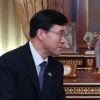
"I am very pleased that the Republic of Korea has provided contributions to FFS for seven consecutive years since its launch in 2015. I hope this year's contribution can help facilitate the implementation of UNDP's stabilization programme to provide returnees and local communities with housing and public infrastructure rehabilitation and livelihood opportunities," says Jang Kyung-Wook (pictured), Ambassador of the Republic of Korea to Iraq.
"We appreciate the hard work of UNDP and its partners to rebuild the lives of internally displaced persons and returnees in areas liberated from ISIL, and we hope to further strengthen our long-standing partnership with UNDP and make joint efforts toward achieving stabilization in Iraq," adds Jang Khyung-Wook.
At the request of the Government of Iraq, UNDP established the FFS in June 2015 to facilitate the return of displaced Iraqis, lay the groundwork for reconstruction and recovery, and safeguard against the resurgence of violence and extremism. The mandate was extended to 2023 due to the scale of urgent remaining stabilization needs and the request from partners to continue our interventions.
In 2021, the FFS is placing greater emphasis on utilizing an integrated approach that includes promoting sustainable livelihood and employment opportunities by rehabilitating supportive infrastructure for productive sectors, such as agriculture and small industries.
(Source: UN)
Posted in Construction & Engineering In Iraq, Iraq Industry & Trade News Comments Off on Korea gives Additional $3m to Stabilization in Iraq