



A Kinder, Gentler CBI?
Posted on 28 November 2012 .
By Mark DeWeaver.
On October 16, Prime Minister Maliki removed the head of the central bank, Sinan al-Shabibi, accusing him of mismanagement and currency manipulation. (There’s more on this story here, here, and here.) This move was widely seen as a power grab by the prime minister and a grave threat to the CBI’s independence. Nevertheless, his removal may actually prove to be a positive development for the listed banks.
In recent years, the CBI has implemented two prudential supervision policies that seem to me to have been entirely misguided—(1) requiring all private-sector banks to meet arbitrary capital targets and (2) imposing an impossibly burdensome anti-money laundering (AML) regime.
While capital adequacy is normally measured as a ratio of capital to risk-weighted assets, the CBI has instead imposed absolute levels of capital (IQD 150 billion by the middle of 2012, IQD 250 billion by the middle of 2013) regardless of the size of the banks’ loan books. Given that most of the banks have more cash than loans, there is really no justification for this on prudential grounds. The policy is rather an attempt to force the banks to lend more and to coerce the smaller banks into merging with one another. It is, in other words, an attempt to replace market forces with central planning.
In some cases the CBI’s insistence on capital increases also appears to have led to increases in the quantity of capital at the expense of its quality. Some majority shareholders are said to have used personal lines of credit from their banks to pay for their own rights shares. The problem with this, of course, is that if those shareholders are unable to repay their loans the banks will take a loss and the new capital will have to be written off.
Similarly, the CBI’s AML policy, introduced last February, had numerous unintended consequences. Rather than blocking illicit currency flows, the new rules instead produced a market for Iraqi government-certified manifests, which anyone who needed dollars could use to prove that he was engaged in a legitimate transaction. Instead of stopping dollar sales to Iran and Syria, the CBI did little more than create an opportunity for officials with access to the right government seals to make a quick profit stamping phony documents. In the end the CBI had no choice but to issue new instructions (at the beginning of October) reinstating the original regulations.
Don’t get me wrong. I happen to think, as do most outside observers, that Shabibi is entirely innocent. But prudential supervision during his tenure has been unduly strict, even to the point, in the case of the AML regulations, of being downright Quixotic.
The interesting question for the commercial banks at this point is thus whether or not the next CBI head might take a more lenient line. Will we get a kinder, gentler central bank or more of the same?
Posted in Investment, Mark DeWeaver on Investments and Finance 8 Comments
Mudarabah and the Shapely Value
Posted on 16 November 2012 .
By Mark DeWeaver.
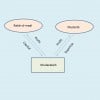
I recently had occasion to bone up on Islamic finance while preparing for a meeting with Kurdistan International Bank (BKUI), Iraq’s largest Islamic bank. In the process, I noticed an interesting parallel between a form of financing known as mudarabah and a game theory concept I hadn’t thought about since my graduate school days, the Shapely value.
Mudarabah is a form of profit sharing in which one partner (possibly a bank), known as the “rabb-ul-maal,” provides 100% of the capital while the other, the “mudarib,” provides management expertise. In order to avoid violating the Islamic prohibition against usuary, the rabb-ul-maal receives a share of the profits rather than a series of fixed payments. This profit share is supposed to be 50% unless otherwise specified. (See this excellent presentation by Deloitte for more on mudarabah and other forms of Islamic finance.)
The interesting thing about 50-50 profit sharing is that there’s no reason why 50%, or any other particular share, should generally be expected to result from a competitive bargaining process. Competitive bargaining could just as easily lead to a very low share for the mudarib in cases where many people were qualified to be managers but few could raise the necessary capital. There’s also no reason to rule out the reverse case. Only a few people might have the necessary expertise while many could come up with the required funds. Then the mudarib would get the highest share.
While not necessarily the expected result of a bargaining process, 50% shares are “fair” in the sense that neither partner can operate the joint venture alone. This idea of fairness is captured in the idea of the Shapely value.
To calculate this number for the general case where there are “n” players, you start by considering every possible coalition of other players that one particular person (i) might join. For each of these, i's contribution is the difference between the total profit the coalition could receive with i as a member and the total it could realize without him. The Shapely value is the average value of all of these potential contributions.
In the case of the mudarabah contract we’re considering here, n = 2. This makes the Shapely value easy to calculate because there are only two possible coalitions either player could join—the “coalition” consisting of one member alone and the coalition including both members.
Suppose the profit achievable by the joint venture is 100 if both participate. Since single-member coalitions make a profit of zero (both capital and expertise are indispensable) the Shapely value for each player is just: ( 0 + 100 ) / 2 = 50. If they cooperate, each gets 50% of the profit.
50% default profit shares for mudarabah contracts are thus an interesting example of the importance of social justice considerations in Islamic finance. Defaulting to the Shapely value rather than the market equilibrium means that the baseline contract terms reflect each partner’s ex-post contribution rather than the ex-ante bargaining outcome. Unlike the market equilibrium, which while efficient has nothing to do with fairness, the concept of mudarabah has a built in ethical dimension.
Posted in Investment, Mark DeWeaver on Investments and Finance 2 Comments

IBN's Expert Bloggers Lead the Way
Posted on 23 August 2012 .
By Padraig O'Hannelly.
For readers interested in investment opportunities in Iraq, I think it's fair to say that our Expert Bloggers have excelled themselves in recent weeks.
Following the analysis of Iraq's banking sector by InvestAD's Sherif Salem earlier this month, Mark DeWeaver of Quantrarian Asia Hedge has been picking through the balance sheets of listed companies to identify under-valued assets.
The results are sometimes startling, with property bought when the Iraqi dinar was worth over $3 -- it's now worth less than one-tenth of a cent -- still carried on the books at original cost price; Mark finds hidden gems trading at tiny fractions of the values of their property.
We're also delighted to welcome a new Expert Blogger to our ranks: Jared Levy is Senior Middle East Analyst at Dunia Frontier Consultants. Based in Iraq, Jared has extensive experience conducting field research, and this week gives us a detailed look at foreign commercial activity in the country in the first seven months of this year. We look forward to reading his perspectives on inward investment in the country.
Upper Quartile and AAIB work closely with businesses in all sectors of the Iraq economy. To see how they can assist your business in Iraq, please contact Gavin Jones or Adrian Shaw.
Posted in Blog, Investment Comments Off on IBN's Expert Bloggers Lead the Way

ISX 'Hidden Gems' Await Discovery
Posted on 17 August 2012 .
By Mark DeWeaver.
The ISX-listed industrials are best known for their main products, which include everything from polyvinyl chloride pellets (used for plastics production) to refrigerators and air conditioners. These companies are typically partially state-owned holdovers from Saddam Hussein’s time. Many have difficulty competing with imports. Often their factories are overstaffed, have obsolete machinery, and are running well below full capacity.
Yet some of them are sitting on a gold mine—the land their factories were built on. Typically this was bought decades ago and is recorded on the balance sheet at a cost of only a few hundred thousand dinar. Even back when one dinar was worth over US$ 3, these valuations were seldom equivalent to much more than a million dollars. Since then, years of money printing, inflation, and deprecation have reduced the book values of these factory sites to almost nothing.
The market value of this property, however, is a lot more than zero. Land in Baghdad, for example, may be worth anywhere from US$ 350 per square meter to well over US$ 1,000 per square meter. It is easily conceivable that many of the companies are now at steep discounts to their market-price adjusted net asset values.
Unfortunately, this discount is not usually easy to calculate. The annual reports generally include only the value of a company’s land at cost and no details on its size, location, or current market value. So far I have been able to find this information for only the following three names:
Al Hilal Industries (IHLI) holds 86 donums of land in the Zafarania industrial zone (in the southeast corner of Baghdad). (One Iraqi donum is 2,500 square meters.) Assuming a value of US$ 350 per square meter in this location, this site is worth about US$ 75 million. In addition, the company also owns about 20 donums in Kamsala (Camp Sarah), probably worth at least US$ 900 per square meter. This might easily be worth another US$ 45 million. The combined US$ 120 million market value for these sites compares to a market cap for the company of only US$ 6.6 million.
Electronic Industries (IELI) holds 66 donums in Zafarania and a total of 22,500 square meters at several other sites around Baghdad. This land might be worth around US$ 70 million, which compares to a market cap of US$ 19.2 million.
Modern Paint Industries (IMPI) holds 98 donums in Zafarania, possibly worth around US$ 86 million. Its market cap is only US$ 17.6 million.
If these cases are not atypical, there must be many more such hidden gems waiting to be discovered by investors.
Posted in Investment, Mark DeWeaver on Investments and Finance Comments Off on ISX 'Hidden Gems' Await Discovery

ISX Year-end Jinx Lifted?
Posted on 18 July 2012 .
By Mark DeWeaver.
The ISX historically has tended to go down in the second half of the year. Last November, I argued that this may be due to the timing of capital increases. (See this post.) If this is the case, the recently announced new rules on share suspensions mean that the market will no longer follow its old seasonal pattern.
In the past, companies would be entirely suspended from trading until rights and bonus shares were deposited in the Iraq Depository Center. This usually took many months. As capital increases generally take place in the first half (around the time that financials for the previous year become available), investors had to wait until the second half to sell. The year-end jinx, I argued, was simply the result of delayed portfolio rebalancing.
Under the new rules, original shares resume trading almost immediately after capital increases. This means that portfolios can be rebalanced right away. While it may still take months for new shares to start trading, investors can now sell some of their old shares to reduce their positions.
As a result, it seems to me that there is no longer any reason for Iraqi shares to decline into the year end. The bad news, of course, is that the year-end jinx hasn’t really been lifted. It’s just going to happen earlier in the year.
Posted in Investment, Mark DeWeaver on Investments and Finance 4 Comments

BMNS Soars as Trading Restarts
Posted on 11 July 2012 .
By Mark DeWeaver.
Original shares of Al Mansour Bank (BMNS) resumed trading on July 1 following the announcement of the bank’s capital increase and dividend plan. All shareholders will receive a 51% bonus share issue along with an IQD 0.068 / share dividend. Qatar National Bank (QNB) is also buying 85 bn new shares at IQD 1.60 / share, which will raise its stake from 23% to 51%.
This is an exciting development. Before the capital increase, BMNS had only IQD 100 bn in capital, making it just one of a number of mid-sized Iraqi lenders. The new funds will raise the bank’s capital to IQD 236 bn, making it second only to BUND, which now has IQD 250 bn.
The terms of the deal were also not unfavorable to minority shareholders. QNB’s total cost per new share, adjusting for the dividend and bonus shares it received, comes to IQD 1.39—a 7% premium to the last traded price of IQD 1.30.
The July 1 closing price was IQD 1.18. For everyone but QNB, this must have been the best one-day return in the ISX all year.
Suppose you were holding one BMNS share worth IQD 1.30 on the last trading date. Following the bonus issue, you had 1.51 new shares, along with the IQD 0.068 dividend. At the July 1 close, you ended up with cash and shares worth IQD 1.18 * 1.51 shares + IQD 0.068 = IQD 1.85. The value of your account had increased by a whopping 42%.
Not bad for a bear market.
Posted in Investment, Mark DeWeaver on Investments and Finance 1 Comment

Iraq: Will a Rising Tide Lift All Boats?
Posted on 01 March 2012 .
Long-term investors in many Iraq-focused oil companies have had their patience amply rewarded, as shares in companies such as Gulf Keystone Petroleum (GKP) and DNO have registered significant gains.
Tony Hayward, CEO of Genel Energy, puts this down in part to ExxonMobil's entry into Kurdistan, which has highlighted the opportunities in the region. So much so, in fact, that he now regards GKP and DNO as overpriced.
Outside fo the direct oil sector, Egypt's Orascom Construction has also hit new recent highs following its contract win in Baiji.
It's a different story for Iraq's indigenous quoted companies, however, which are down about 11% on average year-to-date, but as Mark deWeaver writes there are some technical factors that could cause that fall to correct itself rapidly.
Whether your business is domestic or foreign, Upper Quartile and AAIB are here to help you. For more information please contact Gavin Jones or Adrian Shaw.
Posted in Investment, Iraq Banking & Finance News, Iraq Oil & Gas News Comments Off on Iraq: Will a Rising Tide Lift All Boats?
Your Guide to the Iraqi Dinar
Posted on 01 November 2011 .
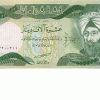
We get many enquiries at Iraq Business News relating to the future of the Iraqi dinar (IQD), for example:
- Will the Iraqi dinar increase in value?
- Will the currency be re-denominated, dropping the 'three zeros'?
- Is it wise to buy Iraqi dinar?
Firstly, Iraq Business News is not in a position to give investment advice. Our mission is to provide our readers with the highest quality information on the business and economy of Iraq.
We hope that this information will be useful to the key decision-makers in Iraqi business, and to all who are interested in the development of the country; gamblers and people involved in get-rich-quick schemes/scams are not our target readership.
But as the value of the Iraqi dinar affects trade, we will continue to report on any possible re-valuations and/or redenominations as soon as information is available.
Regarding the future direction of the dinar, we do not have a crystal ball; in the past the ramping up of petroleum production has somtimes caused currencies to rise, but as our expert blogger Mark DeWeaver explains, this is not always the case. Read more ...
Posted in Investment, Iraq Banking & Finance News 1 Comment
New Iraqi Import Tariffs - The Full List
Posted on 14 February 2011 .
Further to our report last week on Iraq's new import tariffs, you can download the new tariff list in English by clicking on the link below:
The Arabic version is contained in 21 large pdf files, and can be downloaded from the Ministry of Finance:
Iraq Business News cannot accept responsibility for any errors in these documents.
For more discussion on the new tariffs, please click here to read Mark DeWeaver's latest article.
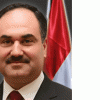
[Picture: Rafia al-Issawi, Minister for Finance]
Posted in Iraq Industry & Trade News 1 Comment

IBN to sponsor Basra Oil & Gas 2011
Posted on 26 January 2011 .
Iraq Business News is to be the Official Digital Media Sponsor for the Basra Oil & Gas Conference 2011. Publisher Antony Wakeham describes the conference as "undoubtedly the up and coming O&G event in Iraq. We are proud to have been chosen as Official Digital Media Sponsors for 2011".
In one year Iraq Business News has grown to become the leading on line business medium for Iraq. IBN has readers in 162 countries and page views are now over 200,000 monthly. News is sourced in the region where its associates have offices in Amman, Basra, Baghdad and Erbil.
Besides comprehensive business news coverage IBN runs a language tutorial, a free-to-advertise Jobs in Iraq page and most recently a Tenders page. The expert bloggers like Dr Mark DeWeaver on Finance and John Drake on Security attract widespread comment from readers.
The free IBN weekly Newsletter now has over 7250 subscribers. Visit www.iraq-businessnews.com to see what is really happening in this remarkable emerging market.
Iraq Business News is a joint venture between Upper Quartile and AAIB Insurance Brokers.
Posted in Iraq Industry & Trade News, Iraq Oil & Gas News Comments Off on IBN to sponsor Basra Oil & Gas 2011