



Italian Firm to Manage West Qurna 2?
Posted on 05 February 2026 .
By John Lee.
Energy Intelligence reports that Iraq's state-owned Basra Oil Company (BOC) has subcontracted management of the West Qurna-2 oil field to a consortium of Italian engineering firm Bonatti and local firm Hilal al-Basra [Crescent Basra].
West Qurna-2, operated by Lukoil under a service contract, is fully state-owned. Following recent US sanctions on Lukoil and the company declaring force majeure, the Iraqi Council of Ministers approved the transfer of operational management of the field to BOC.
Bonatti has previously provided services at West Qurna 2, and also at the Badra and Zubair fields.
Along with the Chinese company Geo-Jade, Hilal al-Basra has agreed to invest in the integrated development project at the Tuba field, in the Zubair district of Basra, and in related projects in the area.
Click here to read the full article.
(Source: Energy Intelligence)
Posted in Iraq Oil & Gas News Comments Off on Italian Firm to Manage West Qurna 2?
Chinese Firm signs Contract for Integrated Energy Project
Posted on 22 May 2025 .
By John Lee.
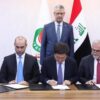
Iraq's Ministry of Oil has signed a major contract for the South Basra Integrated Project with a consortium comprising China's Geo-Jade Petroleum and Iraq's Crescent Basra (Hilal Al-Basra).
The agreement, signed on Wednesday marks the Ministry's first adoption of a fully integrated project model.
Oil Minister Hayan Abdul Ghani described the deal as a strategic leap in developing Iraq's oil wealth and supporting the national economy. The project includes:
- Increasing production at Al-Tubba [Tuba] field from 20,000 to 100,000 barrels per day (bpd).
- Constructing a high-specification refinery with a capacity of 200,000 bpd.
- Establishing a petrochemical plant with an annual capacity of 620,000 tonnes.
- Building a fertilizer plant producing 520,000 tonnes annually.
- Developing a thermal power plant generating 650 megawatts.
- Building a 400-megawatt solar power station.
Surplus electricity from the project will be fed into the national grid, contributing to Iraq's energy mix and infrastructure enhancement.
The Minister emphasised the project's role in economic diversification and job creation for thousands of Iraqi workers. The signing ceremony was attended by deputy ministers for distribution, extraction, gas, and refining, along with senior officials from relevant companies and departments, including: Bassem Mohamed Khudair, Deputy Minister for Extraction; Bassem Abdul Karim, Director General of Basra Oil Company (BOC); and Hassan Mohamed Hassan, Director General of the Iraqi Drilling Company (IDC).
The companies signed a Heads of Agreement exactly one year ago.
(Source: Ministry of Oil)
Posted in Iraq Oil & Gas News Comments Off on Chinese Firm signs Contract for Integrated Energy Project
Subba Oilfield - Iraq Prioritises Gas Self-Sufficiency
Posted on 11 January 2025 .
By John Lee.
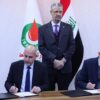
Minister of Oil, Hayan Abdul Ghani, reaffirmed Iraq's commitment to achieving gas self-sufficiency through enhanced gas capture from oil production, development of gas fields, and exploration zones. Speaking at the handover ceremony for the Subba [Sabah, Tuba] Oilfield project, he highlighted its role in boosting oil production and meeting energy demands.
The Subba Oilfield, operated by state entities, will initially produce 70,000 barrels per day (bpd), with potential expansion to 100,000 bpd through additional drilling. The ministry plans to prioritise gas development at the field to fuel power generation, reduce emissions, and support downstream industries like petrochemicals and fertilisers.
Executed by the Oil Projects Company with technical support from Dhi Qar Oil Company (DQOC), the project includes advanced electronic control systems, gas compressors, export tanks, and service facilities. Current output ranges between 8,000-10,000 bpd, with phased upgrades planned.
(Source: Ministry of Oil)
Posted in Iraq Oil & Gas News Comments Off on Subba Oilfield - Iraq Prioritises Gas Self-Sufficiency
China's Geo-Jade in New Integrated Oilfield Project in Iraq
Posted on 20 May 2024 .
By John Lee.
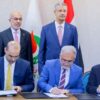
Iraq's Ministry of Oil has signed a Heads of Agreement (HoA) with the Chinese company Geo-Jade and the Iraqi company Crescent Basra (Hilal al-Basra) to invest in the integrated development project at the Tuba field, in the Zubair district of Basra.
According to a statement from the Ministry, the project would have a capacity for crude oil production of 200,000 barrels per day (bpd), along with 50 million cubic feet per day of gas.
Additionally, it includes the establishment of a refinery with a capacity of 200,000 barrels per day and the establishment of a petrochemical plant with an annual production capacity of 800 tons of polyethylene and polypropylene, as well as a fertilizer plant and the establishment of two power stations.
The Director-General of Basra Oil Company (BOC), who signed the Heads of Agreement with the consortium, said that the project will provide 1,200 megawatts of electricity through the two stations, a conventional 800-MW plant, and a 400-MW solar installation.
In a separate announcement this week, Geo-Jade was awarded the rights to develop the Jabal Sanam and Zurbatiya fields.
(Source: Ministry of Oil)
Posted in Construction & Engineering In Iraq, Iraq Industry & Trade News, Iraq Oil & Gas News Comments Off on China's Geo-Jade in New Integrated Oilfield Project in Iraq
Oil Ministry Discusses Development Plans with TotalEnergies
Posted on 07 November 2023 .
By John Lee.
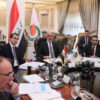
In a meeting of the Joint Management Committee, Iraq's Oil Ministry discussed the development plan for fields and projects contracted with the French company TotalEnergies.
The Deputy Minister for Extraction Affairs affirmed the ministry's commitment to implementing strategic projects with TotalEnergies and QatarEnergy.
According to a statement from the Ministry, the four significant projects under the contract aim to support the national economy through field and oil reservoir development, gas utilization, water supply for local needs, and a groundbreaking 1,000-megawatt solar energy project, a first for Iraq.
It adds that the contracting company has received the work for project execution, including the development of the Artawi field to increase its production capacity to 210,000 barrels. Additionally, the gas treatment project in six oil fields (Ratawi [Artawi], Majnoon, West Qurna 2, Siba, Luhais [Lahais], and Tuba [Subba]) and the seawater project, which will provide substantial quantities of water for industrial and agricultural projects, were discussed. The transition to alternative energy is also part of the plan.
These projects will open doors for the Iraqi private sector to participate and create significant employment opportunities in the region. The Regional Director for the Middle East and North Africa at TotalEnergies, Julien Pouget, expressed the company's pride in the contract and appreciated the continuous support from the Oil Ministry to facilitate the projects included in the agreement. These projects, including Artawi field development, gas emissions reduction, utilization of associated gas in oil fields, seawater supply, and the 1,000-megawatt solar energy production, are expected to have a positive impact on Iraq's oil and gas industry.
(Source: Ministry of Oil)
Posted in Iraq Oil & Gas News Comments Off on Oil Ministry Discusses Development Plans with TotalEnergies
Iraqi Cabinet Approves TotalEnergies' Projects
Posted on 27 July 2021 .
By John Lee.
The Iraqi cabinet has approved the agreement between the Ministry of Oil and French company TotalEnergies to implement four major energy projects in the country:
- Plants to collect and refine associated natural gas at the fields of Artawi [Ratawi], West Qurna 2, Majnoon, Tuba [Subba] and Lahais [Luhais]. This will include a Central Gas Complex at Artawi;
- Development of the Artawi field;
- The integrated seawater project [Common Seawater Supply Project (CSSP)?], which the ministry has been trying to implement for more than ten years; and,
- A 1,000MW solar energy plant.
The project was originally agreed in March.
(Source: Govt of Iraq)
Posted in Iraq Industry & Trade News, Iraq Oil & Gas News 3 Comments
Iraq signs 4 Major Energy Deals with Total
Posted on 30 March 2021 .
By John Lee.
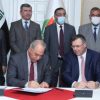
Iraq's Ministry of Oil has signed an agreement of principles with the French company Total for four major energy projects in the country:
- Plants to collect and refine associated natural gas at the fields of Artawi [Ratawi], West Qurna 2, Majnoon, Tuba [Subba] and Lahais [Luhais]. This will include a Central Gas Complex at Artawi;
- Development of the Artawi field;
- The integrated seawater project [Common Seawater Supply Project (CSSP)?], which the ministry has been trying to implement for more than ten years; and,
- A 1,000MW solar energy plant.
(Source: Ministry of Oil)
Posted in Iraq Oil & Gas News Comments Off on Iraq signs 4 Major Energy Deals with Total
Five Oil Storage Facilities available for Investment
Posted on 24 January 2018 .
By John Lee.
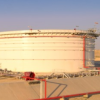
Iraq's National Investment Commission (NIC) has included five oil storage facilities in its list of major strategic projects to be presented during the Kuwait International Conference for Iraq Reconstruction, to be held in Kuwait from 12th to 14th February:
- Bin Omar field for crude oil in Basra Province, with a design capacity of 22x 66000 m3 (first phase) and 9x 66000 m3 (second phase).
- Mosul field for Petroleum Products/ Gasoline 4x 10000 m3, Diesel Fuel 3x 10000 m3 and Kerosene 3x 10000 m3 in Mosul Province.
- Tuba field for Petroleum Products/ Gasoline 4x 20000 m3, Diesel Fuel 2x 20000 m3, Kerosene 3x 10000 m3 and Jet fuel 2x 50000 m3 in Basra Province.
- Aziziya field for Petroleum Products/ Gasoline 2x 10000 m3, Diesel Fuel 1x 10000 m3 and Kerosene 1x 10000 m3 in Kut.
- Samara’a field for Petroleum Products/ Gasoline 4x2500 m3, Diesel Fuel 2x5000 m3 and Kerosene 2x5000 m3 in Saladin Province.
The full 46-page document can be downloaded here.
(Source: NIC)
Posted in Construction & Engineering In Iraq, Investment, Iraq Oil & Gas News Comments Off on Five Oil Storage Facilities available for Investment
PetroChina, Exxon Approached to Boost Production
Posted on 04 January 2016 .
By John Lee.
Iraq has reportedly approached PetroChina and ExxonMobil about investing in a multi-billion dollar project to help boost output from a number of smaller southern fields.
The Deputy Chairman of the South Oil Company (SOC), Basim Abdul Kareem, told Reuters that the "Integrated South Project" consists of building oil pipelines, storage facilities and a seawater supply project to inject water from the Gulf to maintain pressure and enhance oil recovery.
The project targets the Luhais, Nassiriya, Tuba, Nahr Bin Umar and Artawi oilfields, which are currently producing about 240,000 bpd currently and SOC's initial plan calls for raising that to about 350,000 bpd in 2016.
Petrochina has shown more interest than ExxonMobil in the project, according to another SOC official who declined to be identified.
(Sources: Reuters)
Posted in Iraq Oil & Gas News 4 Comments
Weekly Security Update: 17 - 23 March 2015
Posted on 24 March 2015 .

National Overview
Coalition prepares to cooperate in ISF-militia campaign to liberate Tikrit, amid extension of US reconnaissance and air support. While US drone flights are known to have been taking place since 21 March, (reaching as far east as Muqdadiya, 50km from the Iranian border), official participation by the United States in the stalled Tikrit offensive has so far been limited to auxiliary support, due to hostility among sections of the campaign’s Iranian-backed militia forces. Should coalition forces receive the official invitation by the Iraqi authorities to undertake airstrikes into Tikrit as diplomatic sources have indicated is likely to occur, this would place the United States in a state of indirect cooperation with elements of the Iranian military, including Tehran’s revolutionary guard “Quds force”, which is involved in advising operations on the ground. Politically, the move would almost certainly serve to heighten tensions within the campaign’s fractured political milieu, although on a tactical level US air support alone is unlikely to radically alter the outcome of the campaign. Coalition warplanes are already active in bombing runs across the ISIS strongholds of Mosul, Hawijah and Anbar province where they continue to destroy militant units on a daily basis, while in Tikrit itself, the Iraqi air force remains operational, striking the Al Seniya sub-district of the city on 17 March.
North
Disputed battlefields around Kirkuk, Mosul and central Salahuddin witness a gradual withdrawal of ISIS territorial possession, despite a temporary halt in the now four week old Tikrit offensive. Major gains continued to be reported in the villages south and west of Kirkuk city, including in the Daquq area, where on 18 March, heavy fighting was recorded between ISIS fighters and Peshmerga troops in the Aziziya area. Now in full control of Bashir village, Kurdistan Region Government Forces are anticipated to face further resistance in their bid to push into militant centres, with unofficial sources confirming the arrival of fresh reserves to the Hawija front from ISIS’s northern stronghold of Mosul. While the ISF have not yet proceeded to implement stage 2 of the Tikrit assault, fighting nevertheless remains intense within the town with militants continuing to mount regular counter attacks against the larger allied army, including on the strategic area of Tikrit University on 18 March and the Khauimi area three days later. Such forays have demonstrated that despite efforts to starve the besieged militants of ammunition and food supplies, resistance to further ground offensives remains high. Attempts to divert ISF resources to the neighbouring towns of Baiji and Samarra have also been identified over the reporting period, largely in the form of coordinated attacks on Sunni villages which have in turn provoked armed opposition from tribal fighters in the Al-Mazraa area.
Central
ISF close in on ISIS positions north-east of Fallujah, with militant bombings continuing to occur across Shia and mixed areas of Baghdad. Following last week’s developments, the major focus of Iraqi Security Force (ISF) operations remained the dispute town of Karma and the wider Fallujah area, both of which witnessed a surge in confrontations as coalition airstrikes were launched against militants in Al Qaim, Ramadi, Rawa and Baghdadi. On 19 March, ISF units reported that they had surrounded Karma itself, having recaptured the Mamal, Jazeera and Hamria areas west and north of the city over the preceding three days. The immediate impact of these manoeuvres has been to effectively push back militant control to an extent not seen since July 2014 around Fallujah, resulting in the death of as many as 82 ISIS recruits over the reporting period. Outer districts of Baghdad have also benefitted from the reduction in mortar shelling accompanying this process, with the three Katyusha detonations recorded in New Baghdad and Jisr Diyala now confirmed as accidental launches resulting from a fire in the Mamil ammunition storage facility. For the coming week, mixed Shia areas are anticipated to remain the prime target of ISIS IED and VBIED strikes, following the triple car bombs in Sadr city, Zafaraniya and Bab Sharqi over the preceding four days.
South
Risk of tribal conflict remains high on Basra’s northern routes, as southern provinces witness first VBIED attacks in five months. Among the targets of this week’s bombings was the commercial port of Um Qasr which on 18 March saw a truck bomb detonate outside the facility’s external perimeter, killing three local civilians and injuring four others. The scene of low level industrial action in recent months, the incident is the deadliest single attack on the facility since August 2013, when militants aligned with the Islamic State of Iraq and Al Sham (ISIS) struck a loading berth in a similar stationary VBIED detonation. While such incidents were relatively common prior to the ISIS offensive across northern Iraq in June 2014, recent months had witnessed a near total suspension, as militants diverted resources to more pressing needs in the Salahuddin and Anbar battlefields. Given the high profile nature of the target, it is likely that a VBIED was used as part of a wider strategy by ISIS to deflect attention away from its stalled offensives in the north-west and strike back against Shia interests in the south. While further attacks on commercial infrastructure cannot be ruled out, at present the principal risk of armed attack in southern areas remains the threat of tribal clashes, as further shootings between rival families were reported in the At Tuba (Basra), Al Zubayr and Shaghanba areas.
Posted in Weekly Security Update 10 Comments