


Gulf Cup: Iraq draws closer to Arab Neighbours
Posted on 05 January 2023 .
From Amwaj Media. Any opinions expressed are those of the author(s), and do not necessarily reflect the views of Iraq Business News.
Gulf Cup gives Iraq chance to draw closer to Arab neighbors
Iraq is about to embark on a new chapter in its sporting history. From 6th-19th January, Basra will host the 25th edition of the Arabian Gulf Cup (AGC), a biennial football tournament amongst Gulf Arab states.
Iraq will be the venue of a major international football competition for the first time since it both hosted and won the AGC in 1979.
Eight regional teams-Bahrain, Iraq, Kuwait, Oman, Qatar, Saudi Arabia, the United Arab Emirates, and Yemen-will participate in the tournament.
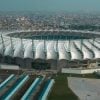
Matches will take place at the Basra International Stadium and the Al-Minaa Olympic Stadium (pictured), venues with capacities of 65,000 and 30,000 spectators respectively.
The full article can be viewed here (registration required).
Posted in Leisure and Tourism in Iraq, Politics Comments Off on Gulf Cup: Iraq draws closer to Arab Neighbours
Partners voice Support for Iraq at Conference in Jordan
Posted on 22 December 2022 .
Joint communiqué/Baghdad Conference for Cooperation and Partnership 2022
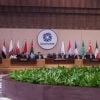
In light of the decision taken at the conference held in Baghdad on 28 August 2021, and at the invitation of His Majesty King Abdullah II, in coordination with His Excellency President Emmanuel Macron of the French Republic and His Excellency Prime Minister Mohammed Shia al-Sudani of the Republic of Iraq, the Hashemite Kingdom of Jordan hosted the Baghdad Conference for Cooperation and Partnership in its second round at the Dead Sea on 20 December 2022.
Participants in the conference expressed appreciation to the Hashemite Kingdom of Jordan for hosting the conference. Jordan and Iraq also thanked the French Republic for its role in coordinating the launch of the conference and participating in two rounds.
The participants reaffirmed the continuation of efforts to build on the outcomes of the first round of the Baghdad Conference and step up cooperation with Iraq, in support of its security, stability and sovereignty, as well as its democratic and constitutional processes, in addition to its efforts to promote dialogue as the means to resolve regional differences. They also underscored their solidarity with Iraq in the face of all challenges, including terrorism, over which Iraq, through great sacrifices and with international and regional cooperation, achieved a historic victory. The participants reaffirmed their condemnation of extremism and terrorism in all its forms.
The participants renewed their support for Iraq in its efforts to bolster the Constitution, the rule of law, and good governance, while building institutions capable of proceeding on the path towards further progress, reconstruction, safeguarding achievements, and meeting the aspirations of its people.
The participants stressed their support for Iraq's efforts to achieve comprehensive development, and working with it to build economic integration, by cooperating across a multitude of sectors, including energy, water, electric connectivity, food and health security, transportation, infrastructure and climate action.
In this context, the participants highlighted the importance of the trilateral cooperation framework between Jordan, Egypt and Iraq, and the joint economic projects agreed on through this mechanism, including electric connectivity projects. They also stressed the importance of joint projects between members of the Gulf Cooperation Council and Iraq in the fields of electric connectivity and transportation, as well as other regional projects that contribute to economic integration, development, and building bridges with global markets, while reflecting positively on the entire region.
In addition, the participants stressed that holding a conference in its second round underlines keenness on supporting Iraq's central in expanding regional economic cooperation and building bridges of dialogue to end tensions and establish cooperation regional relations of mutual benefits. The participants also reaffirmed that achieving economic development and succeeding in regional cooperation projects require building constructive regional ties on the basis of good neighbourliness and non-intervention in the internal affairs of states, as well as respecting international law, and cooperating in maintaining security and stability, countering terrorism, and achieving prosperity.
The participants reviewed the ramifications of regional and international crises on Iraq and the region, stressing that overcoming these crises requires comprehensive regional cooperation, and serious and efficient economic and political approaches that serve mutual interests, support the development process in Iraq, and contribute to regional development.
Furthermore, the participants stressed the importance of holding the third round of the conference, which was launched through Iraqi-French organization, with the participation of the Hashemite Kingdom of Jordan, the United Arab Emirates, the Islamic Republic of Iran, the Kingdom of Bahrain, the Republic of Türkiye, the Kingdom of Saudi Arabia, the Sultanate of Oman, the State of Qatar, the State of Kuwait, the League of Arab States, the Organization of Islamic Cooperation, the Gulf Cooperation Council, the United Nations, and the European Union. The participants agreed to hold the third round of the conference next year, on a date and in a location to be determined through consultations among them.
The Hashemite Kingdom of Jordan expressed appreciation for the active participation of heads of Arab and friendly states, in addition to foreign ministers and representatives of regional and international organizations, welcoming the genuine keenness to bolster cooperation in light of challenges that have made joint systematic action an urgent necessity for safeguarding mutual interests, and an efficient means towards fulfilling the aspirations of peoples to build a more secure, stable and prosperous future.
(Source: French Ministry for Europe and Foreign Affairs)
Posted in Investment, Iraq Industry & Trade News, Politics, Security Comments Off on Partners voice Support for Iraq at Conference in Jordan

Iraq Falls Further in World Press Freedom Index
Posted on 16 December 2022 .
By John Lee.
Iraq has fallen in the World Press Freedom Index for 2022, ranking 172nd out of 180 countries, down nine places on last year.
The result puts Iraq behind countries such as Syria and Saudi Arabia, but ahead of Iran and China. First place went to Norway, with North Korea coming last.
Reporters Without Borders (RWB, RSF), which publishes the annual study, said:
"Between terrorism, political instability and protests, journalists face threats from all sides and come up against the weakness of the state, which is failing in its duty to protect them."
(Source: Reporters Without Borders)
Posted in Iraqi Communications News, Politics, Security Comments Off on Iraq Falls Further in World Press Freedom Index
Iran-linked Militia in Iraq threatens Saudi Arabia
Posted on 10 December 2022 .
By Shelly Kittleson for Al Monitor. Any opinions expressed here are those of the author(s) and do not necessarily reflect the views of Iraq Business News.
Iran-linked militia in Iraq threatens Saudi Arabia as Iraqi PM visits Tehran
Kataib Hezbollah are calling for more attacks on Saudi Arabia amid wrangling over who should protect the country's borders.
Posted in Politics, Security Comments Off on Iran-linked Militia in Iraq threatens Saudi Arabia

Tabaqchali: Supermarkets and Stability
Posted on 07 December 2022 .
By Ahmed Tabaqchali, Chief Strategist of AFC Iraq Fund.
Any opinions expressed are those of the author, and do not necessarily reflect the views of Iraq Business News.
Iraq Market Report: Supermarkets and Stability
The market, as measured by the Rabee Securities RSISX USD Index, was down 4.2%, and down 2.9% for the year. The market's decline for the month was magnified by a 2.04% decline in the parallel market's price of the Iraqi Dinar (IQD) versus the USD, which accounted for about half of the index's decline. Apart from that, the actual decline in the index was mostly a function of a directionless and low turnover, market action taking the index to the low end of its two and half year up-trending channel (chart below), which still supports the market's positive technical picture. The macroeconomic fundamentals discussed here six months ago support our view that this uptrend will likely remain in force; however, its upward slope might moderate or even go sideways, as this month's action suggests.
RSISX USD Index versus Average Daily Turnover
 (Source: Iraq Stock Exchange, Rabee Securities, AFC Research, data as of November 30th)
Most of the index's constituents were down, with the exception of Al Mansour Bank (BMNS) which was up 12.5%, Kharkh Tour Amusement City (SKTA) up 7.4%, while the Bank of Baghdad (BBOB) was flat. The decliners were led by Al-Mansour Pharmaceutical Industries (IMAP) down 9.0%, Al-Kindi of Veterinary Vaccines and Drugs (IKLV) down 8.0%, Baghdad Soft Drinks (IBSD) down 5.3%, AsiaCell (TASC) down 4.5%, Iraqi for Seed Production (AISP) down 4.3%, National Bank of Iraq (BNOI) down 2.8%, and the Commercial Bank of Iraq (BCOI) down 2.0%.
Supermarkets and Stability
One of the most promising recent developments in the economy is increased capital investments, by businesses and individuals, brought about by the relative stability of the last five years since the end of the ISIS conflict. While these years were punctured by a number of shocks such as countrywide demonstrations in late 2019, the assassination of Iran's top general in Baghdad followed by emergence of COVID-19 and the crash in oil prices in 2020, undecisive elections in 2021 followed by a year of a political impasse, and most recently political conflict and violence in the summer of 2022; nevertheless, these shocks pale in comparison to those of the prior decades of conflict that Iraq has experienced. Crucially, these shocks were short-lived, and did not lead to self-reinforcing cycles of violence and conflict along the lines of the past. As such, this relative stability provided a more stable and predictable macroeconomic framework for businesses and individuals to operate in, and to plan for capital investments on a scale not seen in the last prior decades of conflict; that in turn, should be sustained by the population's pent-up demand for goods and services to catch up with the rest of the world. These developments were first seen in the immediate aftermath of the ISIS conflict through the revival of long-forgotten social activities, expressed in consumer retail consumption (restaurants, coffee shops, and malls) and construction as reported in AFC Iraq's travel report in the summer of 2019 "Significant Social and Economic Transformation".
Supermarkets are hardly a new development for Iraqis, having known them since the 1980's, and who had access to all the products and goods that are available in supermarkets worldwide since the country opened up to the outside world post the 2003 invasion. However, the relative stability of the past five years has brought with it a revival in the developments of supermarkets, most notably in Baghdad, that have seen increasingly larger-format purpose-built supermarkets. Two examples of this trend, among others in Baghdad, that have opened in the last two years are Waffir in Inner Kharada Street in Al-Jadria, and the Al Warda in Salman Faiq Street in Kharada. The newer supermarkets do not come only with an extensive product range -i.e. a wide assortment, choice of brands and products including a wide selection of health products, wider aisles, and large spaces, but also provide card (both credit and debit) payment options in addition to the dominant cash payment method - an option that is becoming increasingly available in the city as an acceptable payment method as the gradual adoption of banking takes hold.
The development of supermarkets is likely to be boosted by the injection of foreign direct investments as can be seen by the announcement in mid-October that UAE-based Lulu Group International - with 239 supermarkets and hypermarkets in 23 countries with annual revenues of over USD 8 billion- is planning an IPO to consolidate its regional expansion, and moving into new markets including Iraq, and North Africa. In 2020, the group received an investment of USD 1 billion from the Abu Dhabi sovereign wealth fund (ADQ) to help it expand in Egypt.
The supermarket-sector is not the only sector to benefit from the interest of regional capital, as can be seen from an announcement in late October, that Saudi Arabia's Public Investment Fund (PIF) would invest up to USD 24 billion in Bahrain, Iraq, Jordan, Oman, Sudan and Egypt in key sectors ranging from infrastructure and healthcare to finance and food. Egypt and Iraq are significantly larger markets than the other four and thus should attract proportionally larger investments.
Waffir within Jadria Boutique Mall in Al-Jadria

Inside Waffir within Jadria Boutique Mall in Al-Jadria

Al Warda in Salman Faiq Street in Kharada

Inside Al Warda in Salman Faiq Street in Kharada-Baghdad

Inside Al Warda in Salman Faiq Street in Kharada-Baghdad
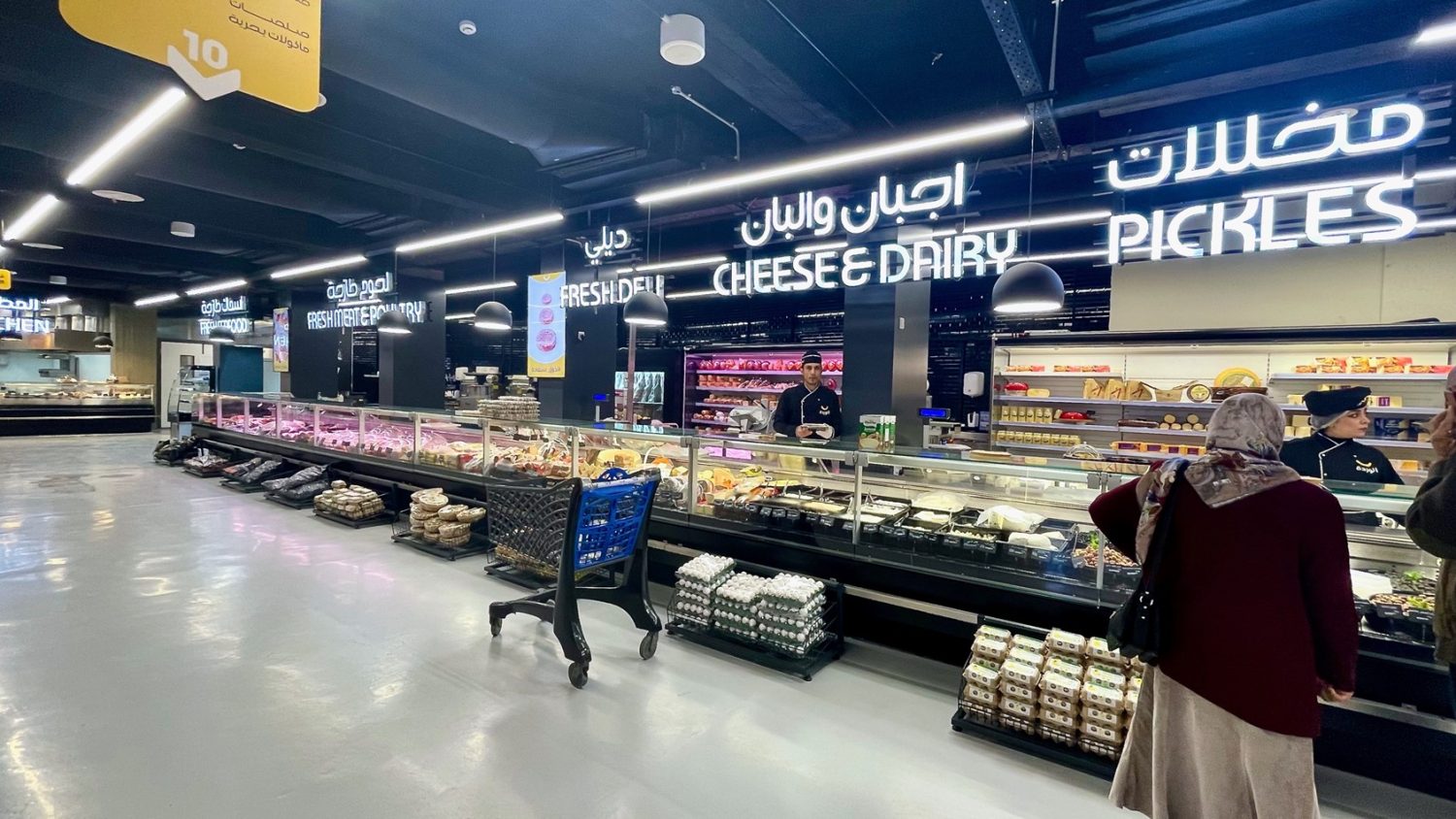
The above photos contrast, with the those below of the somewhat older stores that have narrower isles, with almost all available spaces utilised to offer variety and choice - and as such the newer stores provide an enhanced customer experience. All photos taken by the author during recent shopping trips.
Inside the Green Apple in Jordan Street, Mansour-Baghdad

Inside Mr. Milk in Jordan Street, Mansour-Baghdad
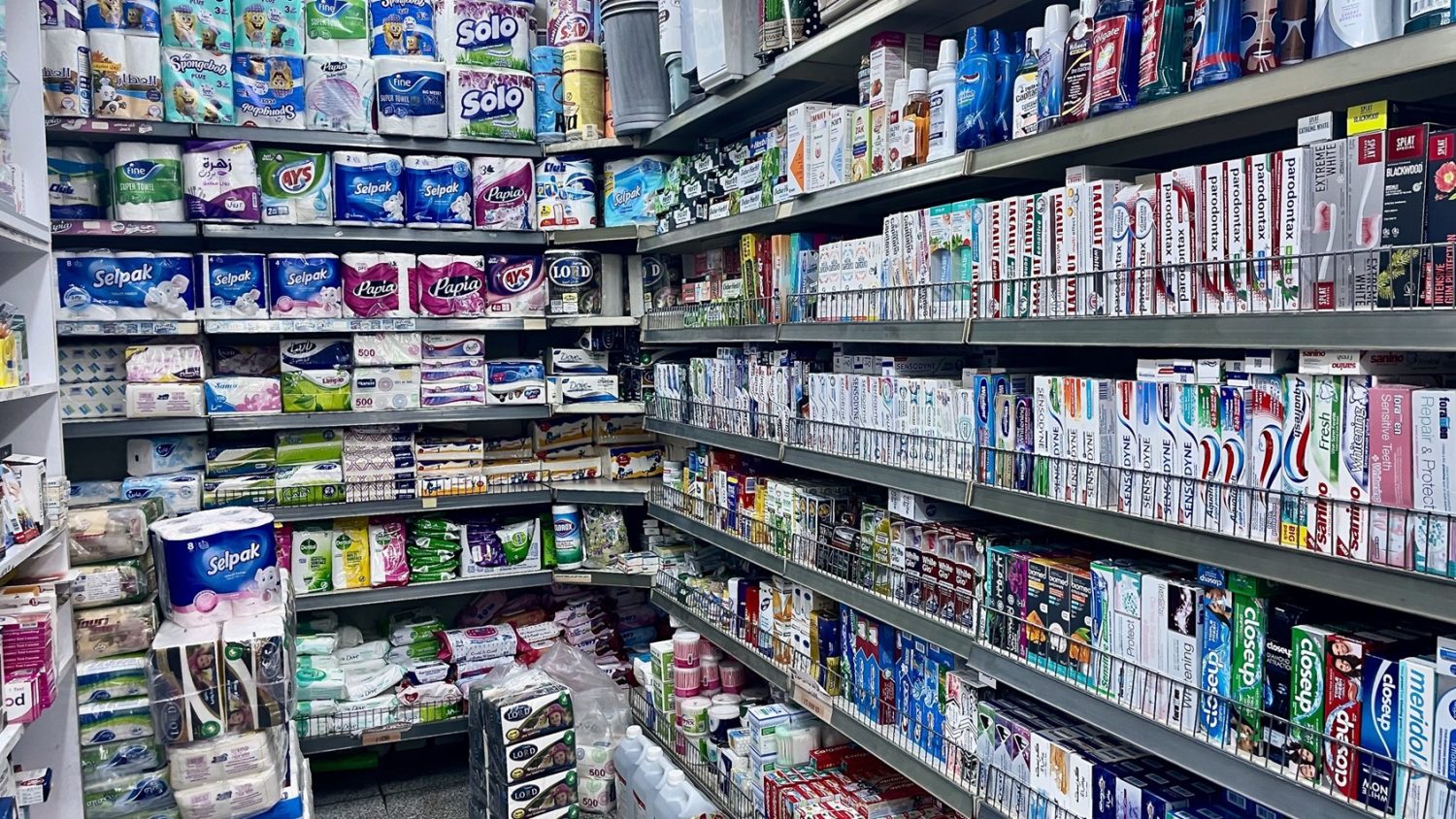
Inside Al Warda in Outer Kharada Street, Kharada-Baghdad

In the meantime, all of these supermarkets are seeing a significant increase in footfall over the last two-years, likely matched by sales, as can be seen from the Google mobility data (below chart) which shows that economic activity, in particular activity in the grocery sector has recovered, 240% above the levels that prevailed pre-2020's great lockdown.
Non-oil Economic Activity in Iraq
 (Source: Google, data as of October 15th October, after which Google will not be updating global mobility data)
Please click here to download Ahmed Tabaqchali's full report in pdf format.
Mr Tabaqchali (@AMTabaqchali) is the Chief Strategist of the AFC Iraq Fund, and is an experienced capital markets professional with over 25 years' experience in US and MENA markets. He is a Visiting Fellow at the LSE Middle East Centre, Senior Fellow at the Institute of Regional and International Studies (IRIS), and a Senior Non-resident Fellow at the Atlantic Council. He is also a board member of Capital Investments, the investment banking arm of Capital Bank in Jordan.
His comments, opinions and analyses are personal views and are intended to be for informational purposes and general interest only and should not be construed as individual investment advice or a recommendation or solicitation to buy, sell or hold any fund or security or to adopt any investment strategy. It does not constitute legal or tax or investment advice. The information provided in this material is compiled from sources that are believed to be reliable, but no guarantee is made of its correctness, is rendered as at publication date and may change without notice and it is not intended as a complete analysis of every material fact regarding Iraq, the region, market or investment.
Posted in Ahmed Tabaqchali, Investment Comments Off on Tabaqchali: Supermarkets and Stability
Will Saudi Investment Pledges in Iraq Overcome Barriers?
Posted on 07 December 2022 .
From Amwaj Media. Any opinions expressed are those of the author(s), and do not necessarily reflect the views of Iraq Business News.
Will Saudi investment pledges in Iraq overcome barriers?
After years of estrangement caused primarily by political reasons, Saudi Arabia is returning to Iraq and looking to invest in its neighbor.
This will likely have significant positive impacts on both countries' economies at a time when Baghdad and Riyadh alike are hoping to diversify away from oil.
But the Kingdom will have to first navigate Iraqi opposition to its investments.
The full article can be viewed here (registration required).
Posted in Investment, Iraq Industry & Trade News, Politics Comments Off on Will Saudi Investment Pledges in Iraq Overcome Barriers?

Saudi Investment Fund to set up Company to Invest in Iraq
Posted on 01 November 2022 .
By John Lee.
Saudi Arabia's Public Investment Fund (PIF) has set up a company to invest in Iraq.
The new company is one of six that will invest a total of up to SAR 90 billion (USD 24 billion) in Bahrain, Iraq, Jordan, Oman, Sudan and Egypt.
They will invest in various key sectors, including but not limited to, infrastructure, real estate development, mining, healthcare, financial services, food and agriculture, manufacturing, telecoms, and technology, among other strategic sectors and industries in each country.
(Source: Saudi Public Investment Fund)
Posted in Investment Comments Off on Saudi Investment Fund to set up Company to Invest in Iraq

Revival of Border Crossing shows Shift in Iraq-Saudi Ties
Posted on 26 October 2022 .
From Amwaj Media. Any opinions expressed are those of the author(s), and do not necessarily reflect the views of Iraq Business News.
Revival of key border crossing shows shift in Iraq-Saudi ties
A new phase of Iraqi-Saudi relations has begun, marked by efforts to strengthen ties between the neighbours.
In September, the Jadidat Arar land crossing was also opened for Iraqis traveling to Saudi Arabia for the Umrah pilgrimage.
Opening the crossing for even more pilgrims marks a new and symbolic stage of the burgeoning bilateral relationship.
Posted in Iraq Transportation News, Politics, Security Comments Off on Revival of Border Crossing shows Shift in Iraq-Saudi Ties
Iraq Stock Market Report
Posted on 02 September 2022 .
Advertising Feature
Rabee Securities Iraq Stock Exchange (ISX) market report (week ending: 1st September 2022).
Please click here to view a table of listed companies and their associated ticker codes.
The RSISX index ended the week at IQD934 (+5.1%) / $816 (+5.1%) (weekly change) (+1.7% and +1.4% YTD change, respectively). The number of week traded shares was 2.9 bn and the weekly trading volume was IQD4.2 bn ($2.8 mn).

ISX Company Announcements
- The National Bank of Iraq (BNOI) has opened its first branch in Saudi Arabia. The bank, which is a subsidiary of Jordan's Capital Bank Group, said the new branch in Riyadh will encourage and facilitate trade between Iraq and Saudi Arabia. In June 2022, Capital Bank Group took in the Saudi Public Investments Fund as a strategic partner with a 23.97% stake. (Iraq Business News)
- Stocks that resumed / will resume trading:
- Modern Sewing (IMOS) resumed trading on Aug. 28 after holding its AGM (Aug. 24) in which they discussed and approved 2021 annual financial statements and decided to distribute IQD0.10 cash dividend per share, corresponding to a yield of 1.6%.
- Gulf Commercial Bank (BGUC) and Al -Khazer for Construction Materials (IKHC) resumed trading on Aug. 31 after holding their AGM in which they discussed and approved 2021 annual financial statements.
- Iraq Baghdad for General Transport's (SBPT) AGM which was planned to be held on August 30th has been postponed due to the lockdown on AGM date till further notice. The company resumed trading on Sep. 1.
- Ashur International Bank (BASH) will resume trading on Sep. 4 due to disclosing its 3M22 financial statements.
- Zain Al-Iraq Islamic Bank (BZII) will resume trading on Sep. 4 due to disclosing its 2021 annual financial statements.
- Stocks that will be suspended from trading:
- ISX will suspend trading of Modern Animal and Agricultural Production (AMAP) starting Sep. 12 due to the AGM that will be held on Sep. 15 to discuss and approve increasing the company's capital from IQD4.1 bn to IQD8.2 bn through 100% rights issue and amending the name of the company by adding an activity of "trade and industry food materials".
- ISX will suspend trading of Mosul Bank (BMFI) starting Sep. 13 due to the AGM that will be held on Sep. 17 to discuss and approve 2021 annual financial statements, discussing cash dividends distribution and electing seven new board members.
- ISX will suspend trading of Asia Al Iraq Islamic Bank (BAIB) starting Sep. 14 due to the AGM that will be held on Sep. 20 to discuss and approve 2021 annual financial statements, discussing cash dividends distribution and electing seven new board members.
- ISX will suspend trading of Commercial Bank of Iraq (BCOI) starting Sep. 22 due to the AGM that will be held on Sep. 27 to discuss and approve 2021 annual financial statements and discussing cash dividends distribution.
- ISX will suspend trading of Baghdad for Packing Materials (IBPM) starting Sep. 14 due to the AGM that will be held on Sep. 19 to discuss and approve 2021 annual financial statements.
https://www.facebook.com/RabeeSecurities
Posted in Investment Comments Off on Iraq Stock Market Report
Iraqi Bank to open branch in Saudi Arabia
Posted on 31 August 2022 .
By John Lee.
The National Bank of Iraq (NBI) has opened its first branch in Saudi Arabia.
The bank, which is a subsidiary of Jordan's Capital Bank Group, said the new branch in Riyadh will encourage and facilitate trade between Iraq and Saudi Arabia.
In June 2022, Capital Bank Group took in the Saudi Public Investments Fund as a strategic partner with a 23.97% stake.
Full text of announcement (Arabic)
(Source: NBI)
Posted in Iraq Banking & Finance News Comments Off on Iraqi Bank to open branch in Saudi Arabia