



SMEs can Transform Emerging Markets such as Iraq
Posted on 19 July 2017 .
The Iraq Britain Business Council (IBBC) has hosted a dinner in honour of Mr Xavier Rolet, CEO of the London Stock Exchange Group.
After dinner, Mr Rolet spoke about the transforming power of Small and Medium-sized Enterprises (SMEs), particularly in emerging markets such as Iraq.
He said that SMEs can spearhead profound societal change in countries which face political and other factors of instability, and spoke of the various initiatives his company is taking globally to build up and promote SMEs.
IBBC Managing Director, Christophe Michels, added:
“It was an immense honour and privilege for IBBC to host Mr Rolet, one of the busiest actors in the global economy.
“The dinner with Mr Rolet was part of the wide ranging effort the IBBC is undertaking to put Iraq firmly on the map as a country to do business in.”
Members in attendance included representatives of Amec Foster Wheeler, Bath Spa University, Constellis, EY, Garda World, HWH & Associates, International Islamic Bank, Mott MacDonald, Pell Frischmann, Perkins +Will UK, Petrofac, Rolls-Royce, Standard Chartered Bank and UB Holding.
(Source: IBBC)
Posted in Investment Comments Off on SMEs can Transform Emerging Markets such as Iraq

Experts discuss Future of Iraq’s Economy at IBBC Retreat
Posted on 12 July 2017 .
The Iraq Britain Business Council (IBBC) held its annual weekend retreat on 7-9 July at Cumberland Lodge, Windsor Park, a venue dedicated to the advancement of international societal issues through constructive dialogue.
Around 60 IBBC Members and guest speakers attended this unique event to discuss pressing issues on the future of Iraq’s economy, prospects and stability.
Friday afternoon featured an Oil & Gas Sector Table Meeting, with representatives from Shell, Constellis, Penspen and Amec Foster Wheeler amongst others. William Wakileh, President and CEO of GE Iraq and Levant, gave a detailed presentation of GE’s work in Iraq during the meeting.
This was followed by a meeting of the Education, Training & Heritage Sector Table. The meeting featured presentations by the Vice Chancellors of the universities of Brighton, Leicester, and the Dean of Academic Partnerships of Northampton University, showcasing the progressive initiatives of British universities to support educational and curricula development in Iraq. Shell gave a presentation on their current training and educational work and requirements in the country. The meeting was also attended by the newly appointed HR director of BP Iraq.
The evening events saw speeches from Baroness Nicholson of Winterbourne, Her Majesty’s Trade Envoy to Iraq, Azerbaijan and Turkmenistan, Canon Dr Edmund Newell, Principal, Cumberland Lodge and H.E. Dr Salih Husain Ali, Ambassador of the Republic of Iraq.
The day was concluded by a powerful speech, courtesy of Dr Barham Salih, former Deputy PM of Iraq, former PM of the Kurdistan Regional Government and Founder of the American University in Suleimani.
The Friday Evening Dinner was generously sponsored by IBBC Member Severn Glocon Group.
The second day of the Conference on Saturday 8 July, consisted of 5 Sessions of panel discussions to address the economic, social and political situation in Iraq from a variety of different angles.
Session 1 ‘Present Situation in Iraq’ was chaired by Neil Quilliam, Senior Research Fellow at Chatham House and featured speeches from Baroness Nicholson, Dr Barham Salih, Ambassador Jonathan Wilks and Dara Rasheed, Deputy Minister of Construction, Housing and Municipalities for the Government of Iraq.
Session 2 addressed ‘Iraq after ISIS/The Future of Governance in Iraq' and was chaired by Botan Osman, Managing Director of Restrata. The Panel featured representatives of Chatham House, Dr Renad Mansour, Academy Fellow and Dr Nussaibah Younis, Associate Fellow, who recently published the Atlantic Council Report of the Task Force on the Future of Iraq. Nicolas Pelham, Middle East Correspondent at The Economist completed the panel.
Session 3 of the day, ‘A New Approach to International Trade’ saw a more finance focused discussion and was chaired by John Curtin, Partner, Ernst & Young. The panel was made up of Martin Kent, Strategy Director at the Department for International Trade, Gordon Welsh, Head of Business Group at UK Export Finance, Rob Lally of the Infrastructure Leadership Team and the Department of International Trade and Andy Birch, Director of DIT in Iraq.
Session 4 on ‘International Financial Support, PPP and Debt Finance’, was chaired by Richard Cotton of the IBBC and featured presentations by Ammar Shubar of Management Partners and Christian Josz, Mission Chief to Iraq of the International Monetary Fund (IMF).
Session 5 closed the day’s events on ‘Future IBBC Events’ chaired by Vikas Handa, IBBC’s UAE Representative.
IBBC also held its bi-annual Council Meeting at the Lodge, prior to dinner on Saturday evening.
The Seminar concluded with an after dinner speech and discussion with Jonathon Wilks, Her Majesty’s Ambassador to Iraq (Designate).
(Source: IBBC)
Posted in Construction & Engineering In Iraq, Investment, Iraq Banking & Finance News, Iraq Education and Training News, Iraq Oil & Gas News, Iraq Public Works News, Politics, Security 1 Comment

How Iraq plans to Secure Key Border Road
Posted on 06 May 2017 .
By Mustafa Saadoun for Al Monitor. Any views expressed here are those of the author, and do not necessarily reflect the views of Iraq Business News.
Iraq is trying to revive the Trebil border crossing between Iraq and Jordan, which was closed in 2014 after the Islamic State (IS) took control of Anbar province.
But the highway from Baghdad toward the crossing is not safe and has been the stage of terrorist attacks for a while, most recently the IS attack on an Iraqi security forces’ convoy April 22 in the Al-Sakkar area east of Rutba on the highway near the Jordanian border.
As a result, 10 security officers were killed and 20 others were injured. Following the incident, soldiers of the Eighth Brigade deployed in Rutba appealed to Prime Minister Haider al-Abadi for equipment and weapons to secure the international highway between Ramadi and Rutba to avoid surprise attacks by IS sleeper cells.
Due to the imminent threats to the road, which is one of Iraq’s vital economic lines as it connects Basra in the south to Jordan in the west, Iraq commissioned an American company to secure and rebuild the road. The contract also included reconstructing bridges, 36 of which are destroyed.
A government source close to Abadi told Al-Monitor on condition of anonymity, “In his recent visit to Baghdad, Jared Kushner, US President Donald Trump’s adviser and son-in-law, discussed with Iraqi officials the issue of securing the Baghdad-Terbil and the Safwan-Terbil crossings.”
Posted in Iraq Industry & Trade News, Iraq Transportation News, Security Comments Off on How Iraq plans to Secure Key Border Road

Edinburgh International Achieves PSC.1 Accreditation
Posted on 31 March 2015 .
Edinburgh International (EI), a leading provider of security and risk management solutions worldwide and a member company of Constellis Group, today announced that it has received ASIS International's accreditation for Quality of Private Security Contractor Operations, known as ANSI/ASIS PSC.1-2012.
Edinburgh International is the first Constellis Group company to attain the PSC.1 accreditation, which builds on the historic Montreux Document and the International Code of Conduct (ICoC) for Private Security Service Providers.
ASIS International, in conjunction with the American National Standards Institute, Inc. (ANSI), developed the PSC.1 standard to establish auditable criteria for managing the quality of private security services and ensure respect for human rights and legal obligations "in conditions where governance and the rule of law have been undermined by conflict or disaster."
Congress has required PSC.1 certification for award of Department of Defense contracts for performing private security functions outside the United States.
Craig Nixon, chief executive officer of Constellis Group, praised the achievement, stating:
"We're extremely proud that Edinburgh International has reached this important milestone. They, along with Triple Canopy, another Constellis company, were active members of ASIS International's Standards Committee during the development of PSC.1, so it's only fitting that EI is among the first companies in the world to achieve this historic certification."
Frank Philip, president of Edinburgh International, added:
"This certification is the direct result of a dedicated effort by our team in Dubai and London, and is a testament to their commitment to enforcing ethical standards. EI operates in some of the most complex security environments on the planet, and we have always known that our operations and management systems met the highest standards.
"We're extremely gratified that the auditors agree."
The certification, which covers EI's headquarters in Dubai and its operations in Basra, Baghdad, and Rumaila, Iraq, was issued by Intertek Certification Limited, a United Kingdom Accreditation Service (UKAS) accredited body, and is valid through March 29, 2018.
(Source: Edinburgh International)
Posted in Security 4 Comments
British Business Group Kurdistan (BBGK) Launched
Posted on 15 December 2014 .
The British Business Group Kurdistan (BBGK) held its launch reception on Wednesday 10th December in the fabulous setting of the Jaguar Land Rover Showroom in Erbil.
The event was attended by business people, members of the diplomatic community and representatives from the Kurdistan Regional Government.
The BBGK was recently established as it was felt there was sufficient momentum in the British business community here to warrant the formation of an independent group of like minded business people to promote British goods and services as well as British-owned companies operating in Kurdistan.
The BBGK provides a forum for networking, problem solving and social activities. In addition to its monthly networking lunch (with a variety of speakers on practical, relevant topics), the BBGK organisers one-off events, often coinciding with visiting trade delegations.
The BBGK also aims to be a touch point for British firms and individuals who are looking at Kurdistan as a potential market and would like to benefit from the experience of business people already operating here. The BBGK has the full support of the British consulate in Kurdistan but is an independent, non-partisan and not-for-profit organisation, run by business people volunteering their services. The BBGK is registered with Ministry of Trade and Industry.
Membership of the BBGK is open to British individuals, British-owned companies and any company that markets British goods and services.
John Downe, Chairman of the BBGK, commented:
“Now is a tremendously exciting time for the region and we want to show the commitment of our members to the Kurdistan Region.
"We would love to hear from people who are interested in joining so together we can further build the business community.”
The founder committee members are:
- John Downe, Chairman (Azure Serviced Offices);
- Mustafa Sed, Events (JCB / K Machinery);
- Botan Osman, Institutional Relations (Stirling Group and Restrata);
- Harry Bucknall, Marketing (Control Risks);
- Chris White, Membership (Jaguar Land Rover / Sardar);
- Greg Englefield, Legal Affairs (Confluent Law Group);
- Mike Barry, Treasurer (Edinburgh International and Constellis).
(Source: British Consulate General)
Posted in Iraq Industry & Trade News 7 Comments

Weekly Security Update, 14 – 20 October 2014
Posted on 21 October 2014 .
By Anne-Laure Barbosa at Constellis Consulting
 The Iraqi parliament’s approval of Sunni MP Khaled al-Obeidi as defense minister, and Mohammed al-Ghabban, a Shia member of the Badr Organisation, as interior minister, will provide a stronger political foundation for Abadi to counter the ISIS insurgency. Ghabban’s appointment follows weeks of negotiations and resistance from Abadi to nominate a member of the Iranian-backed Badr Organisation, best known for its powerful military wing accused of sectarian killings during the 2006-2007 civil war. While the move effectively cements Iran’s influence within the Iraqi cabinet and strengthens the government’s political response the security crisis, Abadi’s strategy to co-opt Sunni tribes and convince them to join ranks against ISIS is likely to be hindered. These political movements are also unlikely to be followed by important developments on the ground, with the security situation remaining critical in most of the North despite the US-led coalition’s continued air campaign. This was reflected in an increase of suicide attacks against ISF and Kurdish units, as well as a deadly series of car bomb attacks in Baghdad and Karbala. While ISIS continue their strategy aimed at seizing territories in the northern and central provinces, the South could witness a series of militant incursions over the next weeks, as the Shia festival of Ashura, which thousands of pilgrims are expected to celebrate, looms.
North
In line with last week’s patterns of violence, the front in Diyala remained the most volatile, with militants reportedly besieging the town of Qara Tappa, in the north-east of Baquba and only 75 miles north of Baghdad. On 20 October, insurgents managed to infiltrate defences near Qara Tappa by wearing Peshmerga uniforms, a tactic repeatedly used by ISIS to hit civilian areas. The clashes which followed killed at least seven soldiers and eight civilians, prompting the Kurds to send reinforcements from Khanaqin. This bold assault also demonstrates that ISIS are consolidating their positions in Jalawla and Sadia, and are increasingly pushing Kurdish forces on a defensive footing on this front. Further attacks were also reported on areas controlled by Kurdish units in Nineveh, where ISIS launched an assault in the Rabia district, near the Syrian border, and Yazidi areas near Sinjar. Other fighting areas included Baiji, where ISIS insurgents attempted an assault on the refinery, and areas to the south of Tikrit. Airstrikes and ISF reinforcements continued to hold back ISIS in territories to the north of Baghdad, particularly in Dhuluiya, a strategic town challenged by militant attacks. Increased insurgent activity in areas defended by the Kurds could indicate an imminent assault on Kurdish interests in Nineveh, Kirkuk and Diyala.
Central
The recent gains made by ISIS in Anbar appear to have impacted on the levels of confidence displayed by insurgents on the ground, while militant cells in Baghdad also ramped up their activities with an increase in car bomb attacks in the capital. On 18 October, ISIS launched a three-front offensive on the town of al-Baghdadi between Hit and Haditha. While the attack failed after tribal fighters repelled ISIS, the group reportedly seized some neighbouring areas and are now surrounding the town. Besieging villages, in order to cause food and fuel shortages for the populations to surrender, has been a tactic consistently used by ISIS, especially in areas insulated from ISF support. While the presence of the nearby Ain al-Assad military base should ensure that reinforcements are sent, these developments show that the ISF have been increasingly pushed on a defensive footing in this strategic corridor. Meanwhile, as militants continue to be prevented from launching a frontal assault on Baghdad due to an important number of troops circling the capital, ISIS elements have been increasingly relying on suicide attacks to inflict damage and casualties. Amid a series of nine deadly car bombs, a militant blew himself up outside a mosque on 20 October, killing at least 17 people. This trend should be sustained over the next weeks.
South
The most significant incidents occurred in Karbala, where an unusual series of five car bombs killed scores of civilians. These attacks point to an escalation in militant activity in the South, as the festival of Ashura, which takes place on 03 November, usually draws tens of thousands of Shia pilgrims walking to Karbala. ISIS is intent on targeting large civilian areas and pilgrimages provide an effective avenue for such high-profile operations. ISIS’s consolidated presence in neighbouring Anbar means that heightened security measures will probably be easier to counter. The lack of ground intelligence will also be compensated by the large civilian gatherings expected for the occasion. Meanwhile, the south-east continued to follow pre-established patterns, with levels of criminal activities in Basra steadily increasing.

Posted in Weekly Security Update Comments Off on Weekly Security Update, 14 – 20 October 2014

Weekly Security Update, 07 - 13 October 2014
Posted on 14 October 2014 .
By Anne-Laure Barbosa at Constellis Consulting
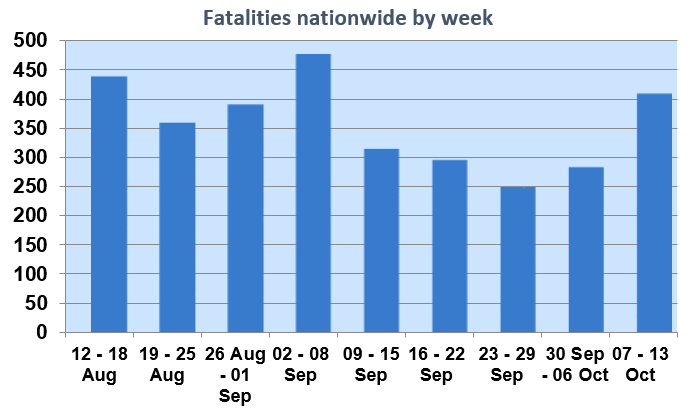
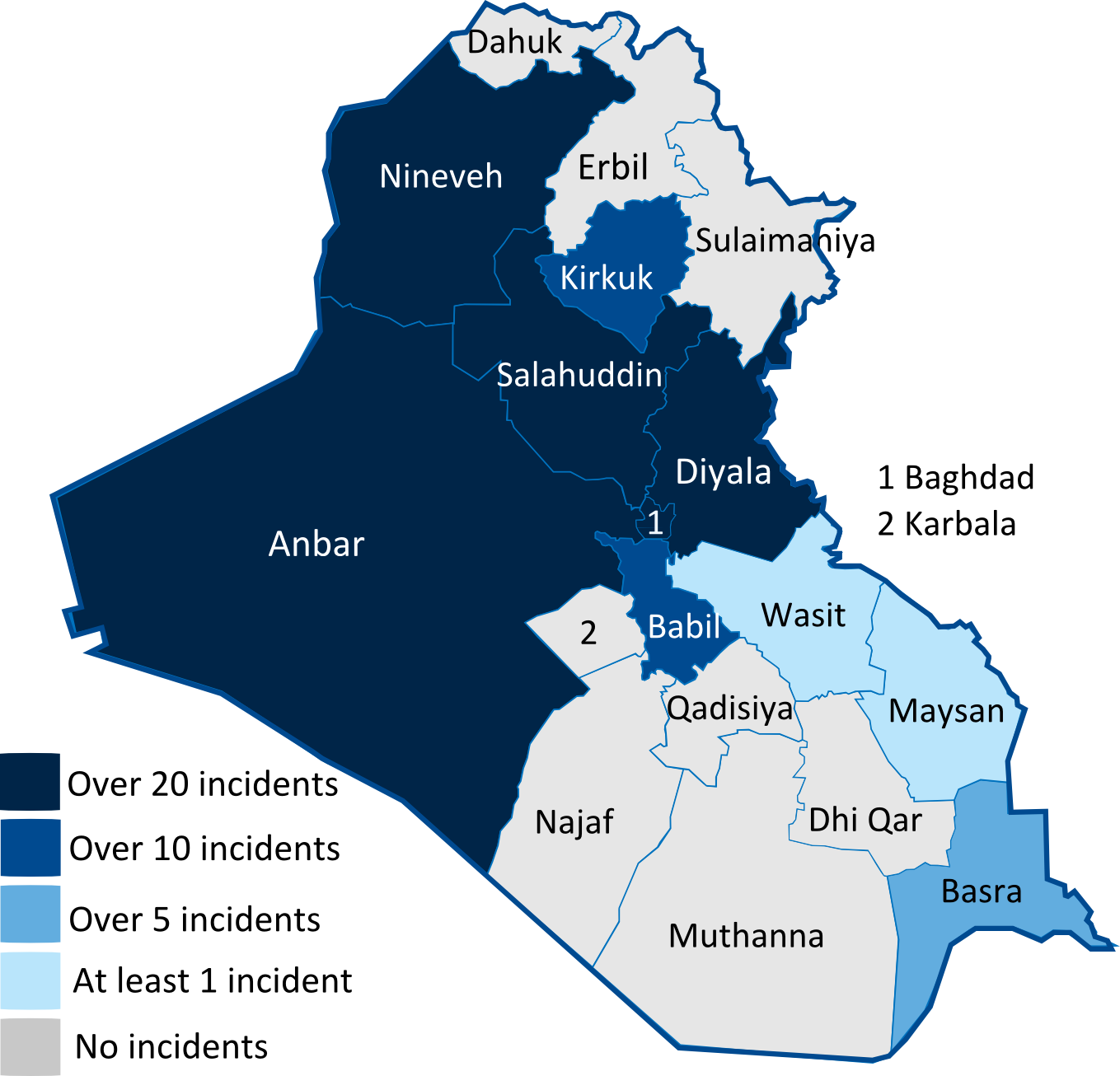 Elevated levels of violence continued to be reflected in a high number of casualties, with at least 408 recorded deaths over the reporting period. While reporting remains interrupted in large swathes of the North, evidence of war crimes committed by Shia fighters against Sunni populations was described in a briefing released by Amnesty International on 14 October. Citing abductions and execution-style killings, the report reignites fears that Iraq’s cycle of violence may lead to a full remobilisation of extremist Shia militias and precipitate an all-out sectarian conflict comparable to the 2006-2007 civil war. Meanwhile, Turkey has agreed to provide military bases to the US and their allies. This decision follows international criticism with regards to Turkey’s reluctance to join the airstrike campaign initiated by the US and supported by a number of NATO and Arab countries. Despite the progressive organisation of the various forces joining the fight against ISIS in Syria and Iraq, ISF ground operations remained largely ineffective in attempting to reverse ISIS’s territorial gains. On the contrary, insurgents managed to consolidate their positions in Anbar, securing one of their main supply routes from Syria and increasing their areas of operations west of Baghdad. ISF’s lack of efficiency was coincident with a stagnant and divided political landscape, with opaque discussions towards filling the government’s key security positions failing to yield any result.
North
While the northern frontline remained largely stable, ISF counter-offensives conducted over the past weeks failed to deter ISIS from launching large-scale assaults against pro-government forces. The most deadly incidents occurred in Diyala, where a joint force of ISF and Kurdish soldiers attempt to contain and repel ISIS. On 12 October, a triple suicide bombing killed at least 26 Kurdish security forces in Qara Tappa, in the north-east of Baquba. The first bomber reportedly detonated an explosives vest at the gateway to a security compound, quickly followed by two suicide bombers who drove VBIEDs into the compound. At least 60 people were wounded in the attack, including a large number of civilians. Heavy clashes were also reported in the Sadia area, with a series of ISIS-led assaults and pro-government counter-attacks maintaining the territorial status quo. Intelligence sources reported that insurgents moved a large number of fighters to southern areas of Kirkuk, in preparation for an attack in the province. Militant activity was also recorded in districts north of Samarra, where most of the Shia volunteer units are stationed. Current dynamics indicate that important clashes should be confined to north-eastern districts over the next days, with the fronts in Nineveh and Salahuddin expected to remain stable.
Central
ISIS militants consolidated their positions in and around Hit, forcing Iraqi troops to retreat from their nearby training base on 13 October. The capture of this military camp is the latest blow to the ISF, which has abandoned several positions to ISIS in Anbar over the past weeks. ISIS is now in control of most of the territories between the Syrian border and Fallujah, confirming their grip on the western province and reinforcing their supply route from Syria. In this context, reversing territorial gains made by insurgents will be much more challenging. While the ISF remain in control of the strategic Ain al Assad base which protects the Haditha Dam, government forces reportedly evacuated several positions in Ramadi, where a roadside bomb killed Anbar’s police chief on 13 October. Prisoners were reportedly moved from Ramadi’s central prison to other facilities in Baghdad, in a bid to prevent a large-scale militant operation aimed at freeing inmates. Levels of violence in Baghdad remained aligned with previous averages despite an increase in VBIED assaults, with six car bombs recorded. These attacks killed at least 59 people and injured over 100. Levels of militant activity are expected to remain elevated over the next reporting period, with possible operations in Baghdad’s southern belt.
South
As previously assessed, the South-East avoided the series of low-impact VBIED attacks witnessed in the previous reporting period. Levels of violence continued to follow established patterns, with Babil’s northern districts concentrating the majority of militant incidents, and greater operational freedom translating in increased levels of criminality in the South-East. Recent weeks have seen displays of greater confidence from criminal gangs, resulting in an increase of kidnap-for-ransom incidents, particularly in Basra. At least four kidnapping incidents were reported in Basra alone over the past week. As ISIS establish their presence in Anbar, neighbouring southern governorates could be exposed to increased levels of militant activity over the next weeks.
Posted in Weekly Security Update Comments Off on Weekly Security Update, 07 - 13 October 2014

Weekly Security Update, 30 September - 06 October 2014
Posted on 07 October 2014 .
By Anne-Laure Barbosa at Constellis Consulting
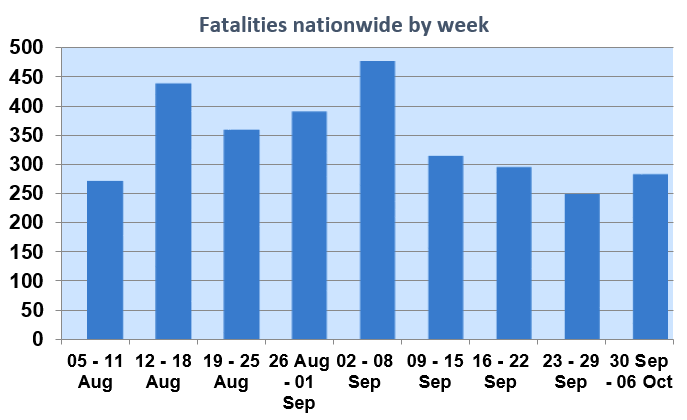
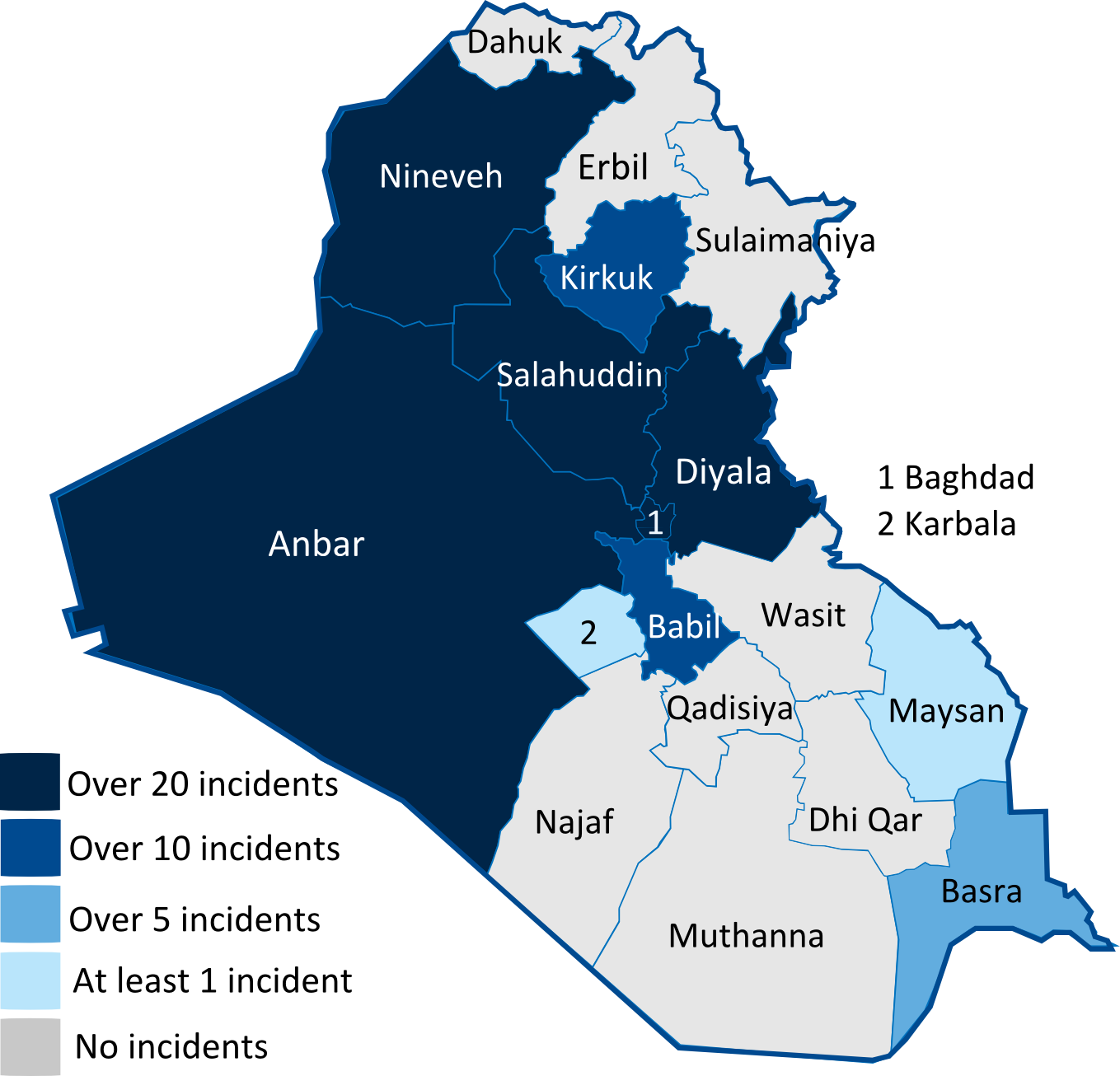 ISIS’s military strategy continued to defy airstrikes conducted by the US and their allies, with militants gaining ground in Anbar and launching successful assaults on towns to the north of Baghdad. The security situation continued to complement stagnating political dynamics in Baghdad, with disagreements opposing moderates and conservative elements judging concessions to the Sunnis have already gone far enough. This lack of unity is likely to remain problematic in the government’s fight against insurgents. Sunni tribes continue to harbour deep suspicions about the government’s agenda, preventing the formation of a unified front against ISIS and limiting cross-sectarian alliances to local arrangements. The coercive methods used by ISIS in areas under their control, such as public executions, as a means to instil fear within the populations, have thus far succeeded in preventing local rebellions. Meanwhile, the effective cooperation between Peshmerga units and Iraqi soldiers continued to reflect improved relations between Erbil and Baghdad, based on Abadi’s recent decision to release the salaries of KRG employees and the promise to seek permanent solutions to crises. As Iraq’s new Prime Minister continues to negotiate policies aimed at reversing the country’s security situation, the scale of recent ISIS operations conducted in southern Salahuddin and northern Anbar have confirmed their change of focus to areas closer to the capital.
North
The most significant clashes between pro-government forces and ISIS were witnessed in the southern part of Salahuddin province, bringing the fighting closer to the capital. The town of Dhululiya, north of Baghdad, was the scene of fierce clashes between a complex nexus of tribal elements allied with ISF forces, and ISIS militants. Insurgents launched a first counter-attack on the town, before pro-government elements managed to repel ISIS in some of its districts. As Dhululiya remains contested, militants also launched an assault on the town of Balad near the northern edges of Baghdad on 04 October, prompting local Sunnis to form an alliance with Shia volunteers to contain the attack. As ISIS increase their efforts on Baghdad’s northern belt, militants continued to adopt a defensive posture in areas close to the northern frontline. Kurdish forces are assessed to have regained half of the territories they lost in ISIS’s swift offensive in August. Four villages were captured in Salahuddin’s Tuz district, while several villages were seized to the north and east of Baqubah in Diyala. Whilst ISIS maintains an important number of troops in and around Mosul, militant resources are expected to remain heavily directed towards central targets, where the group can more easily distract the ISF by attacking Baghdad’s belts.
Central
ISIS militants made further territorial gains in Anbar, while Baghdad witnessed levels of violence in line with previous averages. Islamic fighters seized the town of Kubaisa on 04 October, two days after a complex assault on Hit allowed militants to seize the city located west of Ramadi. The capture of Kubaisa allows Sunni insurgents to consolidate their positions near Haditha and the military base of Ain al-Asad, which the ISF uses to protect the Haditha dam. The dam remains a focal point of ISIS, for the considerable damage its destruction would inflict to Iraq’s power system, and efforts are expected to intensify in order to progress further west. Radical cells established in the capital continued to be responsible for most of the violence witnessed in Baghdad, though incident levels remained aligned with previous averages. The most significant attack occurred in the al-Jadida district, when a car bomb exploded in a popular market, killed 12 civilians and injured dozens. Protections around Baghdad’s western belt have reportedly been reinforced with the sending of additional troops to the town of Ameriyah, near Fallujah, which links Anbar to the capital. ISIS’s main efforts are likely to remain focused on securing Hit and its surrounding areas, ensuring that large-scale assaults will be predominantly attempted in Anbar.
South
As previously assessed, the strategy of diversion followed by ISIS translated in VBIED attacks against southern targets. Arguably incentivised by a period of Shia religious celebrations, militants detonated car bombs in Babil, Karbala and Basra on 30 September. Whilst these attacks failed to cause any fatalities within the population, they nonetheless demonstrate ISIS’s intent to disrupt pro-government counter-offensives in the North. Pre-established patterns of violence should ensure that south-eastern governorates avoid sophisticated militant incursions over the next reporting period, and that most of the violence remain confined to criminal and tribal disputes.
Posted in 'Your Country' - Iraq, Weekly Security Update Comments Off on Weekly Security Update, 30 September - 06 October 2014

Weekly Security Update, 23 - 29 September 2014
Posted on 30 September 2014 .
By Anne-Laure Barbosa at Constellis Consulting
 High levels of violence continued to plague Iraq’s security environment, with general dynamics in line with pre-established patterns. Whilst ISF counter-offensives were successful in re-taking some of the lost territories in Anbar and Diyala, the situation remained generally stagnant, with pro-government forces and insurgents each failing to make major gains. The series of airstrikes conducted by a coalition of Western countries in Iraq continued to be coordinated with a joint force of US and Arab warplanes in Syria, where oil facilities controlled by the Islamic State were targeted with the aim to hit the group’s financial resources. As part of an the overhaul of the country’s armed forces, Prime Minister Haider al-Abadi retired two senior generals known for being close allies of former PM Nouri al-Maliki. This decision responds to a dual imperative for Abadi, who needs to distance himself from the legacy of his predecessor, and tackle a security situation which has caused an increasing number of casualties within the ISF. While this measure will hardly impact on the ISF capabilities, it will likely reinforce Abadi’s leadership among the minorities and moderate Shia elements. On 24 September, US President Barack Obama met Abadi for the first time at the UN General Assembly, publicly endorsing the Iraqi leader and promising more arms and equipment. Following last week’s complex attacks in Baghdad and Anbar, US warplanes focused more heavily on areas surrounding the capital, with the aim to deter IS from launching sophisticated and coordinated assaults on Baghdad. The main areas of direct fighting should remain located in northern Diyala, southern Salahuddin, north-eastern Anbar and northern Nineveh.
North
While the situation remains stagnant in most areas of the North, a joint force of Iraqi troops and Shia militias made some gains in Diyala. On 27 September, Iraqi fighters retook the Sudur dam, near Muqdadiyah. This capture follows days of heavy fighting in the area, which left many dead in pro-government and insurgent ranks. Previously on 25 September, a coalition of ISF and tribal fighters had cleared the Shohani area, north of Muqdadiyah, seizing several villages. Meanwhile, airstrikes hit areas of southern Kirkuk, with local intelligence reporting the deaths of two senior IS leaders near the town of Bashir. Airstrikes have focused on areas entirely controlled by IS and the number of casualties is therefore difficult to assess. Warplanes have sought to avoid urban centres, in order to limit civilian losses, and missiles have therefore mainly hit targets such as armoured vehicles. As militants adapt their tactics to new realities, avoiding visible gatherings and blending with local populations, the impact of airstrikes will be limited to constraining IS’s movements, rather than translate in a swift re-capture of territories. Although reporting remains largely interrupted in Salahuddin and Nineveh, local sources reported that militants blew up the Green Church and the Al Arbain mosque in Tikrit, while several public executions were witnessed in Mosul. Clashes between pro-government forces and IS were reported in the vicinity of the Sinjar district and border towns near Syria, with Rabia retaken by Kurdish forces on 30 September. The next days are expected to see additional counter-offensives against IS-held areas of the North.
Central
As previously assessed, IS militants sustained their efforts on northern Anbar, in a bid to drive away ground troops and air support from the North. Following the assault on an army base in Saqlawiya which left 400 to 600 soldiers dead or captured, Iraqi forces besieged by insurgents in the village of Albu Etha, near Ramadi, were forced to abandon their positions after running short of ammunition. While the current status of Albu Etha varies according to sources, a joint force of Iraqi soldiers and tribal fighters reportedly re-captured the town of Sijir, near Fallujah. ISF counter-offensives in Anbar have been considerably hindered by IEDs placed along the main routes. The increased focus of IS on Anbar prompted US warplanes to deploy south of IS’s northern strongholds, with airstrikes reported in areas near al-Qaim, Ramadi and Fallujah. Meanwhile, militant cells continued to hit Baghdad with car bombs, causing dozens of civilian fatalities in Shia-dominated districts. On 25 September, a twin blast in the southern neighbourhood of Mahmudiyah killed seven people and wounded 23 others. The surge in militant activity in Anbar should ensure that government resources assisted by air support remain focused on Baghdad’s western and northern belts for the next days.
South
While the south-eastern governorates remained largely peaceful, ISF counter-offensives in the North could prompt IS to launch incursions in the South. Levels of violence in the South continued to contrast with incidents witnessed in Babil, with sporadic clashes and IEDs inflicting a number of casualties in the northern Jurf al-Sakhar and Iskandariya districts. As IS insurgents have been challenged in the North by a coalition of pro-government forces, their operations in Anbar as a means to distract the ISF could be expanded with VBIED incursions in the South. Additionally, while the reliance on Shia fighters in the North has effectively curbed tribal violence in the South, the ongoing competition for ministerial positions could lead to a renewal of clashes. This form of violence should remain low-level and low-impact however, with the general security outlook remaining aligned with current averages.

Posted in Weekly Security Update Comments Off on Weekly Security Update, 23 - 29 September 2014

Weekly Security Update, 16 – 22 September 2014
Posted on 24 September 2014 .
By Anne-Laure Barbosa at Constellis Consulting
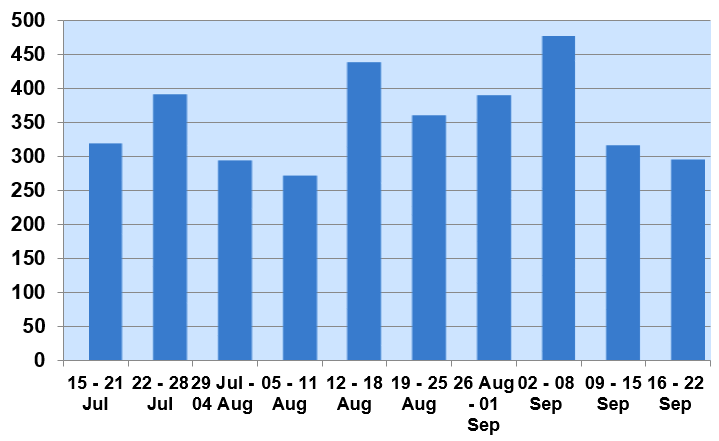
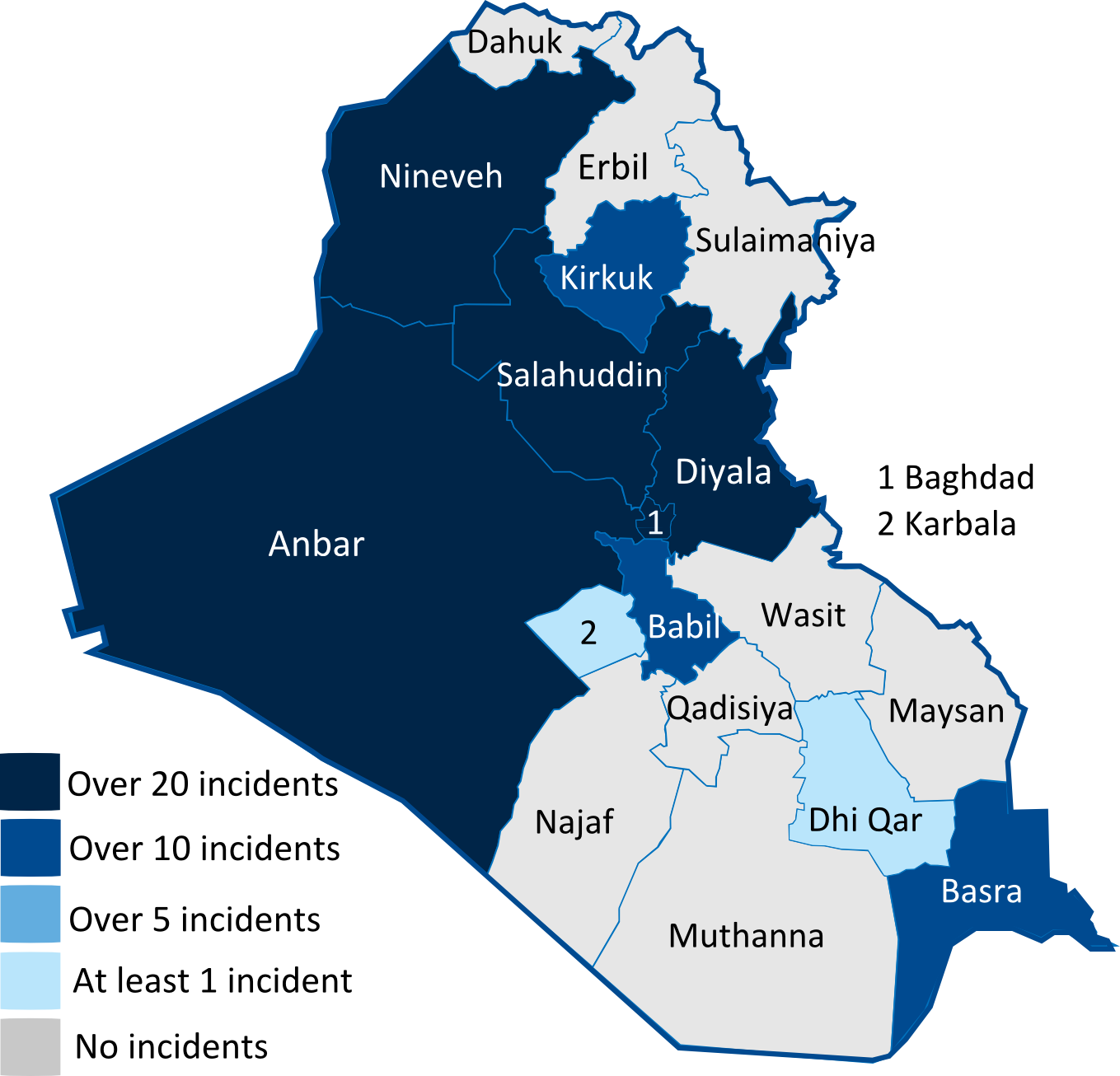 On 16 September, Iraq’s parliament rejected two appointees to head the critical defence and interior ministries, two of the most sensitive positions which remain to be filled. The opposition of the Shia Alliance prevented the parliament from reaching a majority vote, which would have been necessary to approve the appointments of Riad al-Ghareeb and Jaber al-Jaberi. As Prime Minister Haider al-Abadi attempts to fulfil his promise to grant concessions to the Sunnis, completing the formation of an inclusive government will have to overcome long-lasting divisions between the different sectarian and ethnic groups, as well as within the Shia community itself. While negotiations continue in order to fill the five remaining positions in the new Iraqi cabinet, the United States broadened their operational areas, and are now operating over Erbil, Sinjar, the Mosul and Haditha dams, as well as restive territories in northern Babil. Despite the international efforts currently deployed in several parts of the country, Abadi formally ruled out an intervention of foreign ground troops, in a probable attempt at asserting himself as a leader immune to foreign influence. Though Abadi’s position was recently reinforced by the formation of a new government and a leadership style contrasting with Maliki’s, tangible measures towards reconciling Iraq’s antagonistic groups have yet to be discussed and are unlikely before the cabinet is complete. Security dynamics evolved this week, with militants adopting an increasingly defensive posture in the North, as most government resources continue to be allocated on this frontline. As a result central provinces witnessed an increase in militant activity, while levels of violence in the South remained aligned with previous patterns.
North
Kurdish forces launched several offensives to reclaim strategic villages in the plains separating Kurdistan from Mosul, which remains entirely controlled by the Islamic State. Peshmerga units are currently attempting to secure the village of Hassan al-Sham on their way towards Mosul. US airstrikes, without better intelligence on the ground, are likely to be less effective in Iraqi cities and urban centres will be the most challenging to reclaim. As France carried out their first strikes against IS positions in northern Iraq, the United States expanded their air campaign by launching four airstrikes in south-west Kirkuk, destroying a number of vehicles. As Iraqi and Kurdish forces consolidate their positions in Nineveh, further operations were conducted in Diyala’s Himreen, Khalis, Sadia and Muqdadiyah districts, leading to clashes with insurgents. While international support has undoubtedly contributed to stabilising the frontlines and hindering IS’s advance, insurgents have so far maintained their grip on key urban areas. Any important breakthrough remains unlikely in the next weeks, and the security environment should remain stagnant. Most operational areas should remain focused on areas north of Mosul, Sinjar, southern Kirkuk and northern Diyala.
Central
IS militants planned two coordinated attacks in two sections of Baghdad on 18 September, with the aim to free more than a thousand prisoners. The group employed mortar shells, suicide bombers and at least one car bomb in an attempt to infiltrate the Adala Prison in Khadimiya district, and destroy an office of the Badr Organisation in another neighbourhood of the capital. The fact that mortar rounds were fired from areas north of Baghdad demonstrates that IS has the capability to stage complex attacks on the capital without relying on existing cells inside Baghdad. More car bomb attacks were reported in the capital, in the Karada and Mahmudiya neighbourhoods, killing and injuring dozens of civilians. Despite the boldness of these attacks, demonstrating an effort at relieving the pressure put on the northern frontline, the number of VBIEDs remained in line with previous averages. In Anbar, IS militants attacked an army base in the vicinity of Sijir, near Fallujah, which was under siege for a week. Hundreds of soldiers were reportedly captured, killed or injured in the militant offensive, which involved VBIEDs and suicide bombers. The increase in complex operations witnessed in the central provinces demonstrate an apparent willingness to shift the attention of the ISF away from the North, where IS’s advance has been hindered by a combination of military operations and air support. This trend could be prolonged over the next reporting period, as militants appear willing to stretch government resources.
South
A significant increase in criminal activities in Basra owed to a more permissive operational environment, as ISF units from the South continue to assist operations in the North. Following last week’s car bombs, south-eastern provinces avoided major militant incursions, while Babil continued to witness most of the violence. While sophisticated IS operations such as the ones seen in Anbar and Baghdad are unlikely due to a far less favourable terrain to Sunni insurgents, the latter could turn to southern targets, in an effort to stretch the ISF focus further. Any complex attack staged in the South-East will remain isolated, as insurgents lack the capability to launch sustained assaults away from their strongholds. Additionally, the absence of most ISF units could translate in an increase in tribal clashes in Basra, which have been absent this week.
Posted in Weekly Security Update Comments Off on Weekly Security Update, 16 – 22 September 2014