



Weekly Security Update, 09 – 15 September 2014
Posted on 17 September 2014 .
By Anne-Laure Barbosa at Constellis Consulting
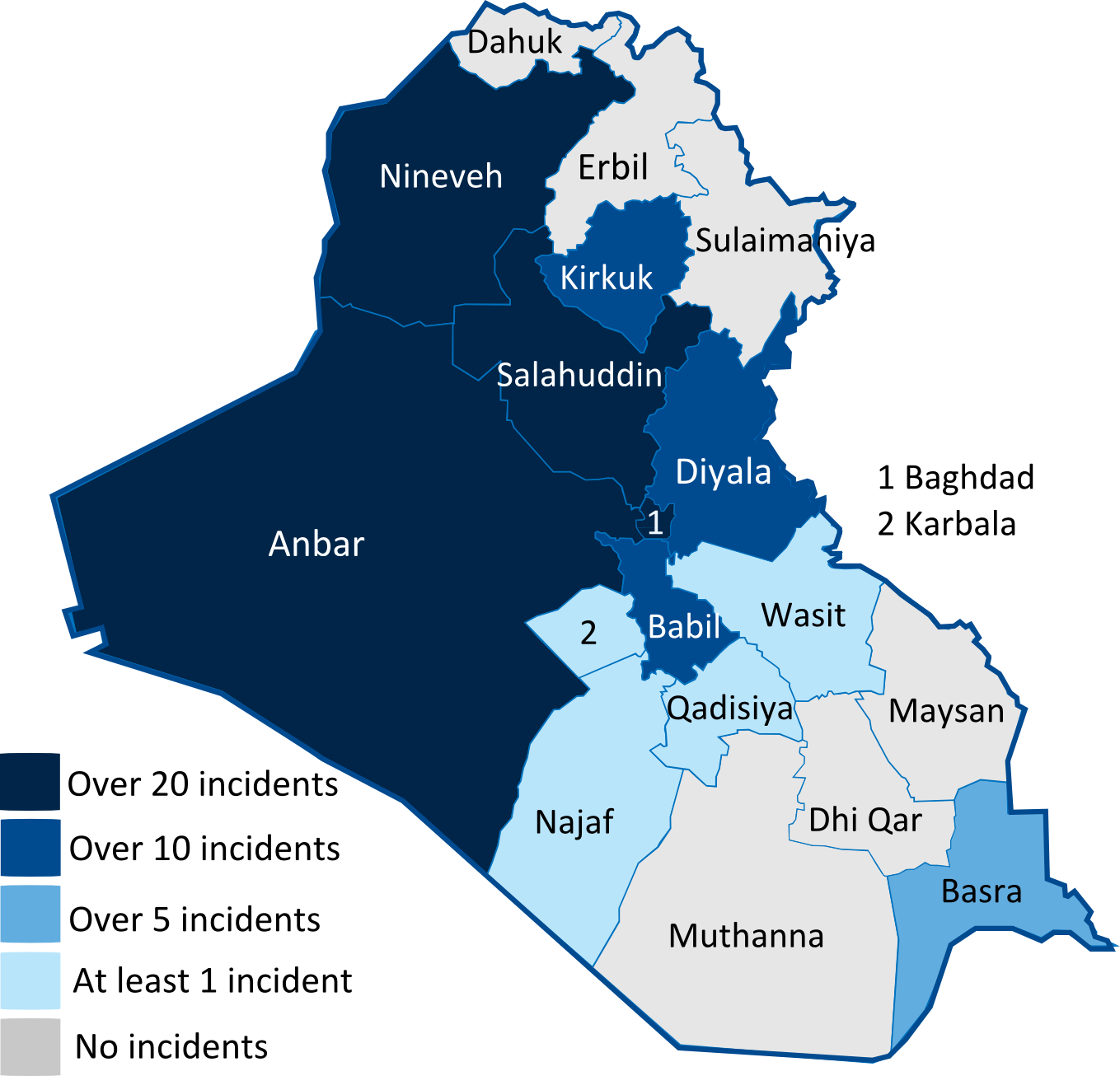 The formation of the new Iraqi government last week led to the swift mobilisation of several Western powers pledging support to the Kurds and Iraqi forces. On 15 September, leaders from thirty countries promised to help fight the Islamic State militants in the north of Iraq, following an international meeting held in Paris and attended by Iraqi President Fouad Massoum. Despite the formation of an international coalition, the main challenges to Iraq’s stability will remain political, and essentially depend on Haider al-Abadi’s ability to persuade the Sunni minority to rebel against IS. The inclusion of Sunni constituencies in the political process will be crucial in turning ambivalent populations into entities with a stake in the new status quo. Even if decisions moving towards this end were implemented, notably with the appointment of Sunni politicians to high-ranked security functions, convincing local tribes that their best interests lie in an alliance with Iraq’s Shia-dominated government will have to overcome a historic and mutual mistrust, and will struggle to hold in the longer term. This task will be all the more complicated by the appointment of former, controversial PM Nouri al-Maliki as one of the country’s three vice presidents, which was certainly set as a condition to Abadi’s endorsement. Most of the violence remained focused on the central and northern governorates, with IS-controlled territories assessed to be mainly located in and around the corridors between al-Qaim and Fallujah in Anbar, Sinjar and Mosul in Nineveh, Mosul and Samarra in Salahuddin, as well as areas of southern Kirkuk and northern Diyala. Despite the return of low-impact car bomb attacks in the South, the region north of Baghdad will continue to see the majority of IS-related incidents. The involvement of foreign powers in the conflict ensures a sustained strategic focus on northern Nineveh and key districts around Baghdad, with more than 150 airstrikes conducted so far.
North
While reporting remains disrupted in most of the North, militant activity was recorded in several areas of Nineveh and Salahuddin. On 14 September, Islamic State insurgents publicly executed eight Sunni men in the village of al-Jumasah, north of Tikrit, for allegedly plotting against the group. This violence is certainly aimed at intimidating local Sunni populations and preventing a revolt in IS-controlled territories, as the central government makes attempts at reaching out to disenfranchised tribes. Unverified reports of mass graves uncovered in several villages seemed to back the strategy of coercion followed by IS. On 12 September, three leaders of the Ubaid tribe were executed near Hawija in Kirkuk, while dozens of former ISF elements were kidnapped by insurgents. The main areas of direct fighting between government forces and insurgents continued to be located south of Tikrit, with clashes reported in al-Dur. Despite the involvement of Western air support in the coordinated campaign against IS, government forces lack the capacity to retake large urban areas and any further capture of territories currently controlled by the Islamic State are likely to be limited to small towns or rural areas. All fronts have remained stagnant over the reporting period, with ISF and Peshmerga forces maintaining their existing presence and IS adapting to airstrikes by limiting their exposure.
Central
The number of car bomb attacks in Baghdad remained aligned with pre-established patterns, with four VBIEDs reported across southern neighbourhoods of the capital. On 10 September, two vehicles exploded in Maysalun and Ghadir areas, killing at least nine civilians and injuring 50 others. On the same day, a suicide attack near the New Baghdad Bridge killed two ISF elements and 19 civilians, and injured 53 others. On 12 September, another VBIED detonated in eastern Baghdad, killing at least four people and wounding 13 others. US airstrikes continued to be reported near the Haditha Dam, in an effort to protect the strategic infrastructure from IS insurgents and strengthen the positions of ISF and co-opted Sunni tribes operating in the area. The majority of resources allocated to fight IS in Anbar appear to be directed at areas around the dam. On 13 September, a joint unit of ISF and local tribes supported by airborne forces launched an operation to re-take Albu Hayat near Haditha. The same dynamics will apply over the next reporting period, with any territorial advance unlikely from either side.
South
Southern governorates witnessed an increase in violence over the reporting period, owing to the continued reliance of the ISF on Shia militias and a subsequently freer operational environment in the South. On 11 September, three car bombs detonated across the south-eastern governorates of Karbala, Najaf and Qadisiya, causing dozens of injuries within the civilian population. Car bombs in the South-East had been avoided since a twin blast hit Karbala on 25 August. The pattern of mass-casualty incursions is effectively disrupted and VBIED attacks are expected to remain irregular and relatively low-impact. Low-level small fire attacks and IEDs continued to account for the majority of incidents reported in the South, though an increase in kidnapping incidents and criminal-related activities was observed in Basra, a probable consequence of a more permissive security environment. Despite these relative changes, the number of fatalities recorded in the South remained higher in Babil and the restive governorate is expected to continue absorbing most of the violence.
Posted in Weekly Security Update Comments Off on Weekly Security Update, 09 – 15 September 2014

Weekly Security Update, 19 - 25 August 2014
Posted on 27 August 2014 .
By Anne-Laure Barbosa at Constellis Consulting
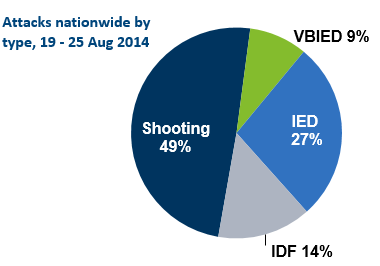
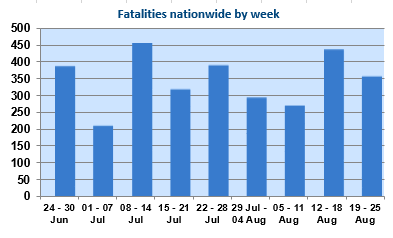
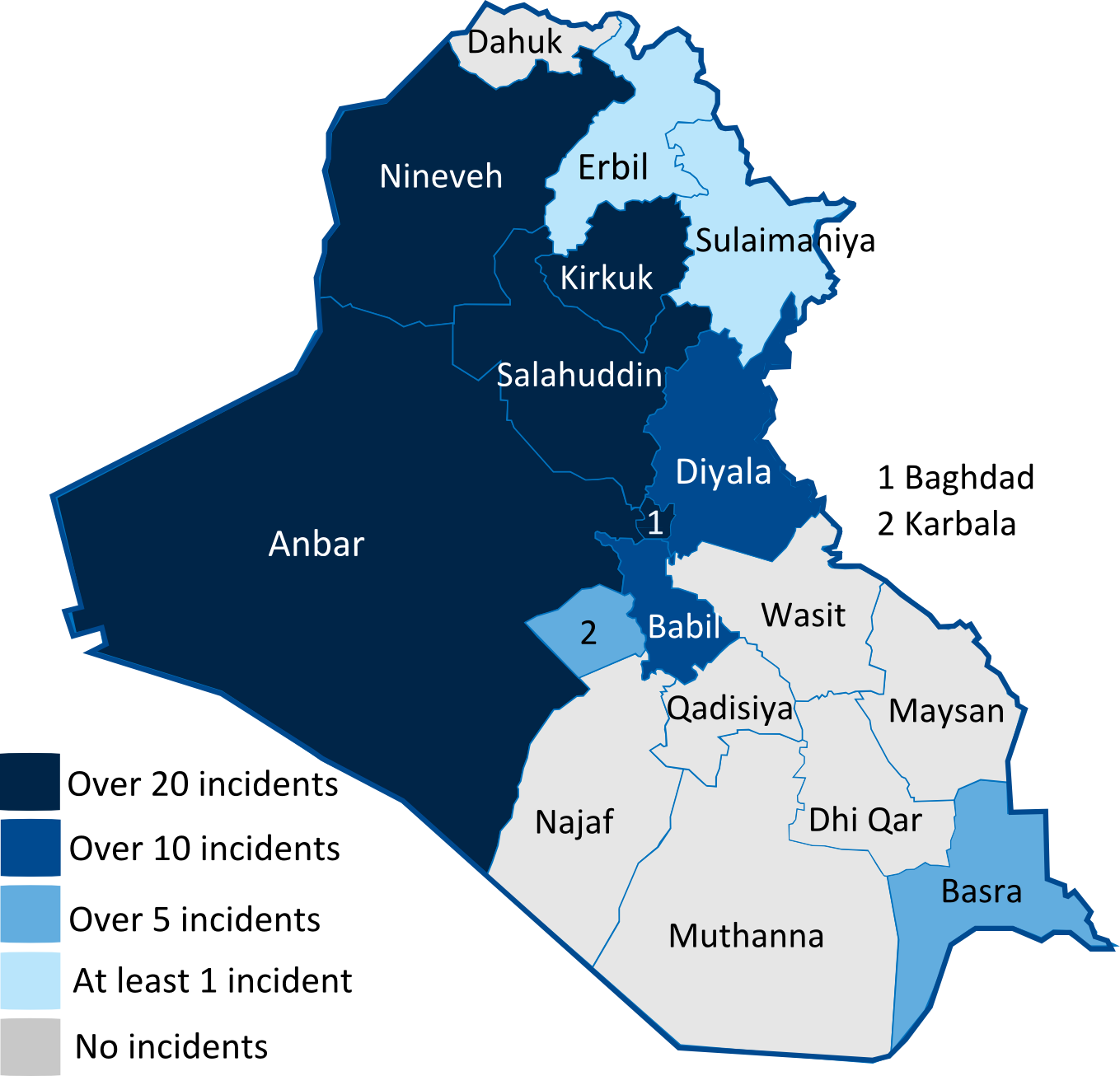 Amidst continuing violence across northern and central Iraq, particularly where Peshmerga, ISF or Shia volunteers defend new borders with IS militants, the shooting of over 60 Sunni worshippers by suspected Shia militiamen in Diyala is a reminder of the extreme sectarian tensions which provide the backdrop to the current headlines dominated by the Islamic State. US airstrikes continued throughout the reporting period, largely targeting IS mobile artillery pieces and other military hardware. In the wake of the killing of US journalist, James Foley, the US administration has refused to be drawn on its intentions beyond a broad intention to push IS militants from Iraq in order to contain them in Syria.
The presence of both US and UK Special Forces in northern Iraq is now an open secret and intelligence-led raids against IS leadership aimed at degrading the group’s decision-making structure and yielding intelligence about future IS intentions are likely to be conducted alongside the air support and humanitarian efforts. The targeting of IS military hardware helped repel an attack on the Baiji refinery whilst also ensuring that Peshmerga and ISF forces were able to hold their positions in the face of IS assaults. The detonation of a vehicle close to Erbil this week, believed to be caused by an adhesive or magnetic IED raised concerns that the autonomous region will see an increase in attacks from territory controlled by IS. The three car bombs in Kirkuk, which killed over 30 people, indicate the extant strength of the Islamic State’s VBIED capability, a capability which will be increasingly relied on should US airstrikes continue to prevent them from challenging ISF and Peshmerga positions by more conventional means.
North
Despite US airstrikes, IS militants continue to challenge Peshmerga and ISF in the North, especially in contested towns and villages where militants can move amongst local Sunni populations and avoid Iraqi and US air power as a result. The town of Jalawla in Diyala Province remained the scene of heavy clashes while Miqdadiyah saw Shia volunteers targeted throughout the reporting period. In Kirkuk city there was a significant increase in IED attacks on top of the three VBIED attacks which struck the entrance to the Rahimawa market and a Peshmerga building under construction. The tackling of VBIED networks in Kirkuk and elsewhere is unlikely to be resourced to the extent necessary to defeat them while the ISF and Peshmerga remain fixed defending territory. Even US intelligence support is unlikely to stretch to VBIED networks at present while domestic US pressure to see IS pushed back and its leadership held accountable dominates strategy. The attack by suspected Shia militiamen on the Sunni Mosab Bin Umar mosque in Bani Weiss likely initiated the VBIED response the following day but its repercussions will certainly continue to be felt and further VBIED and SVEST attacks against Shia religious targets in northern cities and Baghdad should be expected.
Central
 On 12 August, a suicide bomber attacked a checkpoint near Abadi’s home in Baghdad without causing casualties. On 13 August, a series of five VBIEDs hit the Jadeidah, Sharqi, Bayaa, Aamel and New Baghdad neighbourhoods, killing at least 16 civilians and injuring hundreds. On 17 August, a bridge connecting the Fallujah corridor with the south-west of Baghdad, and used by the ISF to transport supplies, was blown up by IS insurgents. An early effect of Maliki’s resignation was felt just one day after the controversial Shia leader stepped aside. On 15 August, members of several Sunni tribes reportedly agreed to ramp up their joint effort with the ISF to fight insurgents in the north-eastern part of Anbar. This tribal surge also followed Anbar governor Ahmed al-Dulaimi’s statement that he had secured US support. Unconfirmed reports stated that US fighter jets conducted flights over the Haditha Dam to prevent IS from capturing the dam. US involvement in Anbar is a sensitive matter as the region has historically been anti-American. Tribal clashes and ISF airstrikes reported in Anbar remained predominantly concentrated in the corridor stretching from Haditha to Fallujah, with accounts of IS attacks in Hit.
South
Two car bombs struck Karbala on 25 August killing four people and injuring 17 more, just hours before two car bombs struck Hilla in Babil Governorate. The targeting of southern Shia populations will increase despite the greater difficulties of conducting VBIED attacks in the Shia South. Karbala represents a particularly sensitive target and Sunni extremists understand the enhanced impacts of killing civilians there. Jarf al-Sakhar in Babil’s Musayib District continues to see the majority of violence south of the capital as existing insurgent cells benefit from increased IS support. Basra must continue to expect VBIED or suicide attacks although these are unlikely to affect international operations and will instead seek to inflict civilian casualties. The few violent incidents in the city this week were largely criminal.
Posted in Weekly Security Update Comments Off on Weekly Security Update, 19 - 25 August 2014

Weekly Security Update, 12 - 18 August 2014
Posted on 19 August 2014 .
By Anne-Laure Barbosa at Constellis Consulting
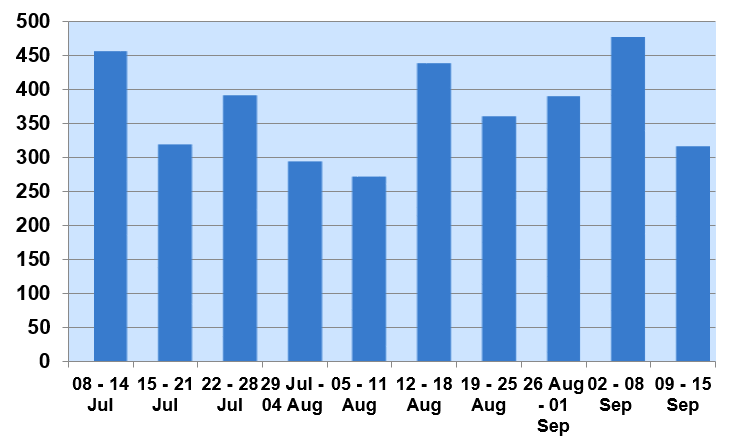
 On 14 August, Nouri al-Maliki bowed to increasing domestic and international pressure, and agreed to step down as Prime Minister to endorse Haider al-Abadi in a televised speech. This endorsement paves the way for the formation of a new government, after months of parliamentary deadlock and Maliki’s stubborn insistence to run for a third term, resisting the opposition of nearly all Iraqi blocs and dwindling support of the Iranian leadership. This relatively smooth transition has largely been prompted by the lighting advance of IS militants into Iraq’s northern governorates, making the formation of a central government increasingly necessary to bring meaningful political solutions to the worsening security situation. Abadi’s biggest challenge will undoubtedly be to reach out to the Sunni community by opening dialogue with their tribal leaders and addressing their legitimate grievances. These actions will depend on Abadi’s ability to craft a leadership style contrasting with Maliki’s. Regardless of Abadi’s apparent intent to build bridges between Iraq’s various communities, hard-line elements within the Dawa party, of which Abadi and Maliki are both members, are likely to try and maintain their influence on decision-making, which will ultimately impact on Baghdad’s response to the insurgency. The majority of violent clashes with IS fighters continued to occur in outlying areas of ‘disputed’ areas, with Kurdish counter-offensives supported by airstrikes translating into several territorial gains in Nineveh. As foreign military powers step up their involvement in Iraq by sending in airplanes and equipment to arm the Kurds, counter-insurgency efforts are expected to remain focussed on areas of Nineveh where minorities are threatened by the actions of IS militants. These mass executions largely accounted for the significant rise in casualties reported this week, with 437 fatalities nationwide.
North
On 18 August and after days of fighting aided by US airstrikes, Kurdish and Iraqi forces recaptured the Mosul Dam on the Tigris River, which fell to militants less than two weeks ago. Peshmerga forces reportedly recaptured the Christian towns of Tel Skuf, Sharafiya and Batnaya on their march towards the dam, and now control most of the surrounding area. While sustained airstrikes over the past days have proven effective in hindering IS’s advance, they have also prompted a tactical shift which will make it harder to dislodge insurgents from urban areas. In response to airstrikes, previously grouped IS pockets of militants have started to dissipate and blend in with civilian populations, making targeting more difficult. On 15 August, the Islamic State reportedly executed 80 members of the Yazidi community in the village of Kocho and kidnapped dozens of women before regrouping in Tal Afar. The siege of Mount Sinjar was reportedly broken by the US airstrikes conducted on the area, where thousands of Yazidis had been stranded for days. Meanwhile, militant activity was reported in Qara Tappa, just 70 miles north of Baghdad, where IS fighters appear to have regrouped to broaden their front against Kurdish forces heavily concentrated in Nineveh. The next days could therefore witness clashes closer to the capital in an effort to shift some of the ISF’s focus away from the North, while Iraqi troops launch operations to retake Tikrit from the south.
Central
 On 12 August, a suicide bomber attacked a checkpoint near Abadi’s home in Baghdad without causing casualties. On 13 August, a series of five VBIEDs hit the Jadeidah, Sharqi, Bayaa, Aamel and New Baghdad neighbourhoods, killing at least 16 civilians and injuring hundreds. On 17 August, a bridge connecting the Fallujah corridor with the south-west of Baghdad, and used by the ISF to transport supplies, was blown up by IS insurgents. An early effect of Maliki’s resignation was felt just one day after the controversial Shia leader stepped aside. On 15 August, members of several Sunni tribes reportedly agreed to ramp up their joint effort with the ISF to fight insurgents in the north-eastern part of Anbar. This tribal surge also followed Anbar governor Ahmed al-Dulaimi’s statement that he had secured US support. Unconfirmed reports stated that US fighter jets conducted flights over the Haditha Dam to prevent IS from capturing the dam. US involvement in Anbar is a sensitive matter as the region has historically been anti-American. Tribal clashes and ISF airstrikes reported in Anbar remained predominantly concentrated in the corridor stretching from Haditha to Fallujah, with accounts of IS attacks in Hit.
South
Political tensions in the South-East over the nomination for the next Prime Minister have decreased, following a public declaration by Nouri al-Maliki endorsing the nomination of Haider al-Abadi. Levels of militant activity across the South remained stagnant, confirming IS’s priority to target northern provinces. The bulk of this violence continued to occur in Babil’s northern Jarf al-Sakhar district, though the decrease in reported incidents backed the assessment that IS militants have alleviated their pressure on Baghdad’s southern belt. Basra governorate continued to follow established patterns of violence, with tribal and criminal disputes accounting for the majority of incidents in the area. The process of government formation will continue to drive most of the Shia infighting witnessed in the South-East.

Posted in Weekly Security Update Comments Off on Weekly Security Update, 12 - 18 August 2014

Weekly Security Update, 05 - 11 August 2014
Posted on 12 August 2014 .
By Anne-Laure Barbosa at Constellis Consulting
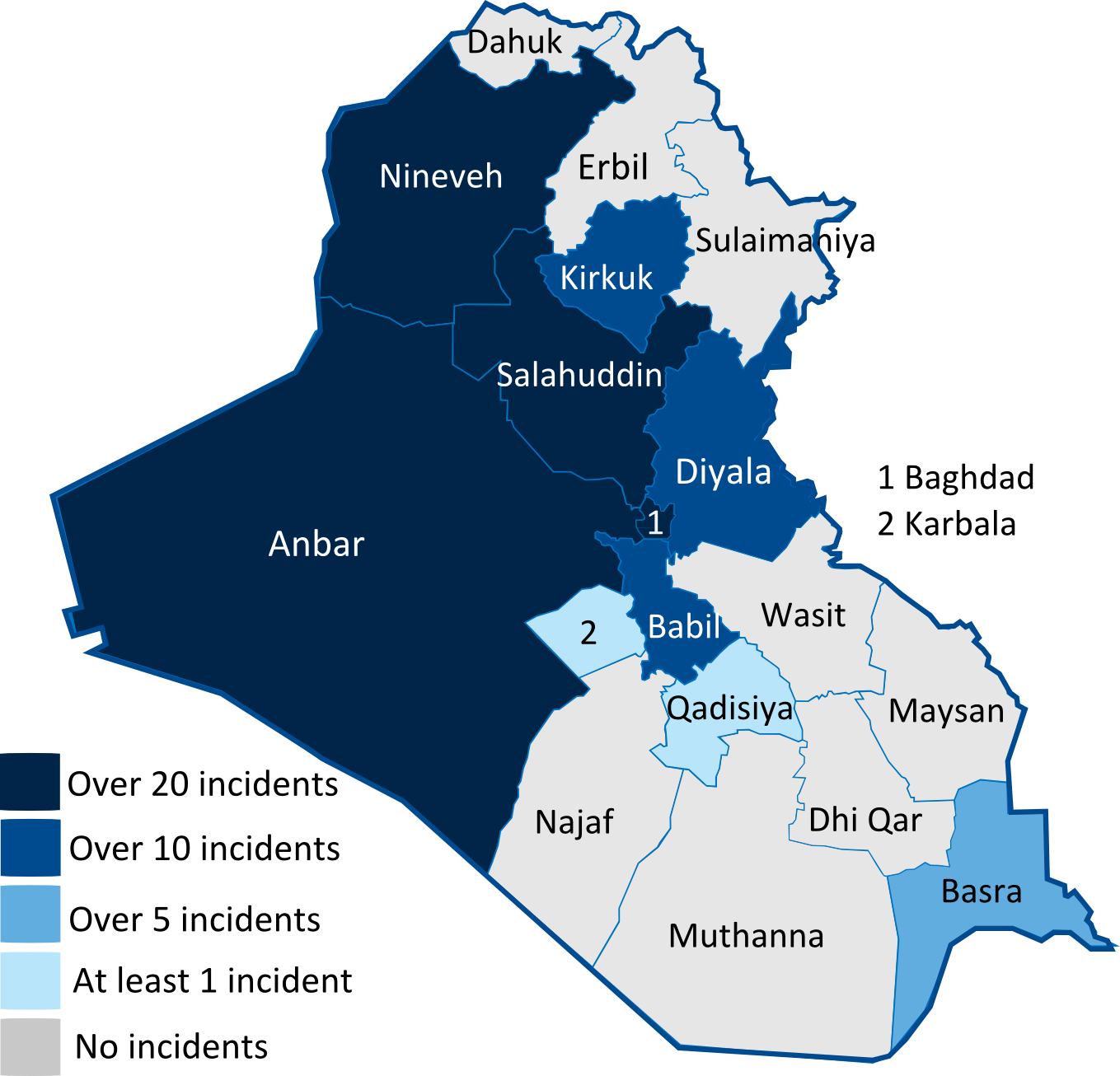 After months of parliamentary deadlock, President Massoum nominated Haider al-Abadi as Prime Minister on 11 August, effectively removing incumbent Prime Minister Nouri al-Maliki from office. This nomination follows lengthy and opaque negotiations between Massoum and leaders from the Shia National Alliance, of which Maliki’s State of Law coalition is a member. The overt opposition of the Iraqi religious establishment and rival Shia party leaders to Maliki’s third term, and increasing divisions within Maliki’s own bloc, allowed Shia MPs to form a separate majority and designate Abadi as their leader. Abadi is himself a member of Maliki’s Dawa party and is seen as a far less polarising figure. The deadline to designate a Prime Minister was set on 10 August before the parliament agreed to adjourn discussions to 19 August, and Maliki immediately deemed Abadi’s appointment unconstitutional, vowing to file a complaint to the Federal Court. As this reaction demonstrates, Maliki, who is set to remain Prime Minister until a government is formed, is unlikely to give up power easily. After his speech, Maliki appeared to have commanded troops to seal off the Green Zone, where most government buildings are located. This display of force in the vicinity of state institutions is another sign that the competition for power unfolding in Baghdad will persist in the coming weeks, although resisting pressures from within and outside Iraq will be increasingly harder to sustain for Maliki. This power struggle will continue to impact on the security solutions to the IS threat. These political maneuvers come amid a deteriorating security situation in the North, where militants continued their advance into Kurdish-controlled areas of Nineveh, prompting the US government to authorise airstrikes on the region. The next days are likely to witness a continued military focus on Sinjar and districts around Mosul recently captured by IS.
North
Following the capture of Sinjar last week, Sunni insurgents confirmed their momentum by capturing additional territories and towns on 07 August. Militants seized the Mosul Dam, before going eastward toward Erbil. Iraq’s largest Christian city, Qaraqosh, was also captured by insurgents following the Peshmerga retreat, sparking the exodus of its inhabitants. Meanwhile, some 50,000 Yazidis are thought to have been trapped in the mountains after fleeing Sinjar, though some of them have been rescued. The possibility of a genocide against religious minorities has been given as the main rationale behind the authorisation of US airstrikes in support of Kurdish counter-offensives in the region. The American military support bore its first fruits, allowing Kurdish forces to re-capture Makhmour and Qwer, the areas closest to Erbil located only a few miles from Kurdistan’s borders. In Jalawla, Diyala, insurgents managed to repel the sustained Kurdish offensives launched against the town over the last weeks, claiming full control of the area. While the majority of IS fighters pulled out from Kirkuk to regroup towards Mosul, militant cells continued to be responsible for a significant number of civilian casualties. On 07 August, two car bombs exploded in the Tis’een area of Kirkuk city, killing 11 locals and injuring 28 others. The main areas of fighting will remain located in Nineveh over the next days, as Kurdish troops supported by airstrikes attempt to progress westward.
Central
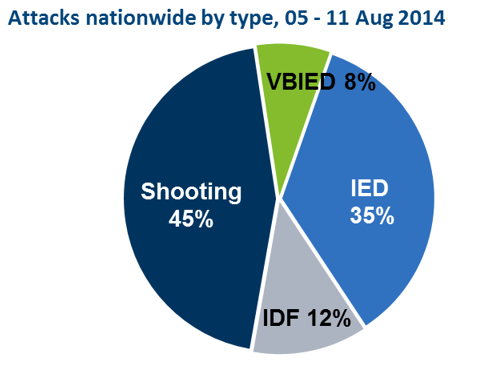 On 12 August, Iraq’s newly-designated Prime Minister Haider al-Abadi won endorsements from the United States and Iran, increasing pressure on Maliki to support a smooth political transition. The power struggle in Baghdad may translate in an increase in levels of violence in the capital, where politicised armed factions are co-located with ISF units loyal to Maliki. Despite troop deployments in the capital ordered by Maliki, their significance was tempered by a senior government official assuring that ISF commanders were loyal to Massoum. No further sign of opposition from Maliki was witnessed on 12 August, as Abadi began maneuvering to form a cabinet within the next month. While fears of a military standoff in Baghdad eased, tensions were still high in the capital at the time of writing. On 06 and 07 August, six car bombs hit Shia neighbourhoods of Baghdad, killing dozens and injuring over 100 civilians. The core of IS operations in Anbar remained focussed on Ramadi and Haditha, where insurgents are attempting to capture the strategic dam. Tribal alliances still appear to be in favour of the government and their defence lines are expected to hold in the near term.
On 12 August, Iraq’s newly-designated Prime Minister Haider al-Abadi won endorsements from the United States and Iran, increasing pressure on Maliki to support a smooth political transition. The power struggle in Baghdad may translate in an increase in levels of violence in the capital, where politicised armed factions are co-located with ISF units loyal to Maliki. Despite troop deployments in the capital ordered by Maliki, their significance was tempered by a senior government official assuring that ISF commanders were loyal to Massoum. No further sign of opposition from Maliki was witnessed on 12 August, as Abadi began maneuvering to form a cabinet within the next month. While fears of a military standoff in Baghdad eased, tensions were still high in the capital at the time of writing. On 06 and 07 August, six car bombs hit Shia neighbourhoods of Baghdad, killing dozens and injuring over 100 civilians. The core of IS operations in Anbar remained focussed on Ramadi and Haditha, where insurgents are attempting to capture the strategic dam. Tribal alliances still appear to be in favour of the government and their defence lines are expected to hold in the near term.
South
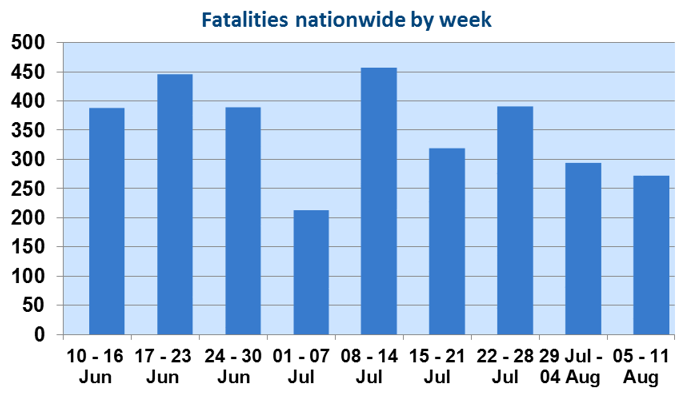
Political tensions in the capital also manifested in the Shia-dominated South, where several pro-Maliki demonstrations in Maysan and Muthanna governorates were witnessed over the reporting period. Should the situation deteriorate as Maliki clings to power, his rivals could attempt to remove him forcefully, sparking Shia infighting between their numerous and competing tribes. Meanwhile, levels of violence in Babil remained stagnant and below their post-IS offensive averages, as insurgents continue to focus on Kurdish-controlled or contested areas of the North. The likelihood of high-impact attacks against the South-East remains assessed as low considering IS’s current priorities on the consolidation and expansion of their positions in the North.
Posted in Weekly Security Update Comments Off on Weekly Security Update, 05 - 11 August 2014

Weekly Security Update, 29 July - 04 August 2014
Posted on 05 August 2014 .
By Anne-Laure Barbosa at Constellis Consulting
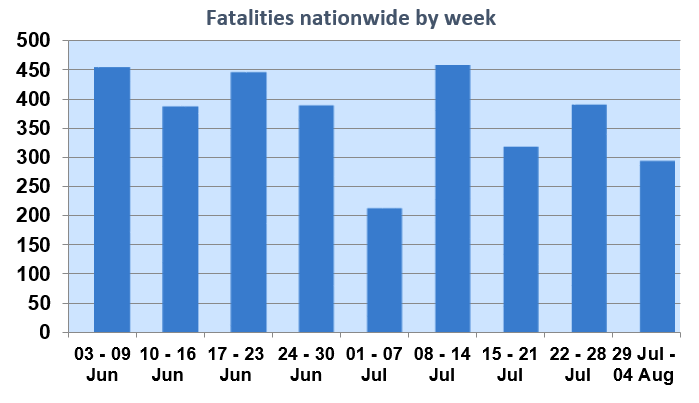
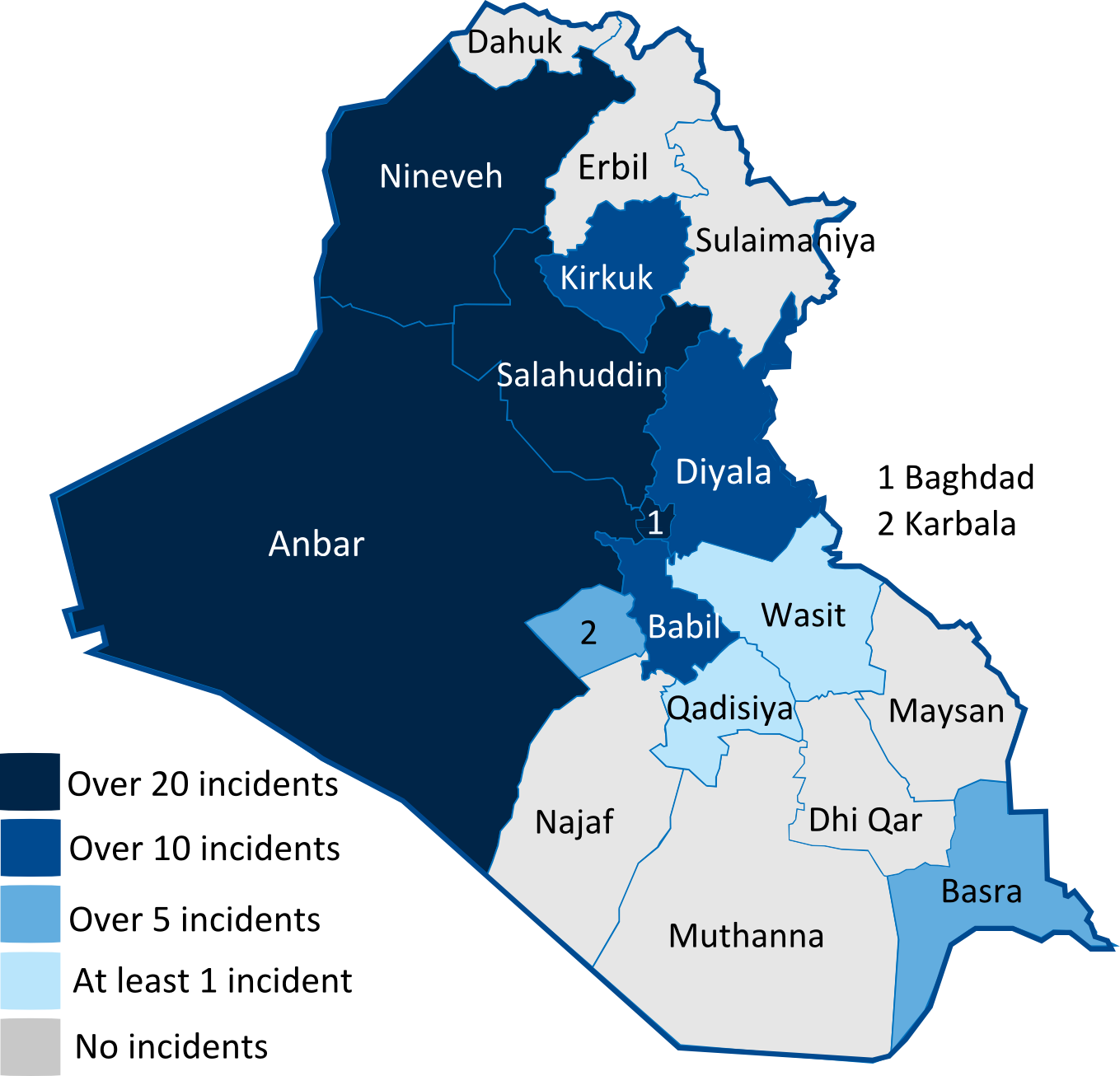 Amid elevated levels of violence accounting for nearly 300 fatalities, the reporting period was marked by ISIS advances across the North. Militant offensives in several districts held or contested by Peshmerga forces led to fierce clashes between ISIS and Kurdish elements in Sinjar district and areas around Mosul, causing tens of thousands to flee. As insurgents extend their reach to previously Kurdish-held territories, and therefore consolidate areas seized in June, the condition of minorities in Nineveh appears increasingly precarious. After expelling Christians and other ancient religious minorities from Mosul in July, there has been accounts of executions among the Yazidi community, a particular branch of Shia Islam, as Kurdish armed forces retreated further north. The deteriorating security situation has added considerable urgency to forming a new government which would have the legitimacy to broker deals with Sunni tribal communities ambivalent to the ISIS advance. On 01 August, Ayatollah Ali al-Sistani called on the country’s politicians to form a national unity government, while incumbent Prime Minister Nouri al-Maliki continues unsuccessfully to secure a third term, prolonging Iraq’s political deadlock. On 04 August, Maliki ordered his air force to assist Kurdish forces, as the latter prepare a counter-offensive on territories fallen to ISIS over the past days. The ISF has been relying heavily on airstrikes to contain the advance of Sunni militants in the North, though air support has so far largely failed to help regain territories. This decision could rather be political, as the next Prime Minister will likely need Kurdish support in parliament to secure his election. While the political sphere is expected to remain stagnant over the next weeks, most of the violence in the North should remain concentrated in Nineveh’s Sinjar district, central Salahuddin, eastern Anbar and northern Diyala.
North
On 03 August, following a 24 hour offensive which inflicted the first major defeat on Kurdish forces, ISIS insurgents captured Iraq’s biggest dam, an oilfield and three towns in Nineveh. The control of the electricity-generating Mosul Dam could give militants the ability to flood major cities and reinforce their grip over the region. At the time of writing, reports were still conflicting over the control of the dam, though its strategic significance guarantees that the area will remain contested. Militants apparently took advantage of a weaker military Kurdish apparatus in Sinjar, a district which had previously been spared the violence observed in other areas hosting a Kurdish presence, though intensifying clashes in its vicinity could have predicted such offensive. ISIS’s increasingly offensive posture against Kurdish forces follows a radicalisation towards minorities present in the Mosul area for centuries, with accounts of assassinations within the Christian and Yazidi communities. While ISIS continues to apply its strict ideology by forcing populations to convert and destroying holy shrines, the main hot spots of violence across the North continued to be located in areas around Samarra in Salahuddin, and northern districts of Diyala. Despite continued IED attacks inside Kirkuk, Peshmerga forces reinforced their positions in the province and declared a unilateral ceasefire in its southern edges, which continues to witness sporadic clashes with ISIS elements.
Central
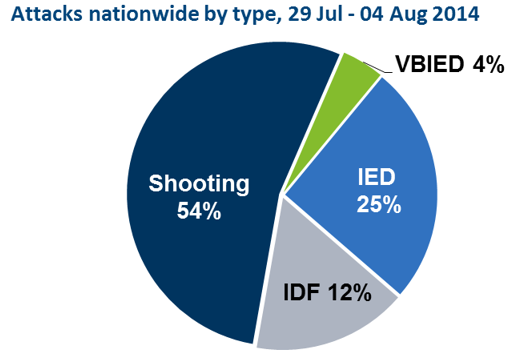 On 01 August, ISIS militants launched an attack on Haditha from three different sides, in a failed attempt to bypass the last line of defense between them and the Haditha Dam. Insurgent advances in Anbar continue to be hindered by the hostility of local tribes, which have sent fighters to reinforce the ranks of ISF units present in the area. The majority of violent incidents continue to be located in Fallujah and Ramadi, with airstrikes accounting for the majority of civilian casualties. Violence in Baghdad experienced a lull compared to previous reporting periods, owing to the ISIS surge in northern governorates. Car bombs remained below averages seen prior to the June advance, though the consolidation of ISIS positions in the northern governorates could eventually shift the focus of ISIS back to the capital. The deadliest incident occurred in the southeastern al-Ameen district, when a VBIED killed 11 civilians and injured 29 others. While ISIS cells are active across northern and central provinces, recent patterns have shown that Sunni militants currently lack the capability to operate with the same intensity on multiple fronts. As such the continued offensives in the North should ensure that levels of violence in Baghdad remain stagnant over the next reporting period.
South
This lull was also visible in Babil, where fewer incidents were reported compared to recent averages. This trend confirms the strategy followed by ISIS, which uses operations in Babil as a means to draw ISF units away from the North and thereby consolidate their positions in Nineveh and Salahuddin. The threat of militant attacks in the South has decreased following the conclusion of Eid al-Fitr. Tribal fighting continues to occur predominantly in Basra, with the resurgence of Shia-nationalist sentiment and return of re-mobilised militias from the northern front likely to be destabilising in the longer term. Meanwhile, south-eastern provinces are expected to follow established patterns of violence.
Posted in Weekly Security Update Comments Off on Weekly Security Update, 29 July - 04 August 2014

Weekly Security Update, 22 - 28 July 2014
Posted on 29 July 2014 .
By Anne-Laure Barbosa at Constellis Consulting
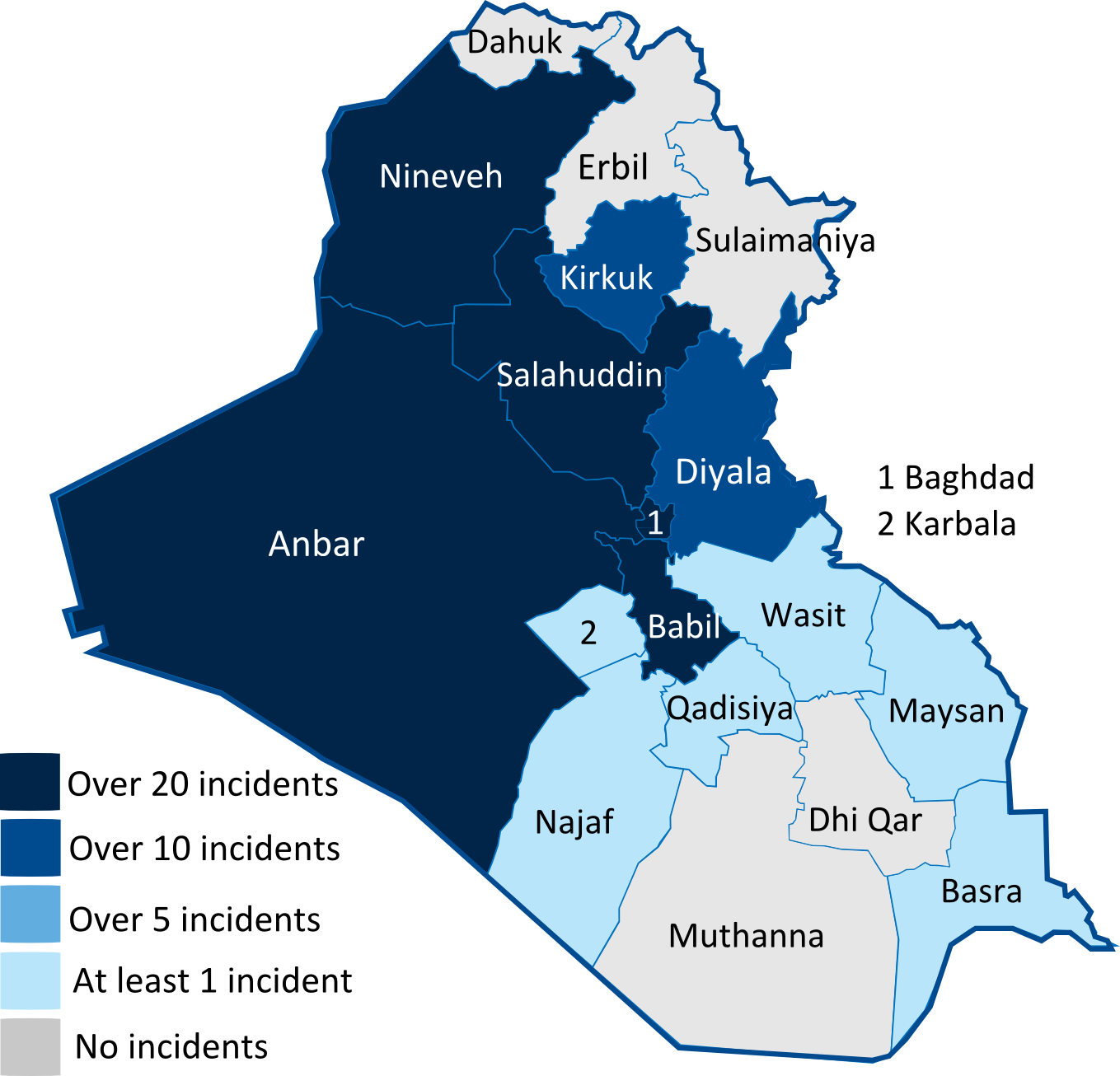 Amid worsening levels of violence owing to the increase in direct clashes between the ISF and ISIS militias, Iraq witnessed movements in the political sphere with the election of a new President. Fouad Massoum, a Kurd member of the Patriotic Union of Kurdistan (PUK) put forward by the Kurdish alliance, was appointed by Iraqi MPs on 25 July. This appointment follows a tradition respected since 2003 to elect a Sunni Speaker of Parliament, a Kurdish President and a Shia Prime Minister. The election of a Prime Minister, necessary to forming the next government, is expected to be the most problematic, as Sunni and Kurdish lists, but more importantly Shia parties outside the State of Law coalition, are staunchly opposed to the re-election of Nouri al-Maliki. The Prime Minister, relying on the majority his party garnered in the April polls, has shown no intention of giving up his seat despite increasing pressure from international players and domestic figures.
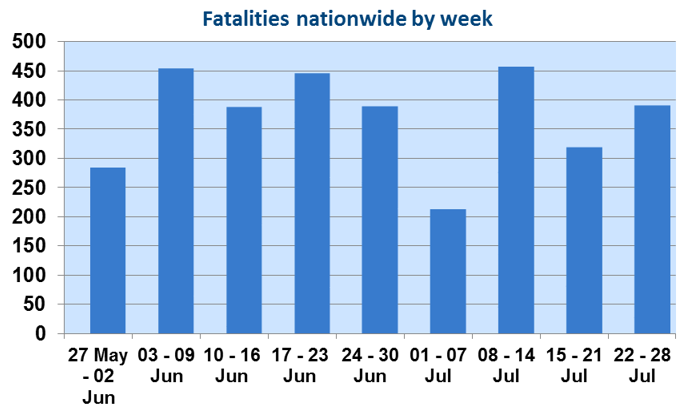
Maliki continued attempts at easing tensions with Iraq’s Kurdish lists, despite rising tensions with Erbil on energy disputes. On 26 July, Maliki visited former President Jalal Talabani in Sulaimaniyah, though no information filtered from the meeting. All these indicators point toward continued gridlock in the parliamentary negotiations aimed at forming a new government, and political stagnation will continue to hinder efforts at dislodging ISIS from Sunni-majority areas. Despite tighter security measures to protect the festival of Eid al Fitr marking the end of Ramadan, violence continued to claim the lives of dozens of civilians on Monday alone, and an estimated 390 were killed over the reporting period. Main hot spots for violent incidents continue to be located in urban areas of Nineveh and Salahuddin, southern Kirkuk, eastern Anbar, western Diyala and northern Babil. Unchanged security patterns ensure that fighting zones will remain predominantly located in these areas.
North
The nature and frequency of attacks reported in northern governorates remained aligned with previous patterns, with ISF and ISIS both failing to make major territorial gains, despite an increased number of direct clashes between government forces and Sunni militants. The main frontline in Salahuddin appears to have moved back towards Samarra, following unsuccessful ISF attempts at retaking Tikrit. On 29 July, ISIS gunmen reportedly blew up the main bridge between Tikrit and Samarra, considerably hindering further counter-insurgency efforts. These tactics, previously used by insurgents in Anbar, confirm the strategy of ISIS in the North, consisting of cutting off routes to isolate their territories from ISF reach. While Peshmerga forces have consolidated their presence in all disputed areas, direct fighting with ISIS militias on their outer borders remained concentrated in the mixed town of Jalawla in Diyala, with the restive neighbourhoods of Tajnid and Wihda changing hands over the reporting period. These areas currently remain under ISIS control. Intensifying clashes in Nineveh and Diyala led to an increase in casualties within Kurdish ranks, with over 60 casualties reported between 24 and 28 July only. The ISF continued to rely on airstrikes to hit militant positions in the ISIS-controlled cities of Mosul and Tikrit, causing an undisclosed number of casualties within the civilian population. Security dynamics are expected to remain stagnant over the coming weeks, with a significant militant push towards Baghdad unlikely at this stage.
Central
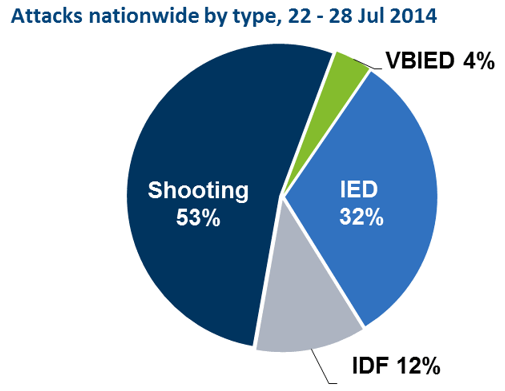 Most serious reported incidents continued to be concentrated in northern and western Baghdad province, as well as urban areas of eastern Anbar. On 24 July, at least 60 people died in clashes after suicide bombers and fighters attacked a bus transferring prisoners in Taji, northern Baghdad. While the responsibility of the attack remains unclear, the involvement of Shia militias cannot be ruled out as armed groups independent to the ISF have progressively been filling the security vacuum left by government forces in Baghdad and its surroundings. On 28 July, also in Taji, four soldiers were killed and seven others wounded when mortar shells fell on an army checkpoint. Meanwhile, violence within the capital continued to hit predominantly Shia neighbourhoods. On 24 July, two car bombs exploded in Karadah area, south east Baghdad, killing a policeman and 11 civilians, and injuring 78 civilians. While the pattern of VBIED waves in the capital remains largely disrupted with only three car bombs reported, last week’s VBIED sequences demonstrate the ongoing ISIS commitment to strike the capital with mass-casualty assaults. The most significant incidents reported in Anbar continued to consist of militant attacks on local police stations, and ISF airstrikes on insurgent-held neighbourhoods of Ramadi and Fallujah.
South
Southern provinces continued to follow established patterns of violence, with significant incidents heavily concentrated in Babil as a means to draw the ISF away from their northern positions. While reporting remains disrupted in most of the North, it can be assessed that this strategy has succeeded to an extent, in light of the strengthening of ISIS positions in areas beyond Samarra. Meanwhile, despite isolated incidents, significant intra-Shia rivalries have yet to materialise, though the unrest has undoubtedly impacted on Shia-nationalist sentiments. On 23 July, in the town of Abu al-Khasib, south of Basra, gunmen broke into a Sunni mosque during prayers, killing the preacher and kidnapping four men. This type of sectarian attack could increase across the South as the crisis deepens in northern provinces.
Posted in Weekly Security Update Comments Off on Weekly Security Update, 22 - 28 July 2014

Weekly Security Update, 15 - 21July 2014
Posted on 23 July 2014 .
By Anne-Laure Barbosa at Constellis Consulting
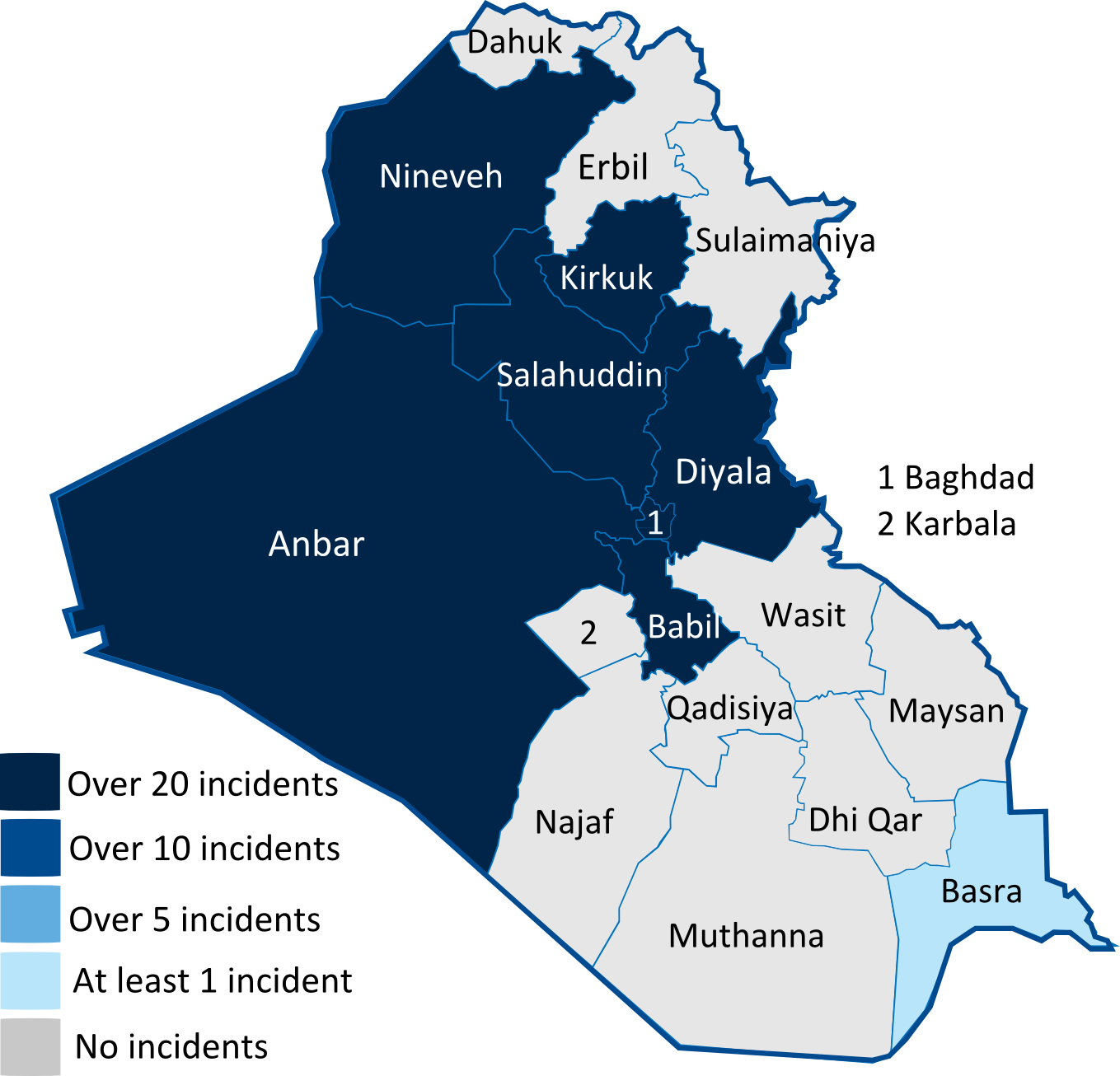 Violence across Iraq’s northern and central provinces remained at a similar intensity to the previous reporting period and only Kirkuk experienced a significant increase in the number of attacks. Fatalities fell, but 318 people were killed and over 500 injured as a result of the ongoing violence. According to UN figures released this week, 5,576 people have died in Iraq in the first 6 months of 2014 and 11,665 injured. By comparison 7,800 died in 2013. The success of ISF air operations dominate government reporting but the heavy use of air power against ISIS fighters in Nineveh and western Anbar demonstrates the lack of real options for the ISF to take back these areas in the short to medium term. ISF operations continue in eastern Anbar and Salahuddin as well as areas to the east and south of Baghdad aimed at pushing back ISIS but these are unlikely to have any long-term success beyond Shia and ethnically mixed communities. While the momentum of ISIS’s June advance appears dissipated, regionally the group continues to consolidate its successes and Iraqi authorities and international observers are correct in no longer underestimating the group’s capabilities and strategic ambitions. The concentration of ISF forces and newly-raised Shia volunteers in areas of government control, particularly Baghdad, has disrupted ISIS cells leading to a fall in VBIED activity. It is assessed that increasing the intensity of attacks in the capital through VBIED and lone suicide bomber attacks against Shia civilian and religious targets is the short term goal of ISIS while consolidating areas already under its control. Drawing ISF away from Baghdad Governorate towards Babil, Diyala, Salahuddin and Anbar will be key to achieving this goal. Politically, limited progress towards the election of a new President this week continues to confirm that government formation remains distant; more than 100 candidates reportedly registered, raising the possibility that the vetting process would delay any vote to August.
North
In Mosul, where ISIS this week issued an ultimatum to the city’s Christian communities which forced them to leave the city overnight, ISF continue to target militants from the air with reported successes but only Peshmerga maintain control of any territory in the governorate: four Kurdish troops were injured in a skirmish north of Mosul. ISF airstrikes continue to cause civilian casualties, most notably in Kirkuk this week where 10 civilians were killed and 20 more injured by attack helicopter strikes on Hawija, the contested town west of Kirkuk. Peshmerga units continue to hold the extended Kurdistani borders although the security of Kirkuk city deteriorated this week exposing the fact that Kurdish control of Kirkuk is contested by militant cells within the city. The number of IED and direct fire attacks rose in the city as well as in the small town of Taza, to its south. This week’s deployment of Shia volunteers to Kirkuk Governorate will raise tensions and likely fuel attacks rather than aid security. Samarra in Salahuddin continues to experience violence although the focus of clashes remains north of the mixed city. ISF reportedly asserted control of Baiji refinery although the cities of Tikrit and Baiji both remain contested. Some of the heaviest fighting between Peshmerga and ISIS continues to occur on the new boundaries of Diyala; Muqdadiyah, Khanaqin and Jalawla continue to experience daily violence.
Central
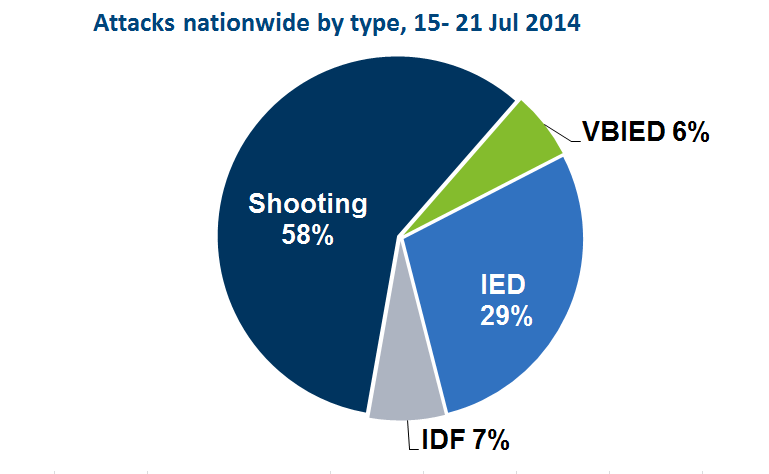 Territorial boundaries in Anbar remain largely unchanged and airstrikes continue to cause both insurgent and civilian casualties without preceding any real success on the ground. Both the routes and cities of western Anbar remain under ISIS control with ISF ground operations in Anbar focussing on Qarma, east of Fallujah, and in rural districts to the city’s north. ISF announced that the routes from Haditha to Hit and from Haditha north to Baiji are now secure but all three cities remain contested. In Baghdad a series of VBIEDs on 19th July caused dozens of casualties but the impact of such operations remains reduced as the increased ISF presence in the city continues to disrupt Sunni militants. A heightened threat of mass-casualty attacks will remain against Shia targets throughout Ramadam and Eid al-Fitr. The detonation of an Australian suicide-bomber in Baghdad and reports of German, Tunisian, Afghan and Chechen fighters killed or captured this week demonstrate both the continued international draw of ISIS as well as the resilience of its supply chains and facilitation networks within the centre of ISF control. The group’s consolidation regionally will increase the flow of suicide attackers to the Iraqi capital in the coming months.
South
Violence in Babil Governorate’s northern districts continued to increase this week. The steady escalation in violence is partly due to an increase in Shia volunteers raising tensions in mixed districts as well as a concerted strategy by ISIS and other Sunni militants to target ISF and Shia targets south of the capital in order to draw ISF units away from the city. Clashes on 18 July alone resulted in the killing and injuring of over 50 ISF and Shia volunteers in the districts of Jurf al Sakhar and Mussayib. Against a backdrop of Shia festivities as well as an increased number of funerals of volunteers killed in the northern and central provinces, southern provinces remained calm with only one incident of tribal violence and a low-level political assassination reported in Basra.
Posted in Security, Weekly Security Update Comments Off on Weekly Security Update, 15 - 21July 2014

Weekly Security Update, 08 - 14 July 2014
Posted on 15 July 2014 .
By Anne-Laure Barbosa at Constellis Consulting
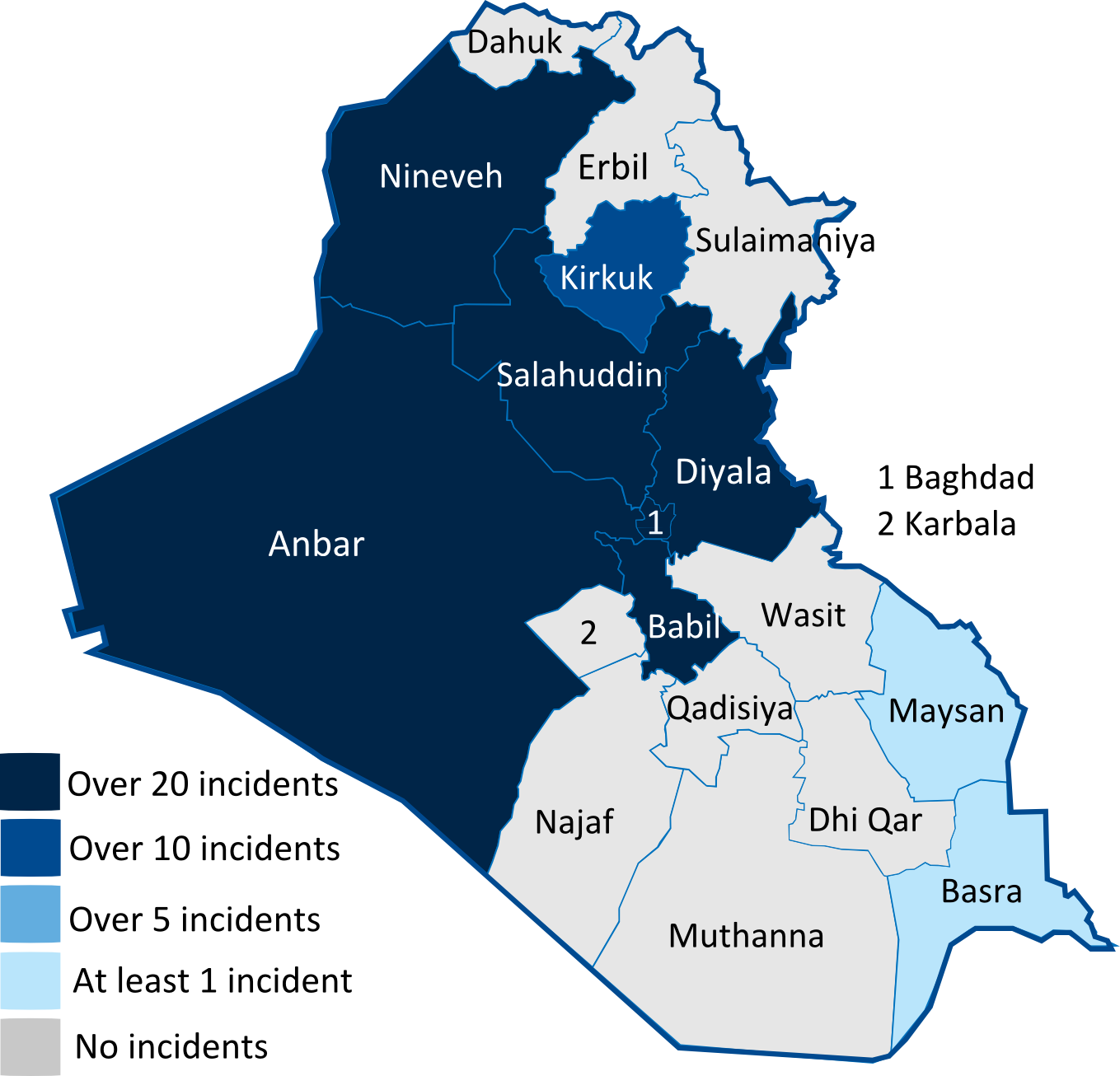 On 15 July, Iraqi MPs took the first formal step toward forming a new government, by electing Salim al-Juburi, a Sunni lawmaker, as the new speaker of parliament. Negotiations between the main parliamentary blocs had been in gridlock since the April elections failed to produce a majority, with sessions adjourned or boycotted by the main protagonists. This vote comes as central authorities face mounting pressure from the international community to form a government capable of addressing the root causes of the ISIS insurgency. Despite these movements, the nomination of a parliament speaker is tempered by the fact that the designation of a new Prime Minister, who concentrates most decision-making powers, is unlikely to bring a similar consensus among the competing factions. The participation of the Kurdish factions in the electoral process also demonstrates that the Kurdish leadership remains cautious and currently seems determined to exploit opportunities available within the existing political framework. The next step toward forming a government is the election of the President, expected to be a Kurd, and which should ensure the continued involvement of Kurdish blocs in the Iraqi political process. Meanwhile, the KRG continued to take steps toward economic autonomy. On 11 June, Peshmerga forces seized control of production facilities at the Kirkuk and Bai Hassan oil fields, expelling Iraqi employees. The nomination of Juburi hardly reflected progress on the ground however, with the ISF counter-offensive launched in the North in a bid to re-take Tikrit failing to produce the expected results. Tribal alliances on the ground have the potential to shift rapidly and their negotiation will be key to the ISF to making permanent gains in ISIS-controlled territories.
North
Most of the violence reported in the North remained concentrated in northern Salahuddin, where ISF units are attempting to regain control of Tikrit. Additional hotspots for violence include southern areas of Kirkuk and northern districts of Diyala, with firefights between ISF and ISIS reported in Muqdadiyah. On 14 July, the ISF attempted to re-take control of the Amreli area of eastern Tikrit, following a two-week long counter-offensive on the Baathist stronghold. Although the ISF appears to have consolidated its positions in the outskirts of Tikrit and is now able to launch regular assaults on the area, claims that the Iraqi Army has managed to expel insurgents from Tikrit are an overstatement and the town is expected to remain disputed over the next weeks. In a possible attempt at alleviating the pressure on Tikrit, ISIS launched an assault on Dhululiya in the southeast of Samarra, and reportedly controls 40 percent of the town after two days of ongoing clashes. The rest of the town is controlled by local tribes and the ISF does not currently have a presence there, though units are expected to reach the area in the coming days. As appears to be demonstrated by ongoing reports from the ground, the concentration of military resources on Tikrit may lead to further ISIS gains south of Samarra. Meanwhile, the lack of local support for Iraqi forces in Tikrit is unlikely to lead to a major breakthrough, though an escalation in direct fighting between Iraqi troops and ISIS fighters is expected.
Central
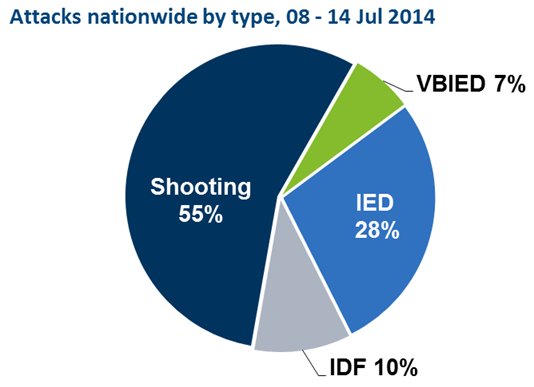 As assessed in previous reports, the situation in central provinces remained stagnant this week, with most ISF operations on the western front focussed on targeting neighbourhoods of Fallujah, and major interactions between Iraqi soldiers and ISIS reported in Haditha and Ramadi. On 13 July, an assault organised by ISIS fighters and supported with military vehicles, was met by forces consisting of ISF, volunteers and tribal elements. The attack resulted in dozens of casualties. Meanwhile, levels of violence in Baghdad remained consistent with previous weekly averages, with attacks involving car bombs relatively scarce and confined to the outer borders of the capital, failing to inflict heavy losses. Eastern districts remained the most exposed to ISIS violence. On 12 June, unidentified gunmen stormed a residential complex in the capital’s Zayuna neighbourhood and killed over 30 civilians. The attack, which targeted apartments allegedly used as a brothel, may have been staged by Shia militias, whose role has become increasingly active in the capital following the collapse of armed forces in the North. Stagnating dynamics on the ground mean that the nature and frequency of attacks will remain similar over the next weeks.
South
The concentration of military resources in the North continued to provide ISIS cells with opportunities to strike areas south of Baghdad. Levels of violence in Babil continued to increase in frequency, demonstrating a continued commitment to weaken Baghdad’s southern belt. On 09 July, a VBIED struck Hillah’s northern neighbourhood of Jaza’ir, followed by the detonation of two additional car bombs in Mahawil district, northern Babil, killing at least 11 people. Ongoing ISF operations in the North have impacted on ISIS tactics, with attacks on Babil seen as a means to alleviate the pressure currently put on ISIS positions on the northern frontline. South-eastern provinces remain assessed as a low priority for insurgents, who are already engaged on multiple fronts across the country. The upcoming Shia festival celebrating the martyrdom of Imam Ali on 19 July nonetheless has the potential to trigger militant assaults on civilians, as pilgrims are expected to converge on Karbala over the next days.
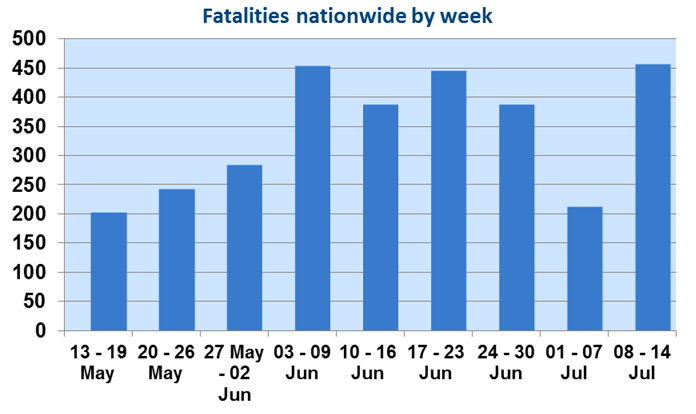
Posted in Weekly Security Update Comments Off on Weekly Security Update, 08 - 14 July 2014

Weekly Security Update, 01 - 07 July
Posted on 08 July 2014 .
By Anne-Laure Barbosa at Constellis Consulting
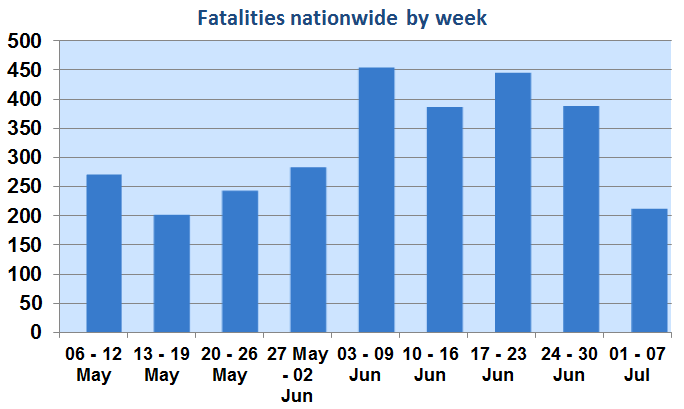
 Reporting remains almost completely interrupted in the provinces of Nineveh and Salahuddin, and the data available does not account for the large number of kidnappings and high levels of sectarian violence rumoured in territories held by ISIS. As the ISF continues its attempts at pushing north towards Tikrit from their main base located in Samarra, ISIS fighters have intensified their efforts on Baghdad’s southern belt, potentially seeking to distract Iraqi forces currently focused on the northern front. While the international community continued to position itself in favour of a united Iraq, divisions continued to widen in the political sphere, with Kurdish authorities seeking to maximise their leverage and Sunni leaders as well as Shia representatives openly questioning the legitimacy of PM Nouri al-Maliki. Otherwise, Iran continued to pursue a cautious policy towards Iraq, declaring it would back any leader emerging from the parliamentary negotiations, which are still in progress.
The country’s political paralysis showed no sign of improvement over the reporting period, with Maliki rejecting calls to give up his bid for a third term and MPs failing to agree on the appointment of a new government. Iraq’s newly-elected parliament put off its next session for five weeks on 06 June, reflecting the gridlock reached by the main parties and guaranteeing prolonged political stagnation, at least until 12 August. Stagnating dynamics in Baghdad are therefore expected to continue reflecting on the overall security situation in Iraq, with main hotspots for direct fighting between ISF and ISIS remaining in eastern Anbar, northern Salahuddin and western Diyala.
North
Despite the large scale counter-offensive operation launched last week on Tikrit by the ISF, Shia militias and volunteers, Iraqi forces failed to recapture the city. The fighting continues and remains confined to the outer borders of the Baathist stronghold, with heavy clashes reported in the village of Awja, only a few miles south of Tikrit. Prior to this offensive, militants fired mortar shells on Samarra and nearly hit the Askari mosque, killing 14 civilians in its vicinity. As Iraq has entered the month of Ramadan, attacks on Shia holy sites could increase, especially as such actions would add further fuel to existing tensions. In parallel to the deteriorating security crisis, Kurdish authorities seem determined to capitalise on their extended territorial presence, warning that Peshmerga units would remain positioned in disputed areas. More worryingly for the central Iraqi government, President Massoud Barzani urged Kurdistan’s regional parliament to plan for an independence referendum on 03 July, though he remained evasive on the timeline. In the meantime, unchecked by Baghdad, the KRG will undoubtedly continue to move towards greater autonomy on oil exports. Kurdish forces swiftly filled the vacuum left by the ISF to move into all disputed areas. The main areas of fighting between Peshmerga and ISIS are currently located in the town of Jalawla in Diyala, where insurgents control a predominantly Arab neighbourhood, and southern areas of Kirkuk. Security dynamics are unlikely to be disrupted in the short term and the next week is expected to witness similar levels of violence.
Central
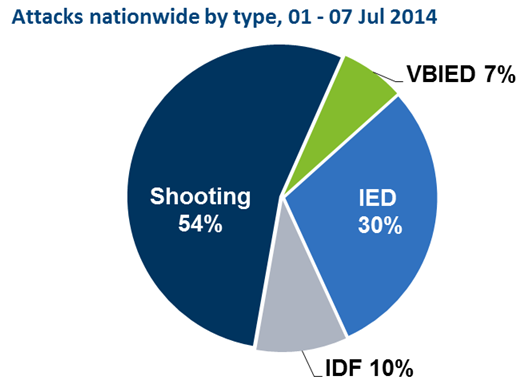 The number of car bombs recorded inside the capital remained well below previous weekly averages, with three VBIED attacks failing to succeed in causing a large number of casualties. The most significant incident occurred at the entrance of Kadhmiya district on 07 July, northwestern Baghdad, when a car bomb targeted a security checkpoint, killing at least five civilians. Most attacks recorded in Baghdad governorate continued to be on its western edges, mainly in Abu Ghraib. Fighting between ISF and ISIS insurgents in Anbar continued to be predominantly concentrated in Fallujah and its outskirts, as Iraqi forces seek to contain the insurgency which has developed in the western desert. The most violent day saw 22 people killed and 17 others injured in clashes involving a complex nexus of tribal fighters, Sunni insurgents and government forces in Fallujah. Other areas along Anbar’s northern corridor, between Fallujah and Qaim, remained contested or controlled by ISIS, with the ISF’s reach limited to a presence in the main cities of Ramadi, Haditha and Hit. The same dynamics will apply over the next days, with any significant change unlikely.
South
With the month of Ramadan started on 29 June, south-eastern provinces have become natural targets for insurgents seeking to capitalise on the presence of Shia pilgrims converging on holy sites. As such levels of violence recorded in the provinces of Karbala and Qadisiya witnessed a notable uptick. The most significant incident occurred on 02 July in Karbala, when the arrest of anti-government Shia cleric Mahmoud al-Sarkhi sparked clashes between his followers and Iraqi security forces, killing up to 45 people. This arrest comes days after Sarkhi published a letter criticising Sistani’s decree for Iraqis to fight alongside the ISF against Sunni insurgents, in a further reflection of the fragmented political landscape within Shia constituencies. The bulk of the violence in the south continued to be reported in Babil, where ISIS operations have steadily intensified over the past week in an effort to disrupt ISF movements further north. On 05 July, two car bombs went off in succession in a commercial area of Basra, killing at least three civilians. While these attacks demonstrate the continued capability and intent of Sunni radicals to strike the south-east, ISIS operations will remain focused on northern and central governorates.
Posted in Weekly Security Update Comments Off on Weekly Security Update, 01 - 07 July

Weekly Security Update, 24 - 30 June 2014
Posted on 01 July 2014 .
By Anne-Laure Barbosa at Constellis Consulting
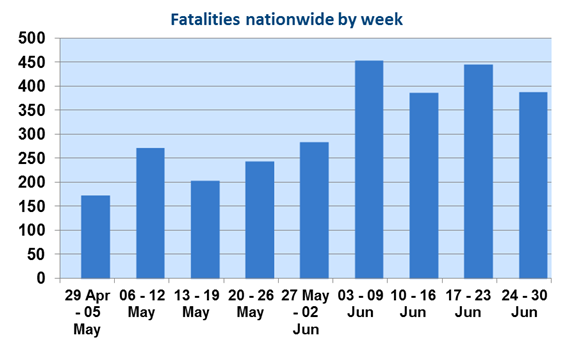
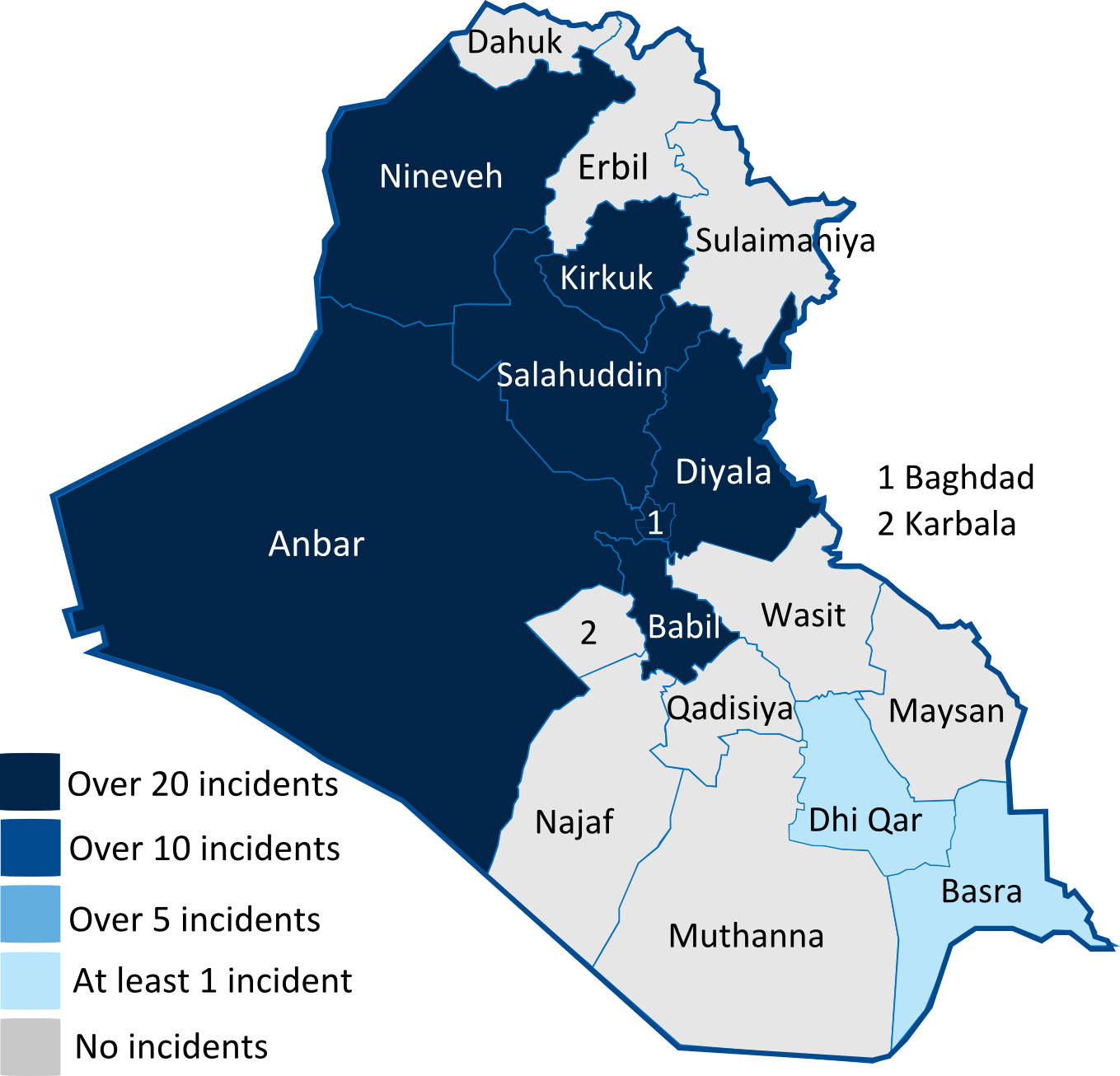 As ISIS consolidates its positions and increases its territorial control across the north and west of Iraq, its leader Abu Bakr al-Baghdadi announced the creation of an ‘Islamic Caliphate’ on 29 June in areas overrun by insurgents. While largely symbolic, this announcement represents another blow to the central government, which has proven incapable of retaking control of towns captured by militants. Hopes for a rapid government formation were shattered on 01 July after Allawi’s Sunni bloc and Kurdish parties walked out of a parliamentary session designed to discuss possible leadership candidates. As long as political forces remain divided, coordinated efforts on the ground between the ISF, Kurdish security forces and local tribal fighters against ISIS are unlikely to materialise and break the current stalemate. Casualty figures released this week showed that violence killed more than 2,400 people in June, the majority them civilians, making it the highest death toll in seven years. The crossing of Kurdish forces into disputed territories, the consolidation of ISIS bases and the resurgence of nationalist sentiments in the South have added more substance to claims that Iraq might eventually disintegrate. PM Maliki’s rivals, among them influential cleric Muqtada al-Sadr, have continued to support a change of leadership and proposed the formation of an emergency government, which the ruling State of Law coalition dismissed immediately. The ouster of Maliki, whose perceived exclusionary policies have gradually antagonised a majority of Iraqis, is expected to remain a condition posed by his rivals to engage in productive leadership negotiations over the next weeks. Despite a continued interruption or lack of reporting across the territories gained by ISIS, it is assessed that levels of violence will continue to rise in the north and west of Iraq.
North
The situation remains essentially stagnant in the North, with the main frontline still located between Samarra and Tikrit. ISF operations attempted to regain control of Tikrit, captured by insurgents on 12 June, with a coordinated assault involving airstrikes and ground troops launched on 28 June. As of 30 June, fighting was still ongoing in the city’s southern outskirts, with an additional 100 vehicles and units of Shia militias making their way to the front from Samarra. The distinct political landscape of Tikrit, which hosts former Baathist elements, means that a recapture of the town by the ISF will be resisted by a majority of locals, making the task particularly difficult. In Samarra, mortar shells failed to hit the al-Askari shrine, one of the holiest Shia sites, the bombing of which precipitated an all-out sectarian conflict in 2006. ISIS fighters have taken advantage of the security vacuum left by the national army to reinforce their positions in the north, most notably in Tal Afar, and engage in occasional clashes with Kurdish Peshmerga forces present on the outer borders of disputed areas in southern Kirkuk and eastern Diyala. However, the posture of Kurdish forces is expected to remain defensive, and attempts at driving ISIS out of Iraqi territories are unlikely in the near term. International efforts aimed at fostering a military alliance between the ISF and the Kurds are unlikely to succeed as long as political concessions regarding oil exports and the regional budget have not been secured, and the situation is therefore expected to remain stagnant across the region.
Central
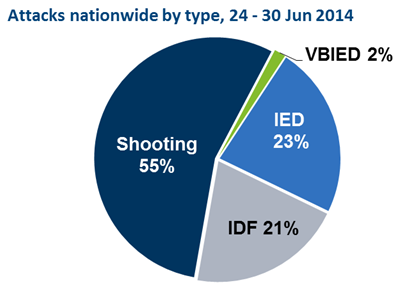 Levels of violence across central provinces remained elevated, with deadly incidents recorded in Baghdad and a revitalised insurgency in northern Anbar. The corridor between Fallujah and al Qaim continued to be the subject of ISIS attacks this week, with major clashes reported in neighbourhoods of Ramadi as well as further north in the vicinity of Haditha. On 26 June, fighting between ISF units and ISIS fighters occurred in Barwana, near the strategic Haditha Dam, prompting fears that a capture of the infrastructure by militants could be imminent. Insurgents took and opened the Fallujah Dam earlier this year, which caused destructive flooding in surrounding areas. Meanwhile, though levels of violence in the capital were aligned with previous levels, Baghdad avoided the sequences of VBIEDs for the second consecutive week. This lull appears to be due to the reinforcement of the security belt around the capital, owing to deployments of Shia volunteers from the south. Despite this change of pattern, mass-casualty assaults continued to hit civilian areas; an IED attack on 26 June killed and injured more than 50 people. This trend is expected to be repeated in the next reporting period, with security measures effectively countering ISIS intent to strike Baghdad with car bombs.
South
The month of Ramadan, which started on 29 June, is expected to witness important gatherings across Shia-dominated provinces. While this period has routinely attracted an increased number of militant attacks against Shia targets in the past, it is doubtful ISIS has the intent or the capability to launch significant attacks south of Babil. The ongoing focus of ISIS on Iraq’s northern territories is indeed likely to confine militant incursions in the South to the mixed province of Babil, where radical cells have had a longstanding presence. The resurgence of Shia-nationalist sentiments and solidarity against the Sunni militant threat have resulted in a sharp decrease in tribal fighting in the South East, with no major incident reported this week. This was further reflected in the deployment of civilian volunteers to northern frontlines. The significant uptick in attacks recorded in Babil illustrates the strategy followed by ISIS this week, who seemingly seek to distract the ISF from its northern positions by attacking areas just south of Baghdad.
Posted in Weekly Security Update Comments Off on Weekly Security Update, 24 - 30 June 2014