



Iraq's Proposed New Labour Laws
Posted on 23 June 2011 .
When tacking the problems of unemployment and illegal work practices, Iraq has a difficult balancing act to achieve.
On one hand, a civilised country cannot accept a situation where foreign labourers are tricked by traffickers to get them into the country illegally, and then told their pay will be a fraction of the minimum wage of $600 per month.
On the other hand, blanket quotas and restrictions on foreign workers increase the problems faced by legitimate businesses and workers, and slow the pace of development.
Iraq's parliament is considering new laws to limit foreign workers by forcing employers to hire at least as many Iraqis.
Legislation, of course, is only followed by the law abiding, and will not concern those who already operate outside the system. And as labour minister Nasser al-Rubaie points out, the problem is by no means unique to Iraq.
But imposing an arbitrary 50% limit on foreign workers, regardless of their conditions, is unlikely to solve Iraq's problems of unemployment and exploitation.
Posted in Employment, Politics 1 Comment
Agricultural Production: Iraq’s Best Chance for Restoring Food Security
Posted on 08 June 2011 .
By Layth Mahdi, Agricultural Advisor. The opinions expressed are those of the author, and do not necessarily reflect the views of Iraq Business News.
Agricultural development plays a key role in achieving human well-being, maintains food security, reduces poverty and mitigates violence. In addition, it contributes to the protection of natural resources, environmental stability and the balance between rural and urban populations as well as the protection of cultural heritage. The agricultural sector is essential to the provision of employment opportunities and the reduction of violence.
Prior to 2003, Iraq had imported about 30% of its food needs annually. The decline in agricultural production after this period, created the need for importing 90% of the food at a cost estimated at more than $12 billion annually. Due to the sudden shift in the agricultural policy from subsidized assistance to an immediate shift to a free market policy, the outcomes lead to a decline in production. The observed outcome resulted in many farmers abandoning the land and agriculture. The impact on natural resources results in an exploited and degraded environment leaving the land destitute and the people impoverished, unemployed experiencing a sense of losing their human dignity.
Despite the huge Iraqi budget (more than $ 90 billion/year), the trend of unemployment, poverty, malnutrition, among Iraq’s most vulnerable population-children; hunger and homelessness has accelerated in the past eight years. For example, unemployment reached more than 40%, and poverty up to 23% (7 million people) of the population. There are five million illiterate, eight million representing widows and spinsters. Additional, an estimated 2.7 million disabled Iraqis and more than two million displaced inside and outside the country. The average family size is large with 5 members per household in the urban sector and 8 members in the rural areas. Another issue that Iraqis face is their incomes per capita is low (300-400 dollars / month) contributing to deepening poverty.
Iraqi population birth rate has increased to more than 750 thousand per year. These worsening living conditions and the deterioration in the agricultural sector, education and health, poor services and increased violence coupled with the lack of or absence of economic development has increased the suffering of average Iraqis fomenting increased suffering from turmoil and political instability, social, and creates violence and terrorism.
Current Iraqi decision makers have exhibited a lack of vision for economic development due to their deficient skills, knowledge and the absence of leadership. Therefore, the performance of the GOI remains below par. Iraq is rich in natural resources and the government has all the administration, regulatory laws and funding, but lacks the political guidance and ability to reform and create economic development ultimately leading to unsustainable growth.
The Iraqi reconstruction efforts led by United State and the coalition have spent more than $60 billion to date. The goal has been to improve basic services, rebuild the economy, strengthen democracy, and improve the infrastructure, building capacity and legitimacy of the Iraqi government. USAID contractors have struggled and are perceived to have failed, unable to reach the full potential of their goals to improve economic growth. The projects were really quite simple and had little to no value in improving the local economy.
The U.S. government has a long-term strategic plan in the Middle East. At the same time the US government has many enemies. Tensions are rising (note recent ME riots) and more protests may be upcoming that will have a negative impact on GOI. The US military should consider initiating agricultural programs to assist GOI in creating jobs and reduce poverty which ultimately will enhance US-Iraqi relations. It is not in the best interest of America to keep the country impoverished and suffering from rising unemployment and poverty.
... also available in pdf format.
And please click here to download a spreadsheet calculating the profit projection for a typical farmer in Muthanna.
Posted in Agriculture Comments Off on Agricultural Production: Iraq’s Best Chance for Restoring Food Security

A Security Review of the Last 8 Weeks
Posted on 05 June 2011 .
The average weekly number of attacks has risen in Iraq over the last two months. Conditions gradually worsened in the first five months of the year, and while the increase in attacks has not been dramatic, it is nonetheless still a concern, particularly as the US prepares to withdraw its military by the end of the year. However, with careful planning companies can still overcome the obstacle of security in Iraq. For a start, violence is highly concentrated, with some areas barely being affected at all.
The Capital
Militant attacks have been most concentrated in Baghdad over the past eight weeks. The city accounted for over 40 per cent of all incidents and is currently over three times more hostile than the next two dangerous cities (Mosul and Kirkuk). However, while it may see more violence than anywhere else in the country, it nonetheless has a number of advantages. For a start, it has numerous ‘safe havens’ or areas where personnel can seek assistance in the event of an incident. It has more security force checkpoints, better hospital facilities and a number of well-patrolled districts which see virtually no violence at all. Foreign firms looking to do business in the capital have a range of options when considering places to arrange meetings or even set up a permanent presence – and their choices are certainly not limited to the Green Zone. There are several districts in the so-called Red Zone that see far fewer incidents on a yearly basis than the heavily fortified city centre.

Levels of Violence by Province - the last 8 weeks
The North
The next two most violent provinces over the last eight weeks were Ninawa and Ta’mim, situated in the north of the country. Each province accounted for 13 per cent of all countrywide attacks, with most of the incidents concentrated in the cities of Mosul and Kirkuk. Recent months have seen a very gradual improvement in security conditions in Mosul, as well-established terrorist organisations have been tackled in a slow and bitter war of attrition with the Iraqi security forces. Kirkuk on the other hand has seen a slight worsening in conditions, with an increase in inter-communal tensions as different ethnic groups compete for influence in the oil-rich and historically contested city.
In sharp contrast to the rest of the country, the area administered by the Kurdish Regional Government has seen very little violence over recent weeks. Companies intent on doing business here have little need to worry about security. That is not to say that there are not other health and safety concerns of a political risk nature in the region. The province of Sulaymaniyah has seen a number of protests over recent weeks, and while most were peaceful, some involved low-level scuffles, arrests and even some vandalism, which is why the province appears on the AKE violence chart. Nonetheless, with only one per cent of all countrywide violence taking place in the province over the last eight weeks, it should still be seen as a stable and largely secure part of the country.
In general, unrest and protests have quietened over recent weeks, although conditions could still escalate over the coming weeks as temperatures rise and the government faces increased criticism for failing to address major public frustrations. Power shortages, poor services and high unemployment are likely to stoke further unrest in Iraq in the future.

Weekly Attacks in Iraq - the last 8 weeks
The Central Region
Apart from the capital, the province of Anbar has been the most hazardous part of the central region, accounting for nine per cent of all countrywide attacks over the last eight weeks. Most of the incidents have been concentrated in the east of the province, among urbanised areas such as Fallujah and Ramadi. The provinces of Diyala, Salah ad-Din and Babil each accounted for between four and five per cent and remain hazardous, albeit significantly more quiet than the earlier years of Iraq’s post-invasion history.
The South
The southern part of the country continues to avoid the majority of violent trends which affect central and more northern provinces. The last eight weeks have seen a scattering of incidents in the region, with Basrah province accounting for only three per cent of all countrywide incidents. Nonetheless, there are still no grounds for complacency and fairly robust security measures are still recommended by personnel operating in the area. An attack on an oil field earlier on 5 June indicates that violence is still a concern, and that the energy sector is still an attractive target for the militant groups operating in the region.
Tactics
Almost two-thirds of all countrywide attacks have involved explosive devices, while a quarter have involved firearms. The vast majority of explosive devices have been relatively small, usually incurring injuries rather than fatalities. Sticky bombs have been regularly used, particularly in Baghdad. Casualties have also usually been indiscriminate, with many of the victims being civilian bystanders caught up in attacks against police patrols or US military vehicles.
While the use of firearms in attacks has been much less frequent, it is perhaps a more sinister tactic, in that the victims are almost always singled out and monitored closely prior to an attack. Many of the victims have been senior members of the security forces or mid-level civic employees.
Iraqis targeted in kidnap and ransom incidents are also likely to have been singled out and monitored. Some are selected because of their rank, some because of their community, but most simply because their abductor believes their family will be able to raise money for a ransom. Counter-surveillance measures are therefore recommended for a wide range of individuals.
Indirect fire (rockets and mortars) only accounted for around seven per cent of all attacks, and most did not incur any casualties. Nonetheless, personnel still need to take the risk into account, particularly those using airports or staying on fortified military facilities such as the Green Zone. Indirect fire is most commonly used to target these types of asset, so they should not be considered entirely secure.
John Drake is a senior risk consultant with AKE, a British private security firm working in Iraq from before 2003. Further details on the company can be found here while AKE’s intelligence and political risk website Global IntAKE can be accessed here.
You can obtain a free trial of AKE’s intelligence reports here.
You can also follow John Drake on twitter here.

Posted in John Drake Comments Off on A Security Review of the Last 8 Weeks

Ad Melkert Addresses Iraq's Stakeholders
Posted on 28 May 2011 .
Statement by the Special Representative of the Secretary General, Ad Melkert, at the National Conference of Economic, Social and Government Stakeholders:
Your Excellency the Speaker of the Council of Representatives, Usama al-Najaifi; Ministers, Ambassadors, Distinguished Visitors.
It is my honour to have the opportunity to address such a diverse cross-section of Iraqi citizens: from government, parliament, business and labour, all willing to address the serious and fundamental challenges of true socio-economic reform and growth in Iraq.
Central to the strengthening of Iraq’s hard won gains in the areas of security and democratic transition are some basic socio-economic considerations which can only be determined and answered by the Government and people of Iraq:
- How will Iraq generate the type of meaningful employment opportunities that allow current residents to stay and re-build the country, and moreover attract those Iraqi citizens living abroad back to the country?
- Outside of the oil and energy sector, in what sectors can Iraq be competitive and positively differentiate itself from other destinations for investment?
- How can workers become recognized as true stakeholders in the success of companies, institutions and the economy generally?
- How can Iraq’s economic growth be used as a tool for improving quality of life and living standards for all citizens, reducing existing inequalities that are unsustainable?
- In what ways can women’s participation be more be more integrated into Iraq’s efforts towards economic growth?
Posted in Construction & Engineering In Iraq Comments Off on Ad Melkert Addresses Iraq's Stakeholders

Iraq beyond 2011: Prosperity or Turmoil?
Posted on 24 May 2011 .
By Tariq Abdell, Iraq’s political risk analyst, Founder & CEO of Mesopotamia Insight.
The opinions expressed here are those of the author, and do not necessarily reflect the views of Iraq Business News.
The recent upsurge in violence across Iraq ( sticky bombs, car bombs, roadside bombs, targeted assassinations, suicide bombers, prison breaks, etc...) underscores, irrefutably, the ubiquitous vulnerabilities of Iraq's national security forces that is exacerbated by a host of daunting and intricate constraints: politicized security apparatus, lingering ethno-sectarian loyalties, political sectarianism, and the region’s geopolitical tensions, namely, Saudi Arabia and Iran's regional ambitions.
In the absence, thus far, of a US-Iraq postwar strategic partnership, the impending complete withdrawal of the U.S. combat troops from Iraq by the end of 2011 and the protracted political horse-trading over the security posts (defense, interior, and national security) will, ultimately, undermine Iraqi Security Forces’ operational capabilities (air sovereignty and border security, for instance) and, subsequently, jeopardizing Iraq's national security. Moreover, given the high levels of interoperability of the two militaries, the foreseeable security vacuum could pose a serious threat to Iraq's national security, namely:
- Reemergence of the quasi-defeated extremist groups, namely, AQI, Jaysh al-Islami, the Promised Day Brigade, Kata’ib Hizbollah, and Asaeb Ahl al-Haq.
- Rekindling of sectarian violence and lawlessness that engulfed Iraq before (05-07).
- Precipitating the war between Baghdad and Erbil over the disputed oil-rich Kirkuk.
- Disruption of Iraq's oil production and supply and, subsequently, Iraq’s petrodollars.
- Invigorating Iran’s centuries-old expansionist and religious ambitions in Iraq – turning Iraq into a satellite Shiite theocracy.
Moreover, the cumulative effects of the ruling class’ ineptitude and schism are protracting decades of erroneous policies and, subsequently, the people’s tribulations. Thus, impelling the majority of the Iraqi people to distrust the legitimacy of their government and the effectiveness of its institutions as evidenced by the latest protests, which accentuated the Iraqi people frustration with their elected officials' ineptitude and their epic failure to curb corruption and end ethno-sectarian quota-sharing system.
The deep-seated political sectarianism and its inherent symptoms, namely, impoverished and disenfranchised population, lack of basic services, higher unemployment, severely languished infrastructure, ineffectual institutions, and rampant corruption are most likely to linger for years to come if the political class continue to pursue self-serving and sectarian-based agendas and political marginalization.
Thus, given the aforementioned challenges, the ruling class (executive and legislative branches) ought to outline clearly its postwar policy objectives and priorities, in accordance with the country’s laws and strategic interests, and heed to the aspirations of its people, regardless of their political and religious believes.
Drawing on past experiences (Eastern European Countries, for instance), Iraqi government ought to craft a comprehensive strategy encompassing socio-economic development, a genuine national reconciliation, and a modern security architecture as an imperative prerequisite for attaining political stability and, subsequently, building a modern and prosperous Iraq.
Conversely, in the absence of a strategic foresight and a strong leadership capable of implementing the aforementioned strategy, Iraq may revert to its darkest years of lawlessness, religious extremism, political instability, foreign interventions, and ethno-sectarian strife. Simply put, Lebanization of Iraq’s nascent democracy.
The opinions expressed here are those of the author, and do not necessarily reflect the views of Iraq Business News.
The author, Tariq Abdell, is an Iraq's political risk analyst, and Founder & CEO of Mesopotamia Insight
He can be contacted at: [email protected]
or
Followed on twitter: Mesopotamia_iq
Posted in Politics, Tariq Abdell 1 Comment
Swedish and Turkish Companies Consider Tikrit Investment
Posted on 21 April 2011 .
The governorate of Salahaddin province said on Tuesday that representatives from Swedish and Turkish companies have met with senior council officials to discuss the implementation of a variety of strategic investment projects in the province.
Salahaddin Governor’s first deputy, Ahmed Abdul-Jabbar al-Karim, told AKnews that the companies concerned specialize in 'economy' and construction.
“The Governor of Salahaddin (Ahmed Abdullah Abed) supports all moves to attract investors to the province,” Karim said.
“A representative of the Swedish delegation said that the support of the province will encourage other European companies to provide services (in the area)”.
From the Turkish delegation, the Managing Director of Maghmoud Construction, Mahmoud Ughlu, was enocouraged by developments in the province’s security situation.
“…the security aspect, which has improved in recent years, encourages Turkish companies to invest in the province,” he said.
Karim went on to detail the benefits for foreign investors entering the region.
“The governor of the province supports companies’ efforts to develop and reconstruct the province ... these efforts will help to eliminate unemployment and improve the economic situation across the province … the building of any state can only be achieved through investment and the private sector to realize progress and development."
(Source: AKnews)
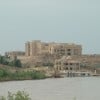
(Photo: Tikrit Palace)
Posted in Investment, Iraq Industry & Trade News Comments Off on Swedish and Turkish Companies Consider Tikrit Investment
More Iraqi Red Tape for Foreign Workers
Posted on 08 April 2011 .
The Ministry of Labor and Social Affairs has said it will require foreign companies operating in Iraq to ensure that local Iraqis make up at least 50% of their work force, in a bid to reduce unemployment in the country.
Official figures indicate that Iraq has more than 25% unemployment with unofficial statistics indicating up to 40%; the figure in the Kurdish region is around 14%, according to the report from AKnews.
"The ministry has decided to force foreign companies operating in Iraq to hire 50 percent of their total employees from the Iraqi work force" said Minister of Labor and Social Affairs Nassar al-Ruabie.
The number of the jobless in Iraq is up to 990,000, he said.
He also highlighted a draft law submitted to the Council of Ministers which provides for a IQD150 billion [about US$12.5] soft loan fund to encourage small businesses.
Meanwhile in Basra, the Investment Commission has specified that foreign investors wishing to employ foreign staff, even where they are below the 50% limit, must comply with the following:
1- The investor should identify a job description for every available job opportunity required in the project.
2- This should be announced in three official newspapers to fix an appointment for an interview.
3- BIC should attend job interviews as an observer.
(Source: AKnews, Basra Investment Commission)
Posted in Construction & Engineering In Iraq, Employment, Iraq Oil & Gas News 1 Comment

Iraq's Visa Madness
Posted on 31 March 2011 .
Visa problems for foreign workers in Iraq continue to make the headlines.
Last week we reported on the difficulties caused by a decision to channel visa applications through the office of the Prime Minister, Nouri al-Maliki; now we hear that the Basra Investment Commission has imposed its own restrictions, with the intention of reducing unemployment.
While the restrictions do not appear to be limited to specific sectors or levels of employment, the main game in town is clearly oil and gas, and in this area there are many foreign workers whose expertise is required in Iraq.
But when we say 'many foreign workers', that is relative – in the context of an unemployment rate between 15% and 39% (depending on whose figures you choose to believe), the number of foreign experts who need to enter Iraq is trivial. While the energy sector accounts for as much as 90% of Iraq's GDP, it employs only about 1% of the workforce, and the number of non-Iraqi experts required would be a very small fraction of this 1%.
It's also worth noting that native Iraqi oil workers are the cheapest in the world, so companies would be inclined to employ them first, if they have the required skills.
If Iraq is to thrive, it must allow companies to bring in the talent they need to development the country's biggest asset.
Your business in Iraq can benefit from the knowledge and experience of both Upper Quartile and AAIB. For more information please contact Gavin Jones or Adrian Shaw.
Posted in Blog, Construction & Engineering In Iraq, Employment, Iraq Industry & Trade News, Iraq Oil & Gas News 2 Comments
Basra Restricts Foreign Workers
Posted on 30 March 2011 .
The head of the Basra Investment Commission said on Wednesday that it has placed strict controls on the entry of foreign workers to the province.
Haidar Ali Fadel told AKnews that the commission is restricting the numbers of foreign workers in the province in order to prioritize local manpower, and that formal approval has not been granted to investors to bring in foreign workers for two years now.
“The commission is responsible in one way or another for addressing the issue of unemployment,” he said, “particularly as unemployment has become a major concern for Iraqis in all provinces across the country”.
“90% of the manpower needed to implement foreign investment projects is available in the country,” Fadel continued, “Iraq possesses experienced workers on all levels.”
According to World Bank estimates, unemployment in Iraq has risen to around 39% over the past two years, a figure the Iraqi government’s Central Bureau of Statistics refutes, placing the figure at only 15%.
(Source: AKnews)
Posted in Construction & Engineering In Iraq, Employment, Iraq Oil & Gas News Comments Off on Basra Restricts Foreign Workers

Managing a Crisis
Posted on 28 March 2011 .
Crisis management
When it was announced that the Arab League summit would take place in Baghdad, many leaders expressed concerns for the safety of the event. Now, several months later, the tables have turned in the Middle East, and some of those leaders are facing a much more hazardous situation at home.
It has been some time since so many crises affected the region. Many companies have been caught on the back foot. Those who were comfortable to work in relatively crime-free Libya found themselves in a war-zone overnight. Tourists in Tunisia, Egypt and Bahrain were presented with chaos at the airport and the risk of violence in the streets. Firms have abandoned properties and employees found themselves stranded in compounds, unable to organise a proper evacuation.
Protests have taken place in Iraq like elsewhere in the region, but they are not having the same impact on commerce. The underlying grievances such as unemployment, impoverishment and a lack of services are as much of a concern here as anywhere else, but private companies have not been significantly affected.
One of the reasons they will not be as badly affected as firms elsewhere in the region is readiness. Companies operating in Iraq (should) have a series of measures in place to mitigate risks. Crisis management is much more likely to be part of the everyday culture of a firm working in the country. The security environment has necessitated it.
Nonetheless, now may be an opportune moment for companies to re-assess their crisis management procedures.
Contingencies
Having contingency guidelines in the first place is a good step. However, it is no use to have them stored in a document, gathering dust on a shelf. They need to be in the minds of people on the ground and even support staff outside of the country. In the event of a crisis there will be little time to read a book. Actions will need to be swift and fluid, by both those initiating crisis response steps in the country, and those with the responsibility of assisting them from outside of the country - such as travel planners, health and safety officers and even those with the responsibility of liaising with employee families. The only way to ensure fluidity is to undertake training and to practise measures on a regular basis, amongst all of the members of staff who will be involved in a crisis when it takes place.
If you have to get out
Evacuation plans should also be reviewed. Many companies will already have evacuation cover in place, but contracts should be checked in light of recent events. Examine the small print of your cover document, because many providers will only guarantee evacuation from the nearest safe airport. In crises in Libya and Egypt these airports were often in another country, which proved little use for employees stuck in gridlock in Cairo or worse - left stranded in the Sahara desert. Measures need to be in place to organise an evacuation by other means, such as boat or car.
Contracting firms should also review how their contingency plans will fit in with those of their client. With more than one organisation operating on a rig it should not be assumed that security will be provided by the largest company. This is often not the case, and certainly should not be something given over to chance.
Evacuation procedures will also vary from company to company, depending on their personnel, activities, location and resources. Evacuation plans therefore need to be bespoke. There is no one-size-fits-all contract that companies can sign and hope for the best. An energy firm with staff in the desert will have completely different evacuation requirements from a hotel firm in a busy tourist resort, or a banking office, construction company or consultancy firm.
Working towards managing a crisis is no easy undertaking. It can be costly and time consuming and will be an entirely different process for every company.
The Benefits
However, crisis management works, and while it has been less documented in the news there are numerous firms that managed to escape the situations in Libya and Egypt at the appropriate time. With a speedy response to the emerging crisis they were able to evacuate their personnel on a standard flight at standard cost before conditions deteriorated. Those that were less prepared and did not react in time were faced with either locking down and staying put or risking dangerous road movements and the elevated cost of chartering a plane once the situation had deteriorated.
Crisis management preparation quickly became a more cost effective policy than simply waiting to respond to a crisis if and when one arose. Furthermore, in the event that employees suffer harm the cost can be unquantifiable. You cannot put a value on the impact on their family, or indeed a company's reputation.
There are no quick solutions and crisis management should be regarded as a long-term process. Nonetheless the potential benefits in the event of an emergency can be immeasurable. The cost of a crisis can very quickly outweigh the cost of mitigating a crisis, and the impact on company staff, assets and reputation can be irreparable.
As such, firms need to begin implementing measures sooner rather than later because if contingency plans are only reviewed when a crisis is taking place, it may be too late.
John Drake is a senior risk consultant with AKE Group, a British private security firm working in Iraq from before 2003. For further information on crisis management please contact [email protected].
You can obtain a free trial of AKE’s intelligence reports here http://www.akegroup.com/intelligence/trial-subscriptions.php
You can also follow John Drake on twitter at www.twitter.com/johnfdrake

www.akegroup.com/iraq
Posted in John Drake Comments Off on Managing a Crisis