



Iraq and the new geopolitical calculus
Posted on 22 March 2011 .
By Tariq Abdell, Iraq’s political risk analyst, and Founder & CEO of Mesopotamia Insight.
The opinions expressed here are those of the author, and do not necessarily reflect the views of Iraq Business News.
In light of ongoing socio-political changes in MENA region, Iraq's massive protests, from Zakho to al-Faw, accentuate the political astuteness and the frustration of the Iraqi people with their elected officials. Disenfranchised Shiites, Sunnis, Kurdish, Arabs, and Christians are all demanding the same: an end to ethno-sectarian quota-sharing system, corruption, and, most importantly, universal access to basic services such as potable water, electricity, housing, education, healthcare, and jobs.
Nonetheless, given the legitimacy and urgency of the protestors' demands, the government nebulous responses (halving of some officials' salaries, 100-day ultimatum to incumbent ministers, boosting food ration with extra cash, etc...) are mere cosmetic measures to allay people's frustration and anger. Unarguably, the cumulative effects, hitherto, of the elected officials' ineptitude and schism are protracting decades of erroneous policies and, subsequently, the people's tribulations. Impelling the majority of the Iraqi people to question the legitimacy of their government and the effectiveness of its institutions, a dangerous threshold that could hastily throw the country back into its darkest years of sectarian violence and lawlessness.
Notwithstanding Iraq's colossal energy resources, billions of oil and natural gas reserves, Iraq fragile democracy and ineffectual institutions, in a restive region, are the breeding ground for societal and political upheavals and foreign interventions. In fact, Iraq's daunting and intricate challenges are both internal and regional:
Internal challenges:
- Lack of basic services, e.g., six million people with no access to clean water -UNICEF.
- 20 to 25 percent of Iraqis still live below the country’s poverty line.
- Unemployment rates hover around %18, notably among military-age male population.
- Higher illiteracy rates, exacerbated with massive brain drain, are eroding Iraq's skilled and professionally literate workforce.
- Rampant corruption and nepotism undermine the efficiency of the State institutions.
- Inequitable distribution and mismanagement of oil's revenues - no hydrocarbon law.
- Parliament still faces a backlog of sensitive issues.
Regional challenges:
- Given the region new geopolitical developments, heightened tensions between Iran and Saudi, Iraq could easily turn into a sectarian proxy war battleground - Shiite Vs. Sunnis.
- The fallouts of Iran's nuclear standoff with the West could easily spillover to Iraq’s already contentious politics and further undermining its stability.
- Given Kirkuk's enormous oil reserves and ethnic diversity (Arabs, Kurds, and Turkmen), it's protracted dispute is a timed bomb, which could expeditiously reignite Iraq's civil war.
- Turkey’s recurrent incursion into Northern Iraq in the pursuit of the Kurdish workers party (PKK) elements and PKK assiduous attacks on the northern oil pipelines are a major threat to the country’s resources and sovereignty.
- Given the hostile intentions of some neighboring counties, the U.S. planned troops withdrawal, by the end of the year, could further jeopardise Iraq's defense capabilities.
Thus, given the enormity and complexity of the aforementioned challenges, Iraq only viable mean to fend off political instability and chaos is to renounce its sectarian-based policies and espouse an inclusive and genuine democratic system that heads to the people aspirations and protects their rights (UN Universal Declaration of Human Rights). Furthermore, both the government and opposition ought to consolidate their efforts to bolster accountability, eradicate corruption and, subsequently, strengthen the State institutions, an essential prerequisite for a rapid socio-economic recovery. To this end, the new government’s long-term vision should entail an action plan that reflects the country strategic and pressing priorities, namely:
- Genuine national reconciliation to overcome sectarian and political schism and violence.
- Overhauling of State institutions to rein in corruption and enhance efficiency.
- Merit-based appointments to promote efficiency and accountability.
- Providing access to basic services (e.g., potable water, electricity, running sewer, etc)
- Equitable distribution of oil revenues.
- Investing in human capital through education and training.
- Job creation to fend off societal and political unrest (Organized crime, for instance).
- Advancing the principles of human rights and rule of law.
- Diversifying and reviving of Iraq' strategic industries to curb its dependence on a single commodity - fossil fuel.
Conversely, in the absence of a comprehensive and inclusive socio-economic development strategy, aiming at strengthening State institutions, eradicating corruption, and addressing the aspirations of the Iraqi people, regardless of their political and religious believes, Iraq may revert to its darkest years of sectarian violence and lawlessness (05-07), giving regional players (Iran, Saudi, Turkey, Syria) a free hand in Iraq's affairs - exploiting Iraq's vulnerabilities (Shiite-Sunni strife, for instance)- to further their national interests and, subsequently, turning Iraq into a prime battleground for proxy wars, or worse, a pariah State. Simply put, “a house divided against itself cannot stand” Abraham Lincoln.
The opinions expressed here are those of the author, and do not necessarily reflect the views of Iraq Business News.
The author, Tariq Abdell, Iraq's political risk analyst, and Founder & CEO of Mesopotamia Insight
He can be contacted at: [email protected]
or
Followed on twitter: http://www.twitter.com/atariqx
Posted in Tariq Abdell 2 Comments
Iraq's Per Capita Income to Double by 2015
Posted on 14 March 2011 .
An economist from the Central Bank of Iraq (CBI) has said that per capita income in the country is projected to more than double within the next four years as a result of a sharp increase in Iraq’s oil output and higher market prices for oil, according to a report from RFE/RL’s Radio Free Iraq (RFI).
Majid al-Suri told RFI that per capita income in Iraq is expected to reach $10,000 by the end of 2015 compared with about $4,500 at present.
He said the projections are based on data provided by the Oil Ministry showing that oil contracts signed with major energy firms such as ExxonMobil, Shell, and BP will boost Iraq’s oil production to an estimated 12 million barrels per day, including 3 million barrels that will be used domestically.
But he said he does not expect the considerable increase in oil revenue to guarantee proportionally higher living standards for the populace due to the “rampant corruption” in the country and the “mismanagement of public funds.”
Iraq affairs analyst Bassim Jamil Anton told RFI that emphasis should be placed on promoting other economic sectors to help increase Iraq’s per capita income rather than putting all of the country’s development prospects on the oil sector.
He said Iraq can only hope to match the prosperity of its oil-rich Arab counterparts with growth in such potentially promising sectors as agriculture and tourism and by attracting foreign investment.
Anton said that despite the continuing terror attacks in some parts of Iraq, economic progress is being made and the number of Iraqis living below the poverty line is projected to decline in the coming years to some 5 million people from the current 7 million.
He said that in the meantime, the government’s priority should be lowering the country’s high unemployment rate of 30 percent.
(Source: RFI)
Posted in Iraq Oil & Gas News Comments Off on Iraq's Per Capita Income to Double by 2015
Commission to Cut Corruption in Ration Card Contracts
Posted on 07 March 2011 .
The parliamentary economic committee will oversee all commercial contracts signed by the Trade Ministry in order to eliminate corruption, a committee member announced today.
Salman al-Moussawi told AKnews that the intervention of the commission is backed by the government in a bid to accelerate the work of the ministry and negate the possibility of fraudulent contracts being signed.
“The Parliamentary Economic Committee will hold weekly talks with Ministry directors to ensure the smooth distribution of ration card items without any delays,” he said.
Moussawi said the committee will also ensure the quality of the food items bought by the ministry for distribution under the system.
The head of the economic committee warned in February his committee’s intention to summon the Iraqi Trade Minister, Rozh Nouri Shaways [Roz Nouri Shawes, Roz Nuri Shaweis], and connected officials over the failings of the ration card system.
Ahmed al-Alwani told AKnews at the time that the Commission would demand disclosure of the accounts relating to the controversial ration card and a detailed explanation of funds allocated and the way they were spent.
“The commission will take serious stance on this issue to ensure that the money spent corresponds to the ration card items and covers all the provinces without exception," Alwani said.
Last year the Trade Ministry announced cuts to the ration card system that provides economically challenged Iraqi families with cut price staple food items. The cuts effectively reduced the scope of the subsidies to include just four items; flour, sugar, cooking oil and rice.
Posted in Agriculture, Iraq Industry & Trade News Comments Off on Commission to Cut Corruption in Ration Card Contracts
Weekly Security Update for 3rd March 2011
Posted on 03 March 2011 .
Overview
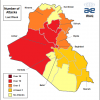
Conditions continue to worsen in Iraq, with civil unrest gripping cities from Arbil in the north to Basrah in the south over the past week. As well as demonstrations in Kurdistan there has also been a lesser reported rise in ethnic tensions around the city of Kirkuk. The past week has also seen a spate of incidents running along a belt of towns from eastern Anbar province to western Diyala province in the centre of the country. The south has also seen a scattering of militant activity, comprising of bombings and rocket attacks, primarily targeting US military interests.
North
In the ethnically divided city of Kirkuk there has been a rise in clashes between armed Arab, Kurd and Turkmen residents over recent weeks. At present Arab and Turkmen sensitivities are being exacerbated by the presence of a significant Kurdish Peshmerga security force on the northern boundaries of the city. The Kurdish authorities state that the force is in the area to maintain stability but many non-Kurdish residents fear the force has ulterior motives as it patrols the outskirts of what many regard as a rightfully Kurdish city.
Discontent with unemployment, nepotism and a lack of political reform continues to prompt demonstrations in Kurdish cities in the north. The response from the authorities has been to deploy Peshmerga forces to restrict traffic and control crowds, occasional resorting to the use of violence to achieve this. However, political concessions will have to be made if the demonstrations continue and become more violent.
Finally, the Kurdistan Workers’ Party (PKK) released a statement on 28 February announcing it had called-off a six-month ceasefire, raising fears of renewed violence in the Qandil Mountains. However, if the coming weeks see a rise in clashes it is not likely to affect the majority of business interests in the region. Activity will likely remain concentrated around isolated parts of the border.
Centre
Like many parts of the country, the central provinces saw bouts of unrest over the past week, particularly on Friday. However, the majority of incidents did not involve fatalities, unlike the protests in the north and south of the country. Indeed the imposition of heightened security measures in Baghdad meant that overall violent activity was particularly low in the city.

Violent Unrest in Iraq
Unrest aside, however, the central region was blighted with a number of more bloody terrorist attacks over the course of the week. A series of suicide bombings left numerous people dead, with the police suffering the majority of attacks. Several shootings also targeted individuals deemed to be pro-state and anti-radical, such as Sahwah members and at least one mosque imam. In the end, it was the bloodiest week in the central province since Ramadan in 2010.
South
Even the more quiet south of Iraq saw its share of violent protests last week, with a fatality reported at a rally in Baghdad and numerous injuries in Amarah (Maysan province) and Nassiriyah (Dhi Qar province). Three bomb blasts were also reported around Basrah city, with armour-piercing devices used on at least one occasion. The majority of targets were US military convoys, although private security vehicles – and by default the clients they escort – are also at potential risk, particularly if they travel high profile. Blending in with the use of low visibility vehicles may be a more preferable option in the region.

AKE ltd
John Drake is a senior risk consultant with AKE Group, a British private security firm working in Iraq from before 2003. Further details on the company can be found here
You can obtain a free trial of AKE’s intelligence reports here
You can also follow John Drake on twitter at www.twitter.com/johnfdrake
Posted in Weekly Security Update Comments Off on Weekly Security Update for 3rd March 2011
MSMEs – A Prerequisite for Inclusive Economic Development
Posted on 25 February 2011 .
By T. Keyzom Ngodup, co-founder and Executive Director at Ideas sYnergy, an Iraq based private sector development consulting company.
Recent demonstrations across the country in Sulimaniya, Kirkuk, Basra, Kut and other provinces are indicative of the growing disenchantment among the youth who are often jobless or underemployed despite Iraq’s tremendous oil and gas resources. According to the Iraqi Ministry of Planning and Development Corporation, unemployment is estimated at 35-40% as of 2009.
Drawing parallels from similar resource-based countries, oil & gas sector’s contribution to GDP is among the highest while contribution to employment as a percentage is as low as 1%. Historically, resource-based economies have made clear attempts to diversify their economies through focus on niche markets or exploitation of relative advantage, both in real economy and in financial markets. Supporting the development of micro, small and medium enterprises (MSMEs) has been inherent to economic diversification and employment generation.
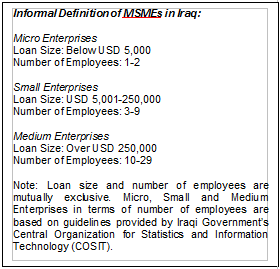 MSMEs are recognized as the engine of economic growth and for their role in promoting equitable development. Globally, they constitute over 90% of total enterprises in most economies and are credited with generating the highest rates of employment growth and account for a major share of industrial production and exports. In Iraq, the exact number of MSMEs and their characteristics are largely unknown, however it is estimated that there are over a million MSMEs, most of them operating informally, and contribute almost two thirds of private sector employment. Despite their rapid growth in recent years, MSMEs face two major obstacles: access to sustainable financing (Iraq ranks 168 out of 181 countries in ‘Ease of Getting Credit’) and access to business development services. Donor agencies such as USAID Economic Development Program Tijara, UNDP Private Sector Development Program among others are attempting to address these gaps, however progress has been limited due to lack of scale, albeit the aforementioned interventions have generated positive attention from local and federal governments. Government of Iraq’s Ministry of Labor and Social Affairs (MOLSA) launched a nation-wide micro-credit scheme in 2007 targeting unemployed youth, however without a sector development approach to improving the overall ecosystem within which the MSMEs operate, all interventions will generate short-lived results without sustainable impact.
Iraq’s ‘Ease of Doing Business’ ranking at 166th is indicative of the difficult bureaucratic registration procedures for MSMEs. In addition, current supply of credit through 12 NGO Microfinance Institutions (MFIs) and SME Lending Units at 14 private banks, supported by USAID-Tijara, outstrips demand. MSMEs require better access to financing and BDS––this includes the deepening and development of financial markets (e.g., improved banking services, venture capital and SME financing) along with systemic improvements in the provision of non-financial business services. Please click here to see a diagram of the challenges in a MSME’s lifecycle.
Despite absence of conducive regulatory environment, business infrastructure and scalable financing mechanisms, Iraqi MSMEs have demonstrated an ability to thrive and provide a basis for the expansion and diversification of the economy. Ideas sYnergy, a recently established multiple bottom line consulting company focused on inclusive private sector development in Iraq, aims to support the creation of MSME lobby clusters/groups in a range of sectors. Ideas sYnergy will work in partnership with ‘enablers’ to build collective capabilities of MSMEs and a wide array of knowledge products towards comprehensive understanding of the MSME landscape in the country.
In world-acclaimed economist Thomas Friedman’s words, ’20-year-olds’ are one of the three major sources of change in today’s world against forces that are upholding the status quo. The Government of Iraq has an opportunity to listen to Iraq’s youth and create opportunities towards building an inclusive economy, where no one is left behind.
T. Keyzom Ngodup is co-founder and Executive Director at Ideas sYnergy, an Iraq based development consulting company committed to economic and social development through market-based solutions that help build and scale innovative businesses for sustainable and inclusive private sector development.
Posted in Keyzom Ngodup 1 Comment
A Week of Surprises
Posted on 24 February 2011 .
With popular uprisings sweeping across the Middle East in recent weeks, Iraq too has seen its share of protests, but the focus here is different. Rather than trying to bring down the (elected) government, the people are expressing their anger at problems such as unemployment, sub-standard public services, scarcity of food, and the corruption and cronyism at the heart of the problem.
It has surprised many that Sulaimaniyah, with its relatively good public services, has been the main hotspot for demonstrations, but protesters here allege that the PUK and KDP have a strangle-hold on the economy.
Government action, such as cutting ministerial salaries and deferring the purchase of F-16 fighters in order to buy food, has not been enough to quell the anger. A 'day of rage' has been planned for tomorrow (Friday), with a major protest expected in Baghdad.
But perhaps most surprising of all is the apparent U-turn from Shia-ite leader Muqtada al-Sadr, reportedly returned again to Najaf, who has called for this day of protest to be deferred for six months to give the government a chance to implement reforms. While only representing one section of the population, his call is likely to take some of the steam out of the situation.
For information on how Upper Quartile and AAIB can assist your business in Iraq, please contact Gavin Jones or Adrian Shaw.
Posted in Blog Comments Off on A Week of Surprises

Babil Investment Commission Attacks Baghdad Govt
Posted on 22 February 2011 .
AKnews reports that the Vice Chairman of the Babil Investment Commission has complained that Iraq’s investment law has been “paralyzed” by the state’s failure to implement it effectively in ministries and government departments.
Abbas al-Tai told the agency that Iraq is one of the best places in the world for investors as it lacks many basic commodities such as housing, sewerage systems and electricity, but the government’s delay in adopting the investment law has left foreign investors reluctant to implement projects in the country.
"Iraq depends mainly on its oil revenues and a large part of public expenditure goes on salaries that take the largest share of the state budget," he said.
"Investment is the best solution to address the deteriorating economic situation in Iraq and radically resolve the problem of unemployment” Tai continued, emphasizing that it would depend on “the state's encouragement and support to set up investment projects.”
Tai attributed the delays in effectively adopting the investment law to lengthy bureaucratic procedures and the long time periods required to attain administrative approval.
“The investment law is good,” he said, “but its implementation and activation are the problems we face in our work”.
Giving the example of a residential construction project approved by the Babil Investment Commission but rejected by the federal Ministry of Municipalities, Tai complained: “The Kawthar housing project was obstructed by all government departments in the province,” and that the Ministry of Municipalities “gave itself the right to decide about investment projects although the Investment Authority is the only party in the country authorized in this matter according to law.”
“The Ministry of Municipalities has hindered our projects completely.”
The solution to this problem according to Tai is the establishment and activation of an investment body that includes representatives of government departments and ministries that has the power to facilitate the implementation of investment projects.
In conclusion, Tai called on the federal government to "…take swift action to resolve this problem and instruct the relevant government institutions to adopt the investment law to avoid future consequences on investment in Iraq."
(Source: AKnews)
Posted in Investment Comments Off on Babil Investment Commission Attacks Baghdad Govt
Violent Protests Break Out in Iraq
Posted on 18 February 2011 .
Violent protests have broken out at various locations in Iraq, with anti-government protesters rallying against corruption, poor basic services and high unemployment.
Basra: In the country's second largest city, about 1,000 people protested on Friday, demanding better services, jobs and improved pensions. They called for the provincial governor to resign, and blocked a bridge for an hour.
Kurdistan: Seven offices of the Goran party in Erbil and Dohuk were attacked, in what officials say was a response to an attack on the ruling Kurdistan Democratic Party (KDP) offices in Sulaimaniyah a day earlier. Two people were killed in that protest, after security forces opened fire on demonstrators. Many Kurds complain that the two dominant political parties in the Kurdish region have a stranglehold on jobs and the economy.
President Barzani, of the Kurdish region, said in a statement: "I call on all parties to behave calmly and to preserve the peace in Kurdistan. I call on the KRG to open an immediate investigation into this incident and hold those responsible for today’s violence accountable."
Meanwhile, Prime Minister Nouri al-Maliki said at a news conference in Baghdad: "The demonstrations are protected and here I say that the security forces are not allowed to use any force against any demonstrations. I say to the protesters, this is your right, (but) without violence. Don't allow troublemakers to incite problems and burn offices because this sabotage and corruption."
Protests were also held in Kut, where one person was killed on Thursday, Kirkuk, Nasiriya, and other towns.
(Sources: Reuters, Al Jazeera, Associated Press, AKnews, KRG)
Posted in Politics Comments Off on Violent Protests Break Out in Iraq

Unlocking Iraq's potentials: strategy and constraints
Posted on 16 February 2011 .
By Tariq Abdell, Iraq's political risk analyst, and Founder & CEO of Mesopotamia Insight.
The opinions expressed here are those of the author, and do not necessarily reflect the views of Iraq Business News.
As Iraq-business news celebrates its one year anniversary, MENA region is witnessing a fundamental political upheavals and changes, costing Mubarak of Egypt and Ben Ali of Tunisia their presidencies, as result of decades of unpopular and undemocratic policies and, most importantly, for injudiciously disenfranchising a crucial segment of their societies: their younger constituents.
Unarguably, Iraq is undergoing major socio- economic changes, among them, the formation of a new and inclusive government, following months of political horse-trading, improved security conditions due to a strong and nonsectarian Army, and surge of foreign companies and investors' interest in Iraq's potentials. However, Iraq's severely languished infrastructure, lack of basic services, impoverished and disgruntle population - decades of wars and despair- could easily jeopardize its hard-earned achievements.
According to the Iraqi Institute for economic reforms, Iraq's agricultural output had fallen from 8% to 3.5%, industrial output from 7% to 1.5%, estimated poverty rate of almost 23%, unemployment still hover above 18%, the appropriation of credit to the economy as % of GDP is 3.37 % in 2008, current power output at 6,5000 megawatts is less than half of Iraq's needs, national debt amounts to $33 billion.
Given the aforementioned challenges, it's an absolute imperative for the Iraqi government to devise a comprehensive and inclusive post-conflict reconstruction strategy, taking into account the aspirations of its people and current budget constraints, which estimates overall expenditure at $81.86 billion and income at $68.56 billion, leaving a shortfall of $13.3 billion. Drawing on past experiences (BRIC countries, for instance) and the support of the international agencies (IMF and WB, for instance), Such a strategy ought to:
- Create a conducive and transparent business environment, compatible with Iraq's new constitution, that is legally and politically permissive (adoption of a new investment law, for instance), and susceptible to attract foreign capital, foster Iraq's political capital, and reinvigorate the efficiency of its institutions . According to the world bank, Iraq ranks 166 on the ease of doing business -next to Afghanistan.
- Institute an independent and inclusive Petroleum Council — reflecting the geographic distribution of Iraq’s energy resources — that is responsible for formulating oil strategies (hydrocarbon law, for instance), deflecting the politicization of the oil sector, enforcing transparency and accountability as bulwarks against corruption , and robust enough to reign in SOC, NOC, and IOCs.
- Set a mechanism that will allow for an equitable distribution of the oil revenues and avoid the resource-rich nations’ deleterious disease, the resource war. Historically, the bulk of Iraq’s oil revenues are distributed along ethno-sectarian, political, and tribal allegiances, as opposed to inclusive and growth-oriented economic policies.
- Foster strategic partnership with the private sector and academia. For instance, GOI could seek foreign companies’ expertise to help revamp its oil sector by introducing technological know-how, the industry best practices, and foster a professionally literate workforce. With such perspicacious initiative, Iraqi government will definitely enhance its oil sector efficiency, boost production, and, eventually, spur economic recovery.
- Revive Iraq's strategic industries(Petrochemicals, for instance) to curtail its dependence on a single commodity, fossil fuel, and, consequently, avoiding its hasty depletion. Furthermore, given Iraq's acute electricity and water crisis, direct solar energy is by far the most abundant renewable energy source in Iraq which can be used for power generation for domestic and international markets , and seawater desalination to help alleviate southern regions water shortage.
Conversely, in the absence of a concerted and inclusive national development strategy that reflects the needs of the Iraqi people (e.g., more jobs, better wages, universal access to basic services, health care, and education) and help resuscitate the country’s weakened economy, Iraq may risk reverting to its years of lawlessness, sectarianism, and chaos, which is far worse than Egypt and Tunisia combined. Irrefutably, "A nation’ s strength ultimately consists in what it can do on its own, and not in what it can borrow from others." Indira Gandhi
The opinions expressed here are those of the author, and do not necessarily reflect the views of Iraq Business News.
The author, Tariq Abdell, is an Iraq's political risk analyst, and Founder & CEO of Mesopotamia Insight
He can be contacted at: [email protected]
or
Followed on twitter: http://www.twitter.com/atariqx
Posted in Construction & Engineering In Iraq, Tariq Abdell 4 Comments
Weekly Security Update for 10th February 2011
Posted on 10 February 2011 .
Overview
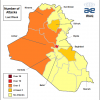
Levels of violence rose slightly in Iraq last week, although conditions have generally been quiet so far in 2011 and the number of weekly security incidents has not yet exceeded 40. The majority of violence is currently taking place in Baghdad and Mosul, although last week saw several attacks in the provinces of Anbar and Salah ad-Din.
North
The northern city of Kirkuk has also seen a spate of incidents over the past few days. After several weeks of relative quiet, two individuals were abducted on 7 February. The body of one was found the following day, while the second was found abandoned and injured. On 9 February three vehicles laden with explosives detonated in the city, close a filling station, a municipal office and the provincial headquarters of the Kurdish Asayish security forces. At least six people were killed and 75 injured in the near-simultaneous blasts. Further north, Kurdistan remains stable, although supporters of opposition movements such as the Gorran party may organise demonstrations against the regional government. They remain critical of unemployment, nepotism and a poor record of political freedoms in the region and are likely to be spurred on by demonstrations in Tunisia and Egypt. However, AKE considers it unlikely that this will lead to major unrest, and it should not be regarded as any major source of alarm for foreign companies working in the region.

Weekly attacks in Iraq - the last 6 months
Centre
Violence remains most concentrated in the centre of the country, with a spate of bombings in Baghdad last week, and several attacks in western Anbar province and throughout Salah ad-Din province. On 5 February a bomb near the revered Askari shrine in Samarra injuring nine people, including two Iranians and two Pakistanis. This highlights both the fact that the extensive security measures in place around the mosque are not exhaustive, but that the perception of the security situation in the country has improved significantly to the extent that religious travellers are increasingly willing to travel from areas around the world. The holy Shi’ah Askari mosque is notable because its partial destruction in a bomb blast in 2006 helped catalyse some of the worst of the country’s sectarian violence. In Diyala province on 4 February three militants were arrested carrying intimidating literature which they were distributing amongst residents of central Ba’qubah. Several individuals suspected of involvement in the manufacture of explosives were also arrested in operations in the city on the same day. It is suspected that most of the detainees are affiliated with the al-Qaeda inspired Islamic State of Iraq. What is important from a security perspective is that they were arrested following tip-offs from local families. This signifies growing co-operation between Diyala residents and the authorities, after years of mistrust between the two. A network of informers will likely be one of the strongest forces against militancy and criminality in Iraq once the US military withdraws from the country.
South
A series of arrests were made around Basrah city over the past week. Most of those detained were involved in criminality, although at least one explosive device was also defused during the police operations. Terrorists evidently still have a presence in the southern region and while conditions have been quieter than normal over recent weeks personnel should not become complacent. Otherwise, around 1,500 people protested against poor services in Basrah city on 6 February. Unrest may become a more prominent issue in Iraq over the coming months, particularly with an ongoing lack in services, jobs and acceptable standards of living. Further analysis on this subject is available here.
John Drake is a senior risk consultant with AKE Group, a British private security firm working in Iraq from before 2003. Further details on the company can be found at www.akegroup.com/iraq
You can obtain a free trial of AKE’s intelligence reports here http://tinyurl.com/245f9rm
You can also follow John Drake on twitter at www.twitter.com/johnfdrake

AKE ltd
Posted in Weekly Security Update Comments Off on Weekly Security Update for 10th February 2011