



Unrest in Iraq - the Risk of Contagion
Posted on 08 February 2011 .
With unrest in several Arab cities, many in the region are worried about the risk of contagion. The latest flashpoints are Egypt, Tunisia, Yemen, Jordan and Algeria; but is Iraq vulnerable as well? The people certainly have a lot to complain about.
Electricity
The heat and increased use of air conditioning put a major strain on the national grid last summer. Blackouts became increasingly common and hours with constant electricity supply became less frequent. For those who could not afford the exorbitant fees of private generators there were intense periods of difficulty, with high temperatures and no fans or refrigeration. Conditions were harsh enough to prompt unrest in several cities in the south of the country. In Basrah two protesters were killed when the police opened fire on a crowd in an attempt to control it.
Electricity projects are currently underway around the country but many are not likely to be completed for several more years. Shortages are therefore likely to persist. With Ramadan taking place in the summer in 2011, tensions are likely to be particularly high. Electricity usage increases during the religious period, particularly if it falls during warmer months, and power shortages can be more emotive during the month-long event than at other times of the year.
Water
Water supply also remains a major issue, with varying service quality in different parts of the country. Infrastructure is being improved in Baghdad but many outlining towns and rural areas remain without a reliable supply. In agricultural areas this has also led to demonstrations in the past. Shortages in provinces like Diyala have provoked local farmers into protesting against what they perceive as excessive usage of water further upriver – crucially, in areas predominantly inhabited by Kurdish Iraqis. Over-usage in the north and in Iraq's neighbouring countries may not only harm yields later in the summer, it could even lead to inter-communal tensions between Kurds and Arabs in the mixed districts of northern Iraq.
Inflation
Another driver of current unrest in the Middle East has been the rising cost of living. Good agricultural performance in Iraq would help restrict domestic inflation in 2011, but difficult logistics and underdeveloped port facilities continue to push up the price of imported goods. This is something that affects all Iraqis, regardless of sector, location and community, and while it has not prompted any major demonstrations in the country so far, it will continue to put pressure on ordinary citizens and add to public frustrations.
Unemployment
Inflation woes are made all the worse by the high unemployment rate in the country. With a battered economy the job market remains poor and those of working age face a grim outlook when searching for employment. However, foreign firms will play an important role in addressing the underutilisation of the Iraqi workforce. Investment in key sectors and the employment of national staff will not only provide foreign companies with access to an important pool of workers, it will help cement a firm’s reputation in the emerging market and tackle a major source of discontentment in the country. As such, current joblessness is a crisis, but it could be viewed as an opportunity.
Congestion
In Baghdad a regular source of complaint is that of travel difficulty. Checkpoints, congestion and route closures clog the daily lives of the city's traders and commuters. However, the removal of checkpoints and opening of roads makes it easier for terrorists, militants and criminals to move around the city. The authorities therefore face a delicate trade-off when considering their priorities. Frustrated drivers may be a better problem to face than a rise in violence in the city.
Violence
Although security conditions have gradually improved over recent years Iraqis continue to die on a daily basis. A suicide bombing against a Shi'ah funeral in the northern Baghdad district of Shu'lah killed dozens and prompted a sporadic protest by local residents on 27 January. Many are frustrated with the failure of the security forces to provide them with protection and further attacks may provoke a backlash against the police, military and government for their perceived failure at protecting the people.
One point to note in Iraq which sets it apart from North Africa is the fact that so many people have died in recent years. Unlike in Tunisia where the death of a market trader in December sparked the beginning of an uprising, the death of Iraqis is less emotive. To put it bluntly, it happens all the time. It is not that an Iraqi life is worth less than a Tunisian one, but the Iraqi public have grown more used to regular carnage. Indeed, this desensitisation, which affects an entire population may be one of the most tragic legacies of Middle Eastern turmoil over the past decade. The aftermath will almost certainly outlive the various authoritarian regimes still clinging to power in the region.
Politics
Seeking to distance himself from comparison to such regimes, prime minister Nuri al-Maliki has pledged to cut his salary in half in response to the latest regional unrest. Evidently the risk of Iraq becoming one of the 'dominoes' has not been lost on him, but his pledge has touched on an issue of particular embitterment amongst the Iraqi electorate. Many despair at the country's high rate of unemployment, particularly when well-paid politicians take eight months to form a government. This delay alone hampered foreign investor confidence and arguably had more of an inhibiting effect on the jobs market than persistent terrorist attacks in the country. The fact that Iraqis had the right to elect these politicians to deliberate without conclusion for months does little to quell their animosity.
Even though Iraq may increasingly be viewed as a stable democratic state in the Middle East, the new regime should not consider itself infallible in the face of unrest in other cities in the region. Unless the Iraqi government can oversee the rapid expansion of services and development of national infrastructure it is likely that the coming year will see more protests in the country. What is perhaps important to note from the perspective of would-be foreign investors is that you will form a major part of the solution to Iraq's current difficulties. The above outlook should not be taken as grounds for alarm. Instead, it should be taken as a call to action by those seeking to capitalise on Iraq's many opportunities, whilst providing employment, development and opportunities for the Iraqi public.

AKE ltd
John Drake is a senior risk consultant with AKE Group, a British private security firm working in Iraq from before 2003. Further details on the company can be found at www.akegroup.com/iraq
You can obtain a free trial of AKE’s intelligence reports here http://tinyurl.com/245f9rm
You can also follow John Drake on twitter at www.twitter.com/johnfdrake
Posted in John Drake 2 Comments
Weekly Security Update for 2nd February 2011
Posted on 02 February 2011 .
Overview
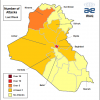
Last week saw considerable violence in Iraq, particularly in Baghdad. There was also a spate of attacks in Mosul and two especially bloody bombings in Karbala. Over 100 fatalities and up to 250 injuries were recorded in total around the country. There was also an increase in targeted shootings in the capital, resuming a trend which appeared to have died for the duration of Arba’een. Two statements have also been made by official organisations over the security environment in the country. While one outlined the positive reduction in attacks on the oil sector in 2010, the other warned that the Iraqi security forces do not have the sufficient capacity to assume responsibility for security without US backing. While efforts to train and prepare the Iraqi police and military will likely increase this year there are concerns that a security gap will emerge after the 31 December US withdrawal deadline. It would be controversial and unpopular for Iraqi politicians to ask them to stay any longer, even if that did prevent a lapse in security.

Regional Violence in Iraq Last Week
North
Levels of violence have risen consistently but very slowly in the two northern provinces of Ninawa and Ta’mim over the last few weeks. The number of security incidents in the region still remains lower than the average seen in 2010. On 24 January an Iraqi contractor was reportedly kidnapped in Mosul and his whereabouts are not currently known. The week also saw two small scale attacks in the usually more quiet Ninawa districts of Ba’aj and Hamdaniyah, although Mosul city remains by far the most hazardous part of the north. Kirkuk and the wider province of Ta’mim continue to see relatively few incidents of violence. Iraqi Kurdistan also remains stable, with very little security concerns being reported in the region. However, personnel should expect possible demonstrations by supporters of the opposition Goran party who are likely to have been inspired by similar unrest in Egypt and Tunisia. The Goran party continues to call for political reform and a reduction of unemployment figures, particularly amongst the youth. As a result, many have sympathies for and similarities to those protesting in Cairo and Tunis. However, unlike many other political groups in Iraq, the Goran party does not have a militant wing of its own and is therefore much less likely to engage in acts of terrorism or militancy to advance its political agenda. Protests have descended into vandalism in the past, but incidents have tended to be highly infrequent and concentrated in small areas. The professional Kurdish security forces will likely be able to contain any unrest and the vast majority of business operations in the region will remain unaffected.
Centre
The central provinces experienced the tail-end of Arba’een violence last week. Two large bombings in Karbala left several people dead, while Baghdad saw a rise in the total number of attacks. The capital also saw a rise in the number of targeted shootings, which were directed against state employees and senior members of the security forces. This type of targeting began to rise in late 2010 but decreased in mid-January after the authorities went on a state of high alert and arrested several people suspected of involvement. It would appear that their efforts only had a temporal impact on the trend, and several more assassinations should be anticipated over the coming weeks. The most devastating bomb attack in the city last week took place in the north-western district of Shu’lah on 27 January, when a car bomb targeted a Shi’ah funeral, killing dozens and injuring over 100. The incident prompted a sporadic protest with survivors and local residents criticising the authorities for failing to protect them. Inspired by protesters elsewhere in the region, and potentially driven by a lack of jobs, services and electricity (especially in the summer) Iraq may see even more urban demonstrations over the course of 2011.
South
The southern region remains relatively quiet when compared to the rest of the country. There were no major incidents reported last week, apart from low level criminality and the arrest of several suspected offenders around Basrah province. AKE personnel on the ground report that security measures have been lessened at checkpoints on key routes. The lack of violence has likely prompted the authorities to direct their resources elsewhere. However, this leaves a potential vulnerability in the event that terrorists attempt to initiate more attacks further down the line. Mass casualty bombings are relatively infrequent in the southern cities, but they do occur. It would therefore appear that one of the greatest risks perhaps is complacency.
John Drake is a senior risk consultant with AKE Group, a British private security firm working in Iraq from before 2003. Further details on the company can be found at www.akegroup.com/iraq
You can obtain a free trial of AKE’s intelligence reports here http://tinyurl.com/245f9rm
You can also follow John Drake on twitter at www.twitter.com/johnfdrake

AKE ltd
Posted in Weekly Security Update Comments Off on Weekly Security Update for 2nd February 2011
Iraq to Create 4m Jobs in 4 Years
Posted on 01 February 2011 .
Iraq's Planning and Development Cooperation Ministry announced plans on Tuesday to create 4 million jobs over the next four years.
Unemployment rates in Iraq hit 15% in 2010 with some provinces up to 37%, according to statistics released by the ministry.
AKnews reports that oil-rich Iraq also has 30% of its people living in poverty.
Abdul Zahra al-Hindawi, the spokesman of the ministry, told the agency that the Iraqi government "will provide the jobs... by implementing service projects which provide opportunities for unemployed youth"
"The provision of employment opportunities will reduce the poverty rate in Iraq from 30% to 16%."
The announced plans are part of a "strategic Plan" to combat poverty in Iraq which was announced in January 2010 by the Planning Ministry, which will last until 2014.
But the main issue of an economic stability is the security situation in the war-torn country. Insurgents have intensified their attacks on the Iraqi security institutions and civilians.
(Source: AKnews)
Posted in Employment Comments Off on Iraq to Create 4m Jobs in 4 Years

Corporate sustainability in post-conflict Iraq
Posted on 31 January 2011 .
By Tariq Abdell, Iraq’s political risk analyst, and Founder & CEO, Mesopotamia Insight
The opinions expressed here are those of the author, and do not necessarily reflect the views of Iraq Business News.
Iraq’s impending multi-billion dollar mega-reconstruction projects (housing, roads, hospitals, bridges, airports, schools, dams, etc...) and its colossal and untapped natural resources - billions of proven oil and gas reserves- are irrefutably the modern day ‘s El Dorado, affording risk-taking investors a unique and unparallelled opportunity to thrive and prosper.
Nonetheless, venturing into Iraq’s quagmire (fragile democracy, geopolitical tensions, severely languished infrastructure, and impoverished population) without strategic foresight and versatility entails grave risk and dire consequences far beyond repair: assets depletion, workforce distress, capital exposure and, ultimately, investments annihilation.
Furthermore, in the absence of socio-economic data repositories, as result of decades of isolation, to support strategic foresight analysis and corporate sustainability strategies, international investors’ only cogent alternative is to device a comprehensive strategy incorporating constructive engagements, strategic partnerships, and the needed political capital as viable mean to foster and strengthen their corporate sustainability and, ultimately, competitiveness.
Given Iraq’s decades of wars, sanctions, and economic hardship, the suggested strategy will entail four interconnected points:
Constructive engagements
Understanding local communities' value systems, cultural nuances, and earning their trust is an absolute imperative for international investors’ survival and competitiveness. To this end, international investors need to engage all the stakeholders in their areas of operation (e.g., tribal and religious leaders, NGOs, media, members of the provincial government, etc...) via a participatory and inclusive approach to foster mutual understanding, respect and, most importantly, common interest.
Strategic partnerships
With the already established relationships, that is corroborated with strategic insights, international investors ought to capitalize on the achievements of the previous phase, by strengthening and solidifying those relationships perceived to be promising, fruitful, and prone to grow into sustainable strategic partnerships.
Corporate social responsibility
Given the socio-economic dynamics of their areas of operation, International investors must adopt an acculturated corporate social responsibility – not charity- to attain broad and immediate impact. To this end, international investors, in concert with local partners, ought to leverage their strategic partnerships to deliver their envisioned corporate social responsibility strategies. For instance, international investors need to work closely with local NGOs and institutions (Basrah University, for instance) to solve a communal problem or foster a fruitful cooperation.
Political capital
To ensure their businesses survival and success in an environment replete with uncertainty, international investors ought to foster their political capital that commensurate with their operational efficiency by leveraging their strategic partnerships and the achievements of their constructive engagements.
Case in point:
Given Basrah’s high unemployment rates – 70%- and its colossal oil reserves, IOCs could play a crucial role in the local economy by introducing the critically needed technical know-how and, thus, help develop local workforce literacy through strategic partnership with local institutions such as Basrah University – suitable platforms for knowledge sharing and dissemination. Unarguably, such perspicacious initiatives would help alleviate Basrah unemployment, spur economic recovery, strengthen IOCs' political capital, and, ultimately, their corporate sustainability.
Drawing on past experiences (Eastern bloc, for instance), transitioning from years of planned economy into free market societies - adaption of democratic and free market principles- is an intricate and time consuming process, that is exacerbated with the geopolitical tensions. Therefore, to overcome the unforeseen externalities associated with Iraq’s post-conflict environment, international investors ought to:
- Recalibrate their corporate sustainability strategies to reflect Iraqi market’s idiosyncrasies. Among them, political landscape, tribal and cultural nuances, ethno-sectarian fabric, institutional and bureaucratic hurdles.
- Build in-house leaders and foster their global mindset, transcultural competence, and societal capital. Such virtues are essential prerequisites for the implementation of the aforementioned strategies.
Simply put, “Ignorant both of your enemy and yourself, you are certain to be in peril” Sun Tzu, a renowned Chinese military general, strategist and philosopher.
The opinions expressed here are those of the author, and do not necessarily reflect the views of Iraq Business News.
The author, Tariq Abdell, is Iraq’s political risk analyst, and Founder & CEO of Mesopotamia Insight
He can be contacted at: [email protected]
or
Followed on twitter: http://www.twitter.com/atariqx
Posted in Tariq Abdell 1 Comment
Unemployment: 15% in Iraq, 14% Kurdistan
Posted on 24 January 2011 .
After the Iraqi Planning Ministry announced that the unemployment rate across Iraq has spiked to 15%, an official from the Kurdistan Region said the rate in Kurdistan is just one percentage lower than the Iraqi level, according to a report from AKnews.
The Iraqi planning minister, whom the report names as 'Mahdi Allaq' [Nasar al-Rubaie?], told a press conference on Thursday that his ministry is seeking to recruit a greater number of citizens in the public sector, in a bid to address the unemployment rate.
(Source: AKnews)
Posted in Iraq Industry & Trade News 1 Comment
Iraqi Govt to Create 171,000 New Jobs
Posted on 19 January 2011 .
This year will see the creation of 171,000 new jobs, according to the latest ruling by the Iraqi parliament.
Azzaman reports that the new jobs are part of the government's efforts to fight unemployment but officials say they will not alleviate unemployment in the country, which they estimate at more than 15%.
Iraq has one of the world’s most bloated public sectors, with the government being the single largest employer in the country.
Financing civil servants, the army and security forces devours more than two thirds of the Iraqi budget, which relies almost solely on oil revenues.
Only a fraction of factories and companies, particularly those owned by the private sector, are operational, mainly due to power shortages and the influx of cheap imports.
Up to 100,000 of the newly employed will join the ranks of Iraqi security forces. The remaining 71,000 will be employed by the country’s various ministries.
The Planning Ministry’s Undersecretary Mahdi al-Allak says government employment measures “are not sufficient”, adding that unemployment “has reached unprecedented levels in the country.”
“Unemployment indicators point to more than 15%, which means there are more than one million jobless people in Iraq,” Allak said.
He said besides those without a job, nearly 30% of Iraqis only worked occasionally “on irregular part-time basis.”
(Source: Azzaman)
Posted in Employment Comments Off on Iraqi Govt to Create 171,000 New Jobs
Turkish Company to Clean Up Baghdad in $24m Contract
Posted on 19 January 2011 .
Baghdad municipality has signed a contract with a Turkish company, Akdneiz, to clean up the city while statistical figures show high unemployment rates.
According to the contract, the districts of Karkh, Rusafa and Karrada [Karadah] in central Baghdad will be cleaned up by Akdeniz for a period of one year.
Iraq's Central Statistics Agency (CSA) reports that unemployment in Baghdad is estimated at 11% of the 7 million residents of the city.
Abdul Zahra al-Handawi, the media spokesman of the center says though unemployment is down this year to 11% from 15% in 2008, but he figure is still high.
Akdeniz has its own labour force numbering more than 1,400, including engineers, cleaners and technicians.
"The company will... provide services to more than 750,000 people in Baghdad, and the personnel of Baghdad Municipality will support the work of the company." says Hakim Abdul-Zahra, the spokesman of the municipality.
(Source: AKnews)
Posted in Iraq Public Works News Comments Off on Turkish Company to Clean Up Baghdad in $24m Contract
Iraq’s Mosul to Produce 200,000 Barrels of Oil Per Day
Posted on 05 January 2011 .
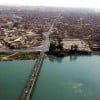
The Province of Nineveh [Ninawa], of which Mosul is the capital, will soon turn into a major oil producing region in Iraq, with output estimated at 200,000 barrels a day, an Iraqi oil official said.
According to the report from Azzaman, the official, who refused to be named, said the crude will mainly flow from two fields currently being developed by state-run firms: Najma and Qaiyara.
“We cannot underestimate a volume like this,” he added.
He urged the Oil Ministry to seriously consider establishing a special oil company to handle the province’s riches.
The official said the output would certainly increase if the authorities allowed foreign firms to explore and drill for oil in the province.
Mosul is known to be among Iraq’s oldest oil producing areas but much of the provincial territory remains unexplored.
The field of Ain Zala is Iraq’s oldest oil-producing field, but the machinery and equipment have not changed since production started there more than 70 years ago.
The official said foreign investment in the province’s natural resources “will reduce currently high unemployment rates” and bring economic prosperity to Mosul, one of Iraq’s most unstable cities.
(Source: Azzaman)
Posted in Iraq Oil & Gas News Comments Off on Iraq’s Mosul to Produce 200,000 Barrels of Oil Per Day
Al-Maliki's New Program For Government
Posted on 22 December 2010 .
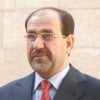
In addition to proposing his new cabinet, Iraq's Prime Minister Nouri al-Maliki presented his government's new program to Parliament this week.
The full text of Iraq's program for government is as follows:
1. Maintaining and commitment to Iraq's constitution completely, and that any subsequent modifications will be in accordance with Article 142 of the Constitution, and activate all of its articles without selective and follow the work of the committees formed in accordance with the Constitution and in particular Article 140. Adoption of legal contexts reference head of the government work to resolve all differences and problems On the basis of outstanding and committed to the political forces and members of the Council of Ministers by the Constitution and the curriculum as is the common government of the forces and parties participating in the political process.
2. Achieve political process, and expand participation in it, in addition to enhance democracy.
3.Consolidation of state institutions and building the rule of law via adoption of asset management and institutional accordance with the principle of citizenship and be regarded as the ministries and state institutions of national identity and property of the people and not the identity of the party, the minister and its personal and prevent any monopoly or domination or tutelage of any class or groups of formations governmental, administrative and public institutions.
4.Human rights respect in the way that ensures expression freedom to all ethnic sides according to law.
5.Renunciation of aggression and terrorism, discrimination and address all acts of aggression, terrorism and discrimination by the enemies of the Iraqi people, led by Saddam's Baath and terrorist groups, and commitment to the fight against sectarianism and to prevent any attempt to return the country to the eras of tyranny and dictatorship and terrorism, blasphemy and the confiscation of the other, and to condemn crimes of deportation and the Anfal and the mass graves, war and adventure, and policies Aggressive and coups.
6. Ensure the right to live in peace and security and freedom for all Iraqis in their homeland, of all religions, nationalities and creeds, and that Iraq will be the components of the social model of brotherhood, coexistence and tolerance
Posted in Iraq Oil & Gas News, Politics Comments Off on Al-Maliki's New Program For Government

Turkish and French Companies Most Active in Iraq
Posted on 04 December 2010 .
An economic adviser in the Iraqi government said on Friday that, of all countries having companies operating in Iraq, Turkey is the best represented, followed by France.
Salam al-Quraishi told AKnews that there are now 270 Turkish companies operating throughout Iraq, mostly specialized in construction of residential complexes and providing electrical power.
"French companies are second in terms of their presence in Iraq, where their number reached to 123 operating companies, according to the National Investment Commission."
The French embassy in Baghdad announced on Oct. 23 its intension to increase trade between Iraq and France during the coming months to 5 billion dollars, revealing that 230 French companies will be present in Iraq in 2011 for the implementation of important investment projects.
"The Iraqi government is seeking in the next phase to develop its economic relations with the United States, Britain, Italy and a number of countries in the world more broadly than it is now."
Posted in Iraq Industry & Trade News 1 Comment