


Work Begins on Iraq-Saudi Interconnector
Posted on 12 June 2023 .
By John Lee.
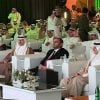
The Iraqi Minister of Electricity, Ziyad Ali Fadel, has attended the ceremony to mark the start of work on the electrical interconnector between Iraq and Saudi Arabia.
The 1GW line will connect between the Saudi city of Arar and Yusufiya in western Baghdad.
GCC Interconnection Authority (GCCIA) hosted the event in Dammam, Saudi Arabia.
(Source: Ministry of Electricity, Trade Arabia, Kuwait Times)
Posted in Iraq Industry & Trade News Comments Off on Work Begins on Iraq-Saudi Interconnector
Minister Pushes TotalEnergies' Solar Project
Posted on 10 June 2023 .
By John Lee.
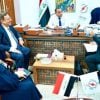
Iraq's Minister of Electricity, Ziad Ali Fadel, held a meeting with TotalEnergies' Director for renewable energy affairs in Iraq, Mr. Khaled Al-Abdali, to discuss the company's procedures for the construction of a 1,000-megawatt solar power station at the Ratawi [Artawi] oil field in Basra.
The meeting was attended by the Director General of the Planning and Studies Department and the Director General of the Technical Department at the Ministry.
The French company is expected to commence implementation shortly, following Cabinet approval last week.
(Source: Ministry of Electricity)
Posted in Healthcare, Iraq Industry & Trade News Comments Off on Minister Pushes TotalEnergies' Solar Project

GE Services Iraqi Gas Turbines
Posted on 10 June 2023 .
By John Lee.
GE Gas Power along with teams from Iraq's Ministry of Electricity, have reportedly serviced and upgraded a total capacity of 1400 MW through several gas turbine service and upgrade projects in the first half of this year.
According to a statement carried by Zawya, GE completed maintenance work, including major overhauls, on two gas turbines with a total capacity of 200 MW at the Khor Al-Zubair power station.
It also carried out projects at power plants ate Shatt Al-Basra, Al Khairat and Al Quds.
(Source: Zawya)
Posted in Iraq Industry & Trade News Comments Off on GE Services Iraqi Gas Turbines
Iraq Open to the World... and Who's Making it Happen
Posted on 07 June 2023 .
From the Iraq Britain Business Council (IBBC):
Iraq open to the world... and who's making it happen.
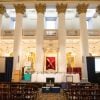
An IBBC conference on June 16th at London's Mansion House.
On 16th June IBBC are hosting a significant delegation of Iraq businesses and government officials to the UK, with a strong focus on energy, oil and gas, new infrastructure, and Investment projects. As Iraq takes a more internationalist approach to business, trade, culture and diplomatic engagement with their neighbours and the world, the range and nature of projects is opening.
For example, Saudi Arabian investment fund (PIF) is investing $3bn in infrastructure projects, Aramco are discussing Basra oil projects, Shell is finally moving into multibillion dollar petrochemical projects, Total Energies has started work on its huge solar, gas capture and oil extraction deal, ANB are moving into Iraq, Dutch Royal Boskalis investing in an export terminal in Basra and the EBRD are expanding operations in Iraq and the Government are investing $17bn in the development road connecting both the Gulf to Turkey and Europe.
H.E. Dr Haider M. Mekkiyah, Chairman of the National Investment Commission is making s keynote speech outlining the current opportunities for Infrastructure and Investment.
You can attend sessions on finance and energy, from leading international speakers, such as Dunia Chalabi, CEO of Total Energies Iraq, Ali AL Janabi chairman of Shell Iraq, Basra Gas Company, Dr Laith Al Shaher, Deputy Minister of Oil, will give a keynote speech, Standard Chartered, TBI and UKEF, GE, and The Sardar Group, and high-profile speakers on the developing Heritage sector from the British Museum. A Tech session with SAP, Mastercard, Scott Logic and Iraq's new streaming stars, 1001.
Professor Frank Gunter is launching the IBBC advisory council's report on Ports and Airport supported by industry leaders and sponsors, Sardar Group, AAA Holding and Hydro-C.
Prof. Hamid Ahmed Khalaf, Advisor to the Prime Minister and Executive Director of the High Committee for Education Developments in Iraq, will attend the conference and take part in the Education Round table discussion chaired by Professor Mohammed Al Uzri. The Iraqi Government has allocated funding for several thousand post graduate scholarships to mostly take place at UK universities of the next 3 years. Education is one of the strongest growth sectors in the country and now represents the second biggest membership stream within IBBC.
Iraq has world class reserves of oil and gas, and oil exports represent over 90% of its income. The sector is due to vastly expand in coming years with new projects having been agreed in Solar, Oil production, Gas capture and Petrochemicals. It is also under increasing pressure to reduce its environmental impact and reliance on crude oil revenues. Under the expert Chairmanship of Dr Luay Al Khateeb, former Electricity Minister, and Founder of the Iraq Energy Academy, our high powered 'Energy Panel' will focus on Iraq's burgeoning Energy sector and how to maximise its potential following international standards and best practices.
Iraq's heritage is coming a big topic, not just for its commercial value, tourism, and growth, but also for what it signifies about Iraq's current culture and history. Hear leading experts on Iraq's heritage.
- Professor John McGinnis, The British Museum /Nimrud Archaeological Trust
- Professor Gamal Abdelmonem, Nottingham Trent University
- Mr Ali Al Makhzomy, Bilweekend
- Dr Rosalind Wade Haddon, British Institute for the Study of Iraq.
- Professor Chris Whitehead, Newcastle University
IBBC is also hosting an exhibition on heritage "Legacies of War and Peace in Iraq: Mosul's Story of Resistance, Resilience, Recovery and Rise".
Supporting the new internationalism are initiatives in training, education, and skills, with British Universities and training companies, who are expanding new courses to propel Iraq business skills, including Nottingham Trent University, University of Mosul, University of Leeds, University of Wasit, and Newcastle University.
Baghdad and Basrah are bristling with new developments and the country is regularly hosting large business delegations from around the world. Whilst IBBC co-hosted the first UK Iraq Trade Fair in mid-May, large UAE, Saudi, Japanese business delegations were in Baghdad as well as the largest ever German business delegation with over 30 company delegates.
For a full agenda please click here and to register here
Iraqis are resilient and have always recovered, but now is a golden time.
A diversifying economy. Iraq is still dependent on oil income, and all financial indexes, including income per head and GDP (+4% '23) are all looking good, with 2022 surplus of over $40bn. Other areas of the economy are expanding off the back of this, especially consumer products, telecoms, education, and tourism. KRG has seen a 30% increase in tourists in 2023, this and other areas of Iraq are projected to grow 10% pa to 2027, Healthcare by 19% pa, food market at 4.13 % (largest growth segment is Confectionery & Snacks), beauty and personal care 6%, Household appliances 5.42%, luxury goods 4%, home laundry care 6%.
A modernising govt. Iraq is finding its confidence and has been active with diplomacy and hosting regional conferences, broking relations between Saudi, Iran, and Turkey, while also stimulating infrastructural development, from oil refineries to dry canal and housing projects, new electricity and renewable energy production, airport, and airline travel facilitation. Making access faster with Visas on arrival and travel between Baghdad Basra and Erbil easier
Stability and security have also paid dividends in Basrah hosting of the Gulf cup which occurred without incident, and the bourgeoning number of tourists at religious and heritage sites.
Still challenges. The international community is still lagging in its view of Iraq, as international travel caution remains from US, EU and UK, and corruption is still prevalent, but on both counts, things are improving as the country moves towards international standards.
Come and meet the key international businesses and officials at our conference on June 16th, including over 20 private Iraqi banks, where we are exploring these themes with energy companies, educational panels, heritage, tech, infrastructure, the KRG, and significant investment and finance panels.
Click here to register
Posted in Construction & Engineering In Iraq, Investment, Iraq Industry & Trade News, Iraq Oil & Gas News, Politics, Security Comments Off on Iraq Open to the World... and Who's Making it Happen
Natural Gas Liquefaction Plant opens at Rumaila
Posted on 06 June 2023 .
By John Lee.
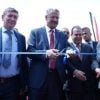
Iraq's Minister of Oil, Hayan Abdul-Ghani has opened the first phase of the natural gas liquefaction plant project at Rumaila oil field.
The project aims to utilize associated gas, and has a capacity of 200 million cubic feet per day in the first phase. By the end of this year, the project's capacity will increase to 400 million cubic feet per day with the addition of 200 million cubic feet from the second phase.
It will supply the national electricity generation network with 320 million cubic feet per day of dry gas, contributing to the production of 1,900 megawatts of electricity. It will also produce 2,150 tons of liquefied gas (cooking gas) per day and 5,900 barrels per day of condensates.
According to a statement from the Ministry of Oil, the project will help reduce carbon dioxide emissions by 10 million tons annually and create job opportunities.
It adds that Basra Gas Company (BGC) started construction of the plant in 2019 and continued the construction work despite the challenges posed by the COVID-19 pandemic in 2020 and 2021. The project includes the construction of the plant, the first and second units, service units, and pipelines connecting the plant to other facilities. It also involves the installation of a power transmission line to the plant, the development of existing facilities in the North Rumaila site to provide the required gas pressures, the enhancement of export facilities in the Umm Qasr Complex, and the improvement of road connections to the plant, among other works.
(Source: Ministry of Oil)
Posted in Iraq Oil & Gas News Comments Off on Natural Gas Liquefaction Plant opens at Rumaila
IMF Forecasts Growth in Iraq's Real Non-Oil GDP of 3.7%
Posted on 06 June 2023 .
By John Lee.
The International Monetary Fund (IMF) has forecast growth in Iraq's real non-oil GDP 3.7 percent in 2023.
Following a recent visit to Iraq, the IMF team also predicts inflation of 5.6 percent in for the year.
Full statement from IMF:
A staff team of the International Monetary Fund (IMF) led by Tokhir Mirzoev visited Amman, Jordan from May 24-31 to discuss with the Iraqi authorities the recent economic developments and outlook as well as policy plans in the period ahead.
At the end of the mission, Mr. Mirzoev issued the following statement:
" The Iraqi economy's growth momentum has slowed in recent months. After recovering to its pre-pandemic level last year, oil production is set to contract by 5 percent in 2023 owing to the OPEC+ production cut and outage of the Kirkuk-Ceyhan oil pipeline. The foreign exchange (FX) market volatility in the wake of tighter anti-money laundering/combating the financing of terrorism (AML/CFT) controls by the Central Bank of Iraq (CBI) on FX sales has adversely affected import-dependent non-oil sectors. Real non-oil GDP is estimated to have contracted by 9-percent (year-on-year) in the last quarter of 2022, negating its growth during the previous three quarters. With the FX market appearing to be stabilizing, helped by CBI's actions, growth of real non-oil GDP is expected to resume and reach 3.7 percent in 2023. After spiking to 7 percent in January, inflation has begun to moderate-reflecting lower international commodity prices as well as a 10-percent revaluation of the dinar-and is projected to average 5.6 percent in 2023.
"Favorable oil market conditions have supported Iraq's fiscal and external positions, but structural imbalances continue to widen. In 2022, fiscal and external current account surpluses have reached 7.6 and 17.3 percent of GDP respectively on the back of record-high oil revenues. The CBI's FX reserves rose to US$97 billion (11 months of imports), including US$16.3 billion (6 percent of GDP) in fiscal savings accumulated by the government. At the same time, a large fiscal expansion has widened the non-oil primary deficit from 52 to over 68 percent of non-oil GDP in the course of 2022.
" An even bigger fiscal loosening envisaged in the draft 2023 budget law would widen the non-oil primary fiscal deficit further to 75 percent of non-oil GDP and bring the overall fiscal balance to a deficit of 6.5 percent of GDP. The combined effects of increased government spending, the exchange rate revaluation, and reduced oil production would bring the fiscal break-even oil price to $96 per barrel.
" In the short run, implementation of the authorities' fiscal plans could re-ignite inflation and FX market volatility. Over the medium term, continuation of current policies in the presence of substantial uncertainty about the future path of oil prices poses critical macroeconomic stability risks. Barring a large increase in oil prices, the current fiscal stance could lead to mounting deficits and intensifying financing pressures in the coming years.
"A significantly tighter fiscal policy is needed to strengthen resilience and reduce the government's dependence on oil revenues while safeguarding critical social spending needs. Key priorities include diversifying fiscal revenues, reducing the oversized government wage bill, and reforming the pension system to make it financially sound and more inclusive. While supporting the government's plan to increase social assistance, the mission recommends stronger targeting to ensure that it is directed to those who are most vulnerable.
"Improving public financial management remains of critical importance. In this context, the mission cautions against the planned establishment of new extrabudgetary funds, which raise governance and efficiency concerns, and strongly recommends adhering to on-budget government expenditures Furthermore, the mission urges full implementation of the framework for managing government guarantees, including Parliamentary approval and publication of an annual ceiling on and the list of government guarantees as part of the budget law. Accelerated efforts to establish a Treasury Single Account are also needed to strengthen public financial management.
"The mission welcomes the progress made by the CBI in improving its liquidity management and the AML/CFT frameworks and underscores the importance of close alignment of the stance of fiscal and monetary policies in managing the economy.
"Creating an enabling environment for private sector development will be of utmost importance for achieving durable and more inclusive growth. Priorities include continued efforts to enhance governance and reduce corruption, restructuring large state-owned banks to improve access to finance, reforming the labor market to promote private sector job creation, improving cost recovery in the electricity sector to enhance its ability to meet demand in a sustainable manner, and improving the broader business environment.
"The IMF staff team stands ready to support the authorities in their reform efforts and would like to thank them for candid and productive discussions during this mission."
(Source: IMF)
Posted in Iraq Industry & Trade News, Iraq Oil & Gas News, Politics Comments Off on IMF Forecasts Growth in Iraq's Real Non-Oil GDP of 3.7%
Malaysian Firm Wins $82m Contract in Iraq
Posted on 31 May 2023 .
By John Lee.
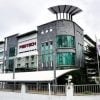
Malaysia's Pestech International, through its joint venture with China Energy Engineering Group Tianjin Electric Power Construction Co Ltd (TEPC), has won a contract is for the completion of the Electricity Sector Reconstruction Project Phase (III), Lot 1-Construction, comprising of four 132-kilovolt Gas Insulated Switchgear (GIS) substations in Baghdad.
The contract value is approximately US$82 million.
Full statement from Pestech:
The Board of Directors of PESTECH ("Board") wishes to announce that PESTECH SDN. BHD. ("PSB") through the unincorporated joint venture between PSB and CHINA ENERGY ENGINEERING GROUP TIANJIN ELECTRIC POWER CONSTRUCTION CO., LTD. ("TEPC") (hereinafter referred to as "TEPC PESTECH JV") had on 30 May 2023, received the consent for an announcement for the Contract Agreement executed between the MINISTRY OF ELECTRICITY ("MOE") of the Republic of Iraq and TEPC PESTECH JV in relation to the acceptance of bid for the execution and completion of the works known as Electricity Sector Reconstruction Project Phase (III), Lot 1-Construction of Four 132kV GIS Substations IFB No: IQP24-MOE-LOT1, Loan Agreement No.: IQ-P24 ("Project").
The lumpsum contract price of the Project is United States Dollars Eighty One Million Seven Hundred Seventy Thousand Two Hundred and Eighteen only (USD81,770,218.00). TEPC PESTECH JV shall pay all taxes, duties and fees required to be paid on its own.
The scope of this project is to design, manufacture, test, deliver, install, pre-commission and commission the PROJECT, which includes four 132/33/11kV, 3 x 63MVA, Gas Insulated Switchgear ("GIS") Substations in Baghdad.
The Government of the Republic of Iraq has received a loan from the Japan International Cooperation Agency ("JICA") towards the cost and payment of Electricity Sector Reconstruction Project-Phase 3 under the contract for Construction of Four 132kV GIS Substations (LOT1).
In the TEPC PESTECH JV arrangement, both parties have agreed to the following scope of works allocation:-
TEPC shall be responsible for:
- Overall project leader;
- Procurement, supply and transportation of part of the major equipment and material;
- Construction including but not limit to Civil and architectural works;
- Onshore activities and relevant arrangement that are required for the execution of the Project, except those specified as scope of PSB;
- Installation, and assisting PSB for the testing and commissioning activities; and
- Other responsibilities of engineering, procurement, commissioning ("EPC") general contractor which is not in the scope of PSB.
PSB shall be responsible for:
- Project management responsibility;
- Substation design, engineering and procurement, supply, transportation of part of the major equipment, including but not limited to, power transformers, 132kV GIS, medium voltage/ low voltage panels, protection and control systems, and other auxiliary systems;
- Onshore delivery of the major equipment and material procured by PSB;
- Main responsibility for the overall testing and commissioning of the Project.
The commencement date shall be the date at which the following conditions precedent have all been fulfilled and the instruction to commence the works is received by TEPC PESTECH JV:
- Execution of the Contract Agreement, and if required, procurement of the approval of the Contract Agreement by relevant authorities of the Republic of Iraq;
- Delivery to TEPC PESTECH JV of reasonable evidence of the MOE's financial arrangements;
- Effective access to and possession of the site given to TEPC PESTECH JV together with such permission(s) as required; and
- Receipt by TEPC PESTECH JV of the advance payment provided that the corresponding bank guarantee has been delivered by TEPC PESTECH JV.
TEPC PESTECH JV shall complete the Project within the period of eighteen (18) months from the date of commencement of works.
The Project will contribute positively towards the revenue and earnings of PESTECH in accordance to the stage of project progress to be recognised in the financial years ending 30 June 2024 to 30 June 2025.
PESTECH does not foresee any exceptional risk other than the normal operational risk associated with the Project such as availability and changes in the price of materials and equipment. The Company will take necessary steps to mitigate the risks as and when it occurs.
None of the Directors and/or Major Shareholders and/or persons connected to them, has any interest, direct or indirect in the Project.
The Board is of the opinion that the Project is in the best interest of the Company.
This announcement is dated 30 May 2023.
(Source: Bursa Malaysia)
Posted in Construction & Engineering In Iraq, Iraq Industry & Trade News Comments Off on Malaysian Firm Wins $82m Contract in Iraq
Iraq, Open to the world: An IBBC Conference
Posted on 25 May 2023 .
From the Iraq Britain Business Council (IBBC):
Iraq, Open to the world..an IBBC conference at the Mansion house, celebrating Iraq's return to international engagement.
On 16th June IBBC are hosting possibly the largest delegation of Iraq businesses and government officials to the UK in recent times. This event is itself an indication of the more internationalist approach Iraqis are taking to business, trade, culture and diplomatic engagement with their neighbours and the world.
You can hear sessions on finance and energy, from leading international speakers, such as BP and Basra Gas, Standard Chartered, TBI and UKEF, GE, Siemens and The Sardar Group, and high-profile speakers on Heritage from the British Museum. And a Tech session with SAP, Mastercard and Iraq's new streaming stars, 1001.Professor Frank Gunter will also be launching the IBBC advisory council's report on Ports and Airport and Mr Laith Al Shaher, Deputy Minister of Oil and
H.E. Dr Haider M. Mekkiyah, Chairman of the National Investment Commission are making keynote speeches.
Since Saddam Hussein's time, Iraq has been a semi closed society, with movement outside the country barred until 2003 and then with limited confidence and resources to travel, Iraqi businesses have largely been marooned by conflict till the defeat of ISIS and terrorism more widely. Since then, Iraq has stabilised, enjoyed high oil prices, higher government income, begun to take its place among regional countries, hosted its neighbours, been open to international investment, (especially interested in UK support) and The PM Mr Al Sudani, has travelled regularly, internationally since his appointment in 2023.
Baghdad and Basrah are bristling with new developments and the country is regularly hosting large business delegations from around the world. Whilst IBBC co-hosted the first UK Iraq Trade Fair in mid-May, large UAE, Saudi, Japanese business delegations were in Baghdad as well as the largest ever German business delegation with over 30 company delegates.
Iraqis are resilient and have always recovered, from Saddam, invasion, ISIS, oil price crashes, now is a golden time.
A diversifying economy. Iraq is still dependent on oil income, and all financial indexes, including income per head and GDP (+4% '23) are all looking good, with 2022 surplus of over $40bn. Other areas of the economy are expanding off the back of this, especially consumer products, telecoms, education, and tourism. KRG has seen a 30% increase in tourists in 2023, this and other areas of Iraq are projected to grow 10% pa to 2027, Healthcare by 19% pa, food market at 4.13 % (largest growth segment is Confectionery & Snacks), beauty and personal care 6%, Household appliances 5.42%, luxury goods 4%, home laundry care 6%.
A modernising govt. Iraq is finding its confidence and has been active with diplomacy and hosting regional conferences, broking relations between Saudi, Iran, and Turkey, while also stimulating infrastructural development, from oil refineries to dry canal and housing projects, new electricity and renewable energy production, airport, and airline travel facilitation. Making access faster with Visas on arrival and travel between Baghdad Basra and Erbil easier. Much of the government's agenda is partly driven by catching up the public and business demands for products and capacity. But initiatives on invention, tech and digital communications differentiate it from previous governments thinking.
Investment. A tangible example of improved stability and diplomacy is the new Saudi Public investment fund (PIF) set to invest in Iraq, and IBBCs Iraq visits to Saudi, while IBBC has more Iraqi members and international companies than ever before.
Stability and security have also paid dividends in Basrah hosting of the Gulf cup which occurred without incident, and the bourgeoning number of tourists at religious and heritage sites.
Still challenges. The international community is still lagging in its view of Iraq, as international travel caution remains from US, EU and UK, and corruption is still prevalent, but on both counts, things are improving as the country moves towards international standards.
Come and meet the key international businesses and officials at our conference on June 16th, including over 20 private Iraqi banks, where we are exploring these themes with energy companies, educational panels, heritage, tech, infrastructure, the KRG, and significant investment and finance panels.
Click here to register
Posted in Investment, Iraq Industry & Trade News, Iraq Oil & Gas News, Politics, Security Comments Off on Iraq, Open to the world: An IBBC Conference
Work Starts at Chinese Solar Plant in Erbil
Posted on 23 May 2023 .
By John Lee.
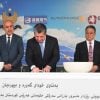
KRG Prime Minister Masrour Barzani has laid the foundation stone at the first solar power plant in Erbil province.
The 25-MW plant is being developed by a consortium consisting of Pluto Otto Cycle and Chinese companies Getting International Energy (which also has interests in neighbouring Jordan) and Shenglong Electric.
The deal to build the plant was signed in December 2022.
Speaking at the event, Prime Minister Barzani made the following statement:
Ladies and gentlemen,
Thank you for joining us today. I am honoured to be here for the groundbreaking ceremony of the first solar power plant in Erbil. This plant will have an impressive capacity of generating 25 MW of electricity per hour. I extend my gratitude to the Ministry of Electricity and the companies involved in this significant project. I envision this as the first of many similar ventures throughout the Kurdistan region.
It is crucial that we prioritise the utilisation of clean, eco-friendly, and alternative sources of energy. In collaboration with the Ministry of Electricity, we have worked towards reforms in this sector to enhance the provision of electricity services to the people of Kurdistan. The Ministry's efforts in improving the electricity infrastructure and addressing energy violations are commendable. Through the implementation of smart meters, we aim to reduce electricity wastage and increase supply hours from the national grid. However, further development is necessary to ensure round-the-clock electricity supply to the public.
The Ministry of Electricity, in partnership with the private sector, must strive to plan and prepare for continuous power supply, including the integration of solar and other renewable energy sources. Opportunities to enhance the electricity sector and better serve the citizens are abundant. Nonetheless, the public's cooperation is equally important. By avoiding wastage, reducing overconsumption, and promptly paying electricity bills, citizens contribute to the government's ability to cover a portion of the electricity production costs and ensure uninterrupted supply. It is important to note that the subsidised electricity provided by the government comes at a significantly lower rate than its actual production, transmission, and distribution costs. By cooperating, citizens can help reduce the government's annual expenditure in this sector.
Dear citizens, despite our recent efforts to increase electricity production, we have not yet achieved the goal of providing 24-hour electricity. Although we have added more power plants, they have not been able to fully meet the region's needs. The rise in population, the establishment of new factories, and the increased use of electrical appliances on a daily basis have contributed to this situation.
To mutually support one another, the government must provide improved services, while citizens must fulfil their responsibilities. We both share a duty in this regard. The government's duty is to offer enhanced services, while citizens have a responsibility to pay their bills promptly. Currently, the national grid does not have the capacity to supply electricity around the clock, leading citizens to rely on private generators. However, if citizens settle their debts to the government, we can provide 24-hour electricity at a cost comparable to or even less than what they pay for private generators. By doing so, citizens can avoid the inconveniences caused by the noise and gasoline odour of private generators in their neighbourhoods.
Therefore, I urge all citizens to consider this government as their own and to actively participate in its functioning. The government is not an unfamiliar entity; it exists to serve you. Similarly, it is your responsibility to safeguard your country and your environment. This dual responsibility is a shared commitment that we must fulfil together.
Once again, I extend my congratulations to the Ministry of Electricity and the private companies involved in this important project. I hope that solar, renewable, clean, and eco-friendly electricity projects will continue to flourish in Kurdistan. Congratulations, and I wish you all success in your endeavours. May Kurdistan thrive and prosper.
(Source: KRG)
Posted in Iraq Industry & Trade News Comments Off on Work Starts at Chinese Solar Plant in Erbil
Iraq to supply More Oil to Lebanon
Posted on 19 May 2023 .
By John Lee.
Iraq's Council of Ministers has announced its commitment to assist Lebanon by meeting its oil derivative requirements.
Additionally, they will provide support in operating the country's electricity production plants and extend the existing supply agreement for an additional third year.
The State Oil Marketing Organization (SOMO) will ensure full supply as per the current contract and increase the volume to 1.5 million tons annually.
Furthermore, a new contract will be established for the supply of two million tons of crude oil each year. This move aims to strengthen the cooperation between the two nations and address Lebanon's energy needs.
(Source: Media Office of the Prime Minister)
Posted in Iraq Industry & Trade News, Iraq Oil & Gas News, Politics Comments Off on Iraq to supply More Oil to Lebanon