


Saudis Provide Homes to Displaced Families
Posted on 05 September 2014 .
Funding from Saudi Arabia to the UN will allow UN-Habitat to provide shelter options for internally displaced people, commonly referred to as IDPs, in the Kurdistan region of Iraq.
Following the takeover of Mosul by the Islamic State of Iraq and the Levant movement – ISIL – last June and the influx of more than 600,000 IDPs to other areas in the country, UN-Habitat was granted USD 8 million from the Saudi government to work with other agencies in the response activities to the IDP crisis in Iraq.
Through this grant, UN-Habitat has started implementing a “Sustainable Shelters for IDPs” programme that focuses on providing convenient housing and early recovery services for approximately 1,000 IDP families in the Kurdistan Region of Iraq in addition to limited intervention in other Iraqi governorates.
Speaking of the new initiative, UN Under-Secretary-General and UN-Habitat Executive Director, Dr Joan Clos, said: “This programme allows us to assess the rapidly changing situation and develop appropriate shelter responses for those affected by the ongoing crisis in Iraq. UN-Habitat is grateful for the generous and timely contribution of the Saudi Arabian government which will enable us to support some of the most vulnerable displaced people in Iraq.”
Each family will be housed in a prefabricated housing unit or in a composite unit within a collective shelter as appropriate, and will have access to electricity, water, and sanitation services. Shelters will be built on identified sites that will include public service centres, including police stations, medical clinics, parks and green spaces.
It is of great concern that IDP families will have access to basic services and employment opportunities. The UN Development Programme, UNDP, is supporting infrastructure component of this initiative and the UN Office for Project Services, UNOPS, will provide solar panels for electrical supply and streets lightening.
In Bahraka and Erbil UN-Habitat has finalized the topographic survey, site plan, designs and bills of quantities of the housing units and the governor of Erbil has endorsed these. Current available resources will cover the erection of between250 and 300 prefab units and proposals have been submitted to donors for additional funding to complement this.
Posted in Security Comments Off on Saudis Provide Homes to Displaced Families
Worsening Conditions in Mosul
Posted on 29 August 2014 .
By John Lee.
The Wall Street Journal has written a report based on six interviews with Mosul residents describing life in the city under the rule of the so called "Islamic State".
In the report, citizens describe a Taliban like rule of brutality enacted upon those who are seen to transgress against the highly austere interpretation of Islam advocated by the Islamic State of Iraq and the Levant (ISIL).
This is evidently a grim situation for the majority of residents. The city was once a major retirement destination for officers in the former regime, often misleadingly described as "secular" but still comparatively progressive compared to ISIL.
For example, for much of the history of the Ba'ath regime, at least until the late 1980s, womens' rights were a feature of their ideology. Not so for ISIL. Furthermore, the banning of smoking and even remotely Western like practices is not proving popular in the city.
Services such as health and electricity have also atrophied. Hospitals are critically short of medicine and electricity is down to a couple of hours a day, from being available for most of the day.
The article ends by speculating that Mosul residents may be organizing to rise up, possibly with the outside help of governor Atheel al-Nujaifi. However, their prospects of success without significant outside help are slim.
(Source: WSJ)
Posted in Security Comments Off on Worsening Conditions in Mosul
METKA Wins Shatt Al Basra Contract
Posted on 07 August 2014 .
By Patrick M Schmidt.
METKA, a Greek engineering and contracting firm, has won a $165 million (192 billion Iraqi dinars) contract to work on the Shatt Al Basra Power Plant.
The contract allows for the company to oversee the process of making the plant fit to burn heavy fuel oil for electrical generation.
The project will be executed over the next year for the Ministry of Electricity.
METKA is already installing a 1,250MW gas-powered turbine in Basra on a separate contract.
(Source: Metka)
Posted in Iraq Oil & Gas News, Iraq Public Works News Comments Off on METKA Wins Shatt Al Basra Contract

Weekly Security Update, 29 July - 04 August 2014
Posted on 05 August 2014 .
By Anne-Laure Barbosa at Constellis Consulting
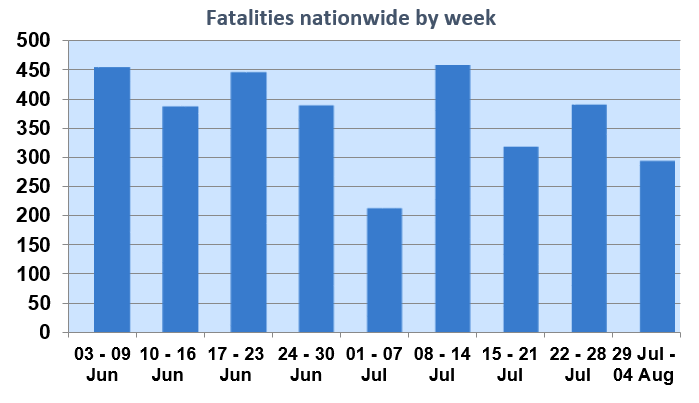
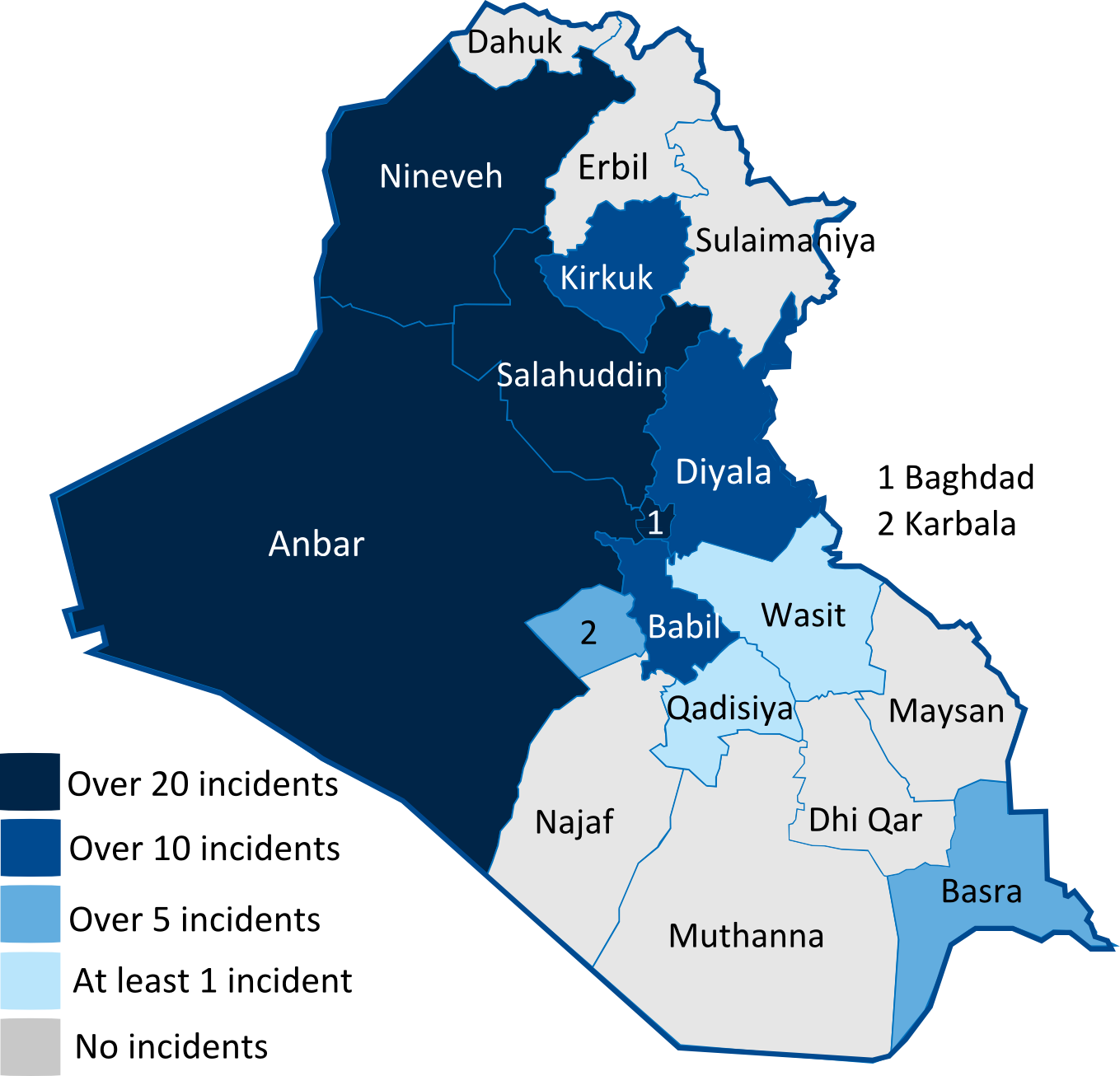 Amid elevated levels of violence accounting for nearly 300 fatalities, the reporting period was marked by ISIS advances across the North. Militant offensives in several districts held or contested by Peshmerga forces led to fierce clashes between ISIS and Kurdish elements in Sinjar district and areas around Mosul, causing tens of thousands to flee. As insurgents extend their reach to previously Kurdish-held territories, and therefore consolidate areas seized in June, the condition of minorities in Nineveh appears increasingly precarious. After expelling Christians and other ancient religious minorities from Mosul in July, there has been accounts of executions among the Yazidi community, a particular branch of Shia Islam, as Kurdish armed forces retreated further north. The deteriorating security situation has added considerable urgency to forming a new government which would have the legitimacy to broker deals with Sunni tribal communities ambivalent to the ISIS advance. On 01 August, Ayatollah Ali al-Sistani called on the country’s politicians to form a national unity government, while incumbent Prime Minister Nouri al-Maliki continues unsuccessfully to secure a third term, prolonging Iraq’s political deadlock. On 04 August, Maliki ordered his air force to assist Kurdish forces, as the latter prepare a counter-offensive on territories fallen to ISIS over the past days. The ISF has been relying heavily on airstrikes to contain the advance of Sunni militants in the North, though air support has so far largely failed to help regain territories. This decision could rather be political, as the next Prime Minister will likely need Kurdish support in parliament to secure his election. While the political sphere is expected to remain stagnant over the next weeks, most of the violence in the North should remain concentrated in Nineveh’s Sinjar district, central Salahuddin, eastern Anbar and northern Diyala.
North
On 03 August, following a 24 hour offensive which inflicted the first major defeat on Kurdish forces, ISIS insurgents captured Iraq’s biggest dam, an oilfield and three towns in Nineveh. The control of the electricity-generating Mosul Dam could give militants the ability to flood major cities and reinforce their grip over the region. At the time of writing, reports were still conflicting over the control of the dam, though its strategic significance guarantees that the area will remain contested. Militants apparently took advantage of a weaker military Kurdish apparatus in Sinjar, a district which had previously been spared the violence observed in other areas hosting a Kurdish presence, though intensifying clashes in its vicinity could have predicted such offensive. ISIS’s increasingly offensive posture against Kurdish forces follows a radicalisation towards minorities present in the Mosul area for centuries, with accounts of assassinations within the Christian and Yazidi communities. While ISIS continues to apply its strict ideology by forcing populations to convert and destroying holy shrines, the main hot spots of violence across the North continued to be located in areas around Samarra in Salahuddin, and northern districts of Diyala. Despite continued IED attacks inside Kirkuk, Peshmerga forces reinforced their positions in the province and declared a unilateral ceasefire in its southern edges, which continues to witness sporadic clashes with ISIS elements.
Central
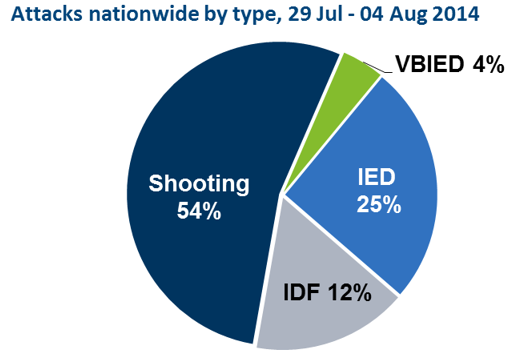 On 01 August, ISIS militants launched an attack on Haditha from three different sides, in a failed attempt to bypass the last line of defense between them and the Haditha Dam. Insurgent advances in Anbar continue to be hindered by the hostility of local tribes, which have sent fighters to reinforce the ranks of ISF units present in the area. The majority of violent incidents continue to be located in Fallujah and Ramadi, with airstrikes accounting for the majority of civilian casualties. Violence in Baghdad experienced a lull compared to previous reporting periods, owing to the ISIS surge in northern governorates. Car bombs remained below averages seen prior to the June advance, though the consolidation of ISIS positions in the northern governorates could eventually shift the focus of ISIS back to the capital. The deadliest incident occurred in the southeastern al-Ameen district, when a VBIED killed 11 civilians and injured 29 others. While ISIS cells are active across northern and central provinces, recent patterns have shown that Sunni militants currently lack the capability to operate with the same intensity on multiple fronts. As such the continued offensives in the North should ensure that levels of violence in Baghdad remain stagnant over the next reporting period.
South
This lull was also visible in Babil, where fewer incidents were reported compared to recent averages. This trend confirms the strategy followed by ISIS, which uses operations in Babil as a means to draw ISF units away from the North and thereby consolidate their positions in Nineveh and Salahuddin. The threat of militant attacks in the South has decreased following the conclusion of Eid al-Fitr. Tribal fighting continues to occur predominantly in Basra, with the resurgence of Shia-nationalist sentiment and return of re-mobilised militias from the northern front likely to be destabilising in the longer term. Meanwhile, south-eastern provinces are expected to follow established patterns of violence.
Posted in Weekly Security Update Comments Off on Weekly Security Update, 29 July - 04 August 2014
Mosul set to become Caliphate’s Capital
Posted on 20 July 2014 .
After the reclusive leader of the Sunni Muslim extremist group that took over Mosul made an appearance at the city’s famous mosque, many of the extremists are boasting that Mosul is to be the capital of their new Islamic state. Evidence that they’re right comes in the form of “Islamic police” patrol cars taking locals to Islamic courts, “Islamic customs duties” levied at the border as well religious overseers in the markets telling local women their clothes are too tight.
Two days ago Mosul man, Abu Zahra, and his friend, another Mosul local, Abed Hamdoun, might have had to kill each other had they met on the street. But today in the northern Iraqi city that was recently taken over by Sunni Muslim extremists, they are able to shake hands. Zahra was so happy to be able to do this, he was crying.
Zahra is a senior member of the Sunni Muslim extremist group known as the Islamic State while Hamdoun belongs to another extremist group, Ansar al-Islam. Previously there had been fighting between the two groups as a result of internal politics that had to do with which extremist parent-group the fighters said they belonged to.
The reason for this extremist reunion: Ansar al-Islam has pledged its allegiance to the Islamic State, or IS, group one day after a sermon made by the IS group’s leader in Mosul. And Hamdoun was leading a group of fighters into the city to pledge allegiance publicly to the IS group’s leader, Abu Bakr al-Baghdadi.
In late June, the IS group announced that they had created an “Islamic caliphate” in the parts of Iraq and Syria that they controlled. Although they have been helped by a variety of armed groups to achieve this goal, the IS group have said that they are firmly in charge of this territory and that other groups must pledge allegiance to their leader, al-Baghdadi. Although Ansar al-Islam, the second largest militant group in Mosul, had been opposed to the IS group, now they have decided to join ranks and do as the IS group asked.
Posted in Politics, Security Comments Off on Mosul set to become Caliphate’s Capital
Ninawa Governor: “Getting Rid of Extremists is Easy"
Posted on 08 July 2014 .
This article was originally published by Niqash. Any opinions expressed are those of the author, and do not necessarily reflect the views of Iraq Business News.
Interview With Ninawa’s Governor: “Getting Rid of the Extremists in Mosul Should be Easy"
Prominent Sunni Muslim politician, Atheel [Athil] al-Nujaifi, who is also the governor of Ninawa province in-exile, talks about why he fled the city when Sunni Muslim extremists attacked. He also explains why the solution for the current Iraqi crisis must come from within the Sunni Muslim population, and why having the Iraqi PM resign won’t solve all the country’s problems.
The governor-in-exile of Ninawa province, the northern region first brought under the control of Sunni Muslim extremists over three weeks ago, talks about why he left the city while it was under attack and how Baghdad refused to let Iraqi Kurdish military come to the city’s aid.
As a prominent Sunni Muslim politician, governor Atheel al-Nujaifi also presents his solutions to the current problem. He believes Iraq’s Sunni know that the Sunni Muslim extremists of the Islamic State, or IS, group are dangerous but that, given the current state of heightened sectarian tensions, they are seeing the group as their protectors, rather than their enemies. If this opinion could be changed, he says, then it should be easy to get rid of the militants from Mosul and other parts of the province.
NIQASH: Can you tell us how the provincial government you once headed in Ninawa is currently operating?
Atheel al-Nujaifi: There are still 14 administrative units which belong to the province of Ninawa and which are not controlled by the IS group. And the provincial government is now based in one of these areas, Qosh. We are holding our council meetings there. And with regard to the provincial council’s service-related departments, we have asked that services - such as water, electricity and health services - continue to be provided. We have opened new offices for these departments outside of Mosul.
Because the IS group doesn’t seem to have a vision for, or system for, managing facilities like this, and given that it cannot pay the salaries of state employees, many of the employees are still communicating with us.
Posted in Politics, Security 2 Comments

Christians Displaced Again by Iraqi Violence
Posted on 05 July 2014 .
By Shaida al-Ameen for Al-Monitor. Any opinions expressed are those of the author, and do not necessarily reflect the views of Iraq Business News.
An estimated 10,000 Christians have been displaced from the Nineveh plains to Iraqi Kurdistan during the past few days as a result of raids by the Islamic State, formerly the Islamic State of Iraq and al-Sham (ISIS), surrounding the majority-Christian Hamdaniyah district. Al-Monitor has confirmed that shelters for displaced persons have been opened in the town of Ainkawa, in Erbil province.
Tamara Jirjees, who fled ISIS attacks with her four children, told Al-Monitor: “We heard the thud of strong blasts that shook our region, and my kids broke out in tears and cries of fear. We took our things and escaped to the Iraqi Kurdistan region.” She further stated, “We reached the checkpoint in Erbil in the evening, and many people were fleeing. It took us a long time to enter the province. The Kurdistan Regional Government opened schools to shelter us and offered us food and water. A representative of the church also visited us and helped us.”
Ainkawa Mayor Jalal Habib told Al-Monitor, “Ten thousand Christian citizens were displaced to Ainkawa in the past few days, and 20 schools and youth centers were turned into shelters to accommodate them. Moreover, the Barzani Charity Foundation, UNHCR [UN High Commissioner for Refugees] and UNICEF … in addition to several other civil associations have provided humanitarian aid to the displaced.”
After the 2003 US-led invasion and occupation and the subsequent rise of extremist Shiite and Sunni organizations, acts of violence against Christians increased in Iraq. The most violent attacks that targeted Christians occurred on Aug. 1, 2004, with the simultaneous bombing of five churches in Baghdad and Mosul.
The violence has since expanded to target liquor stores, clothing stores and beauty salons — most of which are owned by Christians — with the aim of shutting them down. Music shops have also come under attack. Moreover, Christian women have been threatened if they fail to cover their heads like Muslims. A number of abductions and assassinations of Christian clerics have also been reported.
Posted in Security Comments Off on Christians Displaced Again by Iraqi Violence
Electricity Generation needs Urgent Fuel Supply
Posted on 30 June 2014 .
Iraq’s electricity shortages cannot be resolved unless sufficient fuel flows to the power plants feeding Iraq’s national grid, according to Dr Jafar D. Jafar, co-founder and CEO of Uruk Engineering & Contracting, addressing a recent conference.
Uruk’s CEO highlighted the short-fall in fuel availability, particularly gas, currently impacting Iraq’s power generation capacity. He noted that the current gas fuel shortage has decreased Iraq’s power availability on the national grid by at least 3000 MW.
Major Power plants such as Nainawa (6x125 MW), Al-Mansurya (4x182 MW) and Rumaila (5x290 MW) are idle because of lack of fuel. The irony is that Iraq is currently flaring more than 900 million standard cubic feet per day of associated gas in the South whereas major power plants are shut down because of lack of gas.
Peak power supplied from Iraq’s national grid has exceeded 12,000 MW and electricity peak demand is estimated at 16,000 MW. Therefore, these currently idle power plants would go a long way towards reducing black outs during the long Summer months.
Dr. Jafar also noted that gas as a fuel for power generation is the best choice when compared with liquid fuel options such as light distillate or diesel, crude oil or heavy fuel oil (HFO). Gas is best from the environmental view point and from every other standpoint.
For example, power plants operating on gas require the least maintenance and provide the highest availability when compared with power plants operating on liquid fuels.
Ensuring Iraq’s long- term electricity security will require a number of bold and aggressive steps to be taken not only by the government; but also by the international oil companies (IOCs) that have development contracts in the country.
Posted in Iraq Oil & Gas News Comments Off on Electricity Generation needs Urgent Fuel Supply
Visiting Hawija, a town Controlled by ISIS
Posted on 27 June 2014 .
This article was originally published by Niqash. Any opinions expressed are those of the author, and do not necessarily reflect the views of Iraq Business News.
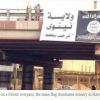
NIQASH visited Hawija, a large northern Iraqi town near Kirkuk, which is currently controlled by Sunni Muslim extremists and local tribes. The town is dominated by ISIS’ black flags and ISIS’ rules. And on the way into town, everybody gets a free Koran.
The area south of the Iraqi city of Kirkuk is now controlled by Sunni Muslim extremist fighters – and part of this includes Hawija, a large, mostly Sunni Muslim town. Although there have been clashes between the Sunni Muslim extremists and the Iraqi Kurdish military who control Kirkuk, the road between the two centres is still open.
It is only being used by a few cars: People returning to Kirkuk after visiting their relatives in Hawija or people from Hawija fleeing to Kirkuk, afraid of further problems in the area.
To get to Hawija you need to go through the Kiwan area, which is now known as the “death strip”. The two opposing forces, the Sunni Muslim extremists led by the group, the Islamic State of Iraq and Syria, or ISIS, and the Iraqi Kurdish military, known as the Peshmerga, are stationed on either side of the road. Both sides are on high alert. If anyone fires a bullet over the other side, fighting breaks out.
Hawija was taken over by Sunni Muslim extremists and members of local Sunni Muslim tribes around June 16 after the Iraqi army withdrew.
As you pass the last Peshmerga checkpoint, the soldiers there advise you not to go any further unless it is extremely important. People are being killed on this road and also being abducted by ISIS, they say.
“Be careful, they will ask you well prepared questions about why you’re going into this area and they will verify the information you give them,” one of the soldiers told me. “If you give them the wrong information, you will be in a lot of trouble.”
I had already taken his advice. I studied at the art school in Hawija for several years, I know a lot of people there and I thought it wouldn’t be difficult to enter the area if I carried my ID card from the art school.
Posted in Security Comments Off on Visiting Hawija, a town Controlled by ISIS
New KRG Cabinet Announced
Posted on 20 June 2014 .
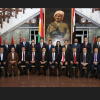
The eighth cabinet of the Kurdistan Regional Government was sworn into office on 18 June 2014 at the Kurdistan Parliament.
The cabinet consists of the following ministries and departments:
Prime Minister: Nechirvan Idris Barzani
Deputy Prime Minister: Qubad Jalal Talabani
Ministry of Agriculture and Water Resources: Abdulstar Majeed
Ministry of Culture and Youth: Khalid Doski
Ministry of Education: Pishtiwan Sadiq
Ministry of Electricity: Salahaddin Babakir
Ministry of Endowment & Religious Affairs: Kamal Muslim
Ministry of Finance & the Economy: Rebaz Mohammad
Ministry of Health: Rekawt Hama Rasheed
Ministry of Higher Education & Scientific Research: Yousif Mohammad
Posted in Politics 3 Comments