


Russian Visit Strengthens Ties with Iraq
Posted on 07 February 2023 .
By John Lee.
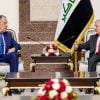
Iraqi President, Dr. Abdul Latif Jamal Rashid, received Russian Foreign Minister Sergey Lavrov and his accompanying delegation on Monday.
President Rashid highlighted the importance of enhancing economic cooperation between the two countries, pointing to the need for coordination and consultation on issues of common interest including security and peace in the region and across the world.
In 2021, trade between the two counties increased by 120 percent as compared with 2020 (from $120 million to $282 million), according to a statement from the Russian Foreign Ministry. Between January and November, 2022, trade grew by 47.5 percent on the same period in 2021 (from $258.5 million to $381.4 million).
Russia's LUKOIL, Gazprom Neft, Bashneft, and Rosneft are implementing a number of major projects in Iraq.
Minister Lavrov said discussions in Iraq focussed on trade, economic and investment ties, adding that Russian oil companies have made investments of over $13 billion in Iraq, and that they have "far-reaching plans with their Iraqi partners."
(Sources: Russian Foreign Ministry, Office of the Iraqi President)
Posted in Iraq Industry & Trade News, Iraq Oil & Gas News, Politics, Security Comments Off on Russian Visit Strengthens Ties with Iraq

Inside Story: Currency Crisis in Iraq as US confronts Iran
Posted on 26 January 2023 .
From Amwaj Media. Any opinions expressed are those of the author(s), and do not necessarily reflect the views of Iraq Business News.
Inside story: Dollar crisis shifts winds in Iraq as US confronts Iran
Iraq is reemerging as a battleground for Iran and the US as deadlock remains over the 2015 Iran nuclear deal, and as Washington seeks to punish the Islamic Republic for its repression of protests and military cooperation with Russia.
The full article can be viewed here (registration required).
Posted in Iraq Banking & Finance News, Iraq Industry & Trade News, Politics, Security Comments Off on Inside Story: Currency Crisis in Iraq as US confronts Iran
Turkish Exports to Iraq Up 16.4%
Posted on 18 January 2023 .
By John Lee.
Exports from Turkiye (Turkey) to Iraq reportedly increased by 16.4 percent in 2022.
According to data issued by the Turkish Exporters Association (TIM), Turkiye sold goods and services valued at $10.4 billion to Iraq during the year, up from $9.0 billion the year before.
Meanwhile, Turkish projects in Iraq were valued at $1.58 billion, putting Iraq in third place behind Russia and Azerbaijan.
(Sources: Hurriyet Daily News, Haber Tusba)
Posted in Iraq Industry & Trade News Comments Off on Turkish Exports to Iraq Up 16.4%

Russia offers Scholarships for Iraqi Kurdistan
Posted on 17 January 2023 .
The Ministry of Higher Education announces scholarships for bachelor's, master's and doctoral studies in Russia
The Ministry of Higher Education and Scientific Research informs teachers, employees and citizens of the Kurdistan Region that the Federal Russia has offered 60 scholarships for bachelor's, master's and doctoral degrees for the academic year 2023-2024 for Kurdistan Region as follows.
1. Bachelor's Degree:
· Applicant must be a citizen of the Kurdistan Region.
· Must not be employed in any institution of the Kurdistan Regional Government.
· For those who apply for medical specialties, the high school grade must be not less than (85%), for those who apply for dentistry and pharmacy, the high school grade must be not less than (80%). Those who apply for engineering, the high school grade must be not less than (75%).
2. Master:
· Applicant must be a citizen of the Kurdistan Region.
· If the applicant is an employee or teacher in the institutions of the Kurdistan Region, he/she must have at least two years of service after obtaining the last degree.
· Bachelor's degree grade must be not less than (65%).
· Applicants must apply for a master's program in the same field. (Bachelor's and Master's degree in the same field).
3. Doctorate:
· Applicant must be a citizen of the Kurdistan Region.
· If the applicant is an employee or teacher in the institutions of the Kurdistan Region, he/she must have at least two years of service after obtaining the last degree.
· Master's degree grade must be not less than (70%).
· Applicants must apply for a PhD program in the same field. (Master's and Doctorate in the same field).
If the successful candidate is employed, he/she will be granted only a study permit by the relevant ministry, with basic salary and fixed allowances.
The successful candidate will be financially supported by Russia. For more details, please visit the scholarship website.
Successful candidates must fill out the electronic application form at the Ministry of Higher Education and Scientific Research through the following link:
Note:
Application will be directly through the scholarship website, ministry of Higher Education does not have any files to process, so do not visit the ministry until the results of the scholarship are released.
Anyone who meets the following requirements, please submit an application to the source of the scholarship through the following link:
https://education-in-russia.com
(Source: KRG)
Posted in Iraq Education and Training News, Politics Comments Off on Russia offers Scholarships for Iraqi Kurdistan

US adds Iraqi Entities to Sanctions List
Posted on 11 January 2023 .
By John Lee.
The U.S. Department of the Treasury's Office of Foreign Assets Control (OFAC) designated critical nodes of a key financial facilitation network of the Islamic State of Iraq and Syria (ISIS), which included four individuals and two entities in Türkiye, who have enabled the terrorist group's recruitment and financial transfers to and from Iraq and Syria.
This network played a key role in money management, transfer, and distribution for ISIS in the region. Concurrently, the Turkish Ministry of Treasury and Finance, together with the Ministry of Interior, have implemented an asset freeze against members of this network.
"Today's action reaffirms Treasury's commitment to degrade ISIS's ability to operate globally," said Under Secretary of the Treasury for Terrorism and Financial Intelligence Brian E. Nelson. "These designations and accompanying asset freezes are a result of close coordination and collaboration with our Turkish partners to target ISIS activity in the region."
This follows OFAC's November 7, 2022 designation of four individuals and eight companies as part of an ISIS cell in South Africa, which was providing technical, financial, or material support to the terrorist group. These individuals and entities are being designated pursuant to Executive Order (E.O.) 13224, as amended, which targets terrorist groups and their supporters.
ISIS FINANCIAL FACILITATOR BRUKAN AL-KHATUNI
Abd Al Hamid Salim Ibrahim Ismail Brukan al-Khatuni (Brukan al-Khatuni) is an Iraqi national illegally living in Türkiye, who has engaged in financial facilitation and recruitment activities for ISIS. Brukan al-Khatuni has played a significant role in transferring funds through his network in support of ISIS and ISIS senior leaders.
Brukan al-Khatuni has served as the head of foreign financing in ISIS's so-called Wilayat al-Jazirah in Iraq. In 2016, Brukan al-Khatuni moved to Türkiye to manage ISIS's financial facilitation network there and transferred funds from Arabian Gulf-based donors to ISIS. Also in 2016, Brukan al-Khatuni joined an ISIS recruitment cell, which was tasked with spreading the ideology of ISIS's previous emir Abu Bakr al-Baghdadi.
As of 2018, Brukan al-Khatuni had assumed an important role in managing ISIS financing in Türkiye. That same year, ISIS transferred millions of dollars to Brukan al-Khatuni. Brukan al-Khatuni managed hawala offices and played roles in ISIS money management, transfer, and distribution.
In 2021, Brukan al-Khatuni sent funds to Yasir 'Ali Ahmad Nuwayran al-Farraji, an ISIS cell member arrested by the Kurdistan Regional Government Counterterrorism Directorate on March 29, 2021 for planning attacks against Kurdish military and security forces in Erbil, Iraq. Al-Farraji later confessed to planning attacks in Erbil in a public statement on April 12, 2021.
Abd Al Hamid Salim Ibrahim Ismail Brukan al-Khatuni is being designated pursuant to E.O. 13224, as amended, for having materially assisted, sponsored, or provided financial, material or technological support for, or goods or services to or in support of, ISIS.
AL-KHATUNI NETWORK
Muhammad Abd Al Hamid Salim Brukan al-Khatuni (Muhammad Abd Al Hamid) and Umar Abd Al Hamid Salim Brukan al-Khatuni (Umar Abd Al Hamid), Brukan al-Khatuni's sons, coordinated with an ISIS finance official to facilitate the transfer of over $500,000 in June 2021. Muhammad Abd Al Hamid and Umar Abd Al Hamid were both affiliated with a money service business in Mersin, Türkiye, which Brukan al-Khatuni later re-branded as Wadi Alrrafidayn for Foodstuffs (Wadi Alrrafidayn). Brukan al-Khatuni and his sons all worked at Wadi Alrrafidayn.
Umar Abd Al Hamid Salim Brukan al-Khatuni, and Muhammad Abd Al Hamid Salim Brukan al-Khatuni are being designated pursuant to E.O. 13224, as amended, for having materially assisted, sponsored, or provided financial, material or technological support for, or goods or services to or in support of, ISIS.
Wadi Alrrafidayn for Foodstuffs is being designated for being owned, controlled, or directed by, directly or indirectly, Brukan al-Khatuni.
Türkiye-based Sham Express, a company founded in 2020 by Brukan al-Khatuni, has also been used by ISIS-affiliated individuals to transfer funds for the group. Particularly, ISIS financial facilitator Lu'ay Jasim Hammadi al-Juburi (Lu'ay Jasim) used Sham Express to transfer money on behalf of ISIS between Türkiye, Syria, and Iraq.
Prior to his arrest in July 2021, then-ISIS finance leader 'Abd-al-Rahman 'Ali al-Ahmad al-Rawi (al-Rawi) established financial channels throughout Russia, Europe, China, and Africa to transfer existing ISIS funds and generate additional ISIS revenue. Al-Rawi worked with Sham Express in connection with these activities. Treasury designated al-Rawi pursuant to E.O. 13224 on April 15, 2019.
ISIS financial facilitators also used Sham Express to support the smuggling of gold from Syria and Sudan via Iraq, Egypt, and Libya to generate additional revenue for ISIS. Sham Express is being designated pursuant to E.O. 13224, as amended, for having materially assisted, sponsored, or provided financial, material or technological support for, or goods or services to or in support of, ISIS.
Lu'ay Jasim, previously an al-Qa'ida member since 2008, joined ISIS in 2014 and worked in ISIS's financial administration for several years until he moved to Mersin, Türkiye, where he managed a business used by ISIS members in Türkiye to illegally transfer funds throughout the region, notably Iraq and Egypt.
Lu'ay Jasim Hammadi al-Juburi is being designated pursuant to E.O. 13224, as amended, for having materially assisted, sponsored, or provided financial, material or technological support for, or goods or services to or in support of, ISIS.
SANCTIONS IMPLICATIONS
As a result of today's action, all property and interests in property of the persons named above, and of any entities that are owned, directly or indirectly, 50 percent or more by them, individually, or with other blocked persons, that are in the United States or in the possession or control of U.S. persons, must be blocked and reported to OFAC. Unless authorized by a general or specific license issued by OFAC or otherwise exempt, OFAC's regulations generally prohibit all transactions by U.S. persons or within the United States (including transactions transiting the United States) that involve any property or interests in property of designated or otherwise blocked persons. The prohibitions include the making or receiving of any contribution of funds, goods, or services to or for the benefit of those persons.
Furthermore, engaging in certain transactions with the persons designated today entails risk of secondary sanctions pursuant to E.O. 13224, as amended. Pursuant to this authority, OFAC can prohibit or impose strict conditions on the opening or maintaining in the United States of a correspondent account or a payable-through account of a foreign financial institution that has knowingly conducted or facilitated any significant transaction on behalf of a Specially Designated Global Terrorist (SDGT).
The power and integrity of OFAC sanctions derive not only from its ability to designate and add persons to the List of Specially Designated Nationals or Blocked Persons ("SDN List"), but also from its willingness to remove persons from the SDN List consistent with the law. The ultimate goal of sanctions is not to punish, but to bring about a positive change in behavior. For information concerning the process for seeking removal from an OFAC list, including the SDN List, please refer to OFAC's Frequently Asked Question 897. For detailed information on the process to submit a request for removal from an OFAC sanctions list.
View identifying information on the persons designated today.
(Source: OFAC)
Posted in Iraq Industry & Trade News, Security Comments Off on US adds Iraqi Entities to Sanctions List
Iraq earns $115bn from Oil Exports in 2022
Posted on 04 January 2023 .
By John Lee.
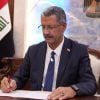
The Iraqi Minister of Oil, Hayan Abdul-Ghani (pictured), has announced revenues of more than $115 billion from exporting crude oil for the year 2022.
More than 1,209 billion barrels of crude oil were exported, giving a daily export rate is approximately 3.320 million barrels per day (bpd).
The oil was bought by companies of various nationalities including Chinese, Indian, South Korean, Turkish, Greek, American, British, French, Russian, Italian, Spanish, Dutch and others, as well as other Arab companies.
(Source: Ministry of Oil)
Posted in Iraq Oil & Gas News Comments Off on Iraq earns $115bn from Oil Exports in 2022
Iran "moves to Consolidate Grip on Iraq's Oil Sector"
Posted on 02 January 2023 .
By Simon Watkins for the OilPrice.com. Any opinions expressed are those of the author(s), and do not necessarily reflect the views of Iraq Business News.
Iran Moves To Consolidate Its Grip On Iraq's Oil Sector
Iran has long held enormous political, economic, and military sway over neighbouring Iraq through its various military and political proxies, and since the discovery of vast reservoirs of oil in Iran first in the early 1900s and shortly after in Iraq, Tehran has an added incentive to retain this influence and to enhance it.
With Iran's longstanding former superpower ally, Russia, now looking to build out its remaining influence south of Europe, there is another reason for Iran to strengthen its ties with Iraq.
Posted in Iraq Oil & Gas News, Politics, Security Comments Off on Iran "moves to Consolidate Grip on Iraq's Oil Sector"
Mediterranean Refiners look to Iraq
Posted on 31 December 2022 .
By Elena Mataro for Argus Media. Any opinions expressed here are those of the author(s) and do not necessarily reflect the views of Iraq Business News.
The EU's ban on Russian seaborne crude imports has opened the door to an increased flow of sour Middle East grades into the Mediterranean.
Iraq's Basrah grades have already emerged as a popular alternative to medium sour Urals, with many European refiners shunning Russian crude months ahead of the embargo.
Posted in Iraq Oil & Gas News Comments Off on Mediterranean Refiners look to Iraq
EU allocates additional EUR4m for Vulnerable Iraqis
Posted on 25 December 2022 .
Iraq: EU allocates additional €4 million in humanitarian funding to help vulnerable facing food insecurity
Political instability, climate change, as well as rising food prices, spurred by the drought and further aggravated with the Russia's unprovoked aggression towards Ukraine, has left many vulnerable Iraqis not able to meet their basic needs.
The funding announced today will help the most vulnerable people, particularly those internally displaced and living outside camps in informal settings in Iraq, to meet their basic needs.
Commissioner for Crisis Management, Janez Lenarčič said:
"More and more vulnerable people, especially displaced, are being affected by the increasing food insecurity in Iraq. Russia's war against Ukraine is having an impact on many lives across the world, especially on people who are already facing hardship. The EU is committed to help those who are in need. This is why we allocated an additional €4 million to help Iraqis in need get through this difficult time. "
The funding will help to support up to 4,000 displaced vulnerable families with monthly cash assistance as they go through the process of obtaining identity and civil documentation. In addition, cash assistance will also benefit up to 1,000 families with a chronically ill member, who are no longer able to meet their essential needs.
Since 2014, the EU allocated €530.5 million in humanitarian aid to help people in Iraq.
(Source: ECHO)
Posted in Blog, Healthcare Comments Off on EU allocates additional EUR4m for Vulnerable Iraqis
Iraqi PM Doubles Down on Oil Deals with China and Russia
Posted on 18 November 2022 .
By Simon Watkins for the OilPrice.com. Any opinions expressed are those of the author(s), and do not necessarily reflect the views of Iraq Business News.
Iraq's New Prime Minister Doubles Down On Oil & Gas Deals With China And Russia
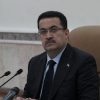
It is possible that U.S. Secretary of State, Antony Blinken, believed for a moment that his call to the new Iraqi Prime Minister, Mohammed Shia al-Sudani, saying that Washington "is eager to work with the government and people of Iraq to improve respect for human rights, increase economic opportunities, advance Iraq's energy independence, and address the climate crisis" might resonate in Baghdad.
A moment only, however, as it transpires that key deals long planned between Iraq and China and Russia are to go ahead, regardless of U.S. wishes.
Posted in Iraq Oil & Gas News, Politics Comments Off on Iraqi PM Doubles Down on Oil Deals with China and Russia