


Iran "signs $4bn Services Deal with Iraq"
Posted on 01 December 2022 .
By John Lee.
Iran and Iraq have reportedly concluded a $4-billion contract under which Iran will supply technical and engineering services to Iraq.
The report from Iran's state-run PressTV gave no details of the deal, but quoted Hamid Hosseini, Director of the Iranian Oil, Gas and Petrochemical Products Exporters' Association (OPEX), as saying:
"In the eight months of this year [beginning on March 20], exports to Iraq, except for electricity, totaled $4.7 billion, down by $1.4 billion compared to the same period last year."
It adds that Iran's exports to Iraq are expected to reach $8-9 billion for the year.
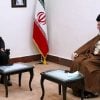
Iraqi Prime Minister Mohammed Shia al-Sudani visited Iran this week, meeting top leaders, including Supreme Leader Ayatollah Ali Khamenei.
(Source: PressTV)
Posted in Investment, Iraq Industry & Trade News, Iraq Oil & Gas News, Politics Comments Off on Iran "signs $4bn Services Deal with Iraq"
Iraq's Gas Debts to Iran Cleared: Minister
Posted on 01 December 2022 .
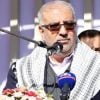
Iraq's outstanding debts for the purchase of natural gas from Iran have been paid off, Iranian Oil Minister Javad Owji (pictured) said.
Speaking to reporters on the sidelines of a weekly cabinet meeting on Wednesday, Owji said Iraq's outstanding debts for the purchase of gas from Iran during the previous and current Iranian year have been settled.
Iran has received a sum of €2.6 billion from Iraq, including €1.6 billion for the sale of gas to the neighboring country this year, he added.
The minister noted that the export of gas to Iraq this year has increased by 1.5 billion cubic meters compared to the previous year.
The Iraqi government has currently no debts to Iran for importing natural gas, Owji stated.
In August, the Iraqi Ministry of Electricity unveiled plans to increase natural gas imports from Iran as Baghdad prepares to open new natural gas-fired power plants.
According to Iraqi officials, the volume of gas imports from Iran stands at 43 million cubic meters, while Iraq requires 55-60 million cubic meters of the energy source.
(Source: Tasnim, under Creative Commons licence)
Posted in Iraq Oil & Gas News, Politics Comments Off on Iraq's Gas Debts to Iran Cleared: Minister
Iraq: A New Opportunity to Reform
Posted on 21 November 2022 .
From the World Bank:
Iraq Economic Monitor, Fall 2022: A New Opportunity to Reform
The World Bank's new Iraq Economic Monitor, A New Opportunity to Reform finds that high oil prices have boded well for Iraq's economy pushing fiscal and external balance into double digit surpluses.
After growing by 2.8 percent in 2021, GDP growth accelerate in the first half of 2022 to 10.5 percent thanks to rising oil output and a recovery in domestic economic activity after the pandemic. Record oil exports have brought in record oil revenues for the government and pushed international reserves to their highest levels in more than two decades.
However, global inflation has partly passed through to consumers, negatively impacting consumption of the lower income deciles, and added to import costs and food security risks. While the Emergency Food Security and Development bill, provided some space for urgent expenditures in the absence of a ratified budget for 2022, investment projects and implementation of economic reforms were impacted by the delays in government formation.
Without deeper structural reforms and economic diversification, Iraq's extreme oil-dependence leaves it vulnerable to commodity price volatility. Despite several reform initiatives, Iraq remains one of the most oil-dependent countries in the world. High dependence on oil, procyclical fiscal policy and insufficient oil revenue management have left Iraq vulnerable to commodity price volatility. The private sector, mostly dominated by the poor and vulnerable segments of the workforce, remains largely informal and stunted.
Looking ahead, Iraq's economic outlook will be supported by persistent high oil prices, but global demand is expected to gradually weaken. GDP growth is forecast to accelerate to 8.7 percent in 2022 driven by strong oil GDP growth of 12 percent and stronger non-oil growth supported by non-oil industry and services activity. Growth is expected to gradually ease over the medium-term as oil production will be constrained by more sluggish global demand. With oil prices projected at over US$90 per barrel in 2022-24, strong oil export revenues are expected to keep fiscal and external accounts in significant surpluses.
Downside risks to the economic outlook relate to further weakening of global demand, insecurity and political instability, and renewed inflationary pressures. Rising food prices exacerbate pre-existing poverty trends and increase food security risks. Risks of social unrest would be compounded by any further erosion of purchasing power due to inflation, and continued electricity and water shortages.
Iraq's socio-economic vulnerabilities are further be amplified by intensifying climate change shocks both in physical (temperature rise, water scarcity, extreme events) and financial terms. Iraq's dependence on oil also leaves it vulnerable to new economic risks amid the global transition towards a decarbonized world that would gradually diminish oil's prominent role in fueling the global economy. The focus of mitigation measures should therefore be on bridging the supply-demand gaps while decarbonizing Iraq's energy value chain and managing the macro-fiscal implications of the transition to a low-carbon economy.
A new government was confirmed into office in October 2022, marking a new opportunity to implement reforms towards economic diversification, tackling longstanding structural challenges and addressing climate challenges. Crucially, Iraq's intertwined development and climate realities require an urgent call for adaptation and mitigation actions that can bring growth and productivity gains, accompanied by fiscal reforms and economic diversification that make these measures feasible and sustainable.
Click here to download the full report.
(Source: World Bank)
Posted in Investment, Iraq Industry & Trade News, Politics Comments Off on Iraq: A New Opportunity to Reform

Japan boosting Infrastructure Projects in Iraq
Posted on 21 November 2022 .
JICA renews commitment to boost infrastructure projects for socio-economic development in Iraq
The United Nations Development Programme (UNDP) in Iraq and Japan International Cooperation Agency (JICA) Iraq Office have signed a renewed partnership agreement to monitor and accelerate the implementation of socio-economic infrastructure projects in Iraq.
Implemented by the Government of Iraq (GoI) with loan assistance from JICA, aiming to improve economic recovery and living conditions of Iraqi communities, Japanese Official Development Assistance (ODA) loan projects are advancing infrastructure development in Iraq.
Five key components of ODA loan projects were completed in 2022 across Iraq, promoting service delivery and connecting communities to vital service sectors. Over two million residents of the city of Basra who experienced deteriorated water supply and quality for decades will soon receive access to a reliable clean source of water, as major components of the Basra Water Supply Improvement Project, locally known as the Basra Grand Water Project, are now completed. In the north, the Deralok Hydropower Plant in Duhok Governorate will soon begin to supply power, feeding 37 MW to the grid and addressing thereby Iraq's efforts to reduce carbon emissions resulting from fuel-operated powerplants.
"For over 14 consecutive years, JICA and UNDP have partnered to support the government to improve socio-economic conditions for Iraqi communities through reliable public service delivery. We will continue to support the Government of Iraq in laying down the foundation for sustainable growth in key public sectors, with a focus on electricity infrastructure, water and sanitation, health, oil, and transportation," says UNDP Iraq Resident Representative Zena Ali-Ahmad.
"We have been working with the Government of Iraq to deliver basic infrastructure and Japanese knowledge to Iraqi people over a decade. Although we have faced many difficulties, including unstable security conditions and the COVID-19 pandemic, some large projects were successfully completed in 2022, which shows a notable progress of JICA projects. Our partnership with UNDP has greatly contributed to this achievement during the implementation stage" says JICA Iraq Chief Representative YONEDA Gen.
Through signing this agreement, JICA and UNDP reaffirm their commitment to improve the state of national infrastructure, public services, and private sector development, advancing Iraq closer to achieving the United Nations Sustainable Development Goals.
Video: https://bit.ly/3AhxKAY
(Source: UN)
Posted in Construction & Engineering In Iraq, Iraq Public Works News Comments Off on Japan boosting Infrastructure Projects in Iraq

IBBC's Dubai Conference doubles in Scope and Impact
Posted on 15 November 2022 .
From the Iraq Britain Business Council (IBBC):
As Iraq returns to the international stage with record oil revenues, stability, and a new Government, the IBBC extended its Autumn Dubai conference over three days to accommodate a record number of attendees and speakers. While energy is fundamental to Iraq, the conference branched out to encompass other important topics, challenges, and opportunities that Iraq's rebounding economy requires in the immediate and longer term.
Foremost sectors include finance and investment, tech, infrastructure and industry, water and the environment, education, skills and training and a special focus on regional areas including KRI and Basrah. Education was the subject of a special preconference day for universities and government officials.
Addressing and welcoming the business conference Baroness Nicholson, President of IBBC confirmed that Iraq is an important country for Britain, and we enjoy good and strong relations, especially between IBBC members from both the UK and Iraq. HE Juma Al Kait, Assistant Undersecretary for International Trade, UAE Ministry of Economy also welcomed the delegates to the UAE and noted that trade between Iraq and UAE has grown over 60% in the last year and is set to continue growing in the future.
HE Mr Mustafa Ghalid Mukheef, Governor of the Central Bank of Iraq, spoke of continued and accelerated investment in infrastructure, Mr Adel Khudair Al Masoodi, Representing the Iraqi Minister of Trade, The British Ambassador, Mr Mark Bryson- Richardson, Dr Mohammed Shukri Chairman of Kurdistan Investment board and Mr Sardar Al Bebany, Sardar group Chairman and CEO and principal sponsors of the conference all focused on different aspects of business and trade opportunities.

With a strong financial focus on day one, Mr Abdullah Jefri of International Finance corporation said that Iraq has an alarming economic reliance on oil and under threat from climate change, drought, and food security so the country will require $250bn of investment to diversify and meet demands for infrastructure and IFC are investing in Telecoms, Ports, infrastructure / renewables and agriculture with the private sector, which is the only way to reach the investment objectives. Dr Salem Chalabi, President and Chairman of Trade Bank of Iraq gave a keynote speech with the message that a concerted effort is required to convert the wealth beneath Iraq to provide prosperity for the poorest who live above it. In particular Iraq has 420,000 new people entering the workforce each year, who require employment. Dr Chalabi called for the private sector to be given the means to address the crucial employment and other challenges. TBI is investing in solar power, refinery production and assisting the central bank in numerous private sector projects.
As principal sponsors, Sardar Group held a keynote session outlining their plans for Iraq, including the opening of the largest car showroom in Iraq in Baghdad, the bourgeoning automotive market, and their dedication to training, developing, and investing in the professionalism of their employees. A notable initiative is Sardar's commitment to training Yazidi IDP's in KRI in business skills and English. But Sardar has also been on a long journey from a family business to a corporation and from car dealerships to the electrification of Iraq and the intention to set up electric trains, while extending nationally and internationally with international investors and capabilities from the USA, Japan, and the UK.

Finance also dominated the afternoon panels with Mr Mohammed Al Delaimy, CEO Standard chartered bank chairing the IFC, MFL Finance, IIB and Etihad Credit Insurance and Sardar group
The KRI brought a significant number of delegates, and a new panel focus of Business in Iraqi Kurdistan, chaired by Mr Aiz Khidairi, with Dr Shukri, Mr Edip Nezir of UB Holding who explained the significant expansion of the group into Skiing resorts in the Kurdish mountains, residential, hospitality and steel in Basra. Mr Sheikh Salih Al Barzinje of London Sky noted the growing IBBC membership and businesses in the region are keen to travel for business and pleasure. Mr Amanj Raheem, Cabinet Secretary of the Kurdistan Regional Government commented on improving relations between Baghdad and Erbil.
The tech forum speakers ranged from Padraig O Hannelly, Editor of Iraq Business news, gave an overarching summary of where tech has evolved in Iraq, followed by Laura Khudairi, of Iraq venture partners, who invest in start-ups and early-stage businesses, explained how the start up economy is fairing and the necessity of bringing in more secondary stage investors to help scale up the ecosystem. Hossam Darra COO of SAP ME gave a full account of how SAP is supporting digital literacy, sustainable business, and the importance of technology as the new infrastructure for all areas of the economy including education, agriculture, and finance and how Government can manage data and resources more efficiently. Shamal Mohammed of Silal then discussed with Ashley Goodall the IBBC tech chair, the options for water and agriculture improvement and management through technology. The potential for carbon credit investment into soil improvement, use and monitoring of water resources and the kind of agricultural systems that are already being deployed in the Gulf, the opportunity for a thriving agriculture sector is possible with the new technologies, carbon credits to upgrade and invest in agriculture and raised the idea of developing a green wall of trees and diverse plants to halt the desertification.

In the second part, the focus was on edutech and the way in which Stirling Education are using online teaching for both students and teachers, the kind of emergent courses available, and the collaboration with KRI education ministry to share online courses with public sector education.
The final panel included Industry members, chaired by Mr Aziz Khudairi, with Mr Adil Akah Al Shnawa, President of the Iraqi Federation of Industries, Mr Ahmed Abdulla Hadi Al Hankawi of Etihad law noted there are 5000 foreign companies in Iraq who all bring tax and income benefits to the economy, and called for more simplicity and encouragement for foreign investors to come to Iraq. Mr Amar Shubar of Management partners gave a strategic overview of Iraq's lack of industrial competitiveness, including the key drivers of failure, and clarity on what can and needs to happen to restore the country's capabilities. Ms Sura Khudairi of Khudairi Group who said the fashion market in Iraq is growing fast and there is a strong possibility of reinventing the local production of materials and design for Iraqis, and showcased her 'Street turban' look, that takes women beyond the religious control of the past. Mr Hardi Ismail of Mselect shared their latest learning and development survey that is the country's first overview of this area, that enables people to make informed decisions about the level and type of training required by companies. Some of the data suggests 41% of companies see increased productivity because of training, 93% still prefer classroom training over online, but the global trend is very much about online training, and 37% of companies cite cost as a restriction to training and development, including oil and gas sectors. The survey will be done annually for comparison and to support Mselect's training insights and business.
Baroness Nicholson, President of IBBC opened day three with a welcoming speech that covered business opportunities in Basrah including speeches from Deputy Governor of Basrah, Mr Mohammed Tahir Altamini, Mr Majid Mozan Gutami, Chairman of Basrah Chamber of commerce, Mr Raed Hanna, MFL Finance, and Ms Marlin Shabo of AAA holding. Mrs Sara Akbar of Oil Serv gave a keynote on collaboration with Kuwait and the combined opportunity with Basrah and the south, while Ms Kate Dourian of Iraq oil report said the GOI has $100bn revenues in 2022 and for the coming year, which should be invested in production and infrastructure.
Basrah is known for its energy production, so the energy panel big guns highlight included not only Iraq Oil report, OilServ but also Basrah Gas Company's Mr Marfa al Asady , and Hans Hoiskar of Petronor. Dr Laith Abdulhussein Kadhim Al Shaher DG of the Legal Directorate at the Ministry of Oil said Iraq is rebuilding its oil infrastructure as its so important for GOI revenues and invited western energy companies to help build the infrastructure. The vision is for Iraq to increase production and activate exploration activities to increase hydrocarbon reserves. Iraq will increase refining capacity to reach self sufficiency in oil products and will increase gas capturing projects to eliminate gas flaring. Gas production is 3bn 'scuff '50% is still flared 1.5bn captured, hence still importing gas from Iran for powerplants. Rehabilitation of infrastructure for export outlets ports and terminals, increasing storage capacity, and environmental protection all planned. Currently there are 4.4mbpd but there is long term demand as Iraq's oil, and the fields are now 100-70 years old, so there's a need to renew and pump to reservoirs and increase capacity. New refining capacity is adding 350k bpd in Karbala from next year.
Further plans include capture of 1.5 'scuff' of gas and to plant more trees and forest on oil fields to reduce pollution as does reduction in gas flaring and reduce methane emission to locate areas of escape and take steps to reduce in the next year. Basra Gas Company's Mr Marfa Al Asady said there has been x4 production increase since 2013 of gas capture and plans to increase to 1.4 scuff. The gas capture has also created 5000 direct jobs and a further 5,000 indirect jobs locally. Furthermore, BGC are also training local young people and women with Basra University to obtain certificates in welding, electronics, and other skills to enable them to apply and obtain jobs in the company. The Basra Uni project also helps local people more generally to get skill certificates for work, Sarah Akbar of Oilserve also observed that its not sensible to be importing gas from Iran while there is so much potential for gas capture in Iraq, and to stop pollution and greenhouse gas emissions, it should be the number one priority of Gov to stop gas flaring and for the private sector to deliver this if opened up to them. Lizzie Porter of Iraq Oil Report also observed that the Gov has $100bn of income that needs to be invested wisely in production and capabilities for a better environment and employment. A message echoed by Mr Hans Hoiskar of Petronor, who said business in Basrah is healthy but again investment in productivity and efficiency is important to regear the country.
Vikas Handa also noted and appealed to the Gov that cancer in Basrah or Iraq is a scourge both Vikas and Dr Laith lost close relatives to cancer, that is an issue in the region, so flaring and pollution must be reduced to stop this. Sara Akbar said that Basrah does not have a cancer centre for scans, so a great need for a cancer centre in Basrah is require and should be funded by oil companies.
Water and the Environment panel addressed World Food Programme, Hydro C (renewables) and Mr Mohammed Shamal of Silal spoke of opportunities for water and agricultural production and Dr Kaiwan Siwaily energy advisor to Sardar Group. Mr Ally Raza Quershi of World food programme in Iraq, building resilience to climate change in Iraq. Who began by showing the marshes and how they have dried out. Iraq is 5th most vulnerable country in world to climate crisis, which is now affecting Iraq; less water flowing to the two rivers, which are drying up. Hamrin lake is only 10% of its 2019 size in 3 yrs. Agriculture is a key part of economy, so how to support that? Wheat production 50% 21-22, down as water more saline and old production techniques for when water was plentiful. 5m were displaced in 2014 now 4m back home and returned to land but farms not producing and shortfalls as too little water. How to survive?
GOI has invested in food distribution but for the longer term if oil price is not sustained what happens then? The Private sector has an opportunity to bring modern technology to help. People believe what they see, not what you tell them, there is a need to demonstrate agricultural change in Iraq can work. Private sector attention is required to help agriculture modernise and compete as Iraqi's also prefer Iraqi products. Digitisation: GOI is trying to adapt at variable levels but moving forward there is much to do. Suggestions that digitising a platform for farmers can enable them to manage crops better. Hassan Heshmat- calls for greening of the economy, and is bringing new technology and solutions and innovations that require immediate actions and investment from and to the private sector. Shamal Mohammed- Silal- says long term investment from government and private sector is required as the environment is not going to get better- to manage water, agriculture, and resources, as is being done in Abu Dhabi, and he proposed a green levy on oil companies for green activities in Iraq. E.g., to plant 10m trees per year, with a multi discipline approach to make it happen. We must act now as in 10 years it will be too late and unsuitable to live/ work in- soil and water is for life and must be cared for. Agriculture started in Iraq 12,000 years ago, and Iraq can do it again and manage resources differently. Dr Kaiwan Siwaily of Sardar Group focused on lessons learned from the KRI's generation and use of Electricity.
Finally, Mr Colin Finlay of IBBC chaired the business success panel including Mr Amit Agrawal of Martrade, Mr Peter Turner of SKA, Mr Khuram Iqbal of AAA holding on how their businesses are thriving in Basrah region with the biggest fertilizer plant in Iraq, able to scale up production and distribution.
The conference closed with Christophe Michels MD of IBBC, thanking Vikas Handa for chairing the event and all delegates, speakers and especially the sponsors; Sardar Group, AAA Holdings, Basra gateway, Hydro-C and Mutual Finance.
For more information on the conference and joining IBBC as members or future conferences please contact IBBC at [email protected] and the website iraqbritainbusiness.org.
Next conference is in the UK at the Mansion House in the City of London in the Spring of 2023.
(Source: IBBC)
Posted in Investment, Iraq Education and Training News, Iraq Industry & Trade News Comments Off on IBBC's Dubai Conference doubles in Scope and Impact
Italy Increases Contribution to Stabilization in Iraq
Posted on 12 November 2022 .
Italy renews its commitment to stabilization with a new EUR 2 million contribution
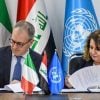
The Ministry of Foreign Affairs and International Cooperation of Italy, through the Italian Agency for Development Cooperation (AICS), has renewed its commitment to stabilizing Iraq with an additional EUR 2 million (approximately US$1.9 million) contribution. The generous contribution will be channeled through UNDP's flagship programme, the Funding Facility for Stabilization.
Italy has generously provided over US$20 million since the Facility was set up in 2015. The funding will be used to focus on rehabilitating public infrastructure and providing essential services to vulnerable communities living in areas affected by the ISIL conflict.
"The impact of our stabilization efforts with continuous support from the international partners such as Italy are visible across Iraq. Hospitals are reopening, clean water is reaching people's homes, and universities are welcoming students back. With this additional funding, UNDP will be able to continue to support the rehabilitation of critical infrastructure in sectors such as electricity, water, education and health," says UNDP Resident Representative Zena Ali Ahmad.
"We are immensely grateful for Italy's continuous support to stabilization in Iraq. This new contribution will position the Facility to better meet the expectations and needs of the people of Iraq and contribute to improving conditions in the Liberated Areas paving the way for displaced Iraqis to return to their communities of origin safely and with dignity," adds Ms Ali Ahmad.
"Iraq is a priority country for Italy, both as a pivot of stability in the region and as a partner in development cooperation. Reconstruction and rehabilitation of facilities and infrastructure is critical to our common goal of ensuring a safe and stable environment for returnees to start rebuilding their lives. Italy has never left Iraq, through thick and thin. We, together with UNDP, stand by Iraqis and are eager to build a peaceful, prosperous and safe future for Iraq," states H.E. Maurizio Greganti, Ambassador of Italy to Iraq.
The Director of the Amman office of the Italian Agency for Development Cooperation (AICS), Dr. Emilio Cabasino, also highlights, "Through constant commitment in development cooperation, big achievements are possible. With this spirit, AICS collaboration in supporting the Funding Facility for Stabilization over the years has allowed reconstruction and returns. With this renewed contribution, it also supports the transition towards handover and new programming for development."
In mid-2015, UNDP established the Funding Facility for Stabilization to assist the Government in rebuilding Iraq after the ISIL conflict. The Facility works with the Government of Iraq and local actors to ensure safe, dignified and voluntary returns and to lay the foundation for reintegrating displaced populations into the community.
With the generous support of international partners, the Facility has mobilized over
US$ 1.55 billion from 29 donors and the Government of Iraq. This collective effort demonstrates the international community's solidarity with Iraq.
(Source: UN)
Posted in Construction & Engineering In Iraq Comments Off on Italy Increases Contribution to Stabilization in Iraq
New Iraqi Cabinet Approved [FULL LISTING]
Posted on 28 October 2022 .
By John Lee.
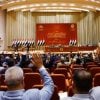
The Iraqi parliament has given a vote of confidence to incoming Prime Minister Muhammad Shia al-Sudani and his new cabinet.
A full listing of the new ministers, along with alternative spellings used by some sources, is shown below:
- Deputy Prime Minister and Minister of Foreign Affairs, Mr. Fouad Hussein [Fuad Hussein]
- Vice President Cabinet and Minister of Oil, Mr. Hayan Abdul Ghani Abdul-Zahra [Hayyan Abdul Ghani; Hayan Abdulghani]
- Deputy Prime Minister and Minister of Planning, Mr. Muhammad Tamim [Mohammed Ali Tamim]
- Minister of Finance, Ms. Taif Sami Mohammed [Al-Sitta Taif Sami]
- Minister of Defense, Mr. Thabet Muhammad Saeed al-Absi [Thabit Muhammad, Thabet Mohammed Saeed]
- Minister of Interior, Mr. Abdul-Amir Kamel al-Shamri [Abdul Amir Al-Shimmery, Abdul Amir Kamel]
- Minister of Health, Dr. Saleh Mahdi Mutalib [Salih Mahdi, Saleh Mehdi Mutalib]
- Minister of Industry and Minerals, Dr. Khaled Battal Najm [Khalid Battal, Khaled Battal Neg]
- Minister of Commerce (Trade), Mr. Atheer Daoud Salman [Athir Daowd Salman, Atheer Dawood Salman Al Ghurairi]
- Minister of Justice, Dr. Khaled Salam Saeed Shawani [Khalid Shawani, Khaled Salam Shwani]
- Minister of Electricity, Engineer Ziyad Ali Fadel [Ziad Ali Fadhil Sudani]
- Minister of Agriculture, Engineer Abbas Jabr Obada
- Minister of Higher Education and Scientific Research, Dr. Naim Abdel-Aboudi [Na'im Al-Abboudi, Naim Abed Yasser]
- Minister of Education, Dr. Ibrahim Namis Yassin
- Minister of Transport, Mr. Razak Muhaibis [Razzaq Muhaibis, Razak Muhaibes Ajimi]
- Minister of Communications. Dr. Hiam Abboud Kazem [Hoyam Abboud, Hiam Abboud Khadim]
- Minister of Water Resources, Mr. Aoun Diab Abdullah
- Minister of Labor and Affairs, Mr. Ahmed Jassem Saber Al-Asadi [Ahmed Jassim Saber]
- Minister of Immigration and Displaced Persons, Ms. Ivan Faeq Yaqoub [Ivan Faiq, Evan Faeq Yacoub]
- Minister of Youth and Sports, Mr. Ahmed Mohamed Hussein Al-Mubarqa [Ahmad Al-Mubarqa, Ahmed Mohamed Hussein]
- Minister of Culture, Tourism and Antiquities, Dr. Ahmed Fakak Ahmed [Ahmad Fakkak Ahmad, Ahmed Fakkak Ahmed al-Badrawi]
(Sources: Iraqi Parliament, Al Monitor)
Posted in Politics Comments Off on New Iraqi Cabinet Approved [FULL LISTING]

Video: Power Blackouts persist in Energy-Rich Iraq
Posted on 19 October 2022 .
From Al Jazeera. Any opinions expressed are those of the author(s), and do not necessarily reflect the views of Iraq Business News.
Iraq is among the world's richest countries in energy, but that is doing little for the people who live there.
For decades, many have suffered because of power outages, and there is no easy solution.
Since 2003, Iraq has spent more than $80bn upgrading its power grid and restoring electricity supplies, but many Iraqis say they are not seeing the benefits.
Al Jazeera's Ali Hashem reports from Baghdad.
Posted in Iraq Industry & Trade News, Politics Comments Off on Video: Power Blackouts persist in Energy-Rich Iraq
Iran to Increase Gas Supplies to Iraq
Posted on 11 October 2022 .
By John Lee.
Iran has said it will increase supplies of gas to Iraq.
At a meeting in Isfahan with senior officials of the Iraqi Ministry of Electricity, the Director of the National Iranian Gas Company (NIGC), Mohammad Reza Joulaei, confirmed the increase, adding, "our relationship with Iraq is a strategic relationship."
He said that the necessary technical and operational checks have been carried out, so there will be no problems to export the gas according to the agreement with Iraq.
(Source: Shana)
Posted in Iraq Industry & Trade News, Iraq Oil & Gas News Comments Off on Iran to Increase Gas Supplies to Iraq
Foundation Stone laid for Iraq-Jordan Electricity Interconnector
Posted on 10 October 2022 .
By John Lee.
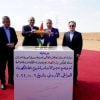
Iraqi Prime Minister Mustafa Al-Kadhimi and the Prime Minister of Jordan, Bisher Al-Khasawneh, have laid the foundation stone for the Iraqi-Jordanian electricity interconnector.
Al-Kadhimi said the project will help secure the exchange of energy between the two countries, and reflects the policy of openness and cooperation adopted by this government.
On the sidelines of the launch, the two sides held a meeting to discuss the development of regional cooperation, in light of the tripartite Baghdad summit last year between the leaders of Jordan, Egypt and Iraq.
(Source: Govt of Iraq)
Posted in Construction & Engineering In Iraq, Iraq Industry & Trade News Comments Off on Foundation Stone laid for Iraq-Jordan Electricity Interconnector